Angry, isolated, paranoid and ageing, many of Ireland’s ‘ordinary’ Catholic priests feel failed and abandoned by the church hierarchy.
But where were the ‘good priests’ when they were needed?
THE VOICEMAIL was succinct. “Why don’t you, Mister Hoban, f**k off back to Rome with your nuncio . . . Piss off back to Rome, you f**ked-up celibates.”
There were more.
“Keep away from my children, you bunch of perverts,” for example.
Fr Brendan Hoban transcribed these voicemails dutifully, along with other parish messages.
He reveals the wording after some reluctance.
His hesitancy is rooted in the same terror that has sent most priests deep into their parish bunkers this week, the terror of appearing to place the anguish of their own tattered, lonely souls above the suffering of the victims of clerical abuse.
So last week, when the Cloyne report was crashing into the public consciousness, Hoban, the 63-year-old parish priest of Ballina, Co Mayo, would have returned to the empty parochial house, heard the messages and told no one.
Then he would have repaired to his icy livingroom, where the sleeping bag on the armchair and the little plug-in radiator bear testament to the mean summer temperature of the ugly, soulless house he calls home.
Meanwhile, Enda Kenny was launching an unprecedented, historic attack on the Vatican in Dáil Éireann, accusing it of downplaying or “managing” the rape and torture of children “to uphold instead the primacy of the institution, its power, standing and ‘reputation’ ”.
Ireland, he declared, was not Rome but “a republic of laws . . . where the delinquency and arrogance of a particular version, of a particular kind of ‘morality’, will no longer be tolerated or ignored”.
Brendan Hoban wonders what all the fuss is about.
Enda Kenny was saying nothing that Irish priests haven’t been saying for years, he claims, about what the bishops should be doing.
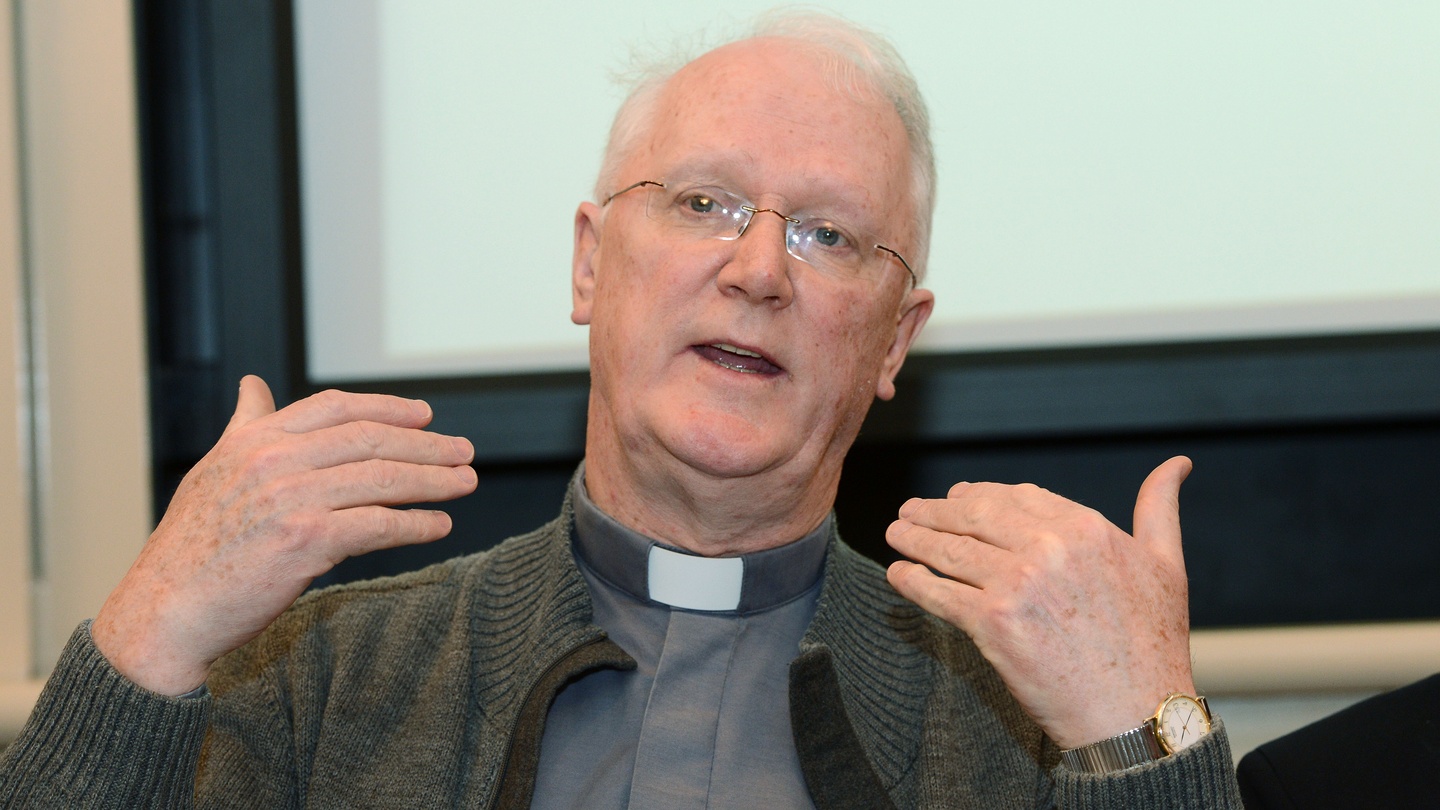 “In effect, he is challenging Rome as distinct from the Irish church. We have no problem living in a democratic republic and I think we have shown ourselves, in the main, as people who have made a contribution to that republic . . . We have been waiting a long, long time for the bishops to say: ‘Let us run our own affairs, rather than tying our hands behind our backs . . .’ ”
But the Taoiseach’s statement does raise a concern, he adds.
“It’s that the Republic could become a cold place for Irish Catholics, as a result of an unnecessary confrontation between church and state. We fear that people would take from Enda Kenny’s statement that this is a dressing-down of priests and bishops, when it’s a dressing-down of Cloyne and Rome, and could be regarded as fodder for other agendas that might be coming up.”
Indeed, the Taoiseach was careful to address the anguish of the “good priests” in his statement: “This Roman clericalism must be devastating for good priests, some of them old, others struggling to keep their humanity, even their sanity, as they work so hard to be the keepers of the church’s light and goodness within their parishes, communities and the human heart.”
For them, their powerlessness has long been confirmed in the heedless appointment of bishops lacking the competence, intellect or independence of spirit to address the spiritual needs of a rapidly evolving republic; bishops such as Cloyne’s John Magee.
“He never worked in a parish, so had no experience of how to run a parish, never mind a diocese. I’m not blaming him for that – it’s back to who appointed him,” says Fr Billy O’Donovan, of Conna, in the Cloyne diocese.
It was Rome that handed the power to John Magee to appoint a head of child protection.
Magee chose Msgr Denis O’Callaghan, then in his late 70s.
Says another priest: “Denis O’Callaghan is an absent-minded professor – and they put him in charge of child protection?”
O’Callaghan is “a man with a great heart”, says Fr Hoban, “but completely disorganised”.
THERE IS CLEARLY a deep anger among ordinary priests.
This is reflected in the 550-plus membership of the fledgling Association of Catholic Priests.
But where were those angry, articulate voices when the damage was being done, when Rome was directing this republic’s affairs and their brothers in Christ were violating the young and vulnerable?
They were where they always were, says Hoban, “trying to do 1,001 things and trying to do them the best they can.”
So does that explain their silence?
There are two “difficulties”, Hoban says.
The first is the mistaken belief that a diocese is run by the bishop and the priests together.
“The fact is we are totally excluded from any say . . . Priests are effectively disenfranchised.”
The other difficulty is loyalty.
Priests live isolated lives.
“The dynamic of our ministry is that friends are very few and far between, but there is extraordinarily strong loyalty among the clergy,” Hoban says.
As well as that, “we were not people who would challenge the status quo. Those who would were weeded out in the seminary.”
Then there is the perennial problem of being “at the bishop’s mercy” in relation to transfers and advancement.
And thus the silence.
Does it all sound a bit self-serving?
“Yes, it’s fair to say that it was self-serving. That lack of moral courage.”
To illustrate this, he describes how a bishop and liturgists have been traversing the Irish dioceses, giving seminars to priests on the controversial new missal translations.
Despite the huge unease there was little or no reaction from audiences.
Then the bishop came to Knock, where he overran his speaking time, leaving no time for the pre-lunch question-and-answer session.
After lunch he launched straight into speaking mode again, whereupon one brave soul stood up and stated that a discussion was needed.
It sounds like the scene where Oliver Twist asks for more food.
Slowly, amazingly, the courageous priest was followed by several more.
“The liturgists were amazed because they presumed there was no opposition, as they hadn’t seen it before,” says Hoban.
Or maybe they hadn’t been reading the papers. It demonstrates what a cold place the church can be for a dissident, says Hoban.
“And we have reaped the whirlwind . . . If a good guy said anything , he said it to the bishop or the parish priest and felt that he’d done what was required. Guys find themselves in situations where their instinct says this doesn’t concern me. Because the message always was: go into your parish; diocesan policy is not your concern.”
In short, blinded by loyalty and conformism, priests trusted too much.
Now, pole-axed by fear, they are overcompensating.
Some have described their fellow clergy as “evil priests” in newspapers; one urges people to boycott the church collections.
The priests’ fear is no longer of the bishops; it’s of the head-spinning no-man’s-land where they now find themselves.
Ageing and isolated, they are operating in hostile territory where their Rome-appointed shepherds are themselves in a state of confused terror – “running around like 27 headless chickens”, according to Fr Tony Flannery – and where the Irish church’s straight-talking totem, Archbishop Diarmuid Martin, has effectively alienated them all.
The isolation and exclusion, compounded by this alienation from their bishops, explains much of the sense of abandonment and fear felt by many priests.
“The feeling is that in their lifetime there will be no end to this,” says Hoban. “For 10 years they’re blue in the face going to courses, seminars, studying guidelines . . . You could call it a high state of paranoia. Then, after all that, something happens in Cloyne and the bottom falls out of it.”
But the paranoia has also infected the priests’ day-to-day pastoral work.
“A woman comes to the door who may have psychiatric problems . . . What do I do? Take a chance by letting her into my front room? There is no doubt that priests have withdrawn, that they’ve become ultracareful and ultrasensitive on how they might be compromised.”
This is the raw terror of men who find themselves accused and deserted.
It’s another reason why so few are prepared to go public about anything.
“There is a phobia among them,” says Hoban. “It’s to do with the fear of accusations, especially ones that go back 30 years. It could be about exposure of an indiscretion from when he was a young priest. Or he could have a nervous disposition and have a phobia of false accusations being made.”
Privately, priests believe that some of those historic accusations are deeply suspect or
“shady”, as one put it.
“But you’re considered guilty from the word go,” say Fr Billy O’Donovan. “You almost have to prove your innocence.”
Accused priests have been publicly stood down, excised instantly from the diocesan directory, left with little or no income, ordered to vacate the parish house in days.
It depends entirely on individual bishops.
“There can’t be a priest in this country who doesn’t think the HSE and the civil authorities shouldn’t be informed as a matter of course ,” says Fr B, a priest who was falsely accused, “but there is also a matter of natural justice.”
Others cite the case of Canon Niall Ahern, who in 2006 was falsely accused of an offence alleged to have occurred some 35 years earlier.
He was back in ministry within months, but not before he had been publicly stood down by his bishop, stigmatised and humiliated in numerous ways.
Even when he was restored to ministry he endured headlines such as “Slur Fr returns to pulpit”.
THE COMPLEXITY of the issue is highlighted by Fr Billy O’Donovan.
He was asked by the diocese to be the official support for the Cloyne priest who was the subject of Bishop Magee’s notorious contradictory letters, one to Rome and a completely different one for diocesan files.
O’Donovan and the accused priest had been friends and their families had been friends.
“But the complexity is that the complainant would also be known to my family,” O’Donovan says.
“The awkwardness would be that the complainant’s family would assume that I’d be on the priest’s side.”
Having vehemently protested his innocence to anyone who would listen, that priest ultimately pleaded guilty in court to indecency charges.
O’Donovan doesn’t comment on the effect of this on him personally, merely saying that he remains in the role of support person.
Another priest speaks to us on condition of anonymity. Fr B, ageing and in poor health, yearns for what he calls “an adult conversation” with senior church figures about his ordeal.
“I’m not looking for money or an apology. I want us to own what happened.”
But, as O’Donovan puts it, the problem is that “of course false allegations have been made, but far too many have been proved”.
Nonetheless, this issue crystallises the abyss that now divides many bishops from their priests. There is no trust of any kind.
“We have the feeling that a facade is being created, such as in the Eucharistic Congress and the new texts, a pretence that all the troubles are now being dealt with and that, from here on, the church will flourish,” says Hoban.
“We are not encouraging people to join us. We know it’s not going to solve any problems. In this diocese there will be eight priests left from an original 34 in 20 years’ time. There is no planning . . . The whole thing is imploding with no recognition of this.”
Many trace the current problems to the abandonment of the Vatican II vision of a church of the laity, with parish councils at the core.
“Mostly it hasn’t happened . . . So when abuse cases arose they were dealt with by clergy, not by mothers and fathers,” says Hoban.
Now the last of the so-called Vatican II priests are disappearing, and the few young men who are replacing them are universally perceived as fiercely traditional and conservative.
Over and over, my conversations with priests return to the calibre of church leaders.
This is why O’Donovan, even during Cloyne’s traumatic week, believes that there is a “far more important week ahead”, meaning the appointment of a new bishop.
“Names being mentioned or guessed at are all right wing, conservative and with a Rome background,” he says.
“We’ve been there before . . . My biggest fear – and it is a real fear – is that someone would be appointed that priests and people will find unacceptable, and that many, priests and people, will walk in that event. We’ve taken enough. We want someone who will talk to us and listen to us.”
Would Irish priests support a breakaway from Rome?
“No,” says Hoban. “What you’re talking about here is the nature of the church. We are deeply unhappy with the competency of the leadership and the drift of Rome. The consultation and transparency we talk about, well, it’s not going to happen in our lifetime. But, to live with yourself, you have to keep saying the things you’re saying. The Association of Catholic Priests is the last fling of the dice.”
Behind all this is the reality of a laity that is voting with its feet.
“That’s the other unspoken thing,” Hoban says. “Our ability to speak to their needs is problematic. We don’t have the ability or the connection to speak out of their world. And that’s the result of celibacy, formation and the loneliness of the ministry.”
Why do they stay? “I’m 63,” Hoban says. “What else do I know? If I was 40 I’d look at things differently. There is a sense now that you’re in it and you’re loyal to it and that you owe something to the people you’ve worked with.”
But he is under no illusion. “Age and oddity go hand in hand. And, as someone said, there’s no one odder than an odd priest. It’s also been said that there is no one deader than a dead priest. People get on with it . . . We’re just functionaries.
“Tomorrow, the reality is that I will do a funeral for a family who have lost a father. That is probably the biggest thing that has happened to them in their lives, and they will remember every detail of this day. And you will do your part to the best of your ability. And at the end of it you’ll be able to look back and say: ‘It matters; I made a difference.’ That’s what the good guys are at.”