
Roman Catholic Church Finances in the United States

The finances of the Roman Catholic Church tend to be well concealed. But a spate of bankruptcy cases in the US (8 out of 196 dioceses, with Honolulu teetering on the brink) has enabled The Economist to examine the situation in that country in more detail than is usually possible.

There are 74 million people in the US who describe themselves as Roman Catholic, and the expenditure of the Church is estimated as $170 billion in 2010. Of this, 57% was spent on health-care networks, 28% on colleges and universities, 6% on dioceses, parishes and schools, and 2.7% on charitable activities. Over 1 million people were employed (by comparison, the Walmart supermarket chain employed 2 million people). Less than a tenth of the income comes from church offerings; much of the rest comes from investments, property, wealthy businessmen, and local and federal government support for the hospitals, universities and schools. The Church in the US probably has about 60% of the total wealth of the Roman Catholic Church worldwide.

The Church has paid out $3.3 billion in settlements for child abuse over the last 15 years and this figure is expected to rise considerably. The dioceses are financially independent and the settlements are made by individual dioceses, which is why a number of them have gone bankrupt as a consequence of these settlements. Ten states are considering relaxing the time limitation on investigating child abuse, which could lead to the bankruptcy of several more dioceses. It is estimated that the Church is spending somewhere between $100 000 and $1 million a year in opposing the relaxation of this time limit. The child abuse scandal has led to a considerable reduction in donations to the Church and, at the same time, the shortage of priests and nuns has reduced the amount of the cheap labour available to the Church and has increased the running costs.

The rest of the report is somewhat technical but the following points emerge. Several dioceses have responded to their financial difficulties by raiding the priests’ pension funds. Between 1986 and 2002 the Diocese of Boston collected about $70-90 million in Easter and Christmas offerings, none of which was paid into the clergy retirement fund, although many parishioners thought that this was where the money was going.

Some dioceses have presented their funds as consisting of numerous different accounts for parishes, schools, hospitals, etc, when in fact there is just a single account. The parishes, schools and hospitals have then lost all their investments when the diocese has gone bankrupt.

Other dioceses, threatened with bankruptcy, have tried to shield their money by moving it out of diocesan accounts. In the ongoing Milwaukee bankruptcy case, the Archbishop of Milwaukee authorized a transfer of $55.6 million from the diocesan account into a cemetery fund. One Californian lawyer who has been involved in several of the bankruptcy cases says, ‘We have seen a consistent tactic of Catholic bishops to shrink the size of their assets, which is not only wrong morally but in violation of state and federal laws’. A whole city block in downtown San Diego was valued in the diocesan accounts at $40 000, the price that had been paid for it in the 1940s. The judge in the case was so irritated by the various ‘shenanigans’ that she ordered a special investigation into the diocesan finances.

The Economist report exposes considerable financial corruption in Roman Catholic dioceses in America but, as so often when dealing with the Church of Rome, there is a reluctance to draw conclusions. Somehow the idea is preserved that the Church of Rome is doing a lot of good in America. One would hope that, from her financial corruption, people would readily deduce her spiritual corruption, but they are remarkably slow to do so.

Complete Article HERE!

Catholics defy bishops to pray for gay marriage

The folk mass hymns and gospels were familiar, the response “And with your spirit” recited Sundays in church by millions of Catholics, but the 120 faithful gathered outside Seattle’s St. James Cathedral on Sunday afternoon were praying for a cause their bishops are campaigning against.

Mobilized by Catholics for Marriage Equality, they celebrated a “Liturgy of Love,” praying for the recognition of same-sex unions and the passage of Referendum 74, which would legalize marriage between persons of the same gender.

“I would just say the God I have come to know is not one to tell people they are not equal,” said Robert Gavino, a Seattle University student.

John House, a parishoner at Our Lady of Sorrows parish in Snoqualmie, added: “Catholics believe Christ’s primary message is one of love, and Catholic social teaching teaches us that God loves everybody. We are standing up for centuries of Catholic social teaching.”

They are also standing against their bishops.

Seattle Archbishop J. Peter Sartain has issued a pastoral letter denouncing Referendum 74, and put three anti-74 videos on the diocesan website. “R-74 jeopardizes freedom rather than expands it: It endangers our religious liberty and the right of conscience,” Bishop Joseph Tyson of Yakima claimed in a particularly strident letter to the faithful.

We disagree, said those on the steps of St. James Cathedral.

“I find (bishops’ claims) perplexing:. Nothing about marriage equality in the state of Washington is any infringement on liberty. This is about civil marriage and civil law,” said John Morfield, a longtime parishoner at St. Mary’s Catholic Church.

And Barbara Guzzo, organizer of Catholics for Marriage, argued that the bishops have brought “anguish, division and sadness” to the faithful, “particularly those with a gay person in their families, the hurt that this has caused.”

Fr. John Whitney, S.J., pastor of St. Joseph Church, has encouraged discussion and helped a recent meeting to promote reconciliation between those who share the bishops’ passionate opposition and those who back Referendum 74. “Authority never supplants conscience,” he told parishoners in a recent “e-blast.”

But stridently conservative bishops across the country have brought politics to the pulpit — and delivered dictates of what belongs in the consciences of those in the pews.

“A properly formed Catholic conscience will never contradict the Church’s teachings in matters of faith and morality,” Bishop David Kagan of Fargo, N.D., said in a weekend letter. The letter contained no mention of social teachings or poverty or human rights, but among things “never acceptable” was “not recognizing the unique and special role of marriage as a unique union of one man and one woman.”

In Washington, however, more than 60 resigned Catholic priests have endorsed Referendum 74. More than 100 retired and former priests in Minnesota have denounced Archbishop John Nienstedt for his efforts to write a one man-one woman definition of marriage into the state constitution.

State Sen. Ed Murray, D-Seattle, present at St. James on Sunday, is a practicing Catholic and chief sponsor of marriage equality in the Legislature. Murray said he was outside the cathedral as a demonstration of his faith.

“I think any time we show solidarity with those on the margins of our society, it is an expression of our faith,” said Murray. “We (gays) are certainly on the margins . . . at least in the hierarchy’s structure.”

The “Liturgy of Love” took place at the same hour as the weekly Solemn Vespers and Benediction inside St. James Cathedral. Earlier this year, the cathedral refused to serve as a collection center for petitions to force a vote on same-sex marriage.

The liturgy outside was familiar.

It featured singing of the Prayer of St. Francis:

“Make me a channel of your peace. Where there is hatred, let me bring your love; where there is injury, your pardon, Lord; where there is doubt, true faith in you.”

Chad Griffin, president of the Human Rights Campaign — the largest national group campaigning for gay and lesbian rights — spoke at the end of the liturgy. A Georgetown product, he said of his Catholic education: “Nowhere, ever, did it tell me to oppose a right that I might have. Or to support discrimination against my brothers and sisters.”

“The other 49 states are watching,” said Griffin.

Later, in an interview, Griffin noted the long string of defeats for same-sex marriage at the polls. But this year, he predicted, will be different. “Scare tactics, false headlines and lies are not working as they used to,” he said. “It’s close, but I’d rather be where we are than where they are.”

Where gay marriage supporters are is ahead in the polls in three states — Washington, Maryland and Maine — that are voting on marriage equality. In a race where polls are neck and neck, Minnesotans will vote on the constitutional amendment, heavily backed by Catholic bishops, that would write a ban into their state constitution.

Across the North Star state, however, lawn signs have sprouted with the message: “Another Catholic voting No.”

Complete Article HERE!

Grand Forks woman to demonstrate against bishop’s election message

Kate Kenna, a lifelong Catholic, career social worker and political progressive in Grand Forks, has mounted a reaction to news of a North Dakota bishop’s call to the faithful concerning voting.

A letter from Bishop David Kagan of Bismarck is to be read Sunday from all the Catholic pulpits in the state urging them to not support abortion, stem-cell research or same-sex marriage when voting.

Kenna bought a “City Briefs” ad in the Herald with a short message: “The bishop is bringing politics to church. Please wear a political button to Mass on Sunday to support the candidate of your choice.”

It began running Thursday online.

Kenna also called Joel Heitkamp at KFGO radio in Fargo, who talked about it Thursday on the air.

And Kenna has organized a sort of demonstration Sunday at her own parish, Holy Family. She and others, including her friend Thomasine Heitkamp, will be standing with others outside the church to show their disagreement with the bishop. The Heitkamps are siblings of Democratic Senate candidate Heidi Heitkamp.

Democrats upset

Kagan was appointed bishop in Bismarck in November and named apostolic administrator of the Fargo diocese this summer until a replacement bishop is announced.

It came to light the past week that Kagan sent a letter to all priests in the state to be read Sunday.

The bishop declined to release the letter pending its being read Sunday in churches. But he announced Thursday he will discuss the letter at 9 a.m. Tuesday on Real Presence Radio at 1370 AM in Grand Forks and 1280 AM in Fargo.

State Sen. Tim Mathern, D-Fargo, released the text of the letter and criticized it in a Forum Communications story Wednesday, saying it went over the line in directing Catholics how to vote.

Although Kagan’s letter does not mention parties or candidates by name, Mathern said it clearly was pointed at Democrats because of the party’s known support for the issues Kagan mentioned.

Plus, Mathern said the phrase used by Kagan telling Catholics not to vote for “the most likable” candidate appears to echo Republican ads referring to Heidi Heitkamp.

Friend of Heitkamps

Kenna said that’s how she sees it, too, especially as a longtime close friend of Thomasine and Heidi Heitkamp.

Catholics are taught to follow their own conscience, she said.

“I think I have a perfectly formed conscience,” said Kenna, who credits growing up going to St. Michael’s Elementary School and St. James High School in Grand Forks. That’s led her to devote her life to social work and to support the Democratic party because she sees it as caring for people.

“We can’t just look at being pro-life as just being pro-delivery,” Kenna said. “Being pro-life means all of life and that means people who are here, also.”

The church is a place where people of all political persuasions should feel welcome and be united in faith, not in politics, she said.

Church response

Christopher Dodson, executive director of the North Dakota Catholic Conference, a public policy and lobbying effort of the two dioceses in the state, agrees that partisan politics doesn’t belong in church. Nor does Bishop Kagan, who does not refer to any individuals or parties in his letter, Dodson said.

“There’s nothing new in the letter, it’s all Catholic teaching on how to form one’s conscience,” Dodson. His office has been sending similar messages to parishes in the state regularly since about Labor Day, he said.

The bishop’s reference to not voting for someone because they are “likable” reflects long-held Catholic teaching that the faithful should look at deeper issues than either pocketbook issues or a person’s personality, Dodson said. It’s not about Heitkamp or anyone in particular, he said.

“It’s not about influencing elections, it’s about the care of souls,” Dodson said. That’s why the bishop has been reluctant to discuss his letter before parishioners hear it themselves in church, not in a partisan debate on radio or television, Dodson said.

“People who are really involved in partisan politics get hyper-partisan around election time and everything they see gets interpreted through those partisan lenses,” he said. “I think parishioners will be pleasantly surprised when they finally hear the letter and see that it doesn’t deal with partisan politics.”

Faith and politics

Kenna long has taken her faith and her politics seriously.

In the fall of 1968 at the height of the Vietnam War, a woman regularly stood across the street from St. James High School, holding a sign protesting the war, Kenna remembers. “She wasn’t allowed to come on the school grounds.”

A junior, Kenna invited the woman to speak to her current events class.

“I got suspended for three days,” she said with a laugh.

Now she feels she must react to the message from the bishop that she might be voting the wrong way.

“I think the bishop of Bismarck has brought this to a new level where he is bringing politics into church and as a responsible voter I have to say that’s wrong, and how do I respond that?” she said.

“I could stand up and walk out of church (while the letter is read) but I think that would be disrespectful to our priest,” she said.

Instead, she and others plan to stand outside Holy Family during Masses on Sunday.

Although she will wear a Heitkamp button, it’s not about campaigning, she said, adding she hopes many wear buttons of all sorts.

“I don’t think it’s a protest; I think it’s just an awareness-building exercise,” she said. “I just want people to examine their consciences and then vote the way they feel is consistent with their beliefs. I don’t want to be told that in church.”

Complete Article HERE!

Marriage would have made me a better priest

One of Ireland’s best-known priests has revealed the anguish the Church’s requirement of mandatory clerical celibacy has caused him.

Fr Brian D’Arcy admitted: “I would have been a much better priest had I married.”

Marriage would have provided “a companion, a closeness, a friend, someone to call home” as well as requiring “making sacrifices for somebody else,” he told BBC NI. “At the end of my life, I don’t have a home. Ideally religious life is supposed to be a type of home. It isn’t, not now anyway.”

In a BBC documentary, he says he contemplated leaving the priesthood in the wake of his disciplining by the Vatican.

Last April, it emerged he had been told by the Vatican watchdog, the Congregation for the Doctrine of Faith, that he must submit his writings and broadcasts to an approved Church censor before publication.

“Is the price of being a priest that you stay quiet, that you don’t be a whistle blower, and that the price of dying a priest is that you don’t speak the truth?”

The documentary makers followed the Enniskillen-based priest for several months as he talked to people within the Church about whether he should stay or leave after 50 years in the Passionist order.

Among those he consu-lted were the dissident Austrian priest, Fr Helmut Schüller, who is actively lobbying for reform of some of the Church’s core teachings, as well as Cardinal Sean Brady, who affirms the priest’s media work.

He is frank about the pain of his experience of sexual abuse, which occurred when he was an 18-year-old seminarian. “I was preyed upon by a member of my own order. Of course, the threat was made that unless I co-operated with this, that I would not be ordained.”

One of his biggest regrets is returning home to Ireland from South Africa in 1994. “I was 25 years ordained in 1994 and I went to Africa to get away from it. The Smyth affair had been going on for a year before and I was so disillusioned with the priesthood that I couldn’t even celebrate my silver jubilee. One of my regrets in life is that I ever came home.”

Complete Article HERE!

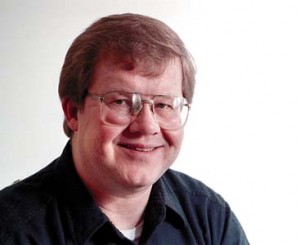
Jerome Christenson: The church has sided with the bigots

By Jerome Christenson

Jesus didn’t come to found a Super PAC. So how do I explain the role of the Roman Catholic Church in this election?
How is it that we find an organization that styles itself “the Bride of Christ” whoring after votes like Tammany Hall with pews?

For months, Minnesota Catholic bishops have been behaving more like old-time, big-city political bosses than pastors of a troubled flock. As a Catholic, I am angered and embarrassed that the leaders of my church have chosen to devote more than half a million dollars to writing language into the Minnesota Constitution that would deny legal rights, protections and privileges to women and to men based solely upon their gender.

Of all the rituals of the church, there is none I find so challenging as the annual re-enactment of Jesus washing the feet of his Apostles, with the concluding admonition of “I have given you an example.”

And what is the example Jesus gives? To go beyond what is comfortable, what is easy, what has been done before. To reach out to the poor, the weak, the put down and oppressed. To those without power, to those who have been denied.

“Come unto me,” he said, with a door open in welcome.

But rather than stand with Jesus in welcome, the prelates are calling upon us to stand with those who would slam the door.

They would have us deny our brothers, sisters, sons, daughters, friends and relations recognition of the most intimate and profound human relationships — and they are so very wrong to do so.

To those who tell me this vote isn’t for or against discrimination, I just repeat what my dad told me: “You’re known by the company you keep.” On this ballot question, on which side do we find the bigots, the homophobes, the haters? And on which side do we find the bishops of the Roman Catholic Church?

The wrong side.

Clearly, the wrong side.

And I am embarrassed and ashamed.

I know, there are plenty of folks who will say, “If you don’t like it, leave.”

No.

This is my church as much as it is the church of the hierarchy — ultimately all are equal before God. I go to Mass for prayer, not for a political rally, and prayer will continue long after the electioneering is over.

And if I claim it as my church, I also share responsibility for what the church does and what it stands for. And in this matter I take my example from the unlettered son of a Nazarene carpenter who dared say to the scribes, elders and pharisees, You are wrong.

And on this matter our bishops are wrong. How do we claim to live according to the great command, Love one another as I have loved you, and say with our words, our money, our votes that some of us are not worthy of — or capable of — what may be the most profound, selfless love humans may experience.

This is something I do know a bit about.

Had she lived, Gayle and I would have been married 35 years this July. If my mom were still living, she and Dad would be celebrating 62. Having lived better and worse, richer and poorer, sickness and health, lived it until parted by death, I know the love that sustained us in joy, anger and sorrow was rooted in our souls, not in our genitals.

To stand between any two people and deny them the expression of such a love is no less a sin than to stand between them and the very love of God.

Complete Article HERE!

The nun who became a sex therapist

Dr Fran Fisher’s latest book blows the lid off the repressed sexuality of convent life. And it’s a subject the former nun knows first hand

By Joanna Moorhead

From nun to sex therapist isn’t an obvious career path but, says the former Sister Jane Frances de Chantal, “when you’ve been starved for a while, you certainly appreciate the feast at the end of it”.

In the Name of God, Why?: Ex-Catholic Nuns Speak Out about Sexual Repression, Abuse & Ultimate Liberation  by Dr. Fran Fisher

Today, Sister Jane is Dr Fran Fisher, a California “sexologist” in US-speak. But she was born and raised in Yorkshire and entered a Franciscan convent in Derbyshire aged 18. She left two years later, met and married an academic, and moved to the US. It wasn’t until she was in her 40s, she says, that she began to understand how much her Catholic upbringing, and her experience of being a nun, had damaged her sexual instincts.

With her children growing up, she saw a course in sex therapy advertised and her interest was immediately piqued. “I enrolled, and what happened next blew my head off. One day the tutor said we were going to discuss our masturbation history and I thought, can I really do this? Somewhere inside I was still a nun even after all these years … I was still sexually naive. I realised that the legacy of my time in the convent was the cause of most of the problems in my marriage. It had been drummed into me as a novice that I didn’t really have ownership over anything, even my own body.”

Fisher decided to combine her new professional direction, running workshops and counselling, with her own past, and to find out whether other former nuns had had similar experiences: the result is a book in which she interviews 28 women who, like her, took vows of poverty, chastity and obedience only to later leave orders. She talked to them about their sexuality before, during and after their time in the convent and discovered many similarities. “Most of the women I interviewed had been raised in strict Catholic families. Many had an alcoholic father. Quite a few had a history of physical and/or sexual abuse. A lot of them described the convent as a safe place to go.”

Fisher, who is now in her early 60s, realised that some of the traits of her own childhood were typical – in particular the fact that both her Irish Catholic parents had wholly negative attitudes towards sex. Her father, she says, almost always described women in pejorative terms; her mother, meanwhile, thought sex was “dangerous, dirty, vile, nasty and filthy”. When Fisher, then aged 14, feared she was pregnant – after an episode of petting that didn’t involve intercourse – her mother fuelled her fears, leaving her with a sense of “never wanting to have anything to do with a man again”.

The convent had the allure of a place where women were pure and mysterious and – most importantly – safe. But once inside its walls, her sexuality began to surface. Fisher became increasingly unhappy, lost a lot of weight, and eventually left the convent one Saturday morning while all the other sisters were at mass. She was, she says, still as naive about sex as she was when she arrived. But that wasn’t the case with all the women she interviewed. “Those who spent decades in a convent had usually experienced a sexual awakening. Some had relationships with other nuns, some with priests, some with laypeople.”

Some of them, too, talked to Fisher about how they were aware of sexual abuse that was going on in the Catholic church – but most, she says, were unable or unwilling to do anything about it. “Very few nuns were whistle-blowers,” she says. “When you’re a nun, you give away your ability to judge a situation.” Obedience meant not taking the lead and not questioning those who were obviously in positions of authority – such as male priests.

Some of the women in the book describe exploitative and unequal sexual relationships with priests – relationships they later questioned but which, at the time, they accepted as “necessary” for the men. As for having a healthy, “normal” sexual relationship, some of the women Fisher interviewed were middle-aged before this happened for the first time. “One woman described having intercourse for the first time aged 52. Another told me that when she first got a boyfriend, aged 50, she had sex every night for the first two or three months. Her partner thought he was going out with an Amazonian – but she said to him: “I’ve waited half a century for this, just lie back and shut up!’”

Fisher, like some of those she interviewed, did eventually experience a happy and more typical sex life. But she is fiercely critical of the Catholic system that allows naive young women (these days, more usually they are from Africa or Asia rather than Europe or North America) to uproot themselves from their families and enter a convent.

“The practice of taking young women (or men) from a childhood of indoctrination and expecting them to make a lifelong commitment to celibacy in their early 20s is clearly wrong,” she says. “And it’s still going on. Not long ago, I saw some young nuns being interviewed on TV. I saw their faces, and I thought: it’s still happening. There are still young women in some parts of the world for whom a convent offers a sanctuary from difficult questions about sex, an education, opportunities. But it’s running away from life, and there’s a huge toll in terms of individual fallout down the line. The church shouldn’t allow it to happen.”

Complete Article HERE!

The Church hates the gays more than it loves its own.

File under the category: The Church hates the gays more than it loves its own. Churches are closing, schools are closing, food banks are underfunded, and shelters for homeless people are shuttered. More and more people are living on the edge of financial collapse…

BUT

Catholic Church Ponied Up More Than $1 Million To Fight Marriage Equality

Forget that vow of poverty: The Roman Catholic Church has shelled out more than $1 million to fight various marriage-equality initiatives, according to a new report from the Human Rights Campaign.

The study shows that the millennia-old institution has donated more than $1.1 million to anti-equality initiatives, including ones fighting gay-marriage measures in Washington, Maryland and Maine—and one supporting a gay-marriage ban in Minnesota, where it has given more than $608,000 to support a constitutional amendment defining marriage as between a man and a woman. (That’s more than half the campaign’s budget.)

Today, the Church is now the top religious donor for anti-equality efforts, with more than $640,000 coming from the Catholic fraternal organization the Knights of Columbus.

Fortunately it looks like gay-rights advocates have been able to raise considerably more funds overall than anti-equality cronies. (HRC has contributed $7.3 million to marriage-equality campaigns in the past 12 months.).

Given that a majority of everyday Catholics actually support gay marriage, HRC president Chad Griffin says “The Church hierarchy owes the laity an explanation as to why they are spending this much money on discrimination, and at what cost to other crucial Church programs.”

In a statement, Jason Adkins of the Minnesota Catholic Conference replied, “Our marriage amendment activities, like our other activities, are aimed at fostering the common good.”
Thanks but no thanks, pal.

Complete Article HERE!

Roman Catholic Priest Comes Out

A Catholic priest is now making the headlines in Italy after having decided to come out on Facebook on International Coming Out Day (11 October).

‘I am gay. Or, better, I am a happily gay priest,’ he stated.

Don Mario Bonfanti, 41, is a priest in Pagnano, near Lecco, in the Italian region of Lombardy. And his openness about his sexuality is something of a revolution.

Openly gay priests, in Italy, are a rarity. The Italian Catholic church is know for not being tolerant of LGBT people.

Bonfanti wrote on Facebook: ‘Truth makes us free, so Jesus said.

‘But, strangely, the Church denies this sentence. Catholic LGBT people must come out. They have to accept the truth.’

Last March, don Bonfanti was banned from another parish in Brianza, Lombardy, for having supported same-sex unions.

The local community defendend their priest, but the bishop did not change his mind and moved don Bonfanti to another church.

Now, a new group, with more than 1,200 followers, has been created on Facebook. ‘Io sto con don Mario’ (I support don Mario), is the name of the group.

Don Mario Bonfanti added: ‘I am happy in this way.’

Complete Article HERE!

Bishop vs. Bishop: Lutheran calls out Catholic over marriage
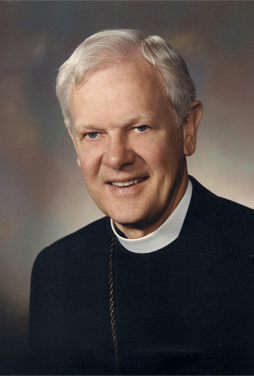
The retired presiding bishop of the Evangelical Lutheran Church in America, the Rt. Rev. Herbert Chilstrom, has delivered a stinging, public critique of his former Roman Catholic counterpart in Minnesota for aggressively campaigning for an anti-same sex marriage amendment on the November ballot.

“I recognize your authority in formulating positions for your own flock in Minnesota: That is one thing,” Chilstrom said in a letter to Roman Catholic Archbishop John Nienstedt, published in the Minneapolis Star Tribune.

“But for you and others to campaign for an amendment that imposes your stance on all citizens in Minnesota — including other Christians, believers of other faith groups and unbelievers — it is overstepping your bounds.”

Minnesota is one of four states voting on marriage this November. Washington, Maryland and Maine will cast ballots on whether to approve marriage equality. In Minnesota, Nienstedt has put $650,000 in church money into promoting the state constitutional amendment that would ban same-sex marriage.

Nienstedt has gone far beyond church leaders in Washington, where Seattle Archbishop J. Peter Sartain allowed parishes to opt out of signature gathering for Referendum 74.

Nienstedt told St. Paul-Minneapolis archdiocesan clergy that he would permit no “open dissension.” As the Star Tribune reported last week, “He wrote one outspoken priest, the Rev. Mike Tegeder, that if he persisted, ‘I . . . will remove you from your ministerial assignments’.”

Nienstedt is also notorious for responding to a Catholic mother’s plea that her gay son be accepted, “I urge you to reconsider the position that you expressed . . . Your eternal salvation may well depend upon a conversion of heart on this topic.”

Asked by the Star Tribune whether a loyal Catholic could vote No, Nienstedt said: “It would be difficult to comprehend how a person could not believe that marriage is anything but a union between one man and one woman. On this point, Catholic teaching is clear.”

Still, more than 80 former Catholic priests have signed a letter denouncing the amendment, and three retired Catholic priests have urged its defeat. Laity have placed “Another Catholic voting No” signs on their lawns. (Taking a cue from Minnesota, 63 former priests in the Seattle Archdiocese have endorsed marriage equality.)

“By word and action, you leave the impression that there is little room for dissent in your church,” Chilstrom wrote to Nienstedt. He cited the example of a former Catholic bishop in Minnesota, the Rt. Rev. Raymond Lucker, who questioned the church’s prohibition against married priests.

The Lutheran Bishop noted that in his denomination, “we engage in a wide spectrum of clergy and laity in developing statements and guidelines in our thinking about complex social issues.” If member disagree with stands taken in the church’s national assembly, the right of conscience is recognized.

“If there were a call from Roman Catholic members in Minnesota to vote on an issue of significance, would you allow such a vote?” Chilstrom asked Nienstedt. “And if a simple majority voted in favor, would you accept that vote as final? It’s clear that such a vote would not even be permitted in your church.

“There is evidence that many in your church will vote No on this amendment. I stand with them and with all who will vote No.”

Complete Article HERE!