What’s the message on the runway for Baroque fashions?

By Thomas F. O’Meara

When I was a boy, more than 50 years ago, ecclesiastical clothes were impressive. They were unusual and colorful, antique and sacral; they were distinctively Roman Catholic. The colored watered silk, the jeweled gloves, the red slippers (buskins) pointed to an individual caught up in a church office. This transcendent figure, a representative of the divine, appeared among the ordinary suits and dresses of working-class Catholics at rare moments. Nonetheless, even as a teenager singing in a college choir at the archbishop’s liturgies, I had already noticed that sometimes rituals focused more on the clothes than on religious words and sacrament. Removing gloves and putting on glasses, keeping a skullcap in place or adjusting a pallium could appear more important than the elevation of the chalice.

SampleTime passes, and today ecclesiastical clothes are less intelligible and point less clearly to something beyond their colors and gilt. They raise questions of gender and class, of culture and sacramentality.

There are three kinds of clothes male Catholics wear for public ecclesiastical and liturgical events. There are vestments for the liturgy of the Eucharist and other sacraments and for devotions. Among them are chasuble and stole, alb and cincture, miter and cope. Second, there are the habits of religious orders and congregations. Third, there are special garments for those in the episcopal order and for those in levels below (monsignors) or above (cardinals). Vestments at the Eucharist and other liturgies appear at their best when they are simple, aesthetically pleasing and inspiring to the people viewing them. Members of religious orders, particularly monks and friars, tend to wear their habits at liturgy and at other times inside their religious houses.

Here is a ninth-century description of the liturgical clothes used by the bishop of Rome, clothes related in their style to garments worn by Romans two centuries earlier. Walahfrid Strabo, who died in 849, wrote: “Priestly vestments have become progressively what they are today: ornaments. In earlier times priests celebrated Mass dressed like everyone else.”

Often special church garments do not come from the patristic or medieval period (which did not encourage distinctive clothes). They come from the Baroque period from 1580 to 1720, when liturgy as theater arranged rituals to channel graces. After 1620, in the world of Pope Urban VIII, ecclesiastical garments began to assume the importance they have today in spotlighting ecclesiastical officeholders. Who may wear what, in which color, and at which church services? The years from 1830 to 1960 witnessed additional, quite artificial elaborations of church attire. Today vestments that reflect the simplicity of the patristic or early medieval style also appear contemporary, while those that appear antiquarian and flamboyant are the product of the Baroque.

Critics of religious clothes

Jesus is a critic of religion. He warns against human display and the use of religious objects to disdain others. He condemns using religion to further being noticed or set apart from most people. “The scribes and the Pharisees … do all their deeds to be seen by people; they make their phylacteries broad and their fringes long, and they love the place of honor at feasts and the best seats in the synagogues … The greatest among you must be your slave” (Matthew 23:5-6, 12).

Few dimensions of human life aroused Jesus’ anger, but religious leaders seeking attention and power through clothes were called “whitewashed tombs that look handsome on the outside but inside are full of the bones of the dead” (Matthew 23:27).

In the years just before the Second Vatican Council (1962-65), Dominican Fr. Yves Congar wrote a critique of the church’s display of power and privilege. He had researched the origins of church vestments and insignia in the Roman Empire and in feudalism, concluding that those clothes no longer have any clear meaning for people. He concluded that vestments can have value, although their religious presence must resonate with the people they address.

One contemporary critique of ecclesiastical clothes was Federico Fellini’s 1972 movie “Roma.” Ecclesiastical fashions are exhibited on a runway where models display chasubles and miters for an audience of nuns and clerics and a presiding cardinal, a pale, sexless creature with crimson robes and ill-suited sunglasses who falls asleep. The style show ends with new designs using electric lights on chasubles.

Vatican II spoke of “a noble simplicity” for ecclesiastical clothes. In the years just after Vatican II, Pope Paul VI sold papal tiaras and issued instructions to set aside unusual clothes like flamboyant cloaks, colored stockings, special buckles and sashes with tassels.

Clothes today

Among a few small groups in the church, religious clothes are returning. They may be returning not as religious signs but as distractions from faith and ministry. Sashes and birettas, chains and large crosses, amices and maniples, special gloves and shoes have reappeared. Restorationist and reactionary groups tend to have striking clothes just as dictatorships have uniforms.

These groups show a preference for special kinds of clerical collars, tall miters, elaborate trains, a metal cross hung around the neck. Programs on EWTN are the runway for Baroque fashions, some authentic, some from the 19th century, most imitations. Great attention is given to gold vestments and gold vessels, odd new habits and distortions of past religious objects. Monastic habits with tunic and hood were originally the ordinary clothes of laborers. As centuries passed, they became unusual when ordinary clothes changed. Still, the habits of the medieval monks and friars were simple, and no sashes and capes or medals are added. The habits of many congregations of men founded after 1830 were colorful and attention-getting, elaborating on the medieval or Baroque but without any connection to the modern world.

At graduations at Catholic universities, students, faculty and administrators wear their academic robes, while parents and families wear suits and dresses. A bishop in a silk cape with ribbons and a skullcap looks out of place. Once, at a fundraising event in a large hotel, a bishop wore what he called his “full dress uniform, which attracts lots of compliments on my wardrobe.” The main speaker of the night remarked: “If I were dying and someone with a red bow and gown drew near, I would be scared stiff.”

The media pays attention to the current pope’s red-pink shoes, fur-lined hat of the eighth century, elaborately embroidered stole from the 18th century. Recent images on television of bishops and popes in white and red cassocks, Renaissance hats and jeweled gloves no longer seem religious and sacramental but antiquarian and self-centered. The pope, during a visit to the White House garden in white cassock and no visible pants, looked out of place; distinctive and different, yes, but not spiritual. American Catholics are, for the first time, reacting to televised gatherings of bishops and cardinals where there is concern over wearing properly colored skirts and sashes.

Clothes and ministry

New religious groups in the United States, along with some young members of older orders seem eager to wear a religious habit in public, not just on the grounds around a school but at airports or on the subway. What does a monastic habit or a cassock in public say to Americans at the beginning of the 21st century? It is not at all evident that the general public knows who this strangely dressed person is or even connects the clothes to religion. The symbolism is not clear and a message is not evident. The person does stand out, but as a kind of public oddity. Eccentric clothes instill separation. While some argue that odd clothes attract people, the fact is that more often than not they repel. Normal people are not attracted by the antique or bizarre costume, and ordinary Christians are not drawn to those whose special costume implies that others are inferior. Sometimes wearing clothes seems to be a substitute for real ministry.

It is not clear how men wearing dresses and capes proclaim God’s transcendence or the Gospel’s love. A man’s identity is something complex; the search for it lasts a lifetime. A celibate cleric gives up things that form male identity, like being a husband and a father. One cannot overlook possible links between unusual clothes and celibacy. Does the celibate male have a neutral or third sexuality that can put on unusual clothes? Are special clothes a protection of celibacy? Or are they a neutralization of maleness? Why would a man want to wear a long dress or a cape in public? Are spiritual reasons the true motivation?

Cultural meaning

Clothes are useful as they keep us warm or cool and cover our nakedness. They can make men and women attractive to others. Human beings and societies have come up with a variety of clothes to which they give particular meanings, using a few clothes as symbols — the toga, the high hat, the veil, the robe. What do ecclesiastical clothes say today? This question touches not only the wearer’s identity but the community’s faith. There is no absolute answer, no answer apart from people in their time and culture. Tradition and history are not an answer, for there is always a time when this ecclesiastical garment was unknown and there will be a time when it will be seen only in a museum.

Time brings and then buries styles. A medieval person probably understood episcopal regalia fairly well because aspects of his or her life depended upon its rare appearance, and it was seen in a milieu of many insignia. The elaborate arrangement of artificial clothes in the Catholic church is from the past four centuries. Today, unusual clothes appear on television as something connected to entertainment. What thoughts are conjured up when a cardinal or archbishop appears at a baseball game in a cape and gown? What does the cape and sash say personally and socially? Does it recall the New Testament or the liturgy of the Christian community?

There are no intrinsically religious clothes. Religious clothes are meant to point to some truth of faith or suggest a sacramental presence. The public person of each minister in the church should relate to the humble Jesus and to sacramentality in this church’s life. In the Christian community all clothing — this includes liturgical clothing — expresses the church’s life animated by the Spirit. Capes and cloaks in a Baroque style are neither prophetic nor countercultural. If regal or antiquarian distinction was once a value for church leaders, if pretension to being ecclesiastically or even metaphysically better was presumed, since Vatican II more and more people ignore such displays. Time never stands still. What seemed powerful in the past is today merely curious. Many Catholics are reaching a point where antiquated clothes are not inspiring and sacramental but exist outside human life.

Both the church’s expression of the reign of God and the culture to which it speaks are historical. Change touches everything. At any time, something new is being born and something static and alien is dying. History flows through the relationships between faith and grace and people, and those are always being determined anew in the concrete. The Holy Spirit strives, against sin, unreality and selfishness, to animate the church. In the last analysis, clothes are just clothes.

Henry David Thoreau said it well: “Beware of all enterprises that require new clothes.” Perhaps some lesson remains in the words of Psalm 132: “I will vest the priests in holiness, and the faithful will shout for joy.”

Complete Article HERE!

Bishop snared in abuse scandal criticizes Catholic newspaper

Sour grapes, Bishop Finn? Retaliating against the NCR because they had the temerity to suggest that you step side because of your involvement in the clergy sex abuse scandal? Have you no shame?

By Matt Pearce
Bishop Robert W. Finn wishes the independent National Catholic Reporter weren’t so independent.

bishop-finn Finn is the bishop of the Roman Catholic diocese of Kansas City-St. Joseph in Missouri. The National Catholic Reporter is a 48-year-old not-for-profit newspaper based in Kansas City.

Finn was convicted in September of shielding priests from sexual-abuse allegations — prompting editorials from the newspaper calling for his resignation. Now, Finn, who is on probation, has taken to his own diocese’s journalistic bully pulpit to denounce the paper.

“In the last months I have been deluged with emails and other correspondence from Catholics concerned about the editorial stances of the Reporter: officially condemning church teaching on the ordination of women, insistent undermining of church teaching on artificial contraception and sexual morality in general, lionizing dissident theologies while rejecting established magisterial teaching, and a litany of other issues,” Finn wrote this weekend in his diocese’s newspaper, the Catholic Key.

Finn noted that the National Catholic Reporter had long been a thorn in the side of Kansas City bishops; in 1968, one tried to get the publication to remove “Catholic” from its name.

Early in his tenure, Finn said, when he solicited the newspaper to “submit their bona fides as a Catholic media outlet in accord with the expectations of church law, they declined to participate, indicating that they considered themselves an ‘independent newspaper which commented on “things Catholic.”‘ At other times, correspondence has seemed to reach a dead end.”

The National Catholic Reporter has won awards for its investigative reporting and has been covering church sex scandals since 1985, National Catholic Reporter publisher and former editor Tom Fox told the Kansas City Star.

“We are a Catholic publication, but independent of the church structure. That’s one of the keys to our credibility,” Fox told the Star, adding of Finn, “He’s hurting. I know he thinks he’s doing his job.”

According to the original criminal indictment against Finn, sometime in 2010 or 2011 Finn discovered that a priest’s laptop computer contained “hundreds of photographs of children … including a child’s naked vagina, up-skirt images and images focused on the crotch.” Finn, who did not report his knowledge of the priest’s photos for months, became the first bishop convicted in the U.S. in the church’s sprawling child-abuse scandal.

Finn has been apologetic; the National Catholic Reporter’s writers, less so.

“No one is suggesting Finn can’t be forgiven his sins. Indeed, forgiveness is precisely what God always stands ready to offer,” Bill Tammeus wrote in a December column published on the publication’s website.

“But when someone in a position of ecclesial authority has failed in so spectacular a way that even a secular court has found him guilty, he has the obligation to do what he can to avoid further damage to what Finn often calls — in words that should make him quake — Holy Mother Church.”

In other words: Resign.

Finn has not resigned. Instead, he has endured rumblings that he has lost support from the priests inside his diocese, as well as parishioners. Nor has he been released from his duties by Pope Benedict XVI, who holds authority over the church’s bishops.

Finn’s Friday editorial was occasioned by the church’s World Communications Day, in which the pope urged the faithful to reflect on how to find meaningfulness in communication both digital and analog. Finn’s message started with his evocation of St. Francis de Sales, the patron saint of journalism, and closed by narrowing his eyes at the National Catholic Reporter.

“In light of the number of recent expressions of concern, I have a responsibility as the local bishop to instruct the faithful about the problematic nature of this media source which bears the name ‘Catholic,’” Finn wrote in his conclusion. “While I remain open to substantive and respectful discussion with the legitimate representatives of NCR, I find that my ability to influence the National Catholic Reporter toward fidelity to the church seems limited to the supernatural level. For this we pray: St. Francis de Sales, intercede for us.”

Complete Article HERE!

Santa Barbara Bishop Apologizes In Catholic Church Cover Up

File under: When an apology is not an apology. Jesus, these men simply can’t stop the prevarication. They couldn’t take responsibility for their actions if their life depended on it. Shame, shame, shame!

By Liberty Zabala
Dark days fall upon the Catholic Church as files upon files of alleged child sex abuse finally come to light.

Letters between Archdiocese of Los Angeles – Santa Barbara Region Bishop Thomas J. Curry and Cardinal Roger Mahony show they knew about alleged child sex abuse but choose to cover it up.

“You can imagine what the church has to lose,” says Child Sex Abuse Therapist Nancy Gutfreund. “You’re supposed to be an organization that completely protects its people and when there’s damage done nobody wants to admit it.”

curry:mahoneyBut Bishop Curry was forced to, releasing this statement saying:

“I wish to apologize for those instances when I made decisions regarding the treatment and disposition of clergy accused of sexual abuse that in retrospect appear inadequate or mistaken.”

A mistake the Santa Barbara District Attorney’s Office is now investigating.

“We have some very serious allegations of obstruction of justice at the very least by individuals, I think the community has trusted throughout for a number of decades,” says Santa Barbara City Chief Deputy District Attorney Hilary Dozer. “And that’s a disturbing fact.”

And prosecutors face another challenge. Most of the files happened in the 1980’s far beyond the statute of limitations.

“If an individual has actively hidden information from law enforcement, there are some ways and situations where that statute of limitations is tolled,” says Dozer. “Meaning it does not preclude us from going forward.”

Senior Deputy District Attorney Ron Zonnen to lead the investigation against the church.

Last year, prosecutors in Philadelphia were able to convict a monsignor and in Missouri, a judge found a bishop guilty for failing to report child sex abuse.

Complete Article HERE!

Catholicism’s Curse

A must read!

By FRANK BRUNI

But while I have nothing against priests, I have quite a lot against an institution that has done a disservice to 27BRUNI-popupthem and to the parishioners in whose interests they should toil. I refer to the Roman Catholic Church, specifically to its modern incarnation and current leaders, who have tucked priests into a cosseted caste above the flock, wrapped them in mysticism and prioritized their protection and reputations over the needs and sometimes even the anguish of the people in the pews. I have a problem, in other words, with the church’s arrogance, a thread that runs through Wills’s book, to be published next month; through fresh revelations of how assiduously a cardinal in Los Angeles worked to cover up child sexual abuse; and through the church’s attempts to silence dissenters, including an outspoken clergyman in Ireland who was recently back in the news.

Complete Article HERE!

German Catholics vent their dissatisfaction with the Church

A study on Germany’s Catholic community reveals the discontent of faithful with the ecclesiastical institution. But proposals for solutions are lacking

By ALESSANDRO ALVIANI

sad lonely popeThe Pope’s ecclesiastical policies are “backward-looking” and suspected of trying to take the Church back to the pre-Second Vatican Council period. As for the Church’s leaders, they are “cut off from reality, reactionary and obstructionist.”

This is the opinion German faithful have of Benedict XVI and the Catholic Church according to a study by Sinus Institute and consulting agency MDG (which the German Church controls). In-depth interviews were conducted with 100 Catholics from different social backgrounds. According to the study, which picks up on a similar one carried out in 2005, German faithful are convinced that today’s Church finds itself in a “desolate situation” and the most obvious manifestation of this is the sex abuse scandal.

The authors of the study wrote that the scandal seriously damaged the image of the Church, even in the eyes of the most fervent Catholics, whose faith was deeply shaken. The scandal was seen as confirmation of the Church’s “modernization deficit”. The Church lost a great deal of credibility not just as a result of the accusations of paedophilia made against it but also because many believe it dealt with the abuse issue inadequately.

Internal dogma and rules that had been tacitly accepted until about a year ago are now openly criticised by faithful. Criticisms range from complaints about “discrimination against women” and celibacy, to the condemnation of homosexuality, contraception and sex outside wedlock, to the marginalisation of lay people involved in Church life.

Another factor that is creating animosity, is the organisational restructuring that is taking place in Germany, with a number of parishes being merged because of the shortage in parish priests, for example.

The study also shows the Church’s detachment from the weakest sections of society: it would make no difference to the lower social classes if the Church ceased to exist.

Despite their criticisms, however, faithful still look to the Church for “spiritual guidance” and “meaning”. The majority of them do not want to lose their Catholic identity and few consider leaving the Church.

So what do German faithful expect from the Church? They want lay people involved in the Church to play a greater role; they want more women in leadership roles; the possibility for women to be ordained priests; the elimination of celibacy; a different attitude towards sexuality and contraception; the sacraments to be administrated to all Christians, regardless of their denomination or sexual identity; less ostentation and less abuse of power and a greater focus on God’s love and love for one’s neighbour.

Complete Article HERE!

Police: Friar accused of abusing students in 2 states kills himself at Pa. monastery

A Franciscan friar accused of sexually abusing students at Catholic high schools in Ohio and Pennsylvania killed himself at a western Pennsylvania monastery, police said Saturday.
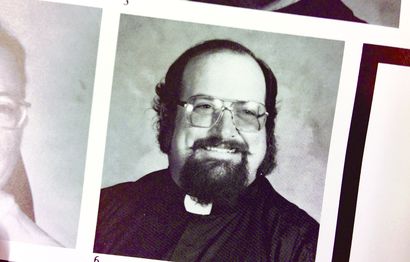
Brother Stephen Baker, 62, was found dead of a self-inflicted knife wound at the St. Bernardine Monastery in Hollidaysburg on Saturday morning, Blair Township Police Chief Roger White said. He declined to say whether a note was found.

Baker was named in legal settlements last week involving 11 men who alleged that he sexually abused them at a Catholic high school in northeast Ohio three decades ago. The undisclosed financial settlements announced Jan. 16 involved his contact with students at John F. Kennedy High School in Warren, Ohio from 1986-90.

The Youngstown diocese previously said it was unaware of the allegations until nearly 20 years after the alleged abuse.

“Let us continue to pray for all victims of abuse, for Brother Baker’s family and the repose of his soul,” Youngstown Bishop George Murry said in a statement Saturday.

After the settlements were announced, the Altoona-Johnstown Diocese in central Pennsylvania said it received complaints in 2011 of possible abuse by Baker at Bishop McCort High School in Johnstown, about 60 miles east of Pittsburgh.

Bishop McCort High School hired an attorney to investigate after several former students alleged they were molested by Baker in the 1990s. Attorney Susan Williams said three former students had talked to her in detail about the alleged abuse.

Baker taught and coached at John F. Kennedy High School in the late 1980’s and early 1990’s and was at Bishop McCort from 1992-2000.

Bishop Mark Bartchak of the Altoona-Johnstown Diocese said in a statement that he was saddened by the news of Baker’s death, but declined further comment citing pending legal action involving the diocese.

A message left for Father Patrick Quinn, the head of Baker’s order, the Third Order Regular Franciscans, was not immediately returned.

Judy Jones, assistant Midwest director of the Survivors Network of those Abused by Priests, said the organization still hopes people who know about other abuse allegations against Baker will continue to come forward.

“We feel sad for Br. Baker’s family but even sadder for the dozens of boys who Baker assaulted,” she said in a statement.

Complete Article HERE!

Gay Poet Richard Blanco Reads His Inaugural Poem ‘One Today’


TEXT:

One Today
One sun rose on us today, kindled over our shores,
peeking over the Smokies, greeting the faces
of the Great Lakes, spreading a simple truth
across the Great Plains, then charging across the Rockies.
One light, waking up rooftops, under each one, a story
told by our silent gestures moving behind windows.

My face, your face, millions of faces in morning’s mirrors,
each one yawning to life, crescendoing into our day:
pencil-yellow school buses, the rhythm of traffic lights,
fruit stands: apples, limes, and oranges arrayed like rainbows
begging our praise. Silver trucks heavy with oil or paper—
bricks or milk, teeming over highways alongside us,
on our way to clean tables, read ledgers, or save lives—
to teach geometry, or ring-up groceries as my mother did
for twenty years, so I could write this poem.

All of us as vital as the one light we move through,
the same light on blackboards with lessons for the day:
equations to solve, history to question, or atoms imagined,
the “I have a dream” we keep dreaming,
or the impossible vocabulary of sorrow that won’t explain
the empty desks of twenty children marked absent
today, and forever. Many prayers, but one light
breathing color into stained glass windows,
life into the faces of bronze statues, warmth
onto the steps of our museums and park benches
as mothers watch children slide into the day.

One ground. Our ground, rooting us to every stalk
of corn, every head of wheat sown by sweat
and hands, hands gleaning coal or planting windmills
in deserts and hilltops that keep us warm, hands
digging trenches, routing pipes and cables, hands
as worn as my father’s cutting sugarcane
so my brother and I could have books and shoes.

The dust of farms and deserts, cities and plains
mingled by one wind—our breath. Breathe. Hear it
through the day’s gorgeous din of honking cabs,
buses launching down avenues, the symphony
of footsteps, guitars, and screeching subways,
the unexpected song bird on your clothes line.

Hear: squeaky playground swings, trains whistling,
or whispers across café tables, Hear: the doors we open
for each other all day, saying: hello, shalom,
buon giorno, howdy, namaste, or buenos días
in the language my mother taught me—in every language
spoken into one wind carrying our lives
without prejudice, as these words break from my lips.

One sky: since the Appalachians and Sierras claimed
their majesty, and the Mississippi and Colorado worked
their way to the sea. Thank the work of our hands:
weaving steel into bridges, finishing one more report
for the boss on time, stitching another wound
or uniform, the first brush stroke on a portrait,
or the last floor on the Freedom Tower
jutting into a sky that yields to our resilience.

One sky, toward which we sometimes lift our eyes
tired from work: some days guessing at the weather
of our lives, some days giving thanks for a love
that loves you back, sometimes praising a mother
who knew how to give, or forgiving a father
who couldn’t give what you wanted.

We head home: through the gloss of rain or weight
of snow, or the plum blush of dusk, but always—home,
always under one sky, our sky. And always one moon
like a silent drum tapping on every rooftop
and every window, of one country—all of us—
facing the stars
hope—a new constellation
waiting for us to map it,
waiting for us to name it—together.

Priest Is Planning to Defy the Vatican’s Orders to Stay Quiet

By DOUGLAS DALBY

A well-known Irish Catholic priest plans to defy Vatican authorities on Sunday by breaking his silence about what he says is a campaign against him by the church over his advocacy of more open discussion on church teachings.

Father Tony FlanneryThe Rev. Tony Flannery, 66, who was suspended by the Vatican last year, said he was told by the Vatican that he would be allowed to return to ministry only if he agreed to write, sign and publish a statement agreeing, among other things, that women should never be ordained as priests and that he would adhere to church orthodoxy on matters like contraception and homosexuality.

“How can I put my name to such a document when it goes against everything I believe in,” he said in an interview on Wednesday. “If I signed this, it would be a betrayal not only of myself but of my fellow priests and lay Catholics who want change. I refuse to be terrified into submission.”

Father Flannery, a regular contributor to religious publications, said he planned to make his case public at a news conference here on Sunday.

The Vatican’s doctrinal office, the Congregation for the Doctrine of the Faith, wrote to Father Flannery’s religious superior, the Rev. Michael Brehl, last year instructing him to remove Father Flannery from his ministry in County Galway, to ensure he did not publish any more articles in religious or other publications, and to tell him not to give interviews to the news media.

In the letter, the Vatican objected in particular to an article published in 2010 in Reality, an Irish religious magazine. In the article, Father Flannery, a Redemptorist priest, wrote that he no longer believed that “the priesthood as we currently have it in the church originated with Jesus” or that he designated “a special group of his followers as priests.”

Instead, he wrote, “It is more likely that some time after Jesus, a select and privileged group within the community who had abrogated power and authority to themselves, interpreted the occasion of the Last Supper in a manner that suited their own agenda.”

Father Flannery said the Vatican wanted him specifically to recant the statement, and affirm that Christ instituted the church with a permanent hierarchical structure and that bishops are divinely established successors to the apostles.

He believes the church’s treatment of him, which he described as a “Spanish Inquisition-style campaign,” is symptomatic of a definite conservative shift under Pope Benedict XVI.

“I have been writing thought-provoking articles and books for decades without hindrance,” he said. “This campaign is being orchestrated by a secretive body that refuses to meet me. Surely I should at least be allowed to explain my views to my accusers.”

His superior was also told to order Father Flannery to withdraw from his leadership role in the Association of Catholic Priests, a group formed in 2009 to articulate the views of rank-and-file members of the clergy.

In reply to an association statement expressing solidarity with Father Flannery, the Congregation for the Doctrine of the Faith denied it was acting in a secretive manner, pointed out that Father Flannery’s views could be construed as “heresy” under church law, and threatened “canonical penalties,” including excommunication, if he did not change his views.

This month, the Congregation for the Doctrine of the Faith wrote to an American priest, Roy Bourgeois, notifying him of his laicization, following his excommunication in 2008 over his support for the ordination of women.

Complete Article HERE!

Breaking God: Former Roman Catholic priest busted for selling meth to feds

A former Roman Catholic priest is among five people who have been indicted by a federal grand jury in an alleged drug operation involving shipments of methamphetamine to Connecticut from California.
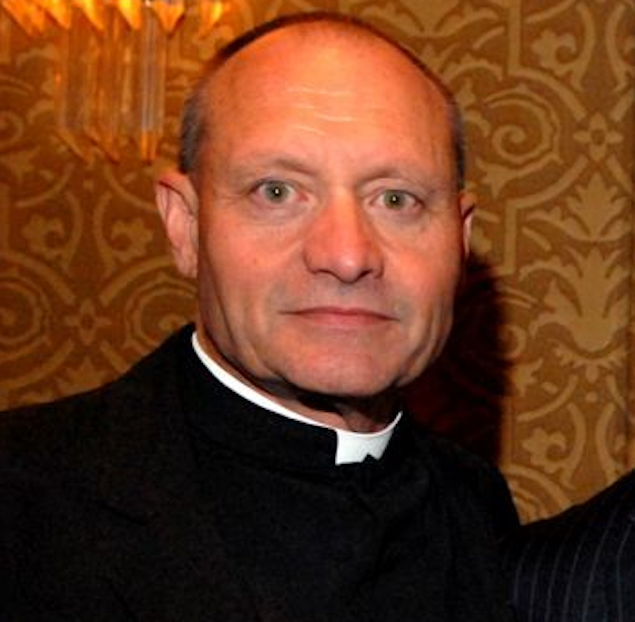
Federal prosecutors said Kevin Wallin, 61, former pastor at St. Augustine’s parish in Bridgeport, received the shipments and sold methamphetamine to an undercover officer six times since last September. Prosecutors say investigators also gathered evidence from court-authorized wiretaps.

The grand jury in Bridgeport indicted the five people Tuesday on charges of conspiring to distribute 500 grams or more of a substance containing methamphetamine and 50 grams of actual methamphetamine. Wallin, of Waterbury, was also charged with six counts of possession with intent to distribute methamphetamine. The conspiracy charges carry 10 years to life in prison upon conviction.

All five are detained. It’s not clear if they have lawyers.

Also charged are Kenneth Devries, 52, of Waterbury, Michael Nelson, 40, of Manchester, Chad McCluskey, 43, of San Clemente, Calif., and Kristen Laschober, 47, of Laguna Niguel, Calif.

Wallin resigned as St. Augustine’s pastor in June 2011 after serving nine years in the post, citing health and personal issues, the Diocese of Bridgeport said in a statement. Diocese officials granted him a sabbatical the following month.

During the sabbatical, diocese officials became concerned about Wallin’s well-being and reached out to him, but he has never spoken directly to church officials, the diocese said in the statement, which did not elaborate.

Wallin’s faculties for public ministry were suspended in May 2012 and he has not been reassigned, the diocese said.

“News of Msgr. Kevin Wallin’s arrest comes with a sense of shock and concern on the part of the diocese and the many people of Fairfield County who have known him as a gifted, accomplished and compassionate priest,” the diocese said. “The diocese stands ready to help as it has throughout the past two years. We ask for prayers for Msgr. Wallin during the difficult days ahead for him.”

Wallin was a close friend of former Archbishop of New York Edward Egan and advised Egan in the early 2000s when Bishop James McCarthy and Monsignor Charles Kavanagh were forced to resign over sexual improprieties.

Complete Article HERE!