The sins of Cardinal Mahony

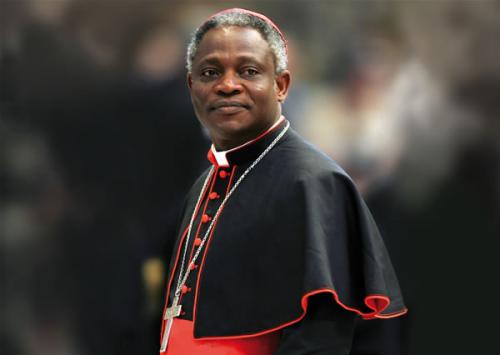
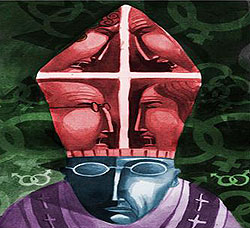
ELEVEN AMERICANS will be among the 117 cardinals of the Catholic Church heading soon to Rome to select the next pope. One of them, Cardinal Roger M. Mahony, for a quarter-century the archbishop of Los Angeles, is lucky not to be in prison, for there is no dispute that he orchestrated what amounted to a cover-up of clerical sexual abuse in Los Angeles.


By now it is familiar news, though no less stomach-turning, that top officials in the Catholic Church protected pedophile priests for decades — impeding criminal investigations, shuffling offenders to new parishes or abroad, and resisting disclosure. In so doing, they exhibited little concern for victims of sex abuse, usually boys.

Still, the scale of the misdeeds in Los Angeles, the largest archdiocese in the United States, counts as a particular disgrace. And it is Cardinal Mahony, who resigned as archbishop two years ago, who oversaw the whole dirty business. For that he has been publicly censured by his successor.

In a highly unusual rebuke, Archbishop José H. Gomez, who took over the church’s top position in Los Angeles in 2011, announced this month that Cardinal Mahony would be stripped of his public duties for having swept under the rug hundreds of allegations of clerical abuse in the 1980s.

Though nearly unprecedented, the reprimand was also largely symbolic. While Cardinal Mahony may have to curtail speaking engagements and other appearances, he is still, as Archbishop Gomez said, a “bishop in good standing.” Translation: Cardinal Mahony remains one of the most powerful figures in the church hierarchy, a member of a tiny elite empowered to guide its finances and vote on the next pope.

His continued prominence reflects the culture of impunity in the Catholic Church a decade after its tolerance and complicity in the abuse of children was exposed. The church has adopted policies intended to avoid fresh outrages, but it also has fought to protect supervisors who shielded criminal molesters.

Cardinal Mahony is a prime example. Even after his archdiocese reached a $660 million civil settlement with more than 500 victims of abuse in 2007, he and the hierarchy did everything in their power to avoid individual accountability. As recently as last week, church lawyers tried to keep secret the names of top officials and parish priests implicated in abuse cases. Fortunately, a California judge ordered disclosure of the relevant church personnel files.

That triggered publication of some 14,000 pages, including notes between Cardinal Mahony and a top aide showing that they repeatedly transferred abusive priests out of the country and the state to evade investigators and publicity. The cardinal also cautioned against exposing abusive priests to therapists who might be legally obligated to report their crimes.

In response to his public rebuke, Cardinal Mahony, who has a master’s degree in social work, wrote that nothing in his training had alerted him to the risks involved in the sexual abuse of minors. How about common sense, respect for the law and a basic understanding of human beings?

The statute of limitations may have expired for Cardinal Mahony and others in Los Angeles who sought to shield wrongdoers from the law. But their actions will not be soon forgotten.

Complete Article HERE!

Ex-Pope Benedict will have security and immunity by remaining in the Vatican

File under:  The real reason…Immunity!
By Philip Pullella

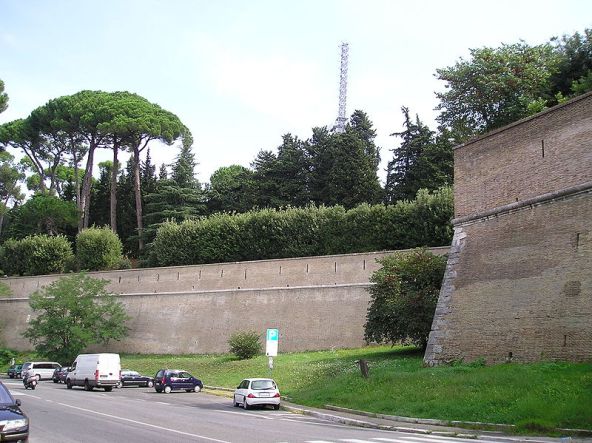
Pope Benedict’s decision to live in the Vatican after he resigns will provide him with security and privacy. It will also offer legal protection from any attempt to prosecute him in connection with sexual abuse cases around the world, Church sources and legal experts say.

“His continued presence in the Vatican is necessary, otherwise he might be defenseless. He wouldn’t have his immunity, his prerogatives, his security, if he is anywhere else,” said one Vatican official, speaking on condition of anonymity.

“It is absolutely necessary” that he stays in the Vatican, said the source, adding that Benedict should have a “dignified existence” in his remaining years.

Vatican sources said officials had three main considerations in deciding that Benedict should live in a convent in the Vatican after he resigns on February 28.

Vatican police, who already know the pope and his habits, will be able to guarantee his privacy and security and not have to entrust it to a foreign police force, which would be necessary if he moved to another country.

“I see a big problem if he would go anywhere else. I’m thinking in terms of his personal security, his safety. We don’t have a secret service that can devote huge resources (like they do) to ex-presidents,” the official said.

Another consideration was that if the pope did move permanently to another country, living in seclusion in a monastery in his native Germany, for example, the location might become a place of pilgrimage.

Complete Article HERE!

What kind of pope do Roman Catholics need?

By Cristina LH Traina

Selection of the next Pope will factor in a host of complicated variables as wings of the Church compete for ascendancy.

Pope Benedict XVI’s impending resignation has already fuelled all the usual speculation about candidates for his successor, accompanied by profiles, photos and odds of election. Behind the hoopla is the question, what sort of leader will really be best for the Church?

Benedict’s own admission that an elderly man cannot undertake the globe-trotting that effective relations require suggests that as a rule, a younger, healthier leader would be a wise choice. But the Church also faces the question what style of leadership would be most fruitful.

Despite the vision of Vatican Council II, which recommended collegial authority and granted the laity almost complete province over action in the world, Pope John Paul II’s and Pope Benedict XVI’s pontificates have echoed an ultramontane, top-down model in which the authority of the pope supersedes that of the bishops, individually or in national organisations.

History of papal power

Vatican I ratified the ultramontane model in an era in which the Roman Catholic Church felt besieged on all sides. The Church had just lost the Papal States and suffered long periods of anti-clericalism and persecution in Europe. The Council responded by absolutising the popes’ control over the one thing left to them: the Church. Over the next 50 years, popes declared a single standard of orthodoxy (the works of Thomas Aquinas) and published – and enforced – laundry lists of anathematised philosophical and political beliefs.

In earlier periods, strong central control could not be realised so easily in practice, except in cases like the Inquisition in which civil power could be conscripted. But when travel took place on foot, by horse, or by sailing ship, and all communications were carried by letter, people had to choose carefully what information to send up and down the chain of the hierarchy. Practices varied, and many “irregularities” simply went uncommented.

Flash forward to the present day, and ultramontanism becomes a little less forgiving. Photos, news reports and blog posts make their way across oceans in seconds or less. Not only does Rome have theoretical authority over every Catholic person and organisation, it has actual access to real-time information about them. This is not to belittle the silencings, excommunications, and even executions of earlier eras, or to overlook the inefficient contemporary Vatican bureaucracy, in which branches famously work at cross purposes. But strong central control combined with instant communication from every layer of the church in every corner of the world creates unprecedented micro-managerial possibilities.

Contemporary contradictions

Cue the debate over the next pope. So-called “conservative” Catholics will be cheering for a candidate who POPEX390continues Benedict’s line of strong Catholic identity. Conservatives, so the stereotype goes, will want a firm hand guiding a centralised, top-down hierarchy capable of overseeing of theology and charitable work all over the world. The ultramontane trend confirmed at Vatican I, and alive and well in the CEO model of the papacy, is their ideal.

A look back at Pope Benedict XVI’s career

In contrast, conventional wisdom says that so-called “liberal” Catholics will be hoping for a candidate who, like John XXIII 50 years ago, might surprise the world by changing direction. Liberals will want a decentralised, participatory structure that places most power in the hands of national bishops’ conferences, in collaboration with the laity. On this view, popes are good for inspiration, pastoral care and ecumenical diplomacy but too far removed from the local details of daily life to rule sensitively on regional questions.

Recent events seem to reinforce these stereotypes. Liberal Catholics took it amiss when the Congregation for the Doctrine of the Faith (CDF) undertook a comprehensive review of the Leadership Conference of Women Religious, the largest organisation of Catholic women major superiors. The CDF judged that rampant “radical feminism”, dissent and collaboration with questionable social justice organisations needed correction, and it appointed Seattle Archbishop Peter Sartain to oversee the “renewal” of the organisation.

Liberals viewed this as an attempt to silence the most educated and independent branch of American women religious. Conservatives held up the smaller Council of Major Superiors of Women Religious, which was not investigated, as an example of fidelity and obedience.

Similarly, when Benedict blocked Lesley Anne Knight’s run for a second term as director of the Catholic umbrella organisation Caritas Internationalis and issued his motu proprio on preserving the Catholic identity of Catholic charities, liberals fretted over Catholic groups’ losses of funds and of opportunities for collaboration with independent non-profits. Conservatives, on the other hand, heralded the increased oversight as an overdue means of ensuring the purity of Catholic teaching and of income streams.

The important exception seems to be the clerical sex abuse crisis. Here organs associated with American liberal Catholicism – Voice of the Faithful, The Survivors Network of those Abused by Priests, Call to Action, BishopAccountability.org, the National Catholic Reporter and others – have echoed conservatives in demanding authoritative, decisive action from the Vatican against bishops who facilitated and hid priestly sexual abuse. Catholics in Ireland and much of Europe, not to mention other parts of the world, have joined them in this demand.

Demand for clerical accountability

And here’s the contradiction. Catholics may not be able to have their cake and eat it too. Some conservative laypeople have laid aside ultramontanism to join the liberal demand for clerical accountability to laypeople, and liberals have joined the conservative chorus requesting action from Rome. Only a tough, centralised hierarchy that monitors all of its outposts carefully can take the strong action against bishops that liberal Catholics seek. A truly collegial model – perhaps a federation of strong national churches with a single spiritual leader, as in the Anglican Communion – would yield more adaptability at the local level but would not have the central power to depose transgressing bishops.

Thus liberal Catholics face a quandary. A pope strong and authoritative enough to purge transgressing bishops is likely to use his power as well to purge liberal theologians, nuns and clergy. A pope who opts for a collegial style more in keeping with Vatican Council II’s precedent will have to rely on his fellow bishops to monitor each other, something they have so far shown little willingness to do.

Conservatives face a similar quandary. What will ensure that the strong hierarchy they envision protects laypeople from clerical transgressions?

There is a third option, of course. If the Catholic Church had structures of accountability that operated from below rather than from above, it would not need to rely on benevolent ultramontanism to get rid of destructive bishops. The next pope could undermine the Vatican’s managerial authority even more radically by insisting that bishops share power collegially with priests, vowed religious and laypeople, and by instituting term limits for bishops like those observed by many Protestant communions. Benedict XVI’s resignation could be the precedent. Stranger things have happened.

Complete Article HERE!

Illinois Senate Says ‘I Heart’ Marriage Equality 34-21

By a vote of 34-21 (62% in favor, 2 Senators voted ‘present’) the Illinois Senate just passed marriage equality legislation, sending it to the state’s House of Representatives – where if it passes it will certainly be signed by Governor Pat Quinn. Happy Valentines Day!

The latest polling in Illinois on marriage equality shows that when voters were asked to choose between marriage, civil unions but no marriage, or no recognition, 46% choose marriage equality, 30% civil unions and only 20% no recognition. A December PPP poll asking whether same-sex marriage should be allowed in Illinois resulted in 47% of registered voters in favor with 42% against.

The Illinois vote continues a series of 2013 legislative victories for equal rights. The Rhode Island House was first up, voting 51-19 in favor in late January. A week and a half ago the United Kingdom’s House of Commons also voted overwhelmingly, 400-175, in support of marriage equality, despite the Conservative government’s not even being able to muster a majority of their own MPs in favor. And just days ago in France the National Assembly got 329 ouis vs 229 nons for President Hollande’s same-sex marriage legislation.

Percentagewise, that’s 73% in Rhode Island, 70% in Her Majesty’s domain, and 59% across the Channel, hefty majorities all.

Paradoxically, even though Illinois is the last so far to vote on marriage equality, it may be the first to make it law.

Rhode Island’s legislation is now stuck in its Senate, where its majority leader is opposed and has not even said yet whether she will allow it to be voted on on the Senate floor (assuming it gets through the Judiciary committee, who’s chair is also not in favor!).

Across the Pond, the legislation still has to go through a lengthy process in committee and in the House of Lords (where it may get voted down or amended into oblivion) before a final reading can happen in the House of Commons. Optimists seem to be suggesting summer or even later before final approval.

In France, the measure is scheduled for the Senate in April, so we could see it enacted and signed sometime in May.

Illinois, though, seems to be on the fastest track towards marriage equality. Its legislation has the vocal support of Chicago’s mayor, the Governor, and even a former Senator from Illinois who occupies an oval shaped office. I haven’t noticed any timeline in the press for a vote in the House but it seems perfectly plausible that a vote in the could be taken in March. The problem at the moment is that no one is yet saying the votes exist there to pass it, despite the House’s 71-47 Democratic majority.

If the same-sex marriage bill is approved in the Senate, the bill still has to pass the House, where it’s expected to meet additional opposition.

Stranger things have happened, but it is hard to see it failing if pressure continues to be applied from the Governor, other state officials, the President’s former Chief of Staff and now Chicago Mayor Rahm Emmanuel, and another nudge or two from the White House. If the votes do appear for passage and the roll is called that would quickly lead to the law being signed. (Couples would be able to marry 30 days after the bill receives the governor’s signature.)

—–

There are further, solid prospects for the advancement of marriage equality around the world in 2013:

After passage by it’s lower house in December, 2012, Uruguay’s Senate is expected to consider a bill legalizing same-sex marriage in April.

New Zealand’s Parliament, having passed a “first reading” of a marriage equality bill back in August by a two-thirds majority, is scheduled to receive the bill back from committee in March and currently has a “second reading” scheduled for March 20th.

The only real downer so far this year has been Hawaii. Its legislature, which consists overwhelmingly of Democrats, has refused to take up marriage equality legislation this year. Despite polling which suggests a majority of Hawaiians are in favor, and despite the state’s only Republican State Senator predicting that the legislation would pass, on February 12th the legislation was iced.

… Rep. Karl Rhoads, who chairs the House Judiciary Committee, told KITV4 the votes simply don’t exist to legalize same-sex marriage. Although a supporter of gay unions, Rhoads says it would be unwise to bring a measure before his committee if the final outcome in the full House is already known, even if the vote is razor-thin close.

“After consultations with my colleagues, I don’t believe we have the political will to pass the measure this session,” said Rhoads. “You never know as an individual how you’re going to vote until you actually get there, but it would be an extremely close vote.”

Perhaps news of the 2012 November elections and the outcomes of same-sex marriage referenda in Maine, Maryland and Washington haven’t yet reached the Hawaiian legislature. Perhaps the fact that Hawaii’s native son, aka the President, is in favor of marriage equality, and that 71% of Hawaii’s voters supported him, isn’t enough.

Whatever the reason, the ultimate result seems inevitable – from the Aloha State to Providence’s Plantations, from New Zealand to the Arc de Triomphe. It’s just too bad the inevitable seems to take so long sometimes.

Complete Article HERE!

Pope favorite has defended African ‘Kill the Gays’ laws

After Pope Benedict XVI’s shock resignation due to his ill health, one of the top contenders for the post is Ghanaian Cardinal Peter Turkson

BY JOE MORGAN

The top three candidates for Pope are all vehemently anti-LGBT, with one defending African laws punishing gay people with death.

Pope Benedict XVI resigned earlier today (11 February), with the 85-year-old citing ill health and his advancing age.

Ghanaian Cardinal Peter Turkson, president of the Pontifical Council for Justice and Peace, has said many of the laws imposed on gay people in Africa are an ‘exaggeration.’

Last year, the National Catholic Register reported the Cardinal saying it is important people understand the ‘reasons’ why some African governments have created legislation against homosexuality.

Turkson argues the ‘intensity of the reaction is probably commensurate with tradition’, saying the African culture needs to be respected.

‘When you’re talking about what’s called “an alternative lifestyle”, are those human rights?’ he said.

‘There’s a subtle distinction between morality and human rights, and that’s what needs to be clarified.’

In over 30 African countries, homosexuality is illegal and punishments range from public whippings to jail time and capital punishment.

Other favorites for Pope include Nigerian Cardinal Francis Arinze and Canadian Cardinal Marc Ouellet.

In a 2003 speech at Georgetown University in the UK, Arinze likened homosexuality with pornography, infanticide and adultery.

He has also opposed religious people wearing rainbow sashes, who prove they are ‘showing their opposition to Church teaching on a major issue of natural law and so disqualify themselves from being given Holy Communion.’

Like Turkson and Arinze, Ouellet has regularly spoken out against homosexuality.

As the same-sex marriage legislation was being debated in Canada, he warned anti-gay speakers could be brought to the ‘court because I am teaching against homosexuality as part of the doctrine of the Catholic Church.’

He has also referred to homosexuality as an ‘abomination’, and the path to equal rights for gay people as a ‘black cloud over America.’

However he has also apologized for Catholic attitudes prior to 1960 that promoted ‘anti-Semitism, racism, indifference to First Nations and discrimination against women and homosexuals.’

Pope Benedict XVI will leave his post on 28 February, where there will be a vacant seat. As there will be no need for a time of traditional mourning, the Vatican will decide on the next pope by the end of March.

Complete Article HERE!

Lower house of French parliament approves bill that would legalize gay marriage, adoption

France’s lower house of parliament has approved a sweeping bill to legalize gay marriage and allow same-sex couples to adopt children.

President Francois Hollande’s Socialists have pushed the measure through the National Assembly and put France on track to join about a dozen, mostly European nations that grant marriage and adoption rights to homosexuals.

The measure, approved in a 329-to-229 vote Tuesday, comes despite an array of demonstrations in recent weeks by opponents of the “marriage for all” bill. Polls show most French support legalizing gay marriage, though that backing softens when children come into play.

The Assembly has been debating the bill and voting on its individual articles in recent weeks. The overall bill now goes to the Senate, which is also controlled by the Socialists and their allies.

Pope Benedict in shock resignation

File under: There’s More To This Than Meets The Eye.

Pope Benedict XVI is to resign at the end of this month after nearly eight years as the head of the Catholic Church, saying he is too old to continue at the age of 85.
sad lonely popeThe unexpected development – the first papal resignation in nearly 600 years – surprised governments, Vatican-watchers and even the his closest aides.

The then Cardinal Joseph Ratzinger became Pope after John Paul II’s death.

The Vatican says it expects a new Pope to be elected before Easter.

The BBC’s Alan Johnston in Rome says the news has come “out of the blue”, and that there was no speculation whatsoever about the move in recent days.

Italian Prime Minister Mario Monti is quoted as saying he was “greatly shaken by this unexpected news”.

A Vatican spokesman, Father Federico Lombardi, said that even the Pope’s closest aides did not know what he was planning to do and were left “incredulous”. He added that the decision showed “great courage” and “determination”.

The brother of the German-born Pope said the pontiff had been advised by his doctor not to take any more transatlantic trips and had been considering stepping down for months.

Talking from his home in Regensburg in Germany, Georg Ratzinger said his brother was having increasing difficulty walking and that his resignation was part of a “natural process”.

He added: “His age is weighing on him. At this age my brother wants more rest.”
‘Incapacity’

At 78, Cardinal Joseph Ratzinger was one of the oldest new popes in history when elected.

He took the helm as one of the fiercest storms the Catholic Church has faced in decades – the scandal of child sex abuse by priests – was breaking.
Continue reading the main story
POPE BENEDICT XVI

At 78, one of the oldest new popes in history when elected in 2005
Born in Germany in 1927, joined Hitler Youth during WWII and was conscripted as an anti-aircraft gunner but deserted
As Cardinal Joseph Ratzinger spent 24 years in charge of Congregation for the Doctrine of the Faith – once known as the Holy Office of the Inquisition
A theological conservative, with uncompromising views on homosexuality and women priests

How does a Pope resign?
How is a Pope elected?

In a statement, the pontiff said: “After having repeatedly examined my conscience before God, I have come to the certainty that my strengths, due to an advanced age, are no longer suited to an adequate exercise of the Petrine ministry.

“I am well aware that this ministry, due to its essential spiritual nature, must be carried out not only with words and deeds, but no less with prayer and suffering.

“However, in today’s world, subject to so many rapid changes and shaken by questions of deep relevance for the life of faith, in order to steer the boat of Saint Peter and proclaim the Gospel, both strength of mind and body are necessary, strength which in the last few months, has deteriorated in me to the extent that I have had to recognise my incapacity to adequately fulfil the ministry entrusted to me.

“For this reason, and well aware of the seriousness of this act, with full freedom I declare that I renounce the ministry of Bishop of Rome, Successor of Saint Peter, entrusted to me by the cardinals on 19 April 2005, in such a way, that as from 28 February 2013, at 20:00 hours, the See of Rome, the See of Saint Peter, will be vacant and a conclave to elect the new Supreme Pontiff will have to be convoked by those whose competence it is.”

A German government spokesman said he was “moved and touched” by the surprise resignation of the pontiff.

“The German government has the highest respect for the Holy Father, for what he has done, for his contributions over the course of his life to the Catholic Church.

“He has left a very personal signature as a thinker at the head of the Church, and also as a shepherd.”

There is a clause in Church Canon Law saying that a papal resignation is valid if the decision is made freely and manifested properly.

Complete Article HERE!