Police launch child porn investigation at Connecticut church

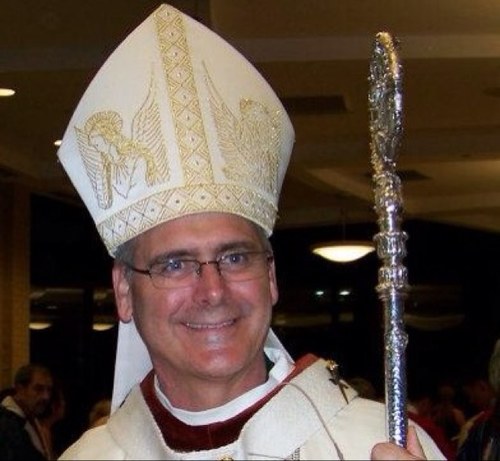
Connecticut state police officers are investigating the discovery of possible child porn at a Roman Catholic church in Waterford.

WFSB-TV reports that police declined to provide details, saying only that a “criminal investigation” is in progress after computers were reportedly seized from the Rectory of St. Paul in Chains Church.

Michael Strammiello, a spokesman for the Diocese of Norwich, did not immediately respond to a call and an email seeking comment Saturday.

WFSB-TV says Norwich Bishop Michael Cote will release a letter to parishioners during masses this weekend announcing that he has received and accepted the resignation of their pastor, Fr. Dennis Carey.

The letter says the resignation is effective immediately and came after the pastor and bishop became aware of a state police investigation into possible criminal behavior by Carey.

Woman Says ‘Exorcist’ Priest Abused Her

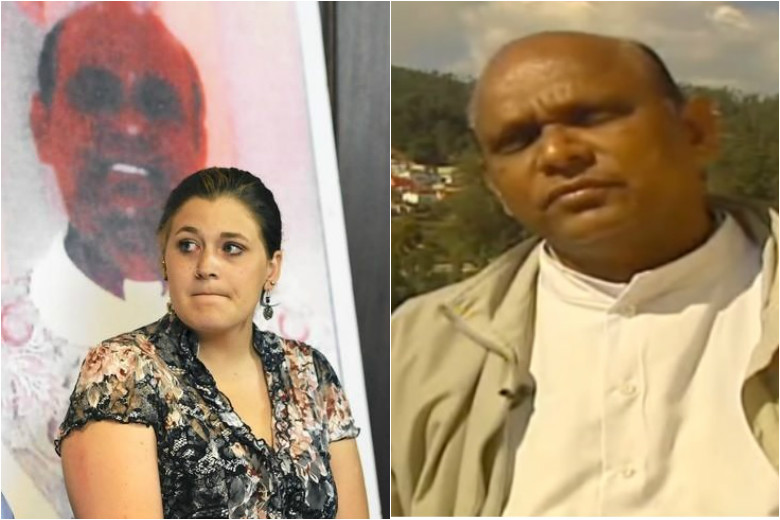
A Roman Catholic priest “kissed (a woman) on all parts of her body” during a so-called “exorcism” session, and “frequently explained full, passionate kisses as ‘blowing the Holy Spirit into’ her,” the woman claims in court.

Jane Doe sued the Catholic Diocese of Arlington, its Bishop Paul Loverde – who is not the priest accused of the abuse – and Human Life International and the HLI Endowment Inc., of Charlottesville, in Arlington County Court.

Doe claims she was sexually abused repeatedly by her “exorcist,” Thomas J. Euteneur, who was president of Human Life International and the HLI Endowment; Euteneur, however, is not named as an individual defendant.

Doe claims that Euteneur, a Roman Catholic priest, offers “‘spiritual deliverance’ and the performance of the rite of exorcism,” and did it “with the knowledge and consent of the Diocese and the Most Rev. Paul S. Loverde. … On at least one previous occasion, the Diocese and Bishop Loverde gave permission to Euteneur to conduct an exorcism within the Diocese.”

Doe claims that the defendants know that exorcism could be “potentially dangerous to the participants.” She says: “The defendants knew that a basic principle in the administration of an exorcism is that the priest should never act alone, and that he should always be accompanied by a support team who have been duly prepared to assist him.”

Doe says that her relationship with Euteneur began on Feb. 28, 2008, when she signed “a document entitled ‘Agreement for spiritual help.’ Among many other things, the document defines ‘deliverance’ as ‘the application of the spiritual resources of the Church to persons with demonic infestation in order to liberate them from the influence of unclean spirits.’”

Euteneur became her “deliverance minister,” and “The aforementioned documents included a requirement of ‘complete cooperation’ and travel to Euteneur’s offices at HLI,” according to the complaint.

Doe says that Euteneur told her “that her case was ‘severe.’”

For two months he touched her “in appropriate ways” in his offices, then in April 2008 told her “that he had received permission from the Diocese to perform the rite of exorcism,” Doe says.

On April 11, 2008, she says, “Euteneur began to hug the plaintiff while saying, ‘I wish I could go a lot further.’ He carried the plaintiff into a guest residence bedroom at HLI and HLIE, laid her on the bed, embraced her, touched her under her bra, and attempted to touch her under her underclothes, which the plaintiff stopped. Euteneur spent the entire night in bed with the plaintiff.

“During the following weeks, during every meeting, Euteneur became progressively persistent in touching the plaintiff inappropriately. He kissed the corners of her moth; stroked her legs, breasts and thighs; caressed her face; laid his body on top of hers; and frequently explained full, passionate kisses as ‘blowing the Holy Spirit into’ her.”

From April to June that year, on six occasions, Doe says, Euteneur “directed the plaintiff to undress; touched and kissed the plaintiff on all parts of her body; and digitally penetrated the plaintiff’s vagina. In addition, Euteneur directed the plaintiff to touch his penis.”

Doe claims that Euteneur “knew that his sexual violations on the plaintiff were not committed with her consent” and “would cause severe emotional distress to the plaintiff.”

Doe claims that HLI hired her as an independent contractor in September 2008, hired her as full-time employee in March 2010, and that during all this time, until June 2010, Euteneur “sexually abused her during working hours and in various rooms at HLI and HLIE headquarters.”

Doe claims that when she told Euteneur she had kept a journal “that she had kept a private journal which covered her time spent with Euteneur,” he persuaded her to “entrust the journal to him for safekeeping” while she took a vacation in Hawaii with her family.

She claims Euteneur “flew to Hawaii and secretly met with the plaintiff every morning while she was there.”

She claims that before she returned, Euteneur went to her home in Virginia “for the purpose of finding and collecting any and all other journals that the plaintiff might have kept. His attempt was unsuccessful.”

And, she claims, when she returned and asked for her journal back, “Euteneur reported that he had burned the journal ‘because it would scandalize the public and harm HLI.’”

After a final, abusive “deliverance,” Doe says, she concluded that her treatment was “illegal, inappropriate, outrageous, harmful, and completely contrary to the dictates of her understanding of Roman Catholic beliefs and practices.”

She claims she gave another priest in the Diocese a “detailed description of her relationship with Euteneur,” but Euteneur remained at HLI and HLIE for 2 more months, during which he sexually violated her two more times.

Finally, in August 2010, Euteneur resigned as president of HIL and HLIE and “was recalled to the Diocese of Palm Beach, Florida,” according to the complaint.

It continues: “On January 31, 2011, Euteneur published a statement in which he wrote: ‘I must acknowledge, however, that one particularly complex situation clouded my judgment and led me to imprudent decisions with harmful consequences, the worst of which was violating the boundaries of chastity with an adult female who was under my spiritual care.’”

She seeks punitive damages for assault, battery, intentional and negligent infliction of emotional distress, negligent entrustment, medical bills, and loss of enjoyment of life.

Complete Article HERE!

Gerald T. Slevin: The Jury Has Spoken! Will the Pope Now Speak?

In Philadelphia today, the jury in the Philadelphia abuse trial found Msgr. William Lynn guilty of child endangerment. Brian Roewe reports on this story at National Catholic Reporter. Jerry Slevin, a Harvard-trained lawyer who has closely followed this trial, has sent the following powerful statement about the verdict:

A Philly jury, that included several Catholics, has found a former top aide to two prominent Philly Catholic Cardinals guilty of endangering children who were sexually assaulted by predatory priests as described here and here.
The Cardinals’ aide, Monsignor Lynn, offered as his main defense that he was only following the Cardinals’ orders pursuant to the Philadelphia Catholic Archdiocese’s massive child abuse cover-up program that continued for decades until as late as last year at least.

The Cardinals had very close ties to the Vatican. One of them, Cardinal Rigali, worked closely with the current pope in Rome for over a decade and was St. Louis mentor for New York’s Cardinal Dolan, head of the American bishops.
The trial revealed in detail a cover-up program that appears to be standard operating procedure in the Catholic Church worldwide.

Will the pope now address this disgrace openly, honestly and effectively? He clearly has failed to do so in the past.

The many ties of the Philly Cardinals to the Vatican are described here.
The challenges the Philly disclosures recently presented for the U.S. bishops are described here.

Several weeks ago U.S. bishops met and had the opportunity to revise their national child protection program to meet these challenges. The bishops, however, failed once again to do so, as U.S. bishops still are not fully accountable for protecting children in their care. The bishops merely continued the policies that a Philly jury has now found to have failed.
The Philly verdict also indicates that the Vatican’s current strategy is doomed to fail as noted here.

It is now quite clear that the Catholic hierarchy is either incapable or unwilling to protect American children, over 100,000 of whom have been sexually abused by predatory priests according to the Vatican’s own experts’ estimates at a recent Vatican conference. That number considerably exceeds the combined U.S. casualties and fatalities from the Iraq and Afghanistan wars. It also represents a number of abused that is equivalent to well over several thousand times all of Jerry Sandusky’s estimated victims.

Will Obama, Romney, Biden, Boehner, Reid, McConnell and Pelosi finally do their duty to protect American children and adopt effective national laws and enforcement policies to protect children from this national scourge?
Ireland is doing it. Why not the U.S. as well?

Complete Article HERE!

Monsignor William Lynn convicted of endangerment

A Roman Catholic church official was convicted Friday of child endangerment but acquitted of conspiracy in a groundbreaking clergy-abuse trial, becoming the first U.S. church official convicted of a crime for mishandling abuse claims.

Monsignor William Lynn helped the archdiocese keep predators in ministry, and the public in the dark, by telling parishes their priests were being removed for health reasons and then sending the men to unsuspecting churches, prosecutors said.

Lynn, 61, had faced about 10 to 20 years in prison if convicted of all three counts he faced – conspiracy and two counts of child endangerment. He was convicted only on one of the endangerment counts, leaving him with the possibility of 3 1/2 to seven years in prison.

The jury could not agree on a verdict for Lynn’s co-defendant, the Rev. James Brennan, who was accused of sexually abusing a 14-year-old boy.

Lynn has been on leave from the church since his arrest last year. He served as secretary for clergy from 1992 to 2004, mostly under Cardinal Anthony Bevilacqua.

No matter the verdict, the trial exposed how deeply involved the late cardinal was in dealing with accused priests. Rarely an hour of testimony went by without Bevilacqua’s name being invoked.

Bevilacqua had the final say on what to do with priests accused of abuse, transferred many of them to new parishes and dressed down anyone who complained, according to testimony. He also ordered the shredding of a 1994 list that warned him that the archdiocese had three diagnosed pedophiles, a dozen confirmed predators and at least 20 more possible abusers in its midst. Prosecutors learned this year that a copy had been stashed in a safe.

Lynn didn’t react when the verdict was read and remained sitting in his chair, his head lowered, even when the judge took a brief recess to thank the jury. He also didn’t acknowledge the dozen or so family members, some of whom were weeping, sitting behind him in the gallery.

The judge ordered that Lynn’s bail be revoked and he was led to jail. The judge said she would at some point entertain a motion for house arrest.

With the verdict, jurors concluded that prosecutors failed to show that Lynn was part of a conspiracy to move predator priests around.

The jury, however, did find that Lynn endangered the victim of defrocked priest Edward Avery, who pleaded guilty before trial to a 1999 sexual assault.

Lynn had deemed Avery “guilty” of an earlier complaint by 1994, and helped steer him into an inpatient treatment program run by the archdiocese. But Lynn knew that Avery later was sent to live in a northeast Philadelphia parish, where the altar boy was assaulted.

Karen Polesir, a spokeswoman for the Survivors Network of those Abused by Priests who was outside the courthouse, said it was a historic trial because it revealed “the abuse and the cover-ups that have been going on in the Philadelphia archdiocese for a long time.”

She said her immediate reaction to the verdict was tears.

“I’m brokenhearted for all the victims that were brave enough to come forward, and the whistleblowers that were brave enough to come forward,” Polesir said. “I’m glad for the one count of guilty, but that is not enough to vindicate the victims and survivors. I feel that there was overwhelming evidence against Monsignor Lynn and that the decision is just heartbreaking.”

Defense lawyers say Lynn alone tried to document the complaints, get priests into treatment and alert the cardinal to the growing crisis. Church documents show therapists had called one accused priest a ticking “time bomb” and “powder keg.”

During the 10-week trial, more than a dozen adults testified about wrenching abuse they said they suffered at the hands of revered priests.

A former seminarian said he was raped by a priest throughout high school at the priest’s mountain house.

A nun testified that she and two female relatives were sexually abused by a priest described by a church official as “one of the sickest people I ever knew.”

A troubled young man described being sexually assaulted in the church sacristy in 1999 by Avery after the 10-year-old altar boy served Mass. Avery is serving a 2 1/2- to five-year prison term.

“I can’t explain the pain, because I’m still trying to figure it out today, but I have an emptiness where my soul should be,” another accuser testified. His mother had sent him to a priest for counseling as an eighth-grader because he’d been raped by a family friend. The priest then followed suit, he said.

Seven men and five women sat on the jury, along with eight alternates. Many have ties to Catholic schools or parishes, but said they could judge the case fairly. There are about 1.5 million Catholics in the five-county archdiocese, and Philadelphia neighborhoods were long identified by their local parishes.

Defense lawyers called the decision to send Lynn to prison overly harsh, given his ties to the community and lack of any prior criminal record. They said they would move for house arrest on Monday. Lynn will spend at least the weekend in a Philadelphia jail.

“He’s upset. He’s crushed. He’s in custody and he didn’t want anything else but to help kids,” defense lawyer Jeffrey M. Lindy said.

Brennan, Lynn’s co-defendant, was accused of sexually abusing a 14-year-old boy in 1996. With the jury unable to agree, the judge declared a mistrial on the attempted rape and child endangerment charges against him.

Lynn’s lawyer, Thomas Bergstrom, pledged in opening statements in late March that the monsignor would not run from the sins of the church. However, he said in closing arguments that Lynn should not be held responsible for them.

He suggested his client was a middle manager-turned-scapegoat for the clergy-abuse scandal. Lynn, he said, documented the abuse complaints and did his best to get reluctant superiors to address it.

“And now, now of all things, the commonwealth wants you to convict him for documenting the abuse that occurred in the archdiocese, …. the evil that other men did. They want to hold him responsible for their sins.”

Philadelphia prosecutors have been investigating the archdiocese for 10 years, since the national crisis erupted in the Boston archdiocese. Lynn testified several times before a grand jury that sat from about 2002 to 2005.

That panel produced a blistering report that identified 63 suspected child molesters in the archdiocese, but said no one could be charged because of legal time limits.

Afterward, then-District Attorney Lynne Abraham helped fight for state reforms that gave reluctant victims more time to come forward in Pennsylvania – and enabled her successor, Seth Williams, to charge Monsignor Lynn and four others last year based on more recent complaints.

In a hotly contested ruling in Lynn’s case, Common Pleas Judge M. Teresa Sarmina let prosecutors tell jurors about 20 of the accused priests named in the first grand jury report, even though they were never charged, because Lynn worked on their files to some extent.

Prosecutors said they showed a pattern at the archdiocese of lying about why priests were removed, sending them to “company doctors” at church-run therapy centers and failing to warn new parishes where they were later transferred.

“They put so many innocent children in danger,” Assistant District Attorney Patrick Blessington said in his closing remarks, noting that it can take years or decades for victims to come forward. “That’s what’s so scary about this. We have no idea how many victims are out there.”

By Bergstrom’s count, the commonwealth spent about 36 of 40 trial days on the tangential cases.

An appeal based on the inclusion of that evidence is considered likely.

Complete Article HERE!

Exit, Don’t Enable the Roman Catholic Church

By Wayne Besen

If there is one thing that irks me, it is having the Roman Catholic Church preach to me about sexual morality. It is a religious sect led by a virulently homophobic Pope that goes out of its way to trash my family. Yet, my family hasn’t spent a cent defending itself against nonexistent charges of child rape, while the Vatican has spent $2.5 billion on legal fees, prevention programs, and settlements relating to the sexual abuse of minors.

Exactly why should I listen to what these “holy” men have to say? I’ve been out of the closet for twenty-four years, during which time I worked in the center of the LGBT movement, but can’t think of a single friend or colleague arrested for child molestation. None of the people I associate with have shielded, shuffled, or offered severance packages to pedophiles to protect the institutions that they work for. But such obscene behavior is precisely what the Vatican did, all the while turning my loved ones into scapegoats to obscure their criminality.

The latest preoccupation of the Catholic Church, as well as their brethren in the ultra-Orthodox Jewish Community, is fiercely lobbying state legislatures to not change the statute of limitations for child sexual abuse cases.

“Even when you have the institution admitting they knew about the abuse, the perpetrator admitting that he did it, and corroborating evidence, if the statute of limitations has expired, there won’t be any justice,” Marci Hamilton, a professor at the Benjamin N. Cordozo School of Law at Yeshiva University, explained to the New York Times.

It seems the hierarchy is only interested in saving its own skin, instead of paying a price for those whose skin it violated. For a church built on a human sacrifice, there is scant evidence of noble virtues as the church lies and litigates against its victims.

Which brings us to a burning question: Why do liberal Catholics continue to support an intolerant, homophobic, misogynistic institution capable of covering up heinous crimes against children?

I’m not the only one asking this pertinent question. On June 1, the Freedom From Religion Foundation placed a full-page ad in USA Today headlined, “It’s Time to Quit The Catholic Church.”

According to the ad: “If you think you can change the church from within – get it to lighten up on birth control, gay rights, marriage equality, embryonic stem-cell research – you’re deluding yourself. By remaining a ‘good Catholic,’ you are doing ‘bad’ to women’s rights. You are an enabler. And it’s got to stop.”

New York Times columnist Bill Keller also urged moderate Catholics to find a new church: “Much as I wish I could encourage the discontented, the Catholics of open minds and open hearts, to stay put and fight the good fight, this is a lost cause…Summon your fortitude, and just go. If you are not getting the spiritual sustenance you need, if you are uneasy being part of an institution out of step with your conscience — then go.”

It does seem as if diehard liberal and moderate Catholics are not fighting so much as being beaten to a pulp by ideologues. If this were a boxing match, it would have been stopped many rounds ago. Indeed, attacks from the right have become so extreme that the Church is even going after American nuns. If nuns aren’t Catholic enough for these fanatics, liberal Catholics sure aren’t going to be embraced any time soon.

This whole debate reminds me of when gay people from conservative backgrounds complain to me that they can’t come out because of the environment in which they were raised. One says, “I grew up in a traditional Chinese household, so I can’t tell my parents.” While another person says, “I grew up in a Pentecostal family, so I can’t tell anyone.” And yet another proclaims, “You wouldn’t understand, it’s not that easy coming out because my parents are from a rural area.”

Everybody has an excuse or explanation, and, no, it’s never easy to come out – but at the same time, it really is a simple process. Saying “I’m gay” works like a charm every time and frees a person to be their authentic self.

Similarly, it may be incredibly difficult to leave the Catholic Church. But, it is also as easy as going to a computer search engine and typing “church” or speaking into your iPhone, “Siri, find me a church.” Within moments dozens of alternatives will pop up – many of which are more concerned with spirituality than the statute of limitations.

Are you tired of being treated like an abused dog by the Catholic Church? Then drop the dogma and quit. After all, they quit you, your family, and your moderate belief system a long time ago. Exit, don’t enable.

Complete Article HERE!

10 years after Catholic sex abuse reforms, what’s changed?

When the nation’s Catholic bishops gather in Atlanta next week (June 13-15) for their annual spring meeting, a top agenda item will be assessing the reforms they adopted 10 years ago as revelations of widespread sexual abuse of children by priests consumed the church.

The policy package they approved at that 2002 meeting in Dallas was known as the Charter for the Protection of Children and Young People, or the Dallas charter, for short. With it, the bishops vowed to finally put an end to the abuse and secrecy. They also pledged to help raise awareness about the plague of child abuse in society.

But is anything different — in the church or in the country — 10 years later? Here’s a look at what has changed, and what has not:

One, law enforcement is more assertive

The chief criticism of the 2002 reforms was that they did not include any means of disciplining bishops who fail to follow the charter. Each bishop still answers only to the pope — and Benedict XVI has so far declined to penalize any of them.

But that hasn’t stopped law enforcement officials from pursuing churchmen when the church will not — a marked change from the deference that police and district attorneys once showed the hierarchy.

Witness the ongoing trial of Monsignor William Lynn, the longtime head of priest personnel for the Philadelphia archdiocese and the first cleric ever to face trial for covering up for abusers. The headline-making story was in many ways a trial in absentia of former Philadelphia Cardinal Anthony Bevilacqua, who died shortly before the trial started, and Cardinal Justin Rigali, who retired under a cloud last year after a grand jury indicted Lynn and others.

Similarly, in Missouri, Bishop Robert Finn of Kansas City-St. Joseph is facing trial in September on charges that he failed to report credible allegations that one of his priests had a trove of child pornography and a suspicious interest in young children. The priest was arrested and charged, and Finn could become the first bishop ever convicted of a crime in connection with the scandal.

Two, progress in other countries is halting

While the U.S. bishops have made important strides in addressing the plague of clergy abuse, the Vatican and church leaders in other countries have been reluctant to push for similar steps elsewhere.

Only last year, in the wake of abuse revelations in Italy, did the Vatican give the bishops in every country a year to draw up their own guidelines. In May, the Italian bishops’ conference became the last national hierarchy in Western Europe to publish abuse policies, but they made it clear that the bishops have no legal obligation to report suspected cases to police.

Three, the Catholic Church may be the safest place for children

Whatever its past record, the Catholic Church in the U.S. has made unparalleled strides in educating their flock about child sexual abuse and ensuring that children are safe in Catholic environments.

Over the past 10 years, Catholic parishes have trained more than 2.1 million clergy, employees, and volunteers about how to create safe environments and prevent child sexual abuse. More than 5.2 million children have also been taught to protect themselves, and churches have run criminal background checks on more than 2 million volunteers, employees, educators, clerics and seminarians.

Allegations of new abuse cases continue to decline, as they have since 1980, and appear to reflect the effectiveness of some of the charter’s policies as well as ongoing efforts to increase screening of seminarians and to deal with suspected abusers before they claim multiple victims.

Four, other denominations are starting to face the issue

What for years was seen as a “Catholic” problem is increasingly being recognized as a blight for all religious communities to one degree or another.

After a series of sexual abuse incidents in recent months, Christianity Today, the flagship evangelical magazine, called for action in an editorial declaring that “all faith-based institutions can no longer afford to assume that predators are somewhere’out there,’ over the clean Christian rainbow. They are not just in college locker rooms and Catholic rectories either. They are on our evangelical faculty and work in our community nonprofits…”

Orthodox Judaism has also been struggling with the issue, after revelations that some communities are thwarting efforts to address the problem or report allegations and suspects to police.

Court rulings may add impetus to reform efforts. Last May, a jury in Florida found that the Florida Baptist Convention was liable for failing to adequately check out a pastor and church planter who was later convicted of abusing a 13-year-old boy.

Five, Americans are realizing it’s not just a problem for religion

Former Penn State football assistant coach Jerry Sandusky is set to go on trial on Monday (June 11) for sexually abusing boys under his charge, a scandal that rocked an iconic college program and brought down legendary head coach Joe Paterno, who died earlier this year.

The story was so shocking that it has reverberated beyond Penn State and focused attention on child abuse in all sports.

In addition, the sexual abuse of students by teachers has made headlines as it rarely did before, and a 2010 jury verdict holding the Boy Scouts of America liable for abuse that was detailed in secret files for decades alerted people to the dangers lurking in that venerable organization.

Whether further changes are in the offing for the Catholic Church or U.S. society is unclear, and may well depend on whether there are further scandals to keep public attention, and pressure, focused.

Complete Article HERE!

Cardinal Authorized Paying Abusers

File Under: This man couldn’t tell the truth if his life depended upon it!

Cardinal Timothy M. Dolan of New York authorized payments of as much as $20,000 to sexually abusive priests as an incentive for them to agree to dismissal from the priesthood when he was the archbishop of Milwaukee.

Questioned at the time about the news that one particularly notorious pedophile cleric had been given a “payoff” to leave the priesthood, Cardinal Dolan, then the archbishop, responded that such an inference was “false, preposterous and unjust.”

But a document unearthed during bankruptcy proceedings for the Archdiocese of Milwaukee and made public by victims’ advocates reveals that the archdiocese did make such payments to multiple accused priests to encourage them to seek dismissal, thereby allowing the church to remove them from the payroll.

A spokesman for the archdiocese confirmed on Wednesday that payments of as much as $20,000 were made to “a handful” of accused priests “as a motivation” not to contest being defrocked. The process, known as “laicization,” is a formal church juridical procedure that requires Vatican approval, and can take far longer if the priest objects.

“It was a way to provide an incentive to go the voluntary route and make it happen quickly, and ultimately cost less,” said Jerry Topczewski, the spokesman for the archdiocese. “Their cooperation made the process a lot more expeditious.”

Cardinal Dolan, who is president of the national bishops’ conference and fast becoming the nation’s most high-profile Roman Catholic cleric, did not respond to several requests for comment.

A victims advocacy group, the Survivors Network of those Abused by Priests, sent a letter of protest to the current archbishop of Milwaukee on Wednesday asking, “In what other occupation, especially one working with families and operating schools and youth programs, is an employee given a cash bonus for raping and sexually assaulting children?”

Experts in the Catholic Church’s response to sexual abuse say that payouts to dismissed priests are not uncommon. When a man becomes a priest, the church is expected to care for his needs for a lifetime.

The newly revealed document is the minutes of a meeting of the finance council of the Milwaukee archdiocese from March 7, 2003, which Cardinal Dolan attended. The archdiocese was facing a flood of potential lawsuits by people claiming abuse, and the church’s insurance company was refusing to cover the costs because it said the church had been negligent. The minutes noted that “unassignable priests” — those suspected of abuse — were still receiving full salaries.

The minutes say that those at the meeting discussed a proposal to “offer $20,000 for laicization ($10,000 at the start and $10,000 at the completion the process).” Instead of salary, they would receive a $1,250 monthly pension benefit, and, until they found another job, health insurance.

The first known payment in Milwaukee was to Franklyn Becker, a former priest with many victims. Cardinal Dolan said in response to a reporter’s question at the time that the payment was “an act of charity,” so that Mr. Becker could pay for health insurance.

According to church documents, Mr. Becker was accused of abusing at least 10 minors, and given a diagnosis of pedophilia in 1983. The church paid more than $16 million to settle lawsuits involving him and one other priest.

The Milwaukee Archdiocese filed for bankruptcy in January 2011, in the face of potential lawsuits by 23 accusers.

Complete Article HERE!

Vatican’s assessment of LCWR about fear, not doctrine

COMMENTARY

The Congregation for the Doctrine of Faith’s April 18 doctrinal assessment of the Leadership Conference of Women Religious is not about doctrine. It is not primarily about protecting the faith or ensuring an ecclesiology of communion, no matter how many times these terms are woven through the report. It is fundamentally about fear — fear of the loss of power — and the willful use of dominative control to defend that power.

The abundance of religious themes and language do not mask this punitive effort to shore up the crumbling authority of hierarchical leaders. Nor does the document hide the anger that roils beneath the protestations of gratitude and concern. The final report of the LCWR assessment reveals a desperate attempt on the part of some fearful and angry church leaders to protect their turf — to maintain an all-male church leadership, to keep women and laypeople under their authority, and to shield the homophobic-homosexual subculture in the leadership of the Catholic church.

When fear rules

The pattern of using coercive intimidation to control others in one’s household is called domestic abuse. Domestic abuse does not need to involve physical violence — in fact, many abusers never beat their partners. Instead, the threatened person strikes out psychologically to evoke compliance. Public humiliations, corrections, threats, accusations of disloyalty and demands for absolute obedience make up the typical arsenal of the abusive person. In extreme cases, the abuser monitors the actions of the other, keeps a record of his or her transgressions, restricts his or her activities, discredits his or her reputation, takes charge of his or her decisions, and threatens to withdraw support if unquestioned compliance to demands is not maintained.

These abusive acts will sound curiously familiar to anyone who has read the proposed implementations of the Vatican doctrinal assessment.

While females can and do commit domestic abuse, statistically, they do so at much reduced rates, inflict less physical harm and commonly have different motivations than male perpetrators, making domestic abuse primarily a crime against women. Yes, a crime — like child sexual abuse — something many bishops, archbishops and cardinals in the Catholic church failed to take seriously until they were forced to do so by lawsuits and public outcry.

But has transfer of learning taken place? Do they get it? Do they get that they cannot treat women and children as stepping stones to power, privilege and pleasure?

Whether through hits or humiliations, broken bones or broken spirits, threats of bodily harm or warnings of impending excommunication, the goal of abusers is the same: Assert absolute control. Wear the person down until he or she gives in or gives up. Use punishment if he or she dares to claim his or her own authority.

The most dangerous time in a household where domestic abuse is present is right after the person being abused has stood up to the abuser. Have too many members of LCWR claimed their own authority? The classic domestic abuser seeks one thing above all else: obedience to dictates. It is not surprising that obedience is alluded to on every page of the final doctrinal assessment document.

In fact, the mandate for implementation of the results of the doctrinal assessment reads like a how-to manual for the most common form of domestic abuse — no physical violence, just a resolute campaign to rein in those who have dared disobey the master, or, in the case of LCWR, the pope and bishops: “to implement a process of review and conformity to the teachings and discipline of the church, the Holy See” (page 7). Pretty clear.

Diagnosing the abuser

Mental illness, including personality disorders, compound domestic abuse but are not its primary cause. Domestic abuse is power abuse. In its most prevalent form, it is conscious, coercive conduct by men those believe they have the unconditional right to use forceful tactics to enforce their rules and maintain absolute control over those they deem subject to them.

What kinds of people abuse others? While there is no single profile of the domestic abuser, research has identified characteristics frequently seen among perpetrators of all types. Ironically, there is not much difference between those who use their fists and those who use words alone to demand obedience.

* Abusers believe they are entitled to maintain power and control over those in their households (institutions).
* They may believe they have an obligation to compel obedience for the benefit of the victim and the good of the household (church).
* They do not identify their controlling and hurtful tactics as abusive and are insulted when others perceive them that way.
* Perpetrators tend to perceive all interactions within relationships through a prism of compliance or disobedience.
* Abusers tend to be insecure men who need to establish dominance to feel confident.

The single most conclusive thing we know about domestic abuse is that it is learned behavior. Abusers have gained knowledge of abusive behaviors by seeing them in action, either in their families or in the various cultures to which they belong. This applies to religious cultures where the seminarian is taught early to bow to the wishes of his rector, to obey his bishop and to submit to the cardinal — all of whom kiss the ring of the pope.

All of this bowing, obeying and willful submission programs the brain to normalize hierarchical authority, and in some less secure individuals, to deeply internalize this way of relating and to replicate it.

As in sexual abuse, church leaders who have witnessed domestic abuse in their families or who have experienced such abuse as children may be particularly susceptible to behave abusively themselves. When a fragile ego combines with learned patterns of abuse, the stage is set for domestic abuse.

While abusers do not fit neatly into any particular diagnostic category, their behavior is not considered “normal.”

Psychologically healthy adults do not mandate obedience, forbid dialogue about subjects they do not wish discussed, or use oppressive tactics to gain control over others. Personally secure leaders don’t issue orders to other functioning adults, threatening punitive measures if they are not obeyed.

Often described as having a “Jekyll and Hyde” personality, most abusers can be quite civilized and even charming when they need to be. Their ability to function as CEOs of companies and preside over large corporations does not eliminate them from the pool of the insecure who strike out against those who threaten them. Some male abusers have been found to harbor a secret loathing of females, considering them inferior. Since such attitudes are certainly present in the history of the church (read St. Jerome), it is possible that its influence still inhabits, consciously or the unconsciously, the collective mind of church leaders.

The persistent desire of hierarchical leaders to keep women under their control and out of their sphere of leadership, especially women theologians, suggests that the “Jerome Syndrome” might still be operative.

[Fran Ferder is a Franciscan sister, clinical psychologist, author and professor at Seattle University.]

Complete Article HERE!

Catholic Clergy Sexual Abuse In The U.S. Context And Causes

COMMENTARY

CATHOLIC CLERGY SEXUAL ABUSE IN THE U.S.
CONTEXT AND CAUSES
A.W.RICHARD SIPE
Santa Clara University
11 May 2012

The context of sexual abuse by Roman Catholic bishops and priests is the culture of the priesthood. Roman Catholic bishops and priests constitute a privileged cast. This persists as a centuries-long reality perpetuated by the monarchical structure essential to the operation of the Roman Catholic Church. The world of RC clergy forms the setting, circumstances, and opportunities that surround the sexual activity of bishops and priests with minors and others. Clergy rule supreme in their spheres of operation—ministry of the sacraments (especially hearing confessions and celebrating mass) religious instructions/teaching, and the administration of their institutions. Parishes (and seminaries) are the most common sites of sexual contacts between priests, minors and others. The climate and culture and power of Catholic bishops and priests put the vulnerable and minors at risk for abuse within areas of clerical control.

The causes of sexual abuse by clergy are solidly rooted in human nature as it is fostered, lived, and expressed in clerical culture. Ordination into major orders (and preparation for them) marks the entrance into the clerical culture. Catholic clerical culture is characterized by homogeneity: it is an exclusively male province—males over twenty-five years of age alone are ordained priests—and they form a homosocial society where women are deprived of any authority. Candidates must promise “perfect and perpetual chastity, therefore celibacy” as a prior condition for ordination [Canon 277 #2]. That requirement confers social power on a priest. [“It was from sexual purity that the priesthood was believed to derive its power.”]

Cardinals and bishops vow absolute obedience to the Pope as the supreme authority. They, the pope’s legitimate surrogates, demand this obedience of their subordinates. [Father Yves Congar once said, “In the Catholic Church it has often seemed that a sin of the flesh was the only sin, and obedience the only virtue.”]

If a priest is apparently compliant with the demands of the culture he receives automatic status regardless of any individual merit. The culture provides an assurance of employment and continued material compensation for the duration of his life. The identification with the power system and subordination to it relives individuals of responsibility for the consequences of their individual actions. Truth telling is curtailed and subjected to the welfare of the organization (the good of the church). The prevailing rationale is that clerics’ first duty is to the higher law of God. Secrecy and loyalty are essential binding elements operative to the function of clerical cultural. Men within the clerical culture are labeled “special” since ordination confers an “ontological” superiority. Clerics thus incorporated into the culture often demonstrate qualities of dependency, entitlement, superiority/arrogance, variable degrees of psychosexual immaturity, but in many cases “they posses enormous powers of empathetic discernment—albeit for purposes of self-aggrandizement.”

These are the fundamental elements operative in the CONTEXT and CAUSES of the sexual abuse of minors and the vulnerable in whatever broader secular culture that clerical sexual abusive behavior occurs.

At the First National Conference for Victims & Survivors of Roman Catholic Clergy Abuse held in Chicago, October 1992 I said: The crisis of sexual abuse by Catholic bishops and priests “now visible is the tip of the iceberg. When the whole story of sexual abuse by presumed celibate clergy is told, it will lead to the highest corridors of Vatican City.”1 Those words that might have seemed shocking or prophetic 20 years ago simply reflect known and documented facts today.

Sexual abuse of minors by Roman Catholic clergy is a long-standing problem. It is historical, but not “history”—the crisis is not over as some bishops and others declared in 2004 and since. Detailed historical accounts of priests abusing minor girls and boys and being sexual with each other are reliable and indelible [Basil 4th Century, Peter Damian 11th Century].[i] The U.S. bishops named the situation a “crisis” in 2002 when they set up a National Review Board. That group made a public presentation of A Report on the Crisis in the Catholic Church in the United States on February 27, 2004. That is the same release date of a report on the investigation on the Nature and Scope of Sexual Abuse of Minors by Catholic Priests and Deacons in the United States 1950—2002 conducted by staff members of the John Jay College of Criminal Justice under the direction of Dr. Karen Terry. She served as the principal investigator of a second study on the Context and Causes of clerical abuse released in 2011. Both of these studies were sponsored by the USCCB who established the Charter for the Protection of Children and Young People in 2002. The cumulative force of media exposure [Boston Globe series on priest abuse beginning January 6, 2002] civil and criminal law suites, pressure from victim advocates, and outrage of the general public precipitated and propelled American bishops (and the Vatican) into measured reactive responses. The documentation provided for the John-Jay studies comes from diocesan files. The criminal trial in Philadelphia (2012) provides one testimony to the inadequacy of Church reporting and file production. I am not alone in reviewing thousands of documented cases of clergy abuse from 1908, 1917 and a continuous supply of reports from1923 up to the present day most not listed by bishops

The ongoing phenomenon of the sexual abuse of minors is a worldwide problem among Roman Catholic clergy. Clergy abuse is not an American problem as proposed by Pope John Pau II, although it is remarkable here. Over all between six and nine percent (6-9%) of U.S. Catholic priests get sexually involved with minors: ten percent (10 %) have been documented in Boston. Eleven and one-half percent (11.5 %) of all the priests active from the Los Angeles Archdiocese in 1983 were subsequently identified as abusers.3 In 1988 the “Sensitive Claims Committee” of the Tucson, AZ diocese held the names of twenty-three percent (23%) of its priests. Ireland, England and European countries were ten to fifteen years behind the United States in bringing the problem to public attention. That is no longer the case. [On May 3, 2012 an Italian priest, Father Riccardo Seppia, of Genoa was sentenced to nine and a half years in prison for child sex abuse and attempting to recruit minors into prostitution.]

Sexual abuse of children by Catholic clergy is a symptom of a culture in distress. It constitutes part of a larger pattern of sexual involvement by priests and bishops with others—some with minors, but more commonly with adult women and men. Although the latter is not illegal, such behavior by a bishop or priest is still marked in most cases by moral negligence, abuse, professional violation and hypocrisy. More importantly, ecclesiastical authority tolerates this behavior in its own ranks as long as it does not cause scandal. This indulgence characterizes the pattern and practice of clerical culture. As one bishop said on his return from a visit to Rome, “The organization to which I belong is rotten to the core and it comes from the top”. [Two conclusions are reasonable: one must assume that in any group of priests a certain number of sexual abusers are active. Second, the clerical system is not capable of monitoring itself. Grand Jury Reports form the most reliable source of the pattern and practice of clergy sex abuse and supervision/cover up by superiors. Also: Cf. Stockton ruling, Judge, May 2012]

Seminary training still does not prepare clergy for celibate/sexual reality. Seminary training produces many psychosexually impaired and retarded priests whose level of adjustment is adolescent at best.4. This tends to create a psychic and moral field and situations in which immature liaisons with young children not only become more possible but are psychosexually over-determined because children are actually on a developmental par with these men.

The celibate/sexual system that surrounds clerical culture fosters and often rewards psychosexual immaturity. Conformists and even sociopaths have a greater chance of ecclesiastical advancement than more mature and healthy clerics.5. [This is one consequence of clerical culture.]

The homosocial system of the Catholic clergy excludes women categorically from decision-making power. At the same time this male-only system glorifies the roles of virgin and mother; this juxtaposition creates a psychosocial structure that reinforces male psychosexual immaturity and malformation.

A significantly larger proportion of Catholic clergy has a homosexual orientation than does the general population.6. This has always been the case, with many saints among them; this is due in part to natural sexual biodiversity [homosexual orientation is a natural variant], a high genetic correlation between homosexual orientation and altruistic drive, and a culture dependent on control and external conformity [Absolute obedience is a cultural factor that can serve both the strong and the weak character.]

By refusing to deal honestly with the reality of homosexuality in the clerical state (and in general), Catholic teaching fosters self-alienation, and psychosexual immaturity of its clergy and encourages and enables identity confusion, sexual acting out, and moral duplicity. Clerical culture is redolent with clergy living “double lives”.

Catholic moral teaching on sexuality is based on a patently false anthropology that renders magisterial pronouncement non-credible. “Every sexual thought, word, desire, and action outside marriage is mortally sinful. Every sexual act within marriage not open to procreation is mortally sinful. In sexual matters there is no paucity of matter.” [This is irrational and unacceptable as are the rationale and pronouncements on contraception.]

Clergy deprived of a moral doctrine in which they can believe founder for moral guidance and leadership in their own lives and behavior. Sexually, priests and the hierarchy resort to denial, rationalization, and splitting in dealing with their own sexual behavior and that of their colleagues. With the laity they often apply the full wrath of the “law” [including the threat of hell].

The hierarchy cannot claim ignorance and deny the sexual practices of their own—themselves and their fellow-priests—and at the same time assert that they are credible and authoritative sources of leadership in sexual morality for the laity. They cannot responsibly [and legally] sidestep their personal and corporate roles as enablers.

Chief justice Anne Burke (IL) who served as the interim Chair of the National Review Board established by the U.S. Bishops in 2002 said after extensive personal contact with the hierarchy, “they do not want to change. They want Business as usual”. [Governor Frank Keating who served as Justice Burke’s predecessor as Board Chair said that the bishops operate like “cosa nostra”.]

In the past ten years the U.S. bishops have instituted some productive and useful educational ventures that alert certain populations to the dangers of abuse. Certainly these will protect some children from sexual predators. [They fail to notify parishioners that priests can be dangerous. Bishops were not included in the Dallas Charter Zero Tolerance policy. There still is no system for holding bishops accountable. The person charged with oversight of alleged bishop abusers is Bishop Robert Brom, a credibly alleged abuser himself.]

The context of child abuse by Roman Catholic clergy—the tip of an iceberg so painfully visible to us now—does not stand on its own. Sexual abuse by clergy is the product of a well-established clerical culture. The fundamental causes of sexual abuse by Catholic clergy are within the clerical culture. Only an honest examination and Reformation of that culture will address adequately the problem of clerical malfeasance about which sex is central.7.

I repeat what I said in 1992: “Difficult as it is to accept, we are certain that the hierarchical and power structures beneath the surface of dioceses and religious societies form the essence of a secret world that selects, cultivates, supports, and will continue to produce and protect child abusers within the ranks of the Catholic clergy. These hidden forces are elements far more dangerous to the sexual health and welfare of Christ’s Church than those already identified”

Complete Article HERE!