Church of England general synod votes against women bishops

The general synod of the Church of England has voted narrowly against the appointment of women as bishops.

The measure was passed by the synod’s houses of bishops and clergy but was rejected by the House of Laity.

Supporters vowed to continue their campaign but it could be five years before a similar vote can be held.

Controversy had centred on the provisions for parishes opposed to women bishops to request supervision by a stand-in male bishop.

‘Bigger consensus’

The outgoing Archbishop of Canterbury, Dr Rowan Williams, spoke of his “deep personal sadness” after the vote.

He said: “Of course I hoped and prayed that this particular business would be at another stage before I left, and… it is a personal sadness, a deep personal sadness that that is not the case.

“I can only wish the synod and the archbishop all good things and every blessing with resolving this in the shortest possible time.”
The Archbishop of Canterbury after the vote on women bishops The outgoing Archbishop of Canterbury was in favour of allowing women bishops

Both the archbishop and his successor, the Rt Rev Justin Welby, the current Bishop of Durham, were in favour of a “yes” vote.

Canon Simon Killwick, vicar of Christ Church, Moss Side, and leader of the Catholic group in the synod, had spoken against the move and said the legislation was “flawed”.

He said it would be possible for the issue to return before the next synod is elected in 2015 if there were “early talks held between the various parties and a real effort to build a bigger consensus”.

Twenty years after the introduction of women priests, the issue has continued to divide traditionalists – among those on the Church’s evangelical and Anglo-Catholic wings – from reformers.

Had the motion been backed by the synod, the proposed legislation would have made its way through Parliament before receiving royal assent.

It needed two-thirds majorities in each of the synod’s three houses.

The votes were 44 for and three against with two abstentions in the House of Bishops, 148 for and 45 against in the House of Clergy, and 132 for and 74 against in the House of Laity.

The vote in the House of Laity, at 64%, was just short of the required majority – six more “yes” votes were needed.

The House of laity is the largest element of the General Synod and is made up of lay members of the church elected by its 44 dioceses.

The decision came at the end of a day of debate by supporters and opponents – and a 12-year legislative process.

The Bishop of Norwich, the Rt Rev Graham James, said: “It is very disappointing that the vote was lost so narrowly.”

Campaign group Women and the Church (Watch) said the outcome was a “devastating blow for the Church of England and the country”.

The Rev Rachel Weir, chairwoman of Watch, said “This is a tragic day for the Church of England after so many years of debate and after all our attempts at compromise.

The Right Reverend Graham James: “Obviously it is very disappointing that the vote was lost”

“Despite this disappointing setback, Watch will continue to campaign for the full acceptance of women’s gifts of leadership in the Church’s life.”

Watch said bishops would need to act promptly to offer pastoral support in the coming weeks to women clergy and others who felt devastated by the decision.

Writing in the Guardian, Lucy Winkett, who would have been in line to become a woman bishop, said the synod was “detonating its credibility with contemporary Britain”.
Emergency meeting

But synod member Susie Leafe said the outcome was because of faults in the legislation.

She said: “There were a lot of places along the way that we could have had a measure in front of us that wouldn’t have been voted down, and it’s very sad that this was able to go on without us facing the reality of the situation.”

The Catholic Group in General Synod said “mediation and conciliation are needed so that new legislation can be framed to provide fairly for all members of the Church of England”.

Zoe Ham, Church Society: “I am happy that the legislation in its form today has been rejected”

The group said in a statement: “We regret the synod was put in the position whereby draft legislation failed at final approval because it was unclear and unfair in its provision for those who, in conscience, are unable to accept the ministry of women as bishops or priests.

“The Catholic Group calls on the House of Bishops to reconvene the talks started in the summer between representatives of different groups, chaired by Bishop Justin Welby.

“The Catholic Group is committed to playing a full part in the process of achieving good legislation to enable us all to move forward together in mission and service to the nation.”

Traditionalist campaign group Together 4ward said: “We are reflecting on and praying about the outcome of general synod, and will make a fuller statement in due course.

“We are, however, pleased that synod has chosen not to pass the Women Bishops Measure in its current form, which we believe would not have allowed the Church to go forward together.”

The House of Bishops will hold an emergency meeting on Wednesday morning following the decision, a Church spokesman said.

Complete Article HERE!

Bourgeois DISMISSED!

A Roman Catholic order in New York says the Vatican has dismissed a priest for his involvement in the movement to ordain women.

A statement from the Maryknoll Fathers and Brothers says the Rev. Roy Bourgeois was let go by the Vatican Congregation for the Doctrine of the Faith.

It says he “participated in the invalid ordination of a woman” in 2008. The woman was a member of a group called Roman Catholic Womenpriests.

Church teaching holds that the priesthood is reserved for men because Christ chose only men as apostles.

Maryknoll said the dismissal means Bourgeois is no longer a priest.

In a statement released Tuesday, Bourgeois said he was compelled by conscience to speak out. He says the issue of women’s equality in the church cannot be dismissed.

Former Maryknoll head decries Vatican interference in Bourgeois case

By Joshua J. McElwee

A former head of the Maryknoll Fathers and Brothers has expressed support for Roy Bourgeois, saying the longtime peace activist and priest has a “deep love for the church” and his dismissal from the order by the Vatican represents meddling in Maryknoll’s affairs.

In his first statement since the dismissal, Bourgeois said Tuesday, “The Vatican and Maryknoll can dismiss me, but they cannot dismiss the issue of gender equality in the Catholic Church.”

The Vatican’s Congregation for the Doctrine of the Faith has “interfered with the integrity of the society,” said Maryknoll Fr. John Sivalon, who served as the order’s superior general from 2002 to 2008.

“It makes it very hard to consider how we talk about mission and visioning for the future and being open to the Spirit, when in fact we’re being dictated to that this is what we need to follow,” Sivalon told NCR Tuesday. “And so I think there is a question about the society itself and how the integrity of the society has been affected by this.”

The Vatican congregation dismissed Bourgeois, a member of Maryknoll for 45 years who had come under scrutiny for his support of women’s ordination, from the order in October, the Maryknoll Fathers and Brothers announced in a press release Monday.

In his statement responding to his dismissal, Bourgeois said his expulsion from Maryknoll “is very difficult and painful.”

“When there is an injustice, silence is the voice of complicity. My conscience compelled me to break my silence and address the sin of sexism in my Church,” Bourgeois writes in the statement, which was posted Tuesday afternoon at the website of the Women’s Ordination Conference.

“My only regret is that it took me so long to confront the issue of male power and domination in the Catholic Church,” Bourgeois wrote.

Sivalon said Bourgeois supports women’s ordination “out of a very deep love for the church.”

“That love for the church just is expressed in his belief that the hierarchical part of the church is becoming less and less relevant in the world and to changes in the world,” he said. “It’s probably with profound sadness that he himself looks upon how that hierarchy has moved away. I think it’s just a sign of his love that he has taken the position.”

Dominican Fr. Tom Doyle, a canon lawyer acting on Bourgeois’ behalf, said Monday neither he nor Bourgeois was aware of the full scope of the Vatican’s move until seeing the press release from Maryknoll on the matter.

Maryknoll’s membership was first informed in the same press release, and the society has not made available the letter from the Vatican congregation dismissing Bourgeois, Sivalon said.

Requests for comment on the matter Tuesday were not immediately returned by the Maryknoll Fathers and Brothers.

Bourgeois first learned of the news Monday afternoon in a phone call from a Maryknoll priest who had called to ask Bourgeois to come up to the order’s New York headquarters for a meeting, Doyle said.

Bourgeois asked the priest the purpose of the meeting, and Doyle said the priest replied that the order had received a letter from the Vatican congregation dismissing Bourgeois both from the order and the priesthood.

Bourgeois then asked if the society would hold off on making an announcement about the matter until he could meet with them and see a copy of the letter, Doyle said. They refused.

“Roy did not see the content of this news release until I printed a copy up and sent it to him by fax,” Doyle said.

The Vatican’s removal of Bourgeois, Sivalon said, “raises questions about how open the society can be to explain avenues of being in mission in different ways.”

Prior to the congregation’s dismissal of the priest, “the society was moving toward a much more Kingdom-centered, Reign of God-centered kind of understanding of its mission and service to that, and this raises questions about it,” said the former superior general.

“My own position would be of support for women’s ordination and opening up ministry to others,” Sivalon said, “and I think it would be the position of probably many in leadership in Maryknoll.”

“I think all of us, looking at what’s happening in the church today, think that it’s just becoming less and less relevant and less and less open to the possibility that the Spirit is speaking through the world and speaking through others,” Sivalon said. “I think people that know Roy would still look upon him as a priest and respect him as a priest, no matter what the congregation has done.”

Bourgeois’ role in Maryknoll had been in question since his presence at the ordination of Roman Catholic Womanpriest Janice Sevre-Duszynska in August 2008.

Shortly after that ordination, Bourgeois was notified by the Vatican congregation that he had incurred a latae sententiae, or automatic, excommunication for his participation at the event.

Maryknoll asked Bourgeois to publicly recant his support of women’s ordination, telling the priest in a March 2011 letter he faced laicization and removal from the order if he did not comply.

In a series of letters and interviews since then, Bourgeois has said he could not comply with the request for reasons of conscience.

Maryknoll’s leadership took a vote on removing Bourgeois from the order in the spring. While the order would confirm at the time that a vote had taken place, it would not comment on its outcome.

Doyle told NCR at the time that Maryknoll Fr. Mike Duggan, the U.S. regional superior of the order, informed Bourgeois of the vote, which was a split decision. Doyle said Duggan told him two council members voted in favor of dismissal and three members abstained.

Monday’s statement from Maryknoll states that Bourgeois’ “disobedience and preaching against the teaching of the Catholic Church about women’s ordination led to his excommunication, dismissal and laicization.”

“With this parting, the Maryknoll Society warmly thanks Roy Bourgeois for his service to mission and all members wish him well in his personal life,” the statement concludes. “In the spirit of equity and charity, Maryknoll will assist Mr. Bourgeois with this transition.”

Doyle said he and Bourgeois would discuss the possibilities for appeal of the decision once they are able to see a copy of the letter from the Vatican congregation.

“As Catholics, we profess that God created men and women of equal worth and dignity,” Bourgeois wrote in his statement Tuesday.

“As priests, we profess that the call to the priesthood comes from God, only God. Who are we, as men, to say that our call from God is authentic, but God’s call to women is not? The exclusion of women from the priesthood is a grave injustice against women, our Church and our loving God who calls both men and women to be priests.”

Several canon lawyers contacted by NCR for background on the issues surrounding dismissal of a priest from a religious order said it is unclear how the Vatican congregation was able to act on the matter. See: Canon lawyers: Vatican’s role ambiguous in Bourgeois’ removal for more.

Complete Article HERE!

Film defrocks church hierarchy over handling of sex abuse

By Andrea Burzynski

Four deaf Wisconsin men were some of the first to seek justice after suffering childhood sexual abuse at the hands of a priest, and a new documentary about the Catholic Church’s poor handling of such cases stemming from the Vatican seeks to make their voices heard.

“Mea Maxima Culpa: Silence in the House of God” explores the impact of the Roman Catholic Church’s protocol as dictated from the Vatican for dealing with pedophile priests. It opens in U.S. cinemas on November 16, and will air on cable channel HBO in February.

Though American media coverage about child sex abuse by clergy has been extensive since a slew of cases came to light in Boston in 2002, Oscar-winning documentary director Alex Gibney wanted to connect individual stories with what he sees as systemic failures stemming from the top of the church.

“A lot of individual stories had been done about clerical sex abuse, but I hadn’t seen one that really connected the individual stories with the larger cover-up by the Vatican, so that was important,” Gibney told Reuters in an interview.

The film centers on the group of deaf men and their experiences as young boys attending St. John’s School for the Deaf in St. Francis, Wisconsin.

In a letter to the Vatican in 1998, the late Rev. Father Lawrence Murphy admitted abusing some 200 deaf boys over two decades beginning in the 1950s.

Murphy claimed he had repented, and asked to live out his last years as a priest, and was never defrocked or punished by civil authorities. He died in 1998.

In the film, the men communicate their frustrating attempts to bring their experiences to the attention of religious and civil authorities with effusive sign language and facial expressions, paired with voiceovers by actors such as Ethan Hawke.

The film also traces a convoluted bureaucracy – right up to the cardinal who is now Pope Benedict – to reveal a set of policies that the film portrays as often seeming more interested in preserving the Church’s image.

STRUGGLING TO BE HEARD

“These were deaf men whose voices literally couldn’t be heard, so there was a silence from them, and there was also this silence coming from the church, a refusal to confront this obvious crime, in part because they were covering it up,” said Gibney.

The Vatican has denied any cover-up in the Murphy case and in 2010 issued a statement condemning his abuse. It has criticized media reports about the Church’s handling of the cases as anti-Catholic.

Contrasting that, the film shows interviews with former church officials who talk openly of church policies to handle cases by “rehabilitating” abusive clergymen and snuffing out scandal.

Gibney said that all of the Vatican officials he contacted declined his interview requests.

Raised Catholic himself, Gibney no longer practices organized religion, but empathizes with Catholics who feel a sense of loyalty to the religion’s institutions and acknowledges that criticism of the church can feel like a personal attack.

“Mea Maxima Culpa,” a Latin phrase meaning “my most grievous fault” focuses on the failures of the Catholic Church’s hierarchy. But Gibney – who won an Oscar for “Taxi to the Dark Side” – said the film’s theme transcends religion and is also relevant for secular institutions.

“This is obviously about the church, but it’s also a crime film,” he said. “It’s about abuse of power and it’s about how institutions instead of reckoning with problems try to cover them up. It’s always the cover-up that creates the problem.”

He cited the Jerry Sandusky sex abuse scandal that rocked Penn State University recently, and the BBC’s poor handling of abuse allegations against the late British TV personality Jimmy Savile as examples of secular institutions brought low by similar issues.

“The thing about predators is that they tend to hide in plain sight,” Gibney said. “You’re seeing it now with Sandusky, you’re seeing it now with Jimmy Savile in Great Britain, and you saw it with Father Murphy in the film.”

Gibney thinks that the public’s stubbornly rosy perceptions of charismatic authority figures, including priests, is a major factor in such scandals.

“They’re often involved in charity or good works,” he said of high-profile abusers. “That seems to give you license to do unbelievable things because people cut you all sorts of slack that they wouldn’t normally do for other people.”

Complete Article HERE!

Dissenting Minnesota priest calls for archbishop’s resignation for defending marriage

BY KIRSTEN ANDERSEN

A Minneapolis-area priest has called for the resignation of Archbishop John Nienstedt after the archbishop supported Minnesota’s effort to pass a constitutional amendment banning same-sex “marriage.”

Fr. Michael Tegeder wrote a letter to the editor of the Minneapolis Star-Tribune oh Thursday requesting that Archbishop Nienstedt “prayerfully consider stepping down from his office.”
Fr. Michael Tegeder did not defend heterosexual marriage.
Calling Nienstedt’s support for the marriage amendment a “misguided crusade,” he suggested that the archbishop’s resignation would be “healing for our state” and “would show some magnanimity on [Nienstedt’s] part.”

Tegeder has long been a dissenter from Catholic teaching on the issue of homosexuality. He and the archbishop have clashed repeatedly over the issue.

Last year, Fr. Tegeder refused to comply with Archbishop Nienstedt’s request that all priests read a “marriage prayer” at Masses, asking God to grant the faithful “courage to proclaim and defend your plan for marriage, which is the union of one man and one woman.

The priest has since spoken to his parishioners and numerous media outlets about his opposition to the marriage amendment, prompting Nienstedt to send him a letter warning him that he may be stripped of his ministerial privileges if he continues to speak in defiance of Church teaching.

Click “like” if you want to defend true marriage.

Fr. Tegeder did not relent In June, the priest gave an interview to the liberal City Pages in which he criticized the archbishop for his stance in favor of the gay marriage ban.

“Nienstedt is just so rigid about these things,” Fr. Tegeder said. “But, you know — just let go of it. What are we trying to defend?”

Just a few weeks before Minnesotans voted on the marriage amendment, the priest sat for another interview, this time with the Star-Tribune.

The interviewer described him as angry and emotional, alternately pounding on the table and breaking down in tears.

He wore a rainbow button and talked about how it hurtful it was to see “sweet, sweet” homosexual men being taunted. He again had harsh words for Abp. Nienstedt, claiming that the archbishop’s attempt to silence his pro-homosexual speech was a sign of “moral bankruptcy.”

Archbishop Nienstedt “is saying he knows what’s best for Minnesota,” Fr. Tegeder told the Star-Tribune. “Well, he just got here. He’s in over his head. We don’t deserve him, and he doesn’t deserve us.”

The archbishop first arrived in Minnesota in 2001 when he was assigned bishop of New Ulm. He has served continuously in Minnesota since then.

It is unknown whether Abp. Nienstedt will proceed with removal of Fr. Tegeder’s ministerial privileges, in accordance with his prior warning.

Calls and e-mails to the Archbishop’s office requesting comment were not immediately returned.

Complete Article HERE!

Roman Catholic Church spent $2 million to defeat marriage equality

by David Zimmerman

According to a new report released by the Human Rights Campaign (HRC), the Roman Catholic Church spent approximately $2 million in an effort to defeat marriage equality initiatives in the four marriage ballot states of Maine, Maryland, Minnesota, and Washington this election cycle. An updated HRC report, available HERE, provides a snapshot of just how much money the Church, along with its close ally the National Organization for Marriage(NOM), poured into campaigns aimed solely at depriving LGBT Americans of dignity and respect.

In Minnesota, the Roman Catholic Church spent upwards of $1.3 million, funding nearly 25 percent of the failed attempts to write discrimination into the state’s constitution. The Church’s funding included hundreds of thousands of dollars from dioceses across the country. The report also highlights the Roman Catholic Church’s donations to states where voters affirmed marriage equality – more than $100,000 in Maine; well over a quarter-million dollars in Maryland; and $307,000 in Washington.

Despite voters rejecting the anti-LGBT agenda financed by the Roman Catholic Church and NOM, the U.S. Conference of Catholic Bishops recently re-committed to fighting against equality for LGBT Americans. San Francisco Archbishop Salvatore Cordileone – a leading anti-LGBT voice within the Roman Catholic Church and one of the chief architects of Prop 8 – said the Church must continue funding discrimination because people “don’t understand” marriage.

The report breaks down publicly reported in-kind and cash expenditures from the Roman Catholic hierarchy, the Knights of Columbus, and NOM to the four ballot states. Final campaign figures from Maine and Maryland will be available in the coming weeks.

Complete Article HERE!

Quote of the Day

“When you rape children, cover it, rape them again, cover it up, rape them again, finally get caught, still cover it up, apologize, recant your apology, then blame the victim, you have zero moral authority to lecture others about their supposed sins.”

John Aravosis at AMERICAblog, writing about the Catholic Church’s most current bit of pearl-clutching over marriage equality.

Fr McVerry questions direction of church

By PATSY McGARRY

How can today’s young people be invited “to commit themselves to a male-dominated, authoritarian institution which suppresses dissent and attempts to control what its members may even discuss?” social justice campaigner Fr Peter McVerry has asked.

The founder of the Peter McVerry Trust for homeless people was speaking in Dublin last night at the first annual general meeting of the Association of Catholic Priests (ACP). The meeting continues today.
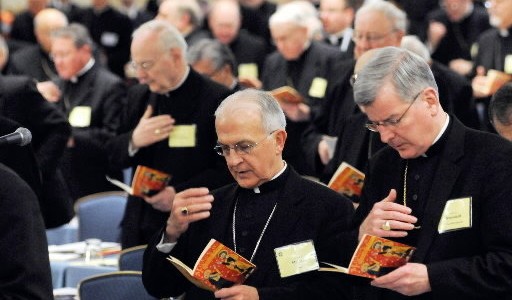
He said there were “many priests and religious . . . who experience only condemnation, exclusion and marginalisation by the very church which was mandated by its founder to reach out to all in compassion, love, and tolerance”.

The church established by Jesus “was to be a community of brothers and sisters, free of all domination”, he said. Jesus warned against “replicating the relationships of power that existed in the wider society”.

“Whatever little theology I have, I learnt from homeless people,” he said. Listening to them had “changed my understanding of who God is and what God wants”.

Fear

Fr McVerry said the wealth, power and status of the church, and its “fear of losing them”, may have filtered “understanding of the message of Jesus”. Such fear was seen recently in the church authorities’ response to child sexual abuse.

He recalled that “for the religious authorities at the time of Jesus, God was a God of the law” and that “the church, too, has often proclaimed a God of the law”. It meant “anyone, like Jesus, dissident priests, organisations like the ACP who challenge this understanding of God, is seen therefore as a threat . . . to be got rid of”.

“Jesus . . . was just ‘the carpenter’s son,’ one of the laity no less” who “was moved by the suffering of his people. And Jesus proclaimed a different God, a God of compassion”.

He wondered whether this was why today the message of the church was seen by so many as irrelevant to their lives.

Complete Article HERE!

Six men suing the Catholic church for alleged sexual abuse

A group of men from a northwestern Ontario First Nations community are suing a Winnipeg-based Roman Catholic order and others to seek redress for alleged sexual abuse they suffered at the hands of their community priest as young boys.

The six men from the Lac La Croix First Nation near Fort Francis seek unspecified financial damages from the federal government, a Catholic diocese in Thunder Bay and the order of Les Oblats de Marie Immaculee du Manitoba, along with a priest who lived and worked on the reserve in the 1960s.

The men range in age from 55 to 61.

In separate statements of claim, each alleges his life has been deeply and negatively affected by the aftershocks of sexual assaults he was subjected to — abuse the men say they felt powerless to speak out about given the priest’s position of power in their small community.

One man states that when he was 10 or 11 years old, the priest took him to his on-reserve home several times during the summer months and anally raped him. The behaviour continued until he was 13 or 14, the now-56-year-old says.

The other men make similar claims, one alleging he was abused more than two dozen times at the priest’s home and in a schoolhouse room. Another claims he was assaulted by the priest in a hotel room during a trip to Minnesota.

The priest died in May 1986.

The allegations have not been proven, and no statement of defence has been filed. No court date has been set to test the men’s claims.

The men state the Order and the Thunder Bay diocese should be held indirectly responsible for the actions of the now-late priest, who was a member of the order and an employee of the diocese, their lawsuits say.

“The Order and the Diocese held out (the priest) as an individual that embodied the values of the Roman Catholic faith such that it was implied that he could be trusted and that he would do no harm,” one lawsuit states.

The two organizations should have known there would be a “power imbalance” given the emphasis the faith places on obeying the wishes of its clergy, and the power the priest had over the “immortal souls” of the faithful in the community.

Complete Article HERE!

Watchdog group asks IRS to probe Catholic bishops

By David Gibson

A public watchdog group is charging the U.S. Conference of Catholic Bishops with openly politicking on behalf of Republican presidential candidate Mitt Romney and it wants the Internal Revenue Service to explore revoking the hierarchy’s tax-exempt status.

“In completely unqualified terms, the IRS should immediately tell the Conference of Catholic Bishops that the conduct of its members is beyond the pale,” said Melanie Sloan, executive director of Citizens for Responsibility and Ethics in Washington (CREW).

“If the Catholic bishops would like to continue receiving the tremendous tax benefits on which they rely, they should follow U.S. law and stay out of American politics,” Sloan added in a statement last Friday (Nov. 2) announcing the complaint.

Sloan argued that last-minute appeals by numerous bishops had crossed the line into electioneering. She named several prelates, including Bishop Daniel Jenky of Peoria, Ill., a fierce critic of President Barack Obama, who ordered his priests to read a letter at all Masses on Sunday that sharply criticized Democratic policies and warned that Catholics who voted for those policies would endanger their eternal salvation.

Though the complaint targets the bishops’ conference, the conference itself has no control over what individual bishops do or do not say. While the USCCB has been waging a fierce political battle with the Obama White House over a contraception mandate, it has been careful not to endorse either candidate.

The bishops under scrutiny deny they are being partisan, and say they are only stating Catholic teaching and pointing out that Democratic policies violate those teachings.

Complaints to the IRS about the Catholic Church are relatively infrequent; church-state watchdogs have generally targeted evangelical churches and other groups associated with the Christian right for violating laws on politicking from the pulpit.

The Freedom From Religion Foundation (FFRF), a secularist group based in Madison, Wis., on Monday announced that it had filed a report with the IRS charging evangelist Billy Graham’s ministry with campaigning on behalf of Romney.

The aging Graham, who turns 94 the day after the election, surprised many observers last month by pledging to “do all I can to help” Romney. The Billy Graham Evangelistic Association subsequently took out full-page newspaper ads in which Graham strongly urges believers “to vote for candidates who support the biblical definition of marriage between a man and woman, protect the sanctity of life and defend our religious freedoms.”

“The context of the ads and publications by BGEA evidence its intent to endorse candidate Mitt Romney,” FFRF co-president Annie Laurie Gaylor wrote in an Oct. 31 letter to the IRS.

The complaints may be moot, however. The Associated Press reported last week that a senior IRS official said the agency has not investigated any houses of worship over political complaints in three years, an assertion supported by many experts in the field.

Complete Article HERE!