Cardinal George hopes gay marriage is blocked, says pope’s remarks were misinterpreted

File under: The pope was misunderstood only when I don’t agree with what everyone else heard.

By Mark Brown

Cardinal Francis George told me in an interview this week that he remains hopeful of blocking the legalization of same-sex marriage in Illinois and that we in the media misinterpreted Pope Francis’ recent remarks that were seen as more accepting of gays.

“If they had the votes, they would have passed it already,” the cardinal said of gay-marriage supporters in response to my assertion that it’s only a matter of time at this point before a law is passed.

“There’s nothing inevitable about social trends,” he said. “They do change. They reverse themselves.”

cardinalgeorgeAs to the pope’s widely publicized “Who am I to judge?” comment when asked about gay priests in the Vatican, George said reporters misunderstood the context and therefore the import of the pope’s words.

“He wasn’t saying we can’t judge that homosexual relations are sinful or not. Objectively, they are,” George said.

The cardinal also remains “very angry” with a group of Catholic elected officials who published a letter asking him to reconsider stripping church funding from immigrant-support groups over their membership in a coalition that endorsed gay-marriage legislation.

And I’d say he’s none too pleased with me for a couple of columns I have written on this subject, although he treated me very cordially during a one-hour interview Monday at his residence on State Parkway.

That interview came after the cardinal sent a letter accusing me of being “both misleading and judgmental” in a column critical of his handling of the funding cutoff and his summation of the pope’s gentle remarks as primarily an affirmation that “homosexual genital relations are morally wrong.”

I’m not looking to get in a back-and-forth with the cardinal. We fundamentally disagree. But I thought you’d be interested in hearing more on what he has to say on these subjects.

Cardinal George defended his admittedly “caustic” earlier response to the public officials in which he reminded those who signed the letter that they will soon have to account for their actions in the hereafter.

“They claim to be Catholics, so I’m their bishop. It’s my job to remind them of certain eternal verities. One of them is judgment at death,” he said.

In that letter, the cardinal said: “Jesus is merciful, but he is not stupid; he knows the difference between right and wrong. Manipulating both immigrants and the church for political advantage is wrong.”

“That’s a somewhat angry response, because I’m very angry about this,” George told me when I mentioned that some of the public officials thought he was threatening them with eternal damnation, which he denied.

But he said he “felt betrayed” by the officials and found it “offensive” that they “thought they could make some points at the expense of the church.”

“When people vaunt their Catholicism and say ‘as Catholics,’ then all right, let me tell you what it is to be a Catholic,” he said.

He said he hasn’t gone so far as to seek to deny communion to those involved.

George expressed his opinion that the funding cutoff “wouldn’t have been an issue if we weren’t in a campaign for governor.”

That confused me a little, because I certainly would have raised the issue whether there was an election next year or not. The cardinal reiterated that his understanding is that some people want to use gay marriage as an issue in the governor’s race.

I suggested it was his decision to halt funding from the Catholic Campaign for Human Development to the immigrant groups that made this an issue. He rejected that assertion, arguing that the leaders of the Illinois Coalition of Immigrant and Refugee Rights in effect cut off funding to their own member groups with the decision in May to endorse gay marriage.

“That made it impossible for the CCHD to continue to fund groups that are associated with ICIRR. It was a principled issue which is before us — without a choice in a sense. If we betray the donors or if we betrayed our own anthropology, our own way of looking at the human being, then we should not continue to have a public voice at all.”

The cardinal noted that groups that receive funding from CCHD sign a contract promising not to promote activities that contradict the moral and social teachings of the Catholic Church, including “capital punishment, abortion, euthanasia, racism, war, discrimination or same-sex marriage.”

“What follows is an inevitable result of their decision,” he said.

“If they had endorsed a racist viewpoint, would we be here talking about this at all?” the cardinal asked.

I asked if he thought advocating same-sex marriage is equivalent to advocating racism.

“In the sense that both are inconsistent with Catholic social teaching,” he confirmed. “It’s not to say there is a moral equivalency.”

George also observed that “it’s interesting that they don’t attack the black Protestant churches” who have been his key allies in the fight against legalizing gay marriage in Illinois. He said the black churches are more influential on the gay-marriage issue than even he because their ministers have closer relationships with their legislators. I promised him I would write about it if black churches cut off financial support to any social-service agencies over gay marriage.

The cardinal acknowledged his own characterization of the pope’s comments on gays may have been “jarring,” as I put it, but he said he was frustrated by journalists missing the pope’s point.

“In our culture, ‘Who am I to judge’ means nobody has the right to distinguish right from wrong,” which wasn’t what the pope meant, the cardinal said.

“He was saying that a person who has given up their sinful ways, you don’t judge them. You accept them,” George said. “. . .He started out saying: gay sex is wrong.”

I told the cardinal I never believed for a moment that the pope was changing church policy toward gays, only setting a different tone that was missing from his own approach.

The cardinal expressed frustration that, in the current political climate, Catholics can’t express their opposition to same-sex marriage without being regarded as bigots.

“”When that becomes the criterion for accepting gay and lesbian people, then we’re in the bind we’re in now, which is a real bind,” he said.

Nobody really expects the Catholic Church to change, only to adapt.

Complete Article HERE!

“God Told Me To” -Ex Pope Benedict Says Mystical Experience Caused Resignation

File under — Who says there ain’t a God?

by Rebecca Savastio

Ex Pope Benedict says God told him to resign his position as Pope during a months-long “mystical experience” he had. When asked why he gave up his position, he said “God told me to.” While denying he had heard voices or saw an apparition of any kind, he explained that God gave him an “absolute desire” to give up being pope and spend the rest of his life praying in completely secluded private Vatican apartments. He claims the “will of God” was correct after seeing what an excellent job Pope Francis has been doing.pope-benedict-resigns

A Vatican spokesman told The Guardian UK that the original report by Zenit, a Catholic news organization, is correct. “The report seems credible,” the spokesman said. “It accurately explains the spiritual process that brought Benedict to resign.”

However, at the time of his resignation, Pope Benedict claimed that he was abandoning the position because of his rapidly declining health. At a meeting of Cardinals, he said “My strengths, due to an advanced age, are no longer suited to an adequate exercise of the Petrine ministry.”

Some are skeptical of Benedict’s “mystical experience” claim and point to the fact that there have been extensive reports of a secret Vatican “gay lobby” whose influence was getting totally out of control. Current Pope Francis admitted to this powerful lobby just a few months ago and said he was planning on addressing it. He later came out and said he “would not judge” gay priests, leaving some to wonder if any action would be taken against the alleged lobby.

However, others feel that it was Benedict’s health alone which prompted his resignation, and one journalist who had met with him just prior to his leaving the papacy said Benedict looked “exhausted.” Benedict is 86 years old and has had numerous health problems in recent years, including a heart condition that required the installment of a pacemaker.

Other theories about his resignation include the scandal that broke recently about a top secret “rent boy” ring that was run by numerous priests inside Vatican City, in which they would hire underage male prostitutes to satisfy the sexual needs of their fellow Cardinals.

Perhaps the most controversial theory of all is that Benedict may be gay himself. That allegation comes, in part, from prominent Catholic blogger Andrew Sullivan. In a post entitled “Two Popes, One Secretary,” Sullivan implies that Benedict’s current arrangement with his male secretary, Monsignor Georg Gänswein, is very strange, saying “So Benedict’s handsome male companion will continue to live with him, while working for the other Pope during the day. Are we supposed to think that’s, well, a normal arrangement?”

Sullivan quotes another writer, Angelo Quattrochi, who discusses whether Gänswein’s relationship with Benedict could be more than professional:

When asked if he felt nervous in the presence of the Holy Father, Gänswein replied that he sometimes did and added: ‘But it is also true that the fact of meeting each other and being together on a daily basis creates a sense of “familiarity”, which makes you feel less nervous. But obviously I know who the Holy Father is and so I know how to behave appropriately. There are always some situations, however, when the heart beats a little stronger than usual.’… This man – clearly in some kind of love with Ratzinger (and vice-versa) will now be working for the new Pope as secretary in the day and spending the nights with the Pope Emeritus. This is not the Vatican. It’s Melrose Place.

So which is the real reason for Benedict’s resignation? A secret “Gay Lobby?” A “Mystical experience?” Health problems? A ring of “rent boys” in the Vatican? The only person who knows the true answer is Benedict himself, and his current claim is “God told me to.”

Complete Article HERE!

Uriel Ojeda to join few Catholic clergy in California prisons for child sex abuse

By Cynthia Hubert

Some time during the next week or so, the Rev. Uriel Ojeda will leave Sacramento County’s Main Jail and join other inmates for a long bus ride to state prison.

Once a rising star in the Sacramento Roman Catholic Diocese, lauded by parishioners for his compassion and faith, the young priest likely will spend at least seven years in the harsh confines of an institution where security cameras and uniformed guards will monitor his every movement.

Uriel OjedaHe will be treated “no differently than any other inmate,” said California Department of Corrections spokesman Bill Sessa.

But Ojeda, 33, is no ordinary convict.

Only a few Catholic priests are currently imprisoned in California for child sexual abuse, said Patrick Wall, a former priest and canon lawyer who advocates for victims of clergy abuse from his office in St. Paul, Minn.

“I am aware of only five,” said Wall. He documents such cases along with the nonprofit BishopAccountability.org.

But their numbers are sure to grow in the coming years, he said, in California and across the country.

Nationally, dioceses have found “credible accusations” of sexual abuse against more than 6,000 priests between 1950 and 2011, Wall said. The number is climbing, he said, following years of scrutiny of the Catholic church for its handling of abusive clergy members and a flood of lawsuits by victims.

“Investigators are doing a better job, and more people are cooperating with law enforcement,” Wall said. “There is an understanding now that Catholic priests can and do abuse children.”

Some, like Ojeda, are cutting plea deals in which they admit to felony crimes rather than face trial.

Ojeda’s dramatic downfall, from a beloved parish priest to an admitted child molester, has shaken the Sacramento diocese and many of its parishioners.

“There are those who naively wish we could get beyond the child sexual abuse crisis,” Bishop Jaime Soto said in a recent interview. “But Father Ojeda’s case reminds us that sexual abuse is a real and ongoing problem in the church. We have got to be vigilant.”

Ojeda was charged with sexually abusing a girl beginning when she was 13 years old. The abuse began, according to the girl’s family, when he was a guest at their home and a parish priest in Woodland. It continued over a period of years.

The diocese acted quickly to remove Ojeda from his ministry during an investigation into the accusations, which came to light in November 2011. He pleaded no contest earlier this month, and was sentenced to eight years in prison.

Wall said the diocese “reacted with precision and authority,” and should serve as a model for others facing such crises.

Soto called Ojeda’s fall from grace “very sad,” but said he hoped everyone involved in the case would learn something from what happened.

“Prisons are very dark places,” Soto said. “But I believe that, even as dark as this whole episode has been for the victim, her family, the church and Father Ojeda, God’s grace is going to show itself.”

Prisons can be especially difficult places for people like Ojeda, corrections officials said. Inmates have a caste system that places people who do harm to children “very low on the scale,” said Sessa.

“He is probably far more vulnerable because of his background as a child molester than because of his background as a priest,” Sessa said.

For his own protection, Ojeda likely would be placed in a “sensitive needs yard” when he is outside of his prison cell, said Sessa, limiting his access to the general inmate population.

Ojeda was the subject of a series of articles in The Sacramento Bee after he was ordained in 2007, part of a celebrated group of newly trained priests in the diocese dubbed “The Magnificent Seven” because of the promise they embodied for a rejuvenated clergy.

He has declined to speak to the media since his arrest in November 2011. His attorney, Jesse Ortiz, did not return messages requesting comment for this article.

State corrections officials described Ojeda’s lifestyle once he leaves Sacramento County jail, where he has been incarcerated since his sentencing on Aug 2.

Within a week or so, he likely will be bused from Sacramento to the Deuel Vocational Institution in Tracy, said Deborah Hoffman, assistant secretary for communications for the state Corrections Department. There, Ojeda will undergo a body search, be photographed and fingerprinted, and submit to a swabbing of the inside of his cheek to collect DNA material, she said.

The Corrections Department will spend the next two to three months assessing Ojeda’s physical health, state of mind and criminal acts before deciding where and how to house him for the remainder of his sentence.

Ojeda’s background would make him a strong candidate for a medium security institution, such as Mule Creek in Ione or Folsom State Prison near Sacramento, officials said.

In time, he might be able to work for a nominal fee, cooking or cleaning or doing laundry. He will be allowed regular visitors, usually on weekends. Phone privileges are earned, and conversations are monitored.

Sessa said other inmates likely will know Ojeda’s name and background within minutes of his incarceration.

“There are no secrets in prison,” he said. “You walk through the gate, and the guy in the back 40 knows about it before you get through security. There is almost no way he would come in unnoticed.”

Although Ojeda might minister informally to other inmates and attend Catholic services in prison, “the staff will treat him as an inmate, not as a priest,” Sessa said.

If he abides by the rules, Ojeda’s eight-year sentence could be shaved by 15 percent, according to the Sacramento County District Attorney’s Office. Once released, he would be required to register as a sex offender and report regularly to authorities.

The Sacramento diocese, meanwhile, has begun the process through the Vatican to remove Ojeda from the priesthood forever.

Complete Article HERE!

Polish priest’s dismissal exposes rift over dialogue with Jews

By Dagmara Leszkowicz

When the outspoken Polish priest Wojciech Lemanski returned with his parishioners to his church near Warsaw after holding a prayer vigil at the Treblinka Nazi death camp in early July, a dismissal notice awaited him.

POLAND-JEWS/PRIESTThe Warsaw diocese of the Roman Catholic Church sacked Lemanski as parish priest in the small village of Jasienica for what it said was his insubordination after numerous clashes on issues such as in-vitro fertilization, abortion and his engagement with the Jewish community.

Lemanski sealed his fate when in a radio interview he accused Archbishop Henryk Hoser, who oversees his parish, of asking whether he was a Jew and circumcised – a charge the diocese has denied.

The episode exposed a rift within the church, as it struggles to retain a central role in Polish life, between conservatives and those who want more openness in dealing with social issues and some of the darker episodes in Poland’s past.

“At a time when Pope Francis is calling for open-mindedness, the church in Poland is crawling into its shell,” said Iwona Jakubowska-Branicka, a sociologist at Warsaw University.

“As with many moral issues, the question of relations with Jews has been swept under the carpet,” she said.

Relations with the Jewish community are an especially difficult subject in Poland, where millions of Jews perished in the Holocaust during the Nazi German occupation of the country.

Most of those who survived were forced to leave in the late 1960s by the communist regime. Poland’s post-communist leaders have condemned the “anti-Zionist campaign” of that time and have often spoken out against other signs of anti-Semitism.

“SPECIAL SENSITIVITY”

Poles have celebrated those compatriots who helped to save local Jews in World War Two, but they have also downplayed events such as the burning of 340 Jews by Polish peasants in the village of Jedwabne in 1943.

The episode was buried by the communist authorities after the war and resurfaced only after a 2001 book written by Polish-born U.S. historian Jan Gross described the massacre.

The publication was criticized by some Catholic church leaders as stoking anti-Polish and anti-Jewish sentiments, but the subsequent debate inspired young Lemanski to work on improving the dialogue between the two groups.

“God knocked on my door and said he wanted something more from me. I can’t imagine being a priest without a special sensitivity for the Jews, their tragedies and a need for dialogue,” the priest said in an interview.

Lemanski is among a few Catholic priests who commemorate the massacre each year with Jewish leaders and holds prayer vigils at the Treblinka camp, one of the infamous Nazi death factories where Jews, along with Poles and others, were gassed.

He also recovered gravestones from abandoned and destroyed Jewish cemeteries, incorporating two of them into the main alter of his church. That move stoked charges from some conservative Catholics that he was turning it into a synagogue.

In a statement explaining its decision to send Lemanski on early retirement, the Warsaw Diocese did not refer to the gravestones, but said he had failed to get church permission on issues related to the parish.

The diocese also said Archbishop Hoser’s relations with the Jewish community were “proper and full of trust”.

Church representatives declined further comment.

Jewish community leaders have avoided being pulled into the affair, but some have expressed support for Lemanski’s efforts.

“I can say one thing: looking at the way parishioners treat the priest, I think that if the Jewish community had had a rabbi like Lemanski, the community would have been very pleased,” said Piotr Kadlcik, head of the Union of Jewish Religious Communities in Poland.

Despite being sidelined by his superiors, Lemanski said he would remain active after lodging an appeal with the Vatican.

“I realize it’s not an easy path but I don’t feel like someone on the margin of the church. On the contrary, I feel like I’m in the centre of my church because without this dialogue our church loses its authority,” he said.

Complete Article HERE!

Boston Archdiocese official charged with hiring prostitute

File under: How refreshingly heterosexual


By Melissa Hanson and Peter Schworm

An official of the Archdiocese of Boston pleaded not guilty today after he was allegedly found with a prostitute behind a cemetery.
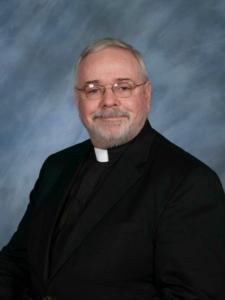
Monsignor Arthur Coyle, 62, of Lowell was arraigned this morning in Lowell District Court. He was ordered held on $500 cash bail and will return to court Sept. 16 for a pretrial conference, said Middlesex district attorney’s spokeswoman Stephanie Guyotte.

In a statement released this afternoon, the archdiocese said Coyle had voluntarily taken a leave of absence from his post as episcopal vicar for the Merrimack Region, a post he has held since 2008.

“While on administrative leave, Msgr. Coyle is prohibited from performing any public ministry,’’ the archdiocese said in the statement. “These restrictions will remain in place pending the outcome of the case. The steps taken today do not represent a determination of Msgr. Coyle’s guilt or innocence as it pertains to these charges.’’

The statement concluded with the sentence, “The Archdiocese asks for prayers for all impacted by this matter.’’

Coyle was arrested at 5:19 p.m. Sunday after he offered a prostitute money for sex, said Lowell Police Captain Kelly Richardson. In a report filed in court, police quoted Coyle as telling them that he had paid a woman working as a prostitute $40 for oral sex. Coyle told police the sex act had not been completed, the report said.

Police had spotted Coyle’s black Chevy Equinox and noticed he had a “known prostitute” in the passenger seat, the report said. After the vehicle parked behind the Polish Cemetery in Lowell, officers waited five minutes, then approached the vehicle and separated Coyle from the alleged prostitute, Siriwan Kongkaen, 38, police said in the report.

Coyle has been charged with paying a fee for sexual conduct.

According to the police report, Kongkaen has been arrested multiple times in the past for prostitution and narcotics-related offenses.

The report also said Coyle had been spotted in the past circling neighborhoods known for prostitution, noting, in particular, an incident in November. Police had seen Coyle in his Equinox circling the area of Linden Street by Union Street and stopped him. When police asked why he had been circling an area known for prostitution, he denied doing so and went home, the report said.

Coyle was ordained a priest in 1977 and appointed an episcopal vicar, a high-ranking official in the church, in 2008, according to the archdiocese’s website.

Complete Article HERE!

Bishop apologises for abuse at Fort Augustus School

Here’s a tip:  when your apology includes words like, “mistakes were made,” instead of “we apologize for raping your children,” your apology is no apology at all.

One of Scotland’s most senior clerics has apologised for decades of physical and sexual abuse of pupils at a Catholic boarding school.


The Bishop of Aberdeen, Hugh Gilbert, addressed parishioners at Fort Augustus in the Highlands.

His statement came after the BBC found evidence of physical and sexual abuse by monks at Fort Augustus Abbey School and its prep school in East Lothian.

The Benedictine order which ran the schools, has already apologised.

Bishop Gilbert’s address is the first time a senior cleric has spoken publicly about abuse at the abbey schools.

He told parishoners: “It is a most bitter, shaming and distressing thing that in this former abbey school a small number of baptised, consecrated and ordained Christian men physically or sexually abused those in their care.

“I know that Abbot Richard Yeo has offered an apology to those who have suffered such abuse and I join him in that.

“We are anxious that there be a thorough police investigation into all this. And, that all that can be done should be done for the victims. All of us must surely pray for those who have suffered.”

BBC Scotland Investigations Correspondent Mark Daly has more on the developments

BBC Scotland spoke to more than 50 former pupils during its six-month investigation.

Many said they had nothing but good memories of the schools, but the BBC also heard accounts from old boys of serious physical violence and sexual assault, including rape, by monks over a 30-year period.

BBC Scotland Investigates: Sins of Our Fathers, which aired on Monday, contained evidence against seven Fort Augustus monks.

Two headmasters have also been accused of covering-up the abuse.

And the documentary contained allegations that the abbey was used as a “dumping ground” for problem clergy who had confessed to abusing children.

Mark Daly, BBC Scotland’s investigations correspondent, who broke the story, said the apology was significant because it was the first time a senior clergyman had addressed the allegations since the programme went out almost a week ago.
Fort Augustus Abbey Fort Augustus Abbey School was one of the most prestigious Catholic boarding schools in Scotland

He said: “The allegations centred on monks from the Benedictine congregation, which is essentially an autonomous order within the Catholic Church.

“The Catholic Church had told us this was not a matter for them, it was a matter for the Benedictines.

“But the evidence we obtained about offences was that they all happened on Scottish soil, they happened to Scottish Catholics – they’re all part of the Catholic flock, as far as the victims are concerned.

“And from the victims’ point of view, they have been waiting for something from the senior clergy in the Church so today will have been something significant.”

Since the programme was broadcast, the BBC has been contacted by other former pupils with similar claims of abuse, right up until the boarding school closed in the 1990s. Police Scotland have confirmed they are investigating the allegations.
‘Annual audits’

Dom Richard Yeo, the Abbot President of the Benedictines order which ran the school, apologised on the programme and said mistakes were made.

“All I can say is that I’m sorry that it happened, it shouldn’t have happened,” he said.

The Catholic Church in Scotland has said it would publish details of its annual audits, which deal with abuse allegations dating back to 2006.

Bishop Gilbert said: “The Catholic Church in Scotland has been addressing this issue increasingly effectively in recent years.

“We want to work with all public bodies who care for the young and vulnerable adults.

“We wish to share our experience and share best practice so that lessons can be learned and children can always be fully protected.”

Complete Article HERE!

Holy smoke! Take the Catholic church gay art tour

With the Pope’s recent statements about homosexuality, the time is right for the Catholic church to take pride in its gay artists


By Jonathan Jones

The Pope has uttered some common sense words about homosexuality – and about time, too. While stopping well short of a full recognition of gay rights, his declaration that he does not “judge” is at least the start of a better approach by the Catholic church.


If Pope Francis wants to think more about this issue, he could do worse than take a tour of churches and galleries in Rome and the Vatican where, for centuries, gay artists have created the glories of the church.

In the Vatican museum he should contemplate Leonardo da Vinci’s St Jerome in the Desert. An ascetic sits in anguished thought in a rocky wilderness in this unfinished masterpiece. It is a great, introspectively spiritual work of religious art whose creator was well known for his love of young men. Leonardo surrounded himself with good-looking assistants and painted a subversively gay icon of male beauty, his bronzed Saint John the Baptist. When da Vinci was in his 20s, he was formally accused of sodomy.

Brooding on these facts, the Pope might walk into the Pauline Chapel, to look upon Michelangelo’s frescoes there. This chapel is in a private part of the Apostolic Palace not open to the public, but I don’t think the Pope would find entry difficult. There, looking at the suffering of the saints, he might consider how Michelangelo courageously expressed his love for men, even as he created some of the most eloquent art of the church.

Is there no escape from this issue? Remembering that some art historians deny the so-called “calumny” that Caravaggio and his clerical patrons were gay, perhaps the Pope might visit the Roman church of San Luigi dei Francesi to look on this master’s paintings of St Matthew. But the demons of desire cannot be suppressed. The naked male flesh in Caravaggio’s paintings tells its own story. By the time Caravaggio came to Rome in the 1590s, Leonardo and Michaelangelo – not to mention the aptly named Italian painter Il Sodoma – had already blazed a gay trail through the art of the Holy City. Caravaggio made art dangerous and exciting again by taking that homosexual impulse to new extremes.

The history of art is inseparable from the history of sexuality. Artists were adventurous characters in the past just as they are today. To make great art you have to take great risks. The Catholic church in its golden age knew this, and it commissioned the boldest and best, whatever the artist’s personal lives.

Perhaps the honesty of Pope Francis will renew art history, for pious timidity blunts understanding of great art. In particular, the myth that gay sex did not exist in the past, or was too risky, or could not be imagined, is nonsense. By the 18th century, gay clubs existed across Europe. The gay scene in Georgian London was intense. Is it really plausible that all this was going on in 1700 but unimaginable in Caravaggio’s Rome in 1600?

It is daft to deny the obvious homoeroticism of Leonardo or Caravaggio, and sophistry to claim that it’s irrelevant to their art. The British Museum is leading the way by drawing attention to the gay content of its collections. The Pope should urge the Vatican to do the same. Let the church take pride in its gay artists.

Complete Article HERE!

Reformist priest praises pope’s new tone but wants more

By Mary Wisniewski

An Austrian priest who has stirred controversy in Europe with his challenge to Catholic church teachings on taboo topics suggested on Wednesday that women should be allowed to become priests and said that gays need justice, not just mercy.

Father Helmut Schuller, who has been banned by American bishops from speaking in Catholic churches while on a tour of the United States that began in mid-July, welcomed recent remarks by Pope Francis on gay rights, but said discussion could go further.

Schuller, in a telephone interview, said the pope’s words were a “good opener” and gay people seem to be happy there’s a friendlier tone from the church than in the past.

Schuller, leader of an Austrian priest group known for its “Call to Disobedience” challenging church teachings on taboo topics such as the ordination of women and priests marrying, has been drawing enthusiastic crowds during a 15-city U.S. tour that began in New York in mid-July and starts its West Coast leg on Wednesday.

The pope raised hopes of a softening of Catholic church opposition to gay rights when he spoke to reporters during his return from a visit to Brazil this week. Addressing the issue of gay clergy, Francis said, “Who am I to judge?” He also reaffirmed church teaching that homosexual acts are a sin.

Responding to the pope’s remarks, Schuller said, “I think it’s not only a question of mercy, but it also should be a question of justice to respect the gay people.”

On the issue of ordaining women, Francis had reaffirmed the church’s ban on women priests, saying, “That door is closed.”

But Schuller said the question is, “Who closed the door?” adding, “It is not possible to think the discussion should be finished.

“We should not only knock at the door but try to open it again,” Schuller said.

The Catholic church teaches that it cannot ordain women because Jesus willingly chose only men as his apostles. Advocates for women priests say he was only acting according to the customs of his times. Seventy percent of U.S. Catholics believe women should be allowed to be priests, according to a New York Times/CBS News poll earlier this year.

U.S. bishops, including Boston Cardinal Sean O’Malley and Detroit Archbishop Allen H. Vigneron, have forbidden Schuller to speak on church property.

“Those who are not in harmony with Catholic church teachings in what they speak about should not be given a venue,” said Joe Kohn, spokesman for the Detroit archdiocese.

Schuller has been meeting privately with U.S. priests. Some priests and nuns were among the crowd of about 500 people who attended his public speech in Chicago last Wednesday.

Schuller said the “Call to Disobedience” arose out of a sense of “deep sorrow” among some Austrian priests, who feared that the worsening priest shortage would mean the end of parish communities. They feared a future of one priest serving as many as 20 parishes – offering Mass at one village before driving onto the next, unable to serve as a pastor to the people.

“We thought to speak out that this cannot be the future of the church,” Schuller said.

Last year, Austria’s church told the priests they could not support the manifesto, which had been criticized by former Pope Benedict XVI, and stay in administrative posts. The group, however, has won broad public backing in opinion polls for its pledge to break church rules by giving communion to Protestants and divorced Catholics who remarry.

Schuller said it is important for parish priests, many of whom are already quietly defying church doctrine by giving communion to divorced and remarried Catholics, to come out of the shadows.

“Don’t hide yourself in your parish communities,” Schuller said in his speech in Chicago. He said bishops know priests are defying doctrine at their parishes, but are comfortable about it because no one speaks out, so there seems to be no need for reform. “They got nervous when we spoke out.”

Schuller – who is from the Archdiocese of Vienna, the home of Sigmund Freud – said church leaders’ approach to dialogue is like “the man who goes to a psychoanalyst and says, ‘We can talk about everything, but not about my mother.’”

Dorothy Petraitis, 82, of Evanston, Illinois, who favors both married and women priests, told Schuller at his Chicago appearance that she is tired of waiting for the church to stop being a “dysfunctional family.”

“I want to be a member of a functioning church. That might mean I have to leave the church,” Petraitis said. “I don’t want to do that. Frankly, I’m a little pissed.”

“Please don’t leave the church,” said Schuller, who noted that he and his fellow rebel priests are often asked by conservatives why they don’t leave.

“We say the church is not a corporation for me. It’s not an apartment I have rented,” Schuller said. “We are church. It’s my church, and I want her to become changed.”

Complete Article HERE!