High stakes for Canada’s Bishops in euthanasia row

by Michael Higgins


While having dinner recently with my former producer, Bernie Lucht, the Montreal Jewish intellectual and onetime head of the Canadian Broadcasting Corporation’s flagship intellectual affairs programme, Ideas, he looked across the table at me and asked plaintively why the Canadian Conference of Catholic Bishops was being so callous with the dying.

Bernie had confused the Catholic Bishops of Alberta and the Northwest Territories with the national episcopal conference. Easy enough to do. What bothered him was the seeming disjunction between Pope Francis’ call for mercy and non-judgmental attitudes toward the marginalised and the position taken by the bishops.

In their 34-page document, Guidelines for the Celebration of the Sacraments with Persons and Families Considering or Opting for Death by Assisted Suicide or Euthanasia, the Alberta and Northwest Territories bishops made it clear that their clergy should not engage in the “truly scandalous” behaviour of granting a request for funeral rites or the sacraments by people who have, for whatever reason, chosen to die by physician-assisted protocols.

Nervous public
Physician-assisted dying is now a legal right in Canada following the passage of Bill C-14 in June of this year. As I have outlined in an article in New York’s Commonweal magazine following Royal Assent for the Bill: “Although benign euphemisms were deployed regularly in an effort to make the legislation more palatable to a nervous public, Canada’s national newspaper, The Globe and Mail, was refreshingly blunt in its editorial position when it observed prior to the bill’s convoluted passing through both chambers that ‘once the new law is adopted, we will be a country whose legislation allows the state to kill its citizens, pure and simple.

People often warn against slippery slopes, but this is no slope. This is a precipice from which there is no return.’”

To be clear, The Globe and Mail was not opposed to the legislation per se as it recognised that Parliament was responding to polls that indicated that the Canadian public was in favour of some form of doctor-induced death with rigorous constraints put in place.

But, not unreasonably and predictably, the Catholic bishops were opposed to the legislation as they considered it “an affront to human dignity, an erosion of human solidarity, and a danger to all vulnerable persons”.

But once the bill was passed and became the law of the land, the Canadian episcopate moved to ensure that Catholic health care facilities were protected from providing services that contradicted their mandate.

To date, they have been successful in achieving that but the Alberta bishops document may have ignited unnecessary controversy, prompting the considerable lobby opposed to exemptions for religiously-affiliated and publicly-funded health care institutions to move toward litigation seeking to revoke that exemption and could well end up in the Supreme Court.

Senior Quebec prelates, like the country’s Primate, Cardinal Gerald Lacroix of Quebec City, and Archbishop Christian Lepine of Montreal, have dissociated themselves from their Western brothers by insisting that their priests will provide funerals for those who choose the now legal medically-assisted dying option and will “accompany people in every step of their life”. By electing a pastoral over a canonical approach, the Quebec clerics have aligned more closely with the Franciscan papacy.

The last time the national episcopate was in very public disagreement was in the early 1980s when a social justice document highly critical of Canada’s fiscal policies and commitment to ‘trickle down economics’ was, in turn, repudiated by then Cardinal Archbishop of Toronto, Gerald Emmett Carter, a close friend of Prime Minister Pierre Trudeau and several of his Cabinet.

This time the stakes are higher.

Complete Article HERE!

Catholics who choose assisted death struggling with compassion vs. doctrine

Scholars say church laws do allow for some flexibility on final sacraments for assisted death

By Geordon Omand

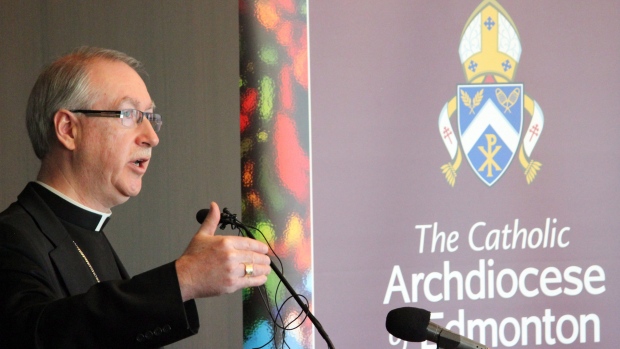
The archbishop of Edmonton Richard Smith is shown in a handout photo. Smith has previously defended the church’s decision to refuse funerals to some Albertans who have chosen assisted dying.

A proper funeral is far more than an end-of-life celebration for practising Catholics, who believe last rites cleanse the soul of sin in preparation for eternal life in heaven.

But for the faithful questioning whether those final sacraments are available to a loved one who has chosen a medically assisted death, the answer may depend on whom in the church they ask.

Catholic doctrine is unequivocal in its opposition to any form of suicide, but Canadian bishops have taken different positions on whether churchgoers who choose an assisted death should be absolutely barred from having an official funeral.

Some religious experts say the schism is the product of Pope Francis’s arrival at the helm of the Catholic Church in 2013, and his emphasis on tolerance and compassion.

Wayne Sumner, a professor emeritus of philosophy at the University of Toronto, said a more flexible approach to the granting of funeral rites is in line with Pope Francis’s similarly softened tone on homosexuality, divorce and the ordination of women.

“I think you’ve got some hard-liners here who want to follow the doctrine, and you’ve got some others who feel a compassion for people who have chosen this route and don’t want to punish them or their families any more or unnecessarily,” he said.

A ‘grave sin’

In the wake of assisted dying becoming legal in Canada earlier this year, six bishops in Alberta and Northwest Territories released guidelines last month instructing priests to refuse funerals for people who choose assisted dying.

The document describes how physician-assisted death is a “grave sin” and contradicts the teachings of the Catholic church.

Death by assisted suicide and euthanasia are grave violations of the law of God, the document says.

“These grievous affronts to the dignity of human life from beginning to natural end are never morally justified,” it says.

Other church leaders since then have said they would not encourage the absolute prohibition of funerals for everyone who chooses assisted dying.

Emma Anderson, a scholar of Canadian Catholicism at the University of Ottawa, said the division among Catholic bishops follows from Pope Francis’s move to empower lower levels of leadership to make decisions based on local circumstances.

The sometimes contradictory results of such delegation of authority risks confusing church members, Anderson said.

“It can be profoundly disturbing if you’re a devout Catholic to be getting really different messages in Quebec, in Ottawa, in Alberta, in the Northwest Territories,” she said. “There doesn’t seem to be a national stance on this issue.”

Some flexibility

Not everyone sees the bishops’ views as contradictory, said Michael Agnew, a post-doctoral fellow in the religious studies department at McMaster University in Hamilton.

“It’s not necessarily that there’s a schism over the church teaching, at least in the hierarchy or the leadership of the church,” Agnew said.

“The difference is probably in the tone that’s being used at times and individual bishops’ or priests’ flexibility around access to these services.”

Rev. Marc Pelchat, vicar general of the Archdiocese of Quebec, said the variation among bishops across Canada has less to do with church doctrine on assisted death and more to do with a difference in approach.

Pelchat said bishops in Quebec encourage a more case-by-case treatment for physician-assisted deaths and are reluctant to establish a hard-and-fast rule that ignores individual circumstances.

But the church ultimately opposes assisted death and prefers palliative care, he added.

Leeway in church law

Douglas Farrow, a professor of Christian thought at McGill University in Montreal, said the difference in direction between bishops is no great surprise.

“Some of them are more theologically astute than others and some of them are more faithful to the church’s teaching than others,” Farrow said.

Church law gives priests considerable leeway to exercise their judgment on a case-by-case basis, he said.

The difference in approach appears to follow some rough geographic patterns as well, noted Arthur Schafer, an ethics scholar at the University of Manitoba.

The strong opposition in Alberta follows the province’s traditional conservatism, whereas the more permissive attitudes in Quebec and British Columbia are in line with the provinces more progressive approaches, he said.

Complete Article HERE!

Struggle of compassion versus doctrine for Catholics who choose assisted death

by Geordon Omand

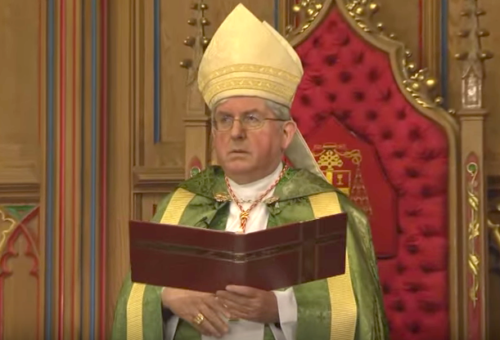
Cardinal Thomas Collins, the Archbishop of Toronto, delivers a statement on physician-assisted death while presiding over mass at St. Paul's Basilica in Toronto in a March 6, 2016, file photo. For the faithful questioning whether the final sacrament of a funeral is available to a loved one who has chosen a medically assisted death, the answer may depend on whom in the church they ask.

VANCOUVER – A proper funeral is far more than an end-of-life celebration for practising Catholics, who believe last rites cleanse the soul of sin in preparation for eternal life in heaven.

But for the faithful questioning whether those final sacraments are available to a loved one who has chosen a medically assisted death, the answer may depend on whom in the church they ask.

Catholic doctrine is unequivocal in its opposition to any form of suicide, but Canadian bishops have taken different positions on whether churchgoers who choose an assisted death should be absolutely barred from having an official funeral.

Some religious experts say the schism is the product of Pope Francis’s arrival at the helm of the Catholic Church in 2013, and his emphasis on tolerance and compassion.

Wayne Sumner, a professor emeritus of philosophy at the University of Toronto, said a more flexible approach to the granting of funeral rites is in line with Pope Francis’s similarly softened tone on homosexuality, divorce and the ordination of women.

“I think you’ve got some hardliners here who want to follow the doctrine and you’ve got some others who feel a compassion for people who have chosen this route and don’t want to punish them or their families any more or unnecessarily,” he said.

In the wake of assisted dying becoming legal in Canada earlier this year, six bishops in Alberta and Northwest Territories released guidelines last month instructing priests to refuse funerals for people who choose assisted dying. The document describes how physician-assisted death is a “grave sin” and contradicts the teachings of the Catholic Church.

Death by assisted suicide and euthanasia are grave violations of the law of God, the document says.

“These grievous affronts to the dignity of human life from beginning to natural end are never morally justified,” it says.

Other church leaders since then have said they would not encourage the absolute prohibition of funerals for everyone who chooses assisted dying.

Emma Anderson, a scholar of Canadian Catholicism at the University of Ottawa, said the division among Catholic bishops follows from Pope Francis’s move to empower lower levels of leadership to make decisions based on local circumstances.

The sometimes contradictory results of such delegation of authority risks confusing church members, Anderson said.

“It can be profoundly disturbing if you’re a devout Catholic to be getting really different messages in Quebec, in Ottawa, in Alberta, in the Northwest Territories,” she said. “There doesn’t seem to be a national stance on this issue.”

Not everyone sees the bishops’ views as contradictory, said Michael Agnew, a post-doctoral fellow in the religious studies department at McMaster University in Hamilton.

“It’s not necessarily that there’s a schism over the church teaching, at least in the hierarchy or the leadership of the church,” Agnew said.

“The difference is probably in the tone that’s being used at times and individual bishops’ or priests’ flexibility around access to these services.”

Rev. Marc Pelchat, vicar general of the Archdiocese of Quebec, said the variation among bishops across Canada has less to do with church doctrine on assisted death and more to do with a difference in approach.

Pelchat said bishops in Quebec encourage a more case-by-case treatment for physician-assisted deaths and are reluctant to establish a hard-and-fast rule that ignores individual circumstances.

But the church ultimately opposes assisted death and prefers palliative care, he added.

Douglas Farrow, a professor of Christian thought at McGill University in Montreal, said the difference in direction between bishops is no great surprise.

“Some of them are more theologically astute than others and some of them are more faithful to the church’s teaching than others,” Farrow said.

Church law gives priests considerable leeway to exercise their judgment on a case-by-case basis, he said.

The difference in approach appears to follow some rough geographic patterns as well, noted Arthur Schafer, an ethics scholar at the University of Manitoba.

The strong opposition in Alberta follows the province’s traditional conservatism, whereas the more permissive attitudes in Quebec and British Columbia are in line with the provinces more progressive approaches, he said.

Complete Article HERE!