Roman Catholic Church Finances in the United States

The finances of the Roman Catholic Church tend to be well concealed. But a spate of bankruptcy cases in the US (8 out of 196 dioceses, with Honolulu teetering on the brink) has enabled The Economist to examine the situation in that country in more detail than is usually possible.

There are 74 million people in the US who describe themselves as Roman Catholic, and the expenditure of the Church is estimated as $170 billion in 2010. Of this, 57% was spent on health-care networks, 28% on colleges and universities, 6% on dioceses, parishes and schools, and 2.7% on charitable activities. Over 1 million people were employed (by comparison, the Walmart supermarket chain employed 2 million people). Less than a tenth of the income comes from church offerings; much of the rest comes from investments, property, wealthy businessmen, and local and federal government support for the hospitals, universities and schools. The Church in the US probably has about 60% of the total wealth of the Roman Catholic Church worldwide.

The Church has paid out $3.3 billion in settlements for child abuse over the last 15 years and this figure is expected to rise considerably. The dioceses are financially independent and the settlements are made by individual dioceses, which is why a number of them have gone bankrupt as a consequence of these settlements. Ten states are considering relaxing the time limitation on investigating child abuse, which could lead to the bankruptcy of several more dioceses. It is estimated that the Church is spending somewhere between $100 000 and $1 million a year in opposing the relaxation of this time limit. The child abuse scandal has led to a considerable reduction in donations to the Church and, at the same time, the shortage of priests and nuns has reduced the amount of the cheap labour available to the Church and has increased the running costs.

The rest of the report is somewhat technical but the following points emerge. Several dioceses have responded to their financial difficulties by raiding the priests’ pension funds. Between 1986 and 2002 the Diocese of Boston collected about $70-90 million in Easter and Christmas offerings, none of which was paid into the clergy retirement fund, although many parishioners thought that this was where the money was going.

Some dioceses have presented their funds as consisting of numerous different accounts for parishes, schools, hospitals, etc, when in fact there is just a single account. The parishes, schools and hospitals have then lost all their investments when the diocese has gone bankrupt.

Other dioceses, threatened with bankruptcy, have tried to shield their money by moving it out of diocesan accounts. In the ongoing Milwaukee bankruptcy case, the Archbishop of Milwaukee authorized a transfer of $55.6 million from the diocesan account into a cemetery fund. One Californian lawyer who has been involved in several of the bankruptcy cases says, ‘We have seen a consistent tactic of Catholic bishops to shrink the size of their assets, which is not only wrong morally but in violation of state and federal laws’. A whole city block in downtown San Diego was valued in the diocesan accounts at $40 000, the price that had been paid for it in the 1940s. The judge in the case was so irritated by the various ‘shenanigans’ that she ordered a special investigation into the diocesan finances.

The Economist report exposes considerable financial corruption in Roman Catholic dioceses in America but, as so often when dealing with the Church of Rome, there is a reluctance to draw conclusions. Somehow the idea is preserved that the Church of Rome is doing a lot of good in America. One would hope that, from her financial corruption, people would readily deduce her spiritual corruption, but they are remarkably slow to do so.

Complete Article HERE!

Catholics defy bishops to pray for gay marriage

The folk mass hymns and gospels were familiar, the response “And with your spirit” recited Sundays in church by millions of Catholics, but the 120 faithful gathered outside Seattle’s St. James Cathedral on Sunday afternoon were praying for a cause their bishops are campaigning against.

Mobilized by Catholics for Marriage Equality, they celebrated a “Liturgy of Love,” praying for the recognition of same-sex unions and the passage of Referendum 74, which would legalize marriage between persons of the same gender.

“I would just say the God I have come to know is not one to tell people they are not equal,” said Robert Gavino, a Seattle University student.

John House, a parishoner at Our Lady of Sorrows parish in Snoqualmie, added: “Catholics believe Christ’s primary message is one of love, and Catholic social teaching teaches us that God loves everybody. We are standing up for centuries of Catholic social teaching.”

They are also standing against their bishops.

Seattle Archbishop J. Peter Sartain has issued a pastoral letter denouncing Referendum 74, and put three anti-74 videos on the diocesan website. “R-74 jeopardizes freedom rather than expands it: It endangers our religious liberty and the right of conscience,” Bishop Joseph Tyson of Yakima claimed in a particularly strident letter to the faithful.

We disagree, said those on the steps of St. James Cathedral.

“I find (bishops’ claims) perplexing:. Nothing about marriage equality in the state of Washington is any infringement on liberty. This is about civil marriage and civil law,” said John Morfield, a longtime parishoner at St. Mary’s Catholic Church.

And Barbara Guzzo, organizer of Catholics for Marriage, argued that the bishops have brought “anguish, division and sadness” to the faithful, “particularly those with a gay person in their families, the hurt that this has caused.”

Fr. John Whitney, S.J., pastor of St. Joseph Church, has encouraged discussion and helped a recent meeting to promote reconciliation between those who share the bishops’ passionate opposition and those who back Referendum 74. “Authority never supplants conscience,” he told parishoners in a recent “e-blast.”

But stridently conservative bishops across the country have brought politics to the pulpit — and delivered dictates of what belongs in the consciences of those in the pews.

“A properly formed Catholic conscience will never contradict the Church’s teachings in matters of faith and morality,” Bishop David Kagan of Fargo, N.D., said in a weekend letter. The letter contained no mention of social teachings or poverty or human rights, but among things “never acceptable” was “not recognizing the unique and special role of marriage as a unique union of one man and one woman.”

In Washington, however, more than 60 resigned Catholic priests have endorsed Referendum 74. More than 100 retired and former priests in Minnesota have denounced Archbishop John Nienstedt for his efforts to write a one man-one woman definition of marriage into the state constitution.

State Sen. Ed Murray, D-Seattle, present at St. James on Sunday, is a practicing Catholic and chief sponsor of marriage equality in the Legislature. Murray said he was outside the cathedral as a demonstration of his faith.

“I think any time we show solidarity with those on the margins of our society, it is an expression of our faith,” said Murray. “We (gays) are certainly on the margins . . . at least in the hierarchy’s structure.”

The “Liturgy of Love” took place at the same hour as the weekly Solemn Vespers and Benediction inside St. James Cathedral. Earlier this year, the cathedral refused to serve as a collection center for petitions to force a vote on same-sex marriage.

The liturgy outside was familiar.

It featured singing of the Prayer of St. Francis:

“Make me a channel of your peace. Where there is hatred, let me bring your love; where there is injury, your pardon, Lord; where there is doubt, true faith in you.”

Chad Griffin, president of the Human Rights Campaign — the largest national group campaigning for gay and lesbian rights — spoke at the end of the liturgy. A Georgetown product, he said of his Catholic education: “Nowhere, ever, did it tell me to oppose a right that I might have. Or to support discrimination against my brothers and sisters.”

“The other 49 states are watching,” said Griffin.

Later, in an interview, Griffin noted the long string of defeats for same-sex marriage at the polls. But this year, he predicted, will be different. “Scare tactics, false headlines and lies are not working as they used to,” he said. “It’s close, but I’d rather be where we are than where they are.”

Where gay marriage supporters are is ahead in the polls in three states — Washington, Maryland and Maine — that are voting on marriage equality. In a race where polls are neck and neck, Minnesotans will vote on the constitutional amendment, heavily backed by Catholic bishops, that would write a ban into their state constitution.

Across the North Star state, however, lawn signs have sprouted with the message: “Another Catholic voting No.”

Complete Article HERE!

Grand Forks woman to demonstrate against bishop’s election message

Kate Kenna, a lifelong Catholic, career social worker and political progressive in Grand Forks, has mounted a reaction to news of a North Dakota bishop’s call to the faithful concerning voting.

A letter from Bishop David Kagan of Bismarck is to be read Sunday from all the Catholic pulpits in the state urging them to not support abortion, stem-cell research or same-sex marriage when voting.

Kenna bought a “City Briefs” ad in the Herald with a short message: “The bishop is bringing politics to church. Please wear a political button to Mass on Sunday to support the candidate of your choice.”

It began running Thursday online.

Kenna also called Joel Heitkamp at KFGO radio in Fargo, who talked about it Thursday on the air.

And Kenna has organized a sort of demonstration Sunday at her own parish, Holy Family. She and others, including her friend Thomasine Heitkamp, will be standing with others outside the church to show their disagreement with the bishop. The Heitkamps are siblings of Democratic Senate candidate Heidi Heitkamp.

Democrats upset

Kagan was appointed bishop in Bismarck in November and named apostolic administrator of the Fargo diocese this summer until a replacement bishop is announced.

It came to light the past week that Kagan sent a letter to all priests in the state to be read Sunday.

The bishop declined to release the letter pending its being read Sunday in churches. But he announced Thursday he will discuss the letter at 9 a.m. Tuesday on Real Presence Radio at 1370 AM in Grand Forks and 1280 AM in Fargo.

State Sen. Tim Mathern, D-Fargo, released the text of the letter and criticized it in a Forum Communications story Wednesday, saying it went over the line in directing Catholics how to vote.

Although Kagan’s letter does not mention parties or candidates by name, Mathern said it clearly was pointed at Democrats because of the party’s known support for the issues Kagan mentioned.

Plus, Mathern said the phrase used by Kagan telling Catholics not to vote for “the most likable” candidate appears to echo Republican ads referring to Heidi Heitkamp.

Friend of Heitkamps

Kenna said that’s how she sees it, too, especially as a longtime close friend of Thomasine and Heidi Heitkamp.

Catholics are taught to follow their own conscience, she said.

“I think I have a perfectly formed conscience,” said Kenna, who credits growing up going to St. Michael’s Elementary School and St. James High School in Grand Forks. That’s led her to devote her life to social work and to support the Democratic party because she sees it as caring for people.

“We can’t just look at being pro-life as just being pro-delivery,” Kenna said. “Being pro-life means all of life and that means people who are here, also.”

The church is a place where people of all political persuasions should feel welcome and be united in faith, not in politics, she said.

Church response

Christopher Dodson, executive director of the North Dakota Catholic Conference, a public policy and lobbying effort of the two dioceses in the state, agrees that partisan politics doesn’t belong in church. Nor does Bishop Kagan, who does not refer to any individuals or parties in his letter, Dodson said.

“There’s nothing new in the letter, it’s all Catholic teaching on how to form one’s conscience,” Dodson. His office has been sending similar messages to parishes in the state regularly since about Labor Day, he said.

The bishop’s reference to not voting for someone because they are “likable” reflects long-held Catholic teaching that the faithful should look at deeper issues than either pocketbook issues or a person’s personality, Dodson said. It’s not about Heitkamp or anyone in particular, he said.

“It’s not about influencing elections, it’s about the care of souls,” Dodson said. That’s why the bishop has been reluctant to discuss his letter before parishioners hear it themselves in church, not in a partisan debate on radio or television, Dodson said.

“People who are really involved in partisan politics get hyper-partisan around election time and everything they see gets interpreted through those partisan lenses,” he said. “I think parishioners will be pleasantly surprised when they finally hear the letter and see that it doesn’t deal with partisan politics.”

Faith and politics

Kenna long has taken her faith and her politics seriously.

In the fall of 1968 at the height of the Vietnam War, a woman regularly stood across the street from St. James High School, holding a sign protesting the war, Kenna remembers. “She wasn’t allowed to come on the school grounds.”

A junior, Kenna invited the woman to speak to her current events class.

“I got suspended for three days,” she said with a laugh.

Now she feels she must react to the message from the bishop that she might be voting the wrong way.

“I think the bishop of Bismarck has brought this to a new level where he is bringing politics into church and as a responsible voter I have to say that’s wrong, and how do I respond that?” she said.

“I could stand up and walk out of church (while the letter is read) but I think that would be disrespectful to our priest,” she said.

Instead, she and others plan to stand outside Holy Family during Masses on Sunday.

Although she will wear a Heitkamp button, it’s not about campaigning, she said, adding she hopes many wear buttons of all sorts.

“I don’t think it’s a protest; I think it’s just an awareness-building exercise,” she said. “I just want people to examine their consciences and then vote the way they feel is consistent with their beliefs. I don’t want to be told that in church.”

Complete Article HERE!

The Church hates the gays more than it loves its own.

File under the category: The Church hates the gays more than it loves its own. Churches are closing, schools are closing, food banks are underfunded, and shelters for homeless people are shuttered. More and more people are living on the edge of financial collapse…

BUT

Catholic Church Ponied Up More Than $1 Million To Fight Marriage Equality

Forget that vow of poverty: The Roman Catholic Church has shelled out more than $1 million to fight various marriage-equality initiatives, according to a new report from the Human Rights Campaign.

The study shows that the millennia-old institution has donated more than $1.1 million to anti-equality initiatives, including ones fighting gay-marriage measures in Washington, Maryland and Maine—and one supporting a gay-marriage ban in Minnesota, where it has given more than $608,000 to support a constitutional amendment defining marriage as between a man and a woman. (That’s more than half the campaign’s budget.)

Today, the Church is now the top religious donor for anti-equality efforts, with more than $640,000 coming from the Catholic fraternal organization the Knights of Columbus.

Fortunately it looks like gay-rights advocates have been able to raise considerably more funds overall than anti-equality cronies. (HRC has contributed $7.3 million to marriage-equality campaigns in the past 12 months.).

Given that a majority of everyday Catholics actually support gay marriage, HRC president Chad Griffin says “The Church hierarchy owes the laity an explanation as to why they are spending this much money on discrimination, and at what cost to other crucial Church programs.”

In a statement, Jason Adkins of the Minnesota Catholic Conference replied, “Our marriage amendment activities, like our other activities, are aimed at fostering the common good.”
Thanks but no thanks, pal.

Complete Article HERE!

Catholic Church errs in fighting same-sex marriage

There’s a delicious rebellion brewing in Washington state — the “other Washington,” as those of us based in D.C. like to say.

A group of 63 former Roman Catholic priests, with a total of 800 years service, supports Referendum 74, a ballot initiative that would make Washington the seventh state in the nation to legalize marriage between same-sex couples. The announcement of their support is designed to combat a church campaign against the measure that the San Francisco Chronicle describes as “aggressive.”

The church is issuing pastoral statements and releasing videos urging parishioners to vote against marriage equality.

Here’s a sampling:

— Bishop Joseph J. Tyson of the Diocese of Yakima, Wash., told his 41 parishes: “Once marriage is redefined as a genderless contract, it will become legally discriminatory for public and private institutions such as schools to promote the unique meaning of marriage. … This law will challenge our right to educate about the unique value of children being raised by his or her own mother and father in a stable home (sic).”

I understand why the church is undertaking an extensive political campaign against gay marriage. There’s no doubt that gay marriage goes against the very biased doctrinal interpretation of homosexuality often cited in the New Testament.

But if members of the Catholic hierarchy are worried about losing followers to other Christian churches, or want to capture the hearts of the next generation of Catholics, they’ll give up the fight.

It’s clear that young Americans of all faiths have been raised in a cultural environment that views LGBTQ couples as no different than heterosexual couples. The bishops are picking a fight over an issue they are not going to win.

The Chronicle sites a recent Elway Poll that pegged support for Referendum 74 at 57 percent. Gov. Christine Gregoire, a Democrat and an outspoken proponent for it, championed same-sex marriage legislation through the state chambers.

Similar measures are on the ballot in Maryland and Maine.

The church is taking on not just Catholic voters in those states or, one could posit, in the United States — Gallup poll last May on gay marriage showed half of Americans support it.

Ireland’s former president, Mary McAleese, this week told Irish state broadcaster RTE she supports gay marriage. Her views on social issues have drawn the ire of many an archbishop, including the former Archbishop of Boston Bernard Law, who called her “a very poor Catholic president.”

Her response: “I am not a Catholic president, I’m president of Ireland,” where “there were all sorts of people. I’m their president. I happen to be Catholic.”

It seems unwise for the church to take on such powerful politicians and social movements that are gaining mainstream support. The timing is particularly unwise when one takes into account how the church’s handling of the priest pedophilia scandal cost it credibility.

I am in awe of the gay rights movement’s progress on this issue. It seems LGBTQ leaders have been able to turn around public opinion on marriage equality in less than a decade. Too bad their sisters in the abortion-rights movement have not been as successful. Abortion is one topic on which the church, sadly, can keep up a successful crusade. But the church undoubtedly has a dwindling supply of social issues in its arsenal.

Complete Article HERE!

Catholic theologian preaches revolution to end church’s ‘authoritarian’ rule

Hans Küng urges confrontation from the grassroots to unseat pope and force radical reform at Vatican

One of the world’s most prominent Catholic theologians has called for a revolution from below to unseat the pope and force radical reform at the Vatican.
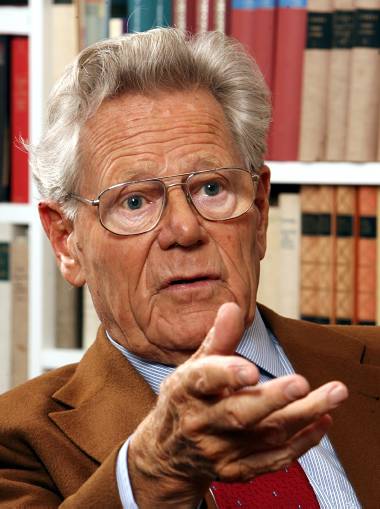
Hans Küng is appealing to priests and churchgoers to confront the Catholic hierarchy, which he says is corrupt, lacking credibility and apathetic to the real concerns of the church’s members.

In an exclusive interview with the Guardian, Küng, who had close contact with the pope when the two worked together as young theologians, described the church as an “authoritarian system” with parallels to Germany’s Nazi dictatorship.

“The unconditional obedience demanded of bishops who swear their allegiance to the pope when they make their holy oath is almost as extreme as that of the German generals who were forced to swear an oath of allegiance to Hitler,” he said.

The Vatican made a point of crushing any form of clerical dissent, he added. “The rules for choosing bishops are so rigid that as soon as candidates emerge who, say, stand up for the pill, or for the ordination of women, they are struck off the list.” The result was a church of “yes men”, almost all of whom unquestioningly toed the line.

“The only way for reform is from the bottom up,” said Küng, 84, who is a priest. “The priests and others in positions of responsibility need to stop being so subservient, to organise themselves and say that there are certain things that they simply will not put up with anymore.”

Küng, the author of around 30 books on Catholic theology, Christianity and ethics, which have sold millions worldwide, said that inspiration for global change was to be found in his native Switzerland and in Austria, where hundreds of Catholic priests have formed movements advocating policies that openly defy current Vatican practices. The revolts have been described as unprecedented by Vatican observers, who say they are likely to cause deep schisms in the church.

“I’ve always said that if one priest in a diocese is roused, that counts for nothing. Five will create a stir. Fifty are pretty much invincible. In Austria the figure is well over 300, possibly up to 400 priests; in Switzerland it’s about 150 who have stood up and it will increase.”

He said recent attempts by the archbishop of Vienna, Christoph Schönborn, to try to stamp out the uprising by threatening to punish those involved in the Austrian “priests’ initiative” had backfired owing to the strength of feeling. “He soon stopped when he realised that so many ordinary people are supportive of them and he was in danger of turning them all against him,” Küng said.

The initiatives support such seemingly modest demands as letting divorced and remarried people receive communion, allowing non-ordained people to lead services and allowing women to take on important positions in the hierarchy. However, as they go against conventional Catholic teaching, the demands have been flatly rejected by the Vatican.

Küng, who was stripped of the authority to teach Catholic theology by Pope John Paul II in 1979 for questioning the concept of papal infallibility, is credited with giving the present pope, Joseph Ratzinger as he then was, the first significant step up the hierarchy of Catholic academia when he called him to Tübingen University, in south-west Germany, as professor of dogmatic theology in 1966.

The pair had worked closely for four years in the 1960s as the youngest theological advisers on the second Vatican council – the most radical overhaul of the Catholic church since the middle ages. But the relationship between the two was never straightforward, with their political differences eventually driving a wedge between them. The dashing and flamboyant Hans Küng, by various accounts, often stole the limelight from the more earnest and staid Joseph Ratzinger.

Küng refers to the “heap of legends” that abound about himself and Ratzinger from their “Tübingen days”, not least the apocryphal accounts of how he gave lifts in his “red sports car” to the bicycle-riding Ratzinger.

“I often gave him a lift, particularly up the steep hills of Tübingen, yes, but too much has been made of this,” he said. “I didn’t drive a sports car, rather an Alfa Romeo Giulia. Ratzinger admitted himself that he had no interest in technology and had no driving licence. But it’s often been turned into some kind of pseudo-profound metaphor idealising the ‘cyclist’ and demonising the ‘Alfa Romeo driver’.”

Indeed the “modest” and prudent “bicycle-rider” image that pope-to-be, now 85, fostered for years has all but evaporated since his 2005 inauguration, according to Küng.

“He has developed a peculiar pomposity that doesn’t fit the man I and others knew, who once walked around in a Basque-style cap and was relatively modest. Now he’s frequently to be seen wrapped in golden splendour and swank. By his own volition he wears the crown of a 19th-century pope, and has even had the garments of the Medici pope Leo X remade for him.”

That “pomposity”, he said, manifested itself most fully in the regular audiences who gather on St Peter’s Square in Rome. “What happens has Potemkin village dimensions,” he said. “Fanatical people go there to celebrate the pope, and tell him how wonderful he is, while meanwhile at home their own parishes are in a lamentable state, with a lack of priests, a far higher number than ever before of people who are leaving than are being baptised and now Vatileaks, which indicates just what a poor state the Vatican administration is in,” he said, referring to the scandal over leaked documents uncovering power struggles within the Vatican which has seen the pope’s former butler appear in court. The trial ends on Saturday.

It was in Tübingen that the paths of the two theologians crossed for several years before diverging sharply following the student riots of 1968. Ratzinger was shocked by the events and escaped to the relative safety of his native Bavaria, where he deepened his involvement in the Catholic hierarchy. Küng stayed in Tübingen and increasingly assumed the role of the Catholic church’s enfant terrible.

“The student revolts were a primal shock for Ratzinger and after that he became ever more conservative and part of the hierarchy of the church,” said Küng.

Calling Pope Benedict XVI’s reign a “pontificate of missed opportunities”, in which he had forgone chances to reconcile with the Protestant, Jewish, orthodox and Muslim faiths, as well as failing to help the African fight against Aids by not allowing the use of birth control, Küng said his “gravest scandal” was the way he had “covered up” worldwide cases of sexual crimes committed by clerics during his time as the head of the Roman Congregation for the Doctrine of the Faith as Cardinal Ratzinger.

“The Vatican is no different from the Kremlin,” Küng said. “Just as Putin as a secret service agent became the head of Russia, so Ratzinger, as head of the Catholic church’s secret services, became head of the Vatican. He has never apologised for the fact that many cases of abuse were sealed under the secretum pontificium (papal secrecy), or acknowledged that this is a disaster for the Catholic church.” Küng described a process of “Putinisation” that has taken place at the Vatican.

Yet despite their differences, the two have remained in contact. Küng visited the pope at his summer retreat, Castel Gandolfo, in 2005, during which the two held an intensive four-hour discussion.

“It felt like we were on an equal footing – after all, we’d been colleagues for years. We walked through the park and there were times I thought he might turn the corner on certain issues, but it never happened. Since then we’ve still kept exchanging letters, but we’ve not met.”

Kung has travelled widely in his life, befriending everyone from Iranian leaders to John F. Kennedy, and Tony Blair with whom he forged close links a decade ago, becoming something of a spiritual guru for the then British prime minister ahead of his decision to convert to Catholicism.

“I was impressed how he tackled the Northern Ireland conflict. But then came the Iraq war and I was extremely troubled by the way in which he collaborated with Bush. I wrote to him calling it a historical failure of the first order. He wrote me a hand-written note in reply, saying he respected my views and thankyou, but that I should know he was acting according to his conscience and was not trying to please the Americans. I was astounded that a British prime minister could make such a catastrophic mistake, and he remains for me a tragic figure.” He described Blair’s conversion to Catholicism as a mistake, insisting he should instead have used his role as a public figure to reconcile differences between the Anglican and Catholic churches in the UK.

From his book-filled study, where a portrait of Sir Thomas More, the 16th-century English Catholic martyr, hangs on the wall, Küng looks out on to his front garden and a two-metre-tall statue of himself. Critics have called it symptomatic of Kung’s inflated sense of his own importance. He is embarrassed as he attempts to explain how it was a gift from his 20-year-old Stiftung Weltethos, (Foundation for a Global Ethic), which operates from his house and will continue to do so after his death.

Far from putting the brakes on his prolific theological output, Küng has recently distilled the ideas of Weltethos – which seeks to create a global code of behaviour, or a globalisation of ethics – into a capricious musical libretto. Mixing narrative with excerpts from the teachings of Confucianism, Hinduism, Buddhism, Judaism, Islam and Christianity, Küng’s writings have been incorporated into a major symphonic work by the British composer Jonathan Harvey that will have its London premiere on Sunday at the Southbank Centre.

Küng says the musical work, like the foundation, is an attempt to emphasise what the religions of the world have in common rather than what divides them.

Weltethos was founded in the early 1990s as an attempt to bring the religions of the world together by emphasising what they have in common rather than what divides them. It has drawn up a code of behavioural rules that it hopes one day will be as universally acceptable as the UN.

The work’s aim is arguably high-minded – Harvey described the demanding task of writing a score for the text as an “awe-inspring responsibility”. But Küng, who has won the support of leading figures including Henry Kissinger, Kofi Annan, Jacques Rogge, Desmond Tutu, Mary Robinson and Shirin Ebadi, insisted its aims were grounded in basic necessity.”At a time of paradigm change in the world, we need a common set of principles, most obvious among them the Golden Rule, in which Confucius taught to not impose on others what you do not wish for yourself,” he said.

Complete Article HERE!

Women as Priests

By JUDITH LEVITT

REFORMERS within the Roman Catholic Church have been calling for the ordination of women as priests. The Vatican, however, refuses to consider the possibility and uses its power to silence those who speak out. Catholic clergy in Europe, Australia and the United States who have voiced public support for female ordination have been either dismissed or threatened with removal from administrative posts within the church.

For those who disobey the prohibition, the consequences are swift and severe. In 2008, the Vatican decreed that any woman who sought ordination, or a bishop who conferred holy orders on her, would be immediately “punished with excommunication.” It went a step further in 2010, categorizing any such attempt as delicta graviora — a grave crime against the church — the same category as priests who sexually abuse children.
Despite the official church position, clergy and laity have been fighting for the ordination of women since the early 1970s, hoping to expand upon the Vatican II reforms. And according to a 2010 poll by The New York Times and CBS, 59 percent of American Catholics favor the ordination of women.

In the last 10 years the Vatican has had to contend with a particularly indomitable group of women who seem to be unaffected by excommunication or other punishment offered by the church. The movement started when seven women were ordained by three Roman Catholic bishops aboard a ship on the Danube River in 2002. The women claimed their ordinations were valid because they conformed to the doctrine of “apostolic succession.” The group that grew out of that occasion calls itself Roman Catholic Womenpriests. There are now more than 100 ordained women priests and 11 bishops.

I grew up as a Catholic, although I don’t practice now. The first time I saw a female Roman Catholic priest on the church altar, dressed in traditional robes, performing the Eucharist and all of the rituals that I grew up with, I was amazed at how deeply it affected me emotionally. It had simply never occurred to me that a woman could preside over the church.

The Roman Catholic Church’s argument against the ordination of women is simple and relies on the logic of tradition: “that’s what we have always done.” Pope John Paul II issued an apostolic letter in 1994 saying that the church had no authority to ordain women because, among other reasons, Christ chose only men to be his apostles. Pope Benedict XVI agrees with his predecessor and insists that the church need offer no further justification for its opposition to women as priests, calling instead for a “radicalism of obedience.”

But contemporary theologians, historians and priests have been challenging the historical basis of the Vatican’s assertion. Recent research suggests that Mary Magdalene, among others, may have been an apostle and that women played leadership roles that profoundly shaped the early church.

Karen L. King’s recent discovery of a scrap of papyrus making reference to Jesus’ wife, and to a female disciple, adds weight to the charge that the Vatican’s opposition to the ordination of women is theologically and historically flawed. The Vatican, however, argues that the document was forged.

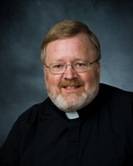
I photographed priests and bishops of the Roman Catholic Womenpriests movement to alter my own deep-seated perception of priests as male. I tried to capture their devotion and conviction and pay tribute to their efforts to reform the church.

Complete Article HERE!

Catholic priest donated $1000 to gay ‘marriage,’ diocese mum

A Catholic priest’s donation to support redefining marriage in Minnesota has been revealed, deepening a rift between a conservative Catholic hierarchy and more liberal subordinates in the blue state over gay ‘marriage.’

The Duluth News Tribune reported Sunday that Rev. Peter Lambert of St. Louis Catholic Church in Floodwood had donated $1,000 to Minnesotans United for Families, the group fighting a constitutional marriage amendment, in March.
The Diocese of Duluth, where Lambert is stationed, has donated $50,000 to support the traditional marriage amendment. Duluth Diocese spokesman Kyle Eller told the Tribune that Lambert didn’t intend the donation to be a public statement.

“It was my understanding that Father Lambert wasn’t aware that the contribution would be made public, and it wasn’t intended to be a public statement,” said Eller, who declined further comment.

The diocese didn’t immediately respond to an email from LifeSiteNews.com requesting comment Tuesday.

The bishops in Minnesota have ranked among the most outspoken Catholic defenders of traditional marriage in the country in recent years. In 2010, the prelates backed a comprehensive six-week campaign to re-catechize their flock on the Church’s moral teaching on marriage and sexuality.

In January, Archbishop John Nienstedt of St. Paul and Minneapolis emphasized to clergy under his purview, which includes the Duluth diocese, the importance of their adherence to Church doctrine on the marriage question.

“The gravity of this struggle, and the radical consequences of inaction propels me to place a solemn charge upon you all,” he said. “On your ordination day, you made a promise to promote and defend all that the Church teaches. I call upon that promise in this effort to defend marriage. There ought not be open dissension on this issue.”

Nienstedt again urged the Catholic faithful this Sunday to support the proposed marriage amendment that will appear on the general election ballot this November.

Supporters of redefining marriage have meanwhile been targeting Catholics with their own message.

An openly homosexual religious priest from St. John’s Abbey in Collegeville, Minn. told a crowd of 200 in June that Catholics are permitted to vote against the amendment as a matter of freedom of conscience.

“I believe this amendment violates an important principle of Catholic teaching, and that as Catholics, we can vote no,” Rev. Bob Pearson said.

Complete Article HERE!

Rev. Stan Sloan has dedicated his life to serving his fellow men

Stan Sloan is not your ordinary Reverend. As a former priest of the Diocese, he has dedicated his life to serving his fellow men, fallen in love, was out during his priesthood, stood up and since departed from the Roman Catholic Church, and even scarier assimilated back into the dating scene after his priesthood. What matters to Sloan is service and perspective – both, which are for and from the people he has helped and continues to help throughout his career.

Currently, as Chicago House and Social Service Agency’s CEO, Sloan has taken his passion for service and his perspective from his days at St. Leonard’s House where he aided former prisoners and homeless people and instilled it back into the community. With exciting, new endeavors with Sweet Miss Givings Bakery, the development of a TransLife Center, as well as events that include Dance for Life, an all-out dance party, at the Park West on September 15 and the charity’s annual speaker series featuring fashion designer Kenneth Cole in November, Sloan has made Chicago House his new Diocese.

TC: (Terrence Chappell) As the longest running CEO of Chicago House and Social Service Agency, it could be argued that you are Chicago House. Who were you before Chicago House?

SS: (The Rev. Stan Sloan) I was a Catholic priest in the Diocese of Tulsa, Oklahoma up until 1995. In 95′ I just decided that I couldn’t do that anymore. I liked what I was doing and I liked the people I was working with, but I couldn’t stand working for the Roman Catholic institution or the hierarchy.

TC: What was the turning point that moved you to transition out of the Roman Catholic Church?

SS: As gay men we under sell this a lot; being gay is so much more about whom you have sex with. I mean even if you’re a celibate gay man, your gay friendships are still important to you. So, if I had a Friday night off, I would go out with my gay friends – not to gay bars because I knew that was crossing the line, but I would go out to dinner with them. Again, I was not breaking any vows. So, the bishop of Tulsa called me in and said that you’re fixing with the gay community. I said yes, but I’m being celibate and that we’re all God’s people. He said it’s one thing to minister to them but it’s another to be friends with them.

TC: Wow. How did that make you feel?

SS: Yea. It’s horrible. It’s okay to minister to them but to not befriend them? You don’t befriend people when you’re actually contributing to the cause let alone their [Roman Catholic Church] stance on birth control. If it sounds like I’m bitter and angry, it’s because I am.

TC: What do you do with all that bitterness and anger?

SS: I exercise like a mad man. I love my work. I’ve got good friends.

TC: However, you didn’t always feel this way. What was it that attracted you to the priesthood?

SS: I always had a natural prayer life growing up as a child. My parents were devout Catholics, and I enjoyed going to daily mass. It was always just a natural fit for me. I actually came out and had a boyfriend before I was a priest.

TC: Oh really? How did that work out?

SS: When I was in seminary I was celibate. So, as I went through the boards to start going into seminary, they asked me if I was gay and I said yes. At the time it was much more permissive than it is now. The church has gone backwards. However, I said if I do this I’ll be celibate.

TC: How did your boyfriend at the time react to you deciding to become a priest?

SS: I told him at the time, Jimmy this is something I have to try and that chances are that I won’t like it and I will be back. We were both kids at the time – we were like 23. He told me if I do this, you do this and when you come back, I won’t be here. So, we broke up, and I went.

TC: But then you quit the Catholic Church.

SS: Yup and never once did I think that I made the wrong decision. It was hard. You grieve it like you grieve a divorce. But, I was lucky that I happen to pick the Episcopal Church as my next step. We just okayed doing gay marriages, so the Episcopal Church is already ahead. I just feel like in the idea world, the Churches or religion in general should lead the rest of the world on social justice issues. However, instead you have ridiculous groups who do just the opposite. I’m very proud to be a part of denomination that is at the forefront of equality, sexual equality, and gender nonconforming issues.

TC: And then you transitioned over to serving and helping homeless people.

SS: Yes. Serving homeless people really puts perspective around your life and whatever is getting you down. You get to see people who have every reason to not have any hope but they do and they are excited about moving forward with their lives. Every day I get to make a difference.

TC: What kind of perspective did that give you at the time?

SS: I was just this naïve, white kid who grew up in Texas in middle-class America. I remember my first day at St. Leonard’s. I was working with all ex-offenders who just got out of prison. I was afraid of these guys. I’ve never been around a population like this. So, I went in and I had to talk to these guys. I started talking to them and I’m thinking to myself I’ve got two master’s degrees and so on. But then I realized that they were way more afraid of me then I was of them. For instance, I’m a part of the world they want to break into – mainstream society.

TC: How did this perspective help you at Chicago House?

SS: Well one of the things Chicago House gets to do on a daily basis is that we get to take our donors and show them the lives of our residents. I invite people all the time to come. It’s great because different people from different factions of our society can meet. We’re not as different as we think we are.

TC: Is there a story of a particular resident or someone that you have helped that stands out?

SS: One of my first days at St. Leonard’s House, I met a guy who I was working one on one with – helping him with his resume and stuff like that. It was like a light bolt when I was working with this guy; this guy’s IQ is off the charts. This guy is way smarter than I am. We stayed in touch and he did a good job while he was at St. Leonard’s House. He wanted to start up his own computer business. I gave him some money to help him get it started. Now, he owns his own computer business and has a home in Lake Forest. Mind you at the time he was just out of prison and would’ve been homeless if he wasn’t staying at St. Leonard’s House.

TC: When you started at Chicago House, you were still a priest in good standing but no longer a part of the Diocese. So, that means you could start dating. How was that?

SS: I didn’t remember from being 23 of how horrible dating was but I learned very quickly it’s a horrible process (laughs). I remember I had this over-the-top romantic idea that I would fall in love with the right one and wouldn’t have to date very much. Of course that’s not true, that’s not how life works.

TC: How was your “first” date?

SS: I signed up with The Smelts for no other reason because I decided that I wanted to date and that I need to find a husband. There was an adorable guy named Seth Hoff, who is still here in town, and I saw him and I thought he was so hot. So, I just found out his name and I just cold called him. I told him I was at swim practice today and that I saw him and asked him out to dinner. He said that I was the guy with no body fat. He said yes and we went on a few dates. I mean I was insane, so it must have been crazy for him. For instance, we would have fun on the date and instead of saying, “Hey, let’s talk soon,” I’d just say, “Can we get another date down?”

It was a very good, funny introduction into the dating world. (Laughs)

TC: What are some exciting, new developments for Chicago House?

SS: I’m excited to announce that Little Miss Muffet will take on Sweet Miss Giving’s product line. They have licensed our brand name and the internship program will operate out of their factory. Little Miss Muffet will give us a dime off every cookie, off every cupcake, and biscotti they will sell. Right now, we are trying to see how we are going to position ourselves with places like Costco and stuff since they are a national baker and they are already in all those places.

Our other big development is our TransLife Center. It will be in a gracious, old mansion where the first floor will be an emergency drop-in center for trans adults who just need to get off the streets for a day. The upstairs rooms will be built as well. There will be nine bedrooms for transgender men and women who are homeless and who need to get their life together. We will be hiring a full-time career counselor who will be transgender himself or herself who will be helping people with employment. We will have a doctor from Children’s Memorial Hospital who will be putting in weekly hours at the TransLife Center connecting people with care, since there is a huge instance of abuse of transgender people by medical professionals. So, as far as I know it will be the most comprehensive service offered to transgender people. We’re very excited about this.

TC: What do you want the LGBT community as a whole to take from Chicago House’s move in the direction of helping and aiding the trans community?

SS: We’ve made good progress as an LGB community and it’s time to start embracing our transgender brothers and sisters.

TC: What are some upcoming events Chicago House has coming up in the future?

SS: We will be having our One Night Stand event at the Park West on September 15. It will be a dance party. We’ve got all sorts of performers. Keith Elliott, who started Dance for Life and who started the burlesque show for TPAN will be a part of the event, so you know it’s going to be brilliant.

November 2 we’ve got Kenneth Cole coming for our speaker series. Kenneth Cole is the national head of the American Foundation of AIDS Research. So, he’s incredibly knowledgeable and will be a fantastic speaker.

TC: What do you want your legacy to be?

SS: That people’s lives are better because you existed.

To find more information about Chicago House visit www.ChicagoHouse.org.

Complete Article HERE!