Atheists Who Do Good Are Redeemed, Not Just Catholics, says the pope

File Under: This is gonna make some waves!


Pope at Mass: Culture of encounter is the foundation of peace

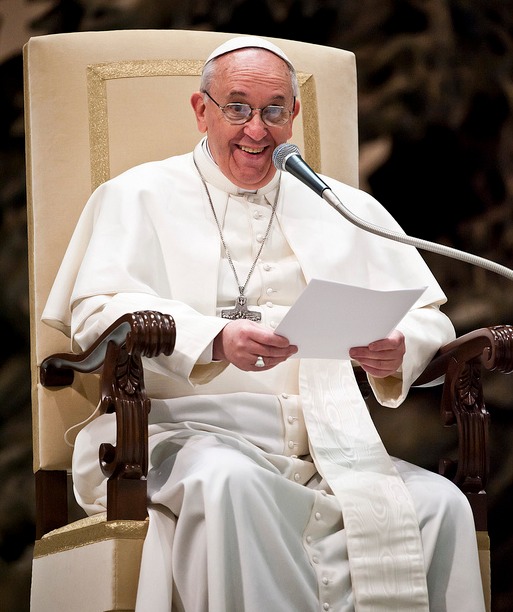
(Vatican Radio) “Doing good” is a principle that unites all humanity, beyond the diversity of ideologies and religions, and creates the “culture of encounter” that is the foundation of peace: this is what Pope said at Mass this morning at the Domus Santae Martae, in the presence of employees of the Governorate of Vatican City. Cardinal Bechara Boutros Rai, Patriarch of Antioch of the Maronites, concelebrated at the Mass.

Wednesday’s Gospel speaks to us about the disciples who prevented a person from outside their group from doing good. “They complain,” the Pope said in his homily, because they say, “If he is not one of us, he cannot do good. If he is not of our party, he cannot do good.” And Jesus corrects them: “Do not hinder him, he says, let him do good.” The disciples, Pope Francis explains, “were a little intolerant,” closed off by the idea of ​​possessing the truth, convinced that “those who do not have the truth, cannot do good.” “This was wrong . . . Jesus broadens the horizon.” Pope Francis said, “The root of this possibility of doing good – that we all have – is in creation”:

“The Lord created us in His image and likeness, and we are the image of the Lord, and He does good and all of us have this commandment at heart: do good and do not do evil. All of us. ‘But, Father, this is not Catholic! He cannot do good.’ Yes, he can. He must. Not can: must! Because he has this commandment within him. Instead, this ‘closing off’ that imagines that those outside, everyone, cannot do good is a wall that leads to war and also to what some people throughout history have conceived of: killing in the name of God. That we can kill in the name of God. And that, simply, is blasphemy. To say that you can kill in the name of God is blasphemy.”

“Instead,” the Pope continued, “the Lord has created us in His image and likeness, and has given us this commandment in the depths of our heart: do good and do not do evil”:

“The Lord has redeemed all of us, all of us, with the Blood of Christ: all of us, not just Catholics. Everyone! ‘Father, the atheists?’ Even the atheists. Everyone! And this Blood makes us children of God of the first class! We are created children in the likeness of God and the Blood of Christ has redeemed us all! And we all have a duty to do good. And this commandment for everyone to do good, I think, is a beautiful path towards peace. If we, each doing our own part, if we do good to others, if we meet there, doing good, and we go slowly, gently, little by little, we will make that culture of encounter: we need that so much. We must meet one another doing good. ‘But I don’t believe, Father, I am an atheist!’ But do good: we will meet one another there.”

“Doing good” the Pope explained, is not a matter of faith: “It is a duty, it is an identity card that our Father has given to all of us, because He has made us in His image and likeness. And He does good, always.”

This was the final prayer of Pope Francis:

“Today is [the feast of] Santa Rita, Patron Saint of impossible things – but this seems impossible: let us ask of her this grace, this grace that all, all, all people would do good and that we would encounter one another in this work, which is a work of creation, like the creation of the Father. A work of the family, because we are all children of God, all of us, all of us! And God loves us, all of us! May Santa Rita grant us this grace, which seems almost impossible. Amen.”

Complete Article HERE!

Catholic Priest Hosting Gay “Sports Camp” To Convert Homosexuals Through Athletics

File under: What a brilliant idea! This same thing worked so well for all of us gay priests.

Me thinks this Father Paul Check guy just wants to be around a bunch of hot and sweaty homo jocks. Hey Fr. Paul, we can totally see right through you. You are scary creepy, just like your predecessor, Father john Harvey, OSFS.


After figuring out that electroshock therapy and gay conversion therapy didn’t really work, a Catholic seminary in Wynnewood, PA has come up with yet another suggestion on how to force grown men into changing their sexuality. You know, because they chose it in the first place.

same-sex atraction sports

The organization, run by Father Paul Check, is planning the 14th year of a weeklong Catholic “sports camp,” which will help men to shed their homosexual desires through playing contact sports with other barely-clothed, sweaty, and presumably sexy gay men.

Check believes the lack of contact sports at an early age can lead men to develop homosexual tendencie

Something smells fishy, and we’re not the only ones that think it. Ed Coffin, a member of Peace Advocacy Network, tells NewsWorks’ Elizabeth Fiedler he plans to protest the annual hookup mecca:s, and hopes to extract the “shame” gay men feel while playing sports with other men. Father Check may be on to something—there aren’t any gay men in major league sports, and if there are, they never win medals or feel accepted.

“It’s very clear what this organization does is focus on turning people who are homosexual–basically trying to change them into heterosexuals or at least get them to live a completely chaste lifestyle–which requires them to not act on any of their homosexual inclinations,” Coffin said. “It falls under the broader realm of conversion therapy. We do feel that this is very detrimental, that’s it’s psychologically damaging.”FatherPaulCheck

And before you knock it, just listen to the satisfaction it brings men who are no longer interested in other men. This testimony, given by “Louis” on the sports camp’s website, proves there’s absolutely nothing homoerotic about sweaty men hugging other sweaty men:

“One time a teammate gave me a sweaty celebratory hug. He was humbly secure in himself, just as he was, selflessly and joyfully showing affection to others. I also liked when one man, whom I’d felt intimidated by, gave me a pat on my belly, meaning “way to go!” His touch made me feel accepted as one of the guys.”

Where do we sign up?

Complete Article HERE!

Theology Has Consequences: What Policies Will Pope Francis Champion?

By Mary E. Hunt

Now that the smoke has cleared from St. Peter’s Square, the future of the Roman Catholic Church is on the minds of many. Catholics are eternally hopeful, so the news of the papal election of an Argentine Jesuit, Jorge Mario Bergoglio, a man of simple personal ways, engendered a certain enthusiasm.

My first official act in the new pontificate was to call a wise octogenarian friend in Buenos Aires, my favorite city in the world, to join in that country’s pride and get an initial assessment of the man. Her reaction was what I would have expected from a Catholic in Boston if Cardinal Bernard Law had been elected. Her one word that stood out was “scary.”
Progressive Catholics had low expectations of the conclave since only what went in would come out, only hand-picked conservative, toe-the-party-line types were electors. Moreover, the process was flawed on the face of it by the lack of women, young people, and lay people. It was flawed by a dearth of democracy. Not even the seagull that sat on the chimney awaiting the decision was enough to persuade that the Holy Spirit was really in charge.

Structural changes in the kyriarchal model of church are needed so that many voices can be heard and many people can participate in decision-making in base communities, parishes, regions, and indeed in global conversations among the more than one billion Catholics. Short of this, no amount of cleaning up the curia or leading by personal asceticism, which are both expected of Pope Francis, will suffice for more than cosmetic changes. Leaving aside the ermine-lined cloak that his predecessor favored is symbolically notable but not institution changing.

The papal selection process, long thought to be secret, is now quite transparent. Once the white smoke rose, but before the name was announced, the Italian Bishops’ Conference tipped off the world in their email of congratulations to Cardinal Angelo Scola of Milan. Oops! He was not elected pope, even though he was widely considered the choice of the Pope Emeritus and those who want the curia reformed. Instead, the second highest vote getter at the previous conclave (2005) that picked Benedict XVI was chosen this time. Cardinal Bergoglio was apparently more acceptable to left, right, and center of a very conservative group of electors.

Geography is destiny. A cursory look at the Roman Catholic Church worldwide shows more than 400 million Catholics in Latin America, 125 million each in Asia and Africa, 265 million in Europe, 100 million in North America, and 8 million in Oceana. A Latin American pope is a good business decision, consistent with what an economist suggested as part of a wholesale makeover of the institution. The European Catholic Church has simply lost market share (from 65 percent a century ago to 24 percent now). The Global South is the church’s future. So a Latin American pope is a logical choice. But let the record show that this one comes from a country where Mass attendance numbers are more like France today than Italy of old. Argentina is an increasingly secular democracy where Cardinal Bergoglio grew used to being on the losing side of social change efforts, including divorce and same-sex marriage, which are now legal there. Argentina is Argentina.

After completing a doctoral dissertation in which I compared Latin American liberation theology and U.S. feminist theology, I spent 1980-81 as a visiting professor at ISEDET, the ecumenical Protestant seminary in Buenos Aires. I volunteered at Servicio Paz y Justicia led by Adolfo Perez Esquivel, where I got an education about social justice. The “Dirty War” was raging. Religious people were working feverishly to find thousands of people who had been “disappeared” and prevent others from suffering the same fate. Many Catholic priests perished; Jews suffered disproportionately to their numbers in the population.

Our faculty, some members of the Lutheran school, and those of Seminario Rabinico Latinoamericano led brilliantly by Conservative Rabbi Marshall Myer (to whom Jacobo Timmerman dedicated his stirring book, Prisoner Without a Name, Cell Without a Number) met monthly for lunch and discussion of how we could be useful in a difficult situation. I do not recall any Jesuits in attendance. Plans to host a weekend meeting at our school focused on human rights and youth resulted in the firebombing of the ISEDET library in November 1980 with the loss of 2,000 books. I learned close up and personal that theology has consequences.

The controversy over then Cardinal Bergoglio’s role in the kidnapping of two Jesuits during this period is instructive. As a Jesuit leader, Padre Jorge, as he liked to be known informally, opposed liberation theology and the ecclesial model of base communities that was consistent with it. In my view, he opposed the most creative, politically-useful, scripturally-sound way of thinking about how people who were made poor by the avarice of others could change their context and bring about justice.

Instead of putting the public weight of the Jesuit order behind the efforts of some of his brothers in slums and shantytowns (and the women who were involved in both theological and pastoral work from this perspective), he ordered Jesuits to stick with parish assignments. The two priests in question chose to cast their lot with the poor instead of obey the dictates of the order.

Did the Jesuit superior-now-Pope Francis call the military dictators and agree to their kidnapping? No one is accusing him of this. Adolfo Perez Esquivel, a human rights champion and Nobel Peace Laureate (1980) knew the scene so I trust his word. He says that the now pope was not involved with the military. There were bishops who played tennis with the generals, but Bergoglio was not one of them. In fact, Padre Jorge is alleged to have intervened with military leaders for the release of the two Jesuits. But this is small comfort.

The larger conservative theological program—which was in public opposition to the best efforts of church people to bring about justice by living out liberation theology principles—helped to create the dangerous situation in the first place. To apologize thirty years later and say the institutional church did not do enough does not bring back the disappeared. Theology has consequences. Moral do-overs are few and far between.

The hierarchical church’s behavior was to Argentina what the sex abuse cases and episcopal cover-up have been for U.S. Catholics, namely the straw that broke the camel’s back. I am haunted by a picture of the Mothers of the Plaza de Mayo, mothers of the disappeared, who went to the church center where the bishops were on retreat to clamor for their help in finding their children. The picture shows a line of police between the mothers and the bishops, the mothers on one side of the fence and the bishops on the other. The institutional church in Argentina has never recovered its credibility. To the contrary, it is further eroded by similar instances of being on the wrong side of the history of justice.

The election of a doctrinally conservative pope, even one with the winning simplicity of his namesake, is especially dangerous in today’s media-saturated world where image too often trumps substance. It is easy to rejoice in the lack of gross glitter that has come to characterize the institutional church while being distracted from how theological positions deepen and entrench social injustice. A kinder, gentler pope who puts the weight of the Roman Catholic hierarchal church behind efforts to prevent divorce, abortion, contraception, same-sex marriage—as Mr. Bergoglio did in his country—is, as my Argentine colleague observed, scary. While he may clean up some of the bureaucratic mess in the curia, he shows no evidence from his Argentina actions that he will be any more responsive than his predecessor to changing policies and structures that oppress the world’s poor, the majority of whom are women and children.

There is something perverse about opposing condom use and then washing the feet of people with HIV/AIDS. There is something suspect about opposing reproductive health care for women who may not want to get pregnant and then generously insisting on the legal baptism of children whose parents are not married. There is something dubious about calling the hierarchical church to a simpler way of being and ignoring the many women whose ministerial service would enhance its output. The Spanish expression that comes to mind is “what you give with the wrist, you erase with the elbow.” This seems to be the Jesuitical pattern of the new pope.

Lesbian, gay, bisexual, and trans people kill themselves because Catholic hierarchs tell them that their sexuality is “intrinsically morally disordered.” Women die from unsafe, illegal abortions because the Catholic hierarchy spends millions of dollars opposing legislation that would make their choices safer. Survivors of sexual abuse by clergy live tortured lives because the cleric-centric structures of the church favor their abusers. While a few nuns famously ride the bus, the Vatican’s current crackdown on women religious makes most of them feel as if they have been thrown under the bus. Theology does indeed have consequences.

It is early to opine about the pontificate of Pope Francis. Catholics, including this one, are a hopeful lot. Five thousand journalists in Rome for the conclave should have asked more critical questions. My observation is that the recent papal election only serves to reinforce and reinscribe the Vatican’s power. In the absence of a religious counter-narrative, at a time when progressive Catholic voices are all but silenced, the papal theatrics—complete with an appealing hero triumphing in the end—keep the focus on the personal and spiritual, off the political and theological. It is time to reverse that pattern before any more people disappear.

Complete Article HERE!

Church of Scotland votes to allow gay ministers

General assembly votes to allow congregations to admit gay ministers but only if they specifically elect to do so

By Severin Carrell

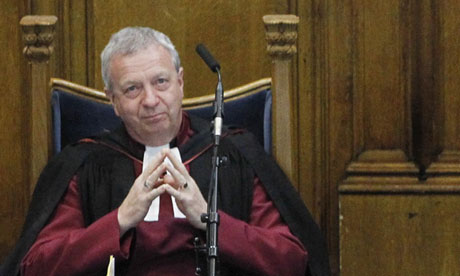
The Church of Scotland, the country’s largest Protestant church, has narrowly voted to admit gay and lesbian ministers after traditionalists agreed to compromise after four years of division.

The church’s ruling general assembly voted to allow congregations to admit gay ministers but only if they specifically elect to do so, in a radical departure from more than 450 years of orthodoxy set in train by the protestant reformer John Knox.

The vote is likely to lead to an end to a four-year controversy which has split the church after an openly gay minister, Scott Rennie, was selected to lead Queen’s Cross parish in Aberdeen in 2009.

The general assembly, equivalent to the Church of England’s synod, rejected a motion which would have made gay ordination – solely for ministers in civil partnerships or who are celibate – the default position of the Church of Scotland, by 340 votes to 282.

The new deal – which now has to be written into a new church law and authorised by next year’s general assembly – affirms the traditional teaching of the church as favouring heterosexual ministers, but will allow congregations to opt in to select gay ministers if they wish.

The church’s complicated law-making procedures could still mean the compromise measure – which was proposed in a late motion tabled on Monday by the previous moderator, Albert Bogle, may not be law until 2015.

John Chalmers, the Church of Scotland’s principal clerk, said the vote was historic: “This has been one way or another, a massive vote for the peace and unity of the church.” He said both sides of the debate had moved to agree a compromise.

The general assembly had voted for the “mixed economy”, he said, where congregations could decide to uphold traditional teachings to only employ heterosexual ministers but whether others could take on gay and lesbian ministers.

Critics of gay ordination had warned that scores of Church of Scotland ministers and congregations could leave in protest at proposals to make it church policy that all congregations had to accept gay ministers unless they opted out of doing so.

Six ministers and two congregations have already resigned, while senior figures in the far more orthodox Free Church of Scotland said that around 50 ministers have been in touch about defecting.

The Church of Scotland has been edging towards gay ordination ever since Rennie’s appointment: in 2011, the general assembly voted to allow gay ministers already in post to remain in place, so long as they were in openly-declared civil partnerships or celibate, and had been ordained before 2009.

The vote came after the general assembly heard from the Rev Elizabeth Spence, a lesbian minister from Ibrox in Glasgow.

“For me, there is nothing bigger than whether I’m accepted in this church or not, because I am a gay woman,” she said, adding: “It’s now time; it’s time to decide, so those of who are in this limbo can get under the wire.”

A minister based in England, the Rev Jim Sharp, also urged the assembly to support gay ordination, in the spirit of accepting the total equality of all people, regardless of gender, ethnicity or sexuality.

“Let us be brave, let us bold,” he said. “Let us not put ourselves in the position where ten, 20 years from now, people say of us ‘how on earth can anyone think that lesbians and gays were second class citizens and not worthy to be treated as equals?’”

The Rt Rev Roy Patton, the moderator of the Presbyterian Church of Ireland, warned the delegates there would be serious tensions within the global presbyterian church if the general assembly voted to admit gay ministers. That would be “hard to comprehend”, he said.

“It would lead a church away from the tradition of the church,” he said. “We do believe this is contrary to the message of god and will make it difficult for the church as a whole to reach out to the wider world.”

The Rev David Randall, another traditionalist, said the controversy had already divided the church: it had lost ministers, congregations and money as a result. There were other people in the church “hanging on by the fingernails”, hoping the move towards gay ordination would be blocked.

The proposals in the church’s theological commission report on ordaining gay ministers for a gay marriage liturgy was one of his “worst nightmares”, Randall said. “The basic issue is whether or not this church stands by the teaching of scripture or whether we think that we know better than god’s will,” he said. “This is no time for compromise.”

Complete Article HERE!

Cardinal Keith O’Brien still a danger, say abuse accusers

Complaints of Vatican whitewash as O’Brien leaves Scotland for penance in exile

by Catherine Deveney

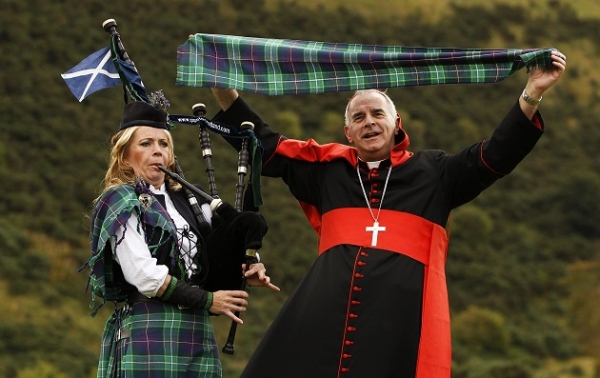
The four men whose accusations of sexual misconduct led to the dramatic resignation of Britain’s leading Catholic cleric as archbishop have attacked a Vatican announcement last week that he will leave the country for a period of “prayer and penance”. The three priests and one ex-priest, whose complaints were first reported in the Observer in February, say Cardinal Keith O’Brien should have been sent for psychological treatment instead.

One of the priests warns: “Keith is extremely manipulative and needs help to be challenged out of his denial. If he does not receive treatment, I believe he is still a danger to himself and to others.”

The four men are demanding an investigation into O’Brien’s “predatory behaviour” and say that stripping him of his cardinal status should not be ruled out. Despite making statements to the papal nuncio three months ago, they have heard nothing about a formal investigation into the cardinal, who was a vociferous public opponent of homosexuality.

“Removing O’Brien from Scotland might temporarily reduce the embarrassment to the church authorities but this story has not been fully told yet,” says Lenny, the ex-priest complainant. “We have been patient but I’m still waiting to be told what, if any, process the church has in mind.”

“They’re all passing the buck on this,” agrees one of the priests. “It’s a smokescreen. We need an investigation and Keith needs to be challenged by professionals to acknowledge the damage he has done to people, himself and the church.”

The Vatican’s statement followed O’Brien’s recent return to Dunbar, in his old diocese of St Andrews and Edinburgh, where he was due to retire. Peter Kearney, director of communications for the Catholic church in Scotland, told the Observer that no one in Scotland had the authority to challenge O’Brien’s behaviour, his return to Scotland or his residence in church property. “We are part of the Roman Catholic church and the ultimate authority for the way the church functions in Scotland lies in Rome. The only person who is senior to the cardinal is the pope.”

“That,” says one complainant, “is farcical.” “I don’t care about red hats,” says another, “but if the red hat is shoring up his perceived power, it has to go.”

Although there is no official investigation by the Scottish church, behind the scenes Bishop Joseph Toal of Argyll and the Isles has been asked to talk informally to the complainants. “It’s been hard listening to what’s being said,” he admitted to the Observer. “But it’s important we hear what they’re saying and the gravity of the situation. If I can help in some way, I will.”

Calls for an investigation have been backed by Catholic theologian Professor Werner Jeanrond, master of St Benet’s Hall at Oxford University. “Instead of dealing with issues we are constantly presented with this half-baked solution of removing people. It is not a grown-up church handling this case. I am in favour of investigation on the personal level, so that he can own up to his concealment and own his own life again, but because he was in the clerical life it also has to be a formal investigation. We also have to have an investigation into why we are in this mess.”

O’Brien’s downfall reveals a bigger tragedy, argues Jeanrond. “As a church, we have failed to come to terms with homosexuality. Once and for all we have to face up to the fact that there are homosexuals, gays, lesbians and transsexuals.” Jeanrond has been shocked by the absence of an organised laity in Britain compared with other European countries. “As soon as something happens on the clerical side, the whole church is paralysed. That’s ridiculous. Is the whole of Jesus’s mission coming to an end because Keith O’Brien has sinned?”

The four complainants say an investigation is about justice, not vengeance. “I will give forgiveness if asked,” says one, “as long as the damage has been recognised. At times, we don’t do ourselves a lot of good by throwing pardon around like confetti without a change of heart. I am angry at the system that licked his boots and allowed him to get on with it.”

Complete Article HERE!

Cardinal Dolan and America’s troubled Catholic Church

By Anthony M. Stevens-Arroyo

Cardinal Dolan, president of the USCCB, says he needs an “attractive, articulate, intelligent” woman as his personal spokesperson, claiming that “the days of fat, balding Irish bishops are over.” He has chosen Kim Daniels, a long-time effective advocate of conservative causes, and ex-personal domestic policy czar to Sarah Palin. Might one say that Daniels has gone “from Sarah Palin’s brain to Cardinal Dolan’s voice?” But her promotion also signals that the cardinal as head of the USCCB has had more failures than successes.

dolanThis is not to deny Dolan’s talents. Seldom has Catholic America had a prelate so effective with media. He uses lunch-pail comparisons to explain even the most complex of church teachings. He stood up to inquisitorial Catholic right-wingers and invited President Obama to the annual Al Smith Dinner. But I believe an honest appraisal would show that influence and respect for the USCCB is lower now than when Dolan assumed the office. These are moments when I think his leadership struck out.

Strike one was in allowing division between Catholic America’s religious sisters and the bishops. Perhaps he could not have controlled a Vatican investigation into the LCWR, but surely he could have influenced Rome’s maladroit handling. Moreover, the Nuns-On-the-Bus tour turned into a symbolic civil war with the sisters on one side and the bishops on the other. Dolan should have known his side would lose because the nuns have always held the warmest spot in Catholic hearts.

Strike two was in silence after the over-the-top comparisons by clerics like the Bishop of Peoria. who compared President Obama to Hitler and by laypersons like the Knights of Columbus’ Supreme Knight Carl Anderson who promoted Catholic resistance to Obama in the spirit of the Mexican Cristeros. The latter group of Catholics, it will be remembered gathered armed militias against the Mexican government and eventually assassinated a president. The legal principle here is “Qui tacuit, consentire,” and it means that silence is the same as acquiesce. This criticism extends to Bishop Finn of Kansas City who was found guilty of violating civil law and his own policy against pedophile clerics. By going easier on Catholic males than on the religious women battling for social justice on economic matters, Dolan widened the deepening rifts in Catholic America.

Strike three was allowing the Fortnight to Freedom to become identified with politicking for Mitt Romney. This effort had been spawned in the murky dark places of the Manhattan Declaration with obvious partisan intent. Tacking on the current immigration law as another instance of “religious persecution” was not enough to dislodge the public perception that the Fortnight was intended to instruct Catholics to vote for Republicans. This alliance with evangelicals was unfruitful. The original evangelical partners were a questionable crew embracing entrepreneurial pastors who raise fabulous amounts of money for partisan causes. Our Catholic tradition, however, obliges bishops to pastoral roles. When the bishops jumped into the same barrel with the right-wing pastors they diminished Catholic tradition. Dolan should have seen this coming. (Let me classify this as a “foul ball” so that the cardinal gets another swing.)

The last strike was in undercutting the policy of a full committee of the USCCB with contradictory statements by individual bishops. After the Social Justice Committee of the USCCB had condemned the Paul Ryan budget, Cardinal Dolan and Madison Bishop Robert Morlino rejected the conclusion that Ryan’s plan was outside Catholic teaching. Given new life, Ryan quickly dismissed his episcopal critics as “not all the bishops” happily trivializing the USCCB committee structure with his quip.

Once you break the code yourself, you give others license to do the same. Thus, while Dolan stated the need to consider more carefully the Obama remedy to the HHS mandate on February 2, 2013, Philadelphia’s Archbishop Chaput issued a statement on February 4, 2013 that jumped the gun, claiming total rejection came from “courage that gives prudence spine and results in right action, whatever the cost.” Two days later, Dolan said “me too.”

I consider it appalling that the president of the USCCB needs a personal spokesperson in addition to the USCCB’s resident Sister Mary Ann Walsh. Ensuring division among bishops to promote the influence of an individual cleric is never good.

Complete Article HERE!

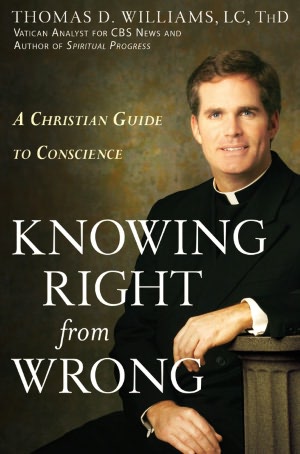
Legion priest leaves priesthood to care for son

A prominent American priest of the Legion of Christ religious order has decided to leave the priesthood after admitting he fathered a child years ago.

The Legion said Saturday the Rev. Thomas Williams, a moral theologian, author, lecturer and television personality, had asked Pope Francis to be relieved of his celibacy and other priestly obligations. A friend, the Rev. John Connor, wrote in a Legion blog that Williams wanted to care for his son and the mother.

After Williams’ admission, the Legion’s then-superior acknowledged he had known for years about the child, yet allowed Williams to continue teaching and preaching morality. It was another blow to a congregation discredited by revelations that its founder was a pedophile who built a cult-like order which the Vatican is trying to reform.

Complete Article HERE!

Church lecture on morality? What a joke (Opinion)

Veiled threats by the Catholic hierarchy to excommunicate politicians who support the proposed abortion legislation are clerical comedy at its blackest.

As administrators of a private club, governed by self-generated rules, bishops and cardinals are perfectly entitled to formulate their own membership policies (within the law, of course).

But the excommunication tactic involves a darkly hilarious proposition – that good standing with the Vatican is synonymous with morality.

Anyone convinced by this quaint notion should break the habit of a lifetime and open their eyes.

On any given Sunday, many of the country’s most twisted crooks can be found in churches of various kinds.

Sometimes, the worst offender is the degenerate priest on the altar; sometimes, it’s the corrupt TD in the front pew.

In the more salubrious parishes, it’s the gangster banker who likes to showcase his spiritual side by leading the prayers of the faithful.

This is not to say that believers are more prone to greed or deceit than anybody else but rather that the greedy and deceitful frequently disguise themselves by infiltrating the company of believers.

Hiding in plain sight is a well established law-evasion technique; in holy Catholic Ireland, the strategy has been refined to involve hiding within the sight of God.

Excommunication would be an excellent idea if church authorities started with the real reprobates and worked downwards – just like Jesus did when He decided to cleanse the temple.

Complete Article HERE!

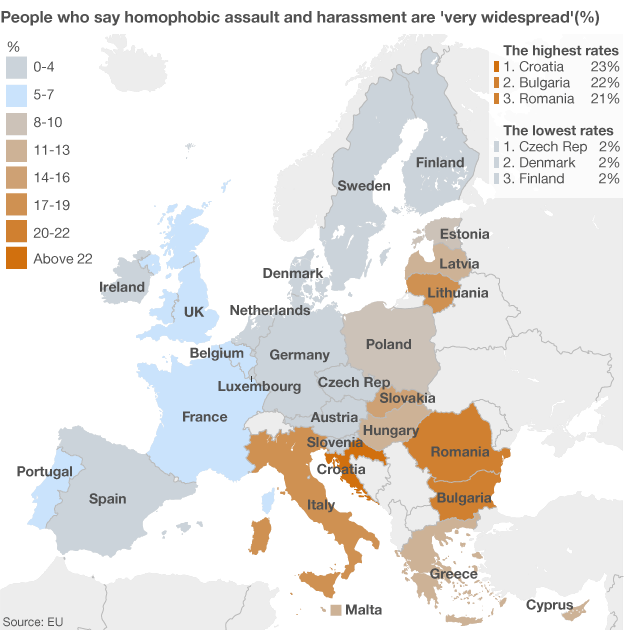
EU LGBT Survey: Poll on homophobia sparks concern

A quarter of gay people surveyed in a major EU poll say they have been subjected to attacks or violent threats in the past five years.

Poorer and younger respondents were more likely to face discrimination due to their sexuality, the survey found.

The EU’s Fundamental Rights Agency surveyed 93,000 people in the EU and Croatia for what it calls the most comprehensive survey of its kind.

Friday marks the International Day against Homophobia and Transphobia.

The EU LGBT (Lesbian Gay Bisexual Transgender) Survey shows some worrying trends, says the BBC’s Anna Holligan in The Hague, where some 300 politicians and experts are gathering to discuss shaping new European Union policies to stamp out homophobia.

Unreported discrimination
FRA Director Morten Kjaerum said “big challenges” remained when it came to battling discrimination against LGBT people across the EU.

The online survey asked lesbian, gay, bisexual and transgender respondents whether they had experienced discrimination, violence, verbal abuse or hate speech on the grounds of their sexual orientation or gender identity.

The survey found

Some 26% of respondents (and 35% of transgender respondents) said they had been attacked or threatened with violence in the past five years
Most of the hate attacks reported took place in public and were perpetrated by more than one person, with the attackers predominantly being male
More than half of those who said they had been attacked did not report the incident to the authorities, believing no action would be taken
Half of respondents said they had felt personally discriminated against in the year before the survey, although 90% did not report the discrimination
Some 20% of gay or bisexual respondents and 29% of transgender respondents said they had suffered discrimination at work or when looking for a job
Two-thirds of respondents said they had tried to hide or disguise their sexuality at school.
The FRA hopes the findings will help policy makers to better target their work in promoting the rights of LGBT people.

Spat at
Gay man John van Breugel, from the Netherlands, told the BBC he was shocked by the scale of the problem.

He himself, he said, had been subjected to homophobic abuse only twice in his life.

“First when I was in Germany with my boyfriend and a couple came up and called us ‘dirty gays’,” he said.

On the second occasion, he was in London when someone spat in his face as he went to the shops.

Seeing his attacker approach a gay night club, he told the bouncers what had happened, there was an altercation and the man was arrested, Mr van Breugel said.

“I came out as gay when I was 17,” he recalled. “My best friend never spoke to me again, but everyone else was very accepting – my family and friends were great. At my high school no bad words were said against me.”

He said the EU should do everything it could to tackle hate crime against gay people, including sanctions on countries that allowed homophobic attacks to happen.

Complete Article HERE!

And then there were 12

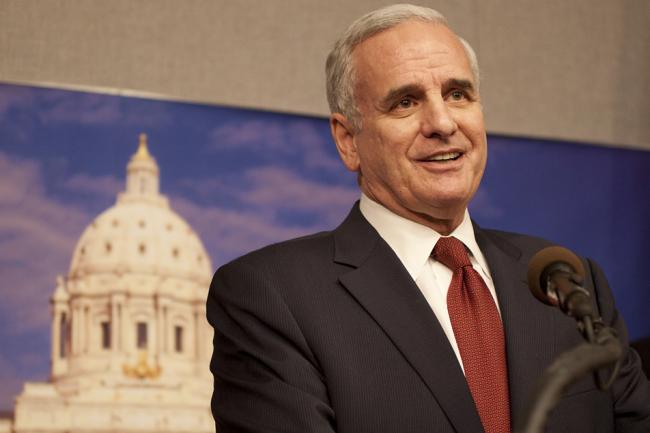
Minnesotans Cheer As Governor Mark Dayton Signs Marriage Equality Bill Into Law

It’s official, y’all!

Following a 37-30 vote in the Minnesota Senate yesterday, the bill that would soon make Minnesota the 12th state to legalize same-sex marriage was officially headed to it’s final destination: the desk of Governor Mark Dayton.


Dayton, a longtime supporter of marriage equality, made a celebration of the landmark event by holding a signing ceremony on the south steps of the Capitol just moments ago.

“What a day for Minnesota, and what a difference a year and election can make in our states,” Dayton told the cheering crowd before he signed the bill. “Last year there were concerns that marriage equality would be banned here forever. Now my signature will make it legal in two and a half months.”

Dayton’s signature on the bill will make Minnesota the first Midwestern state to legalize same-sex marriage by legislative vote, and the third state within the last month, following victories in Rhode Island and Delaware.

Now that the bill has been signed into law, it will take effect on August 1. Something tells us Minnesota’s ministers are in for a fabulous fourth quarter!

Complete Article HERE!