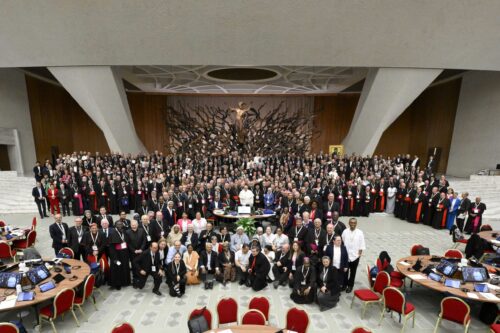
50 Reasons to Boycott the Catholic Church

The Church uses its resources to oppose social progress and positive change all over the world.

By Adam Lee

Last month in Ireland, Savita Halappanavar died, and she shouldn’t have. Savita was a 31-year-old married woman, four months pregnant, who went to the hospital with a miscarriage in progress that developed into a blood infection. She could easily have been saved if the already doomed fetus was aborted. Instead, her doctors did nothing, explaining that “this is a Catholic country,” and left her to suffer in agony for days, only intervening once it was too late.

Savita’s death is just the latest in a long line of tragedies directly attributable to the doctrines and beliefs of the Roman Catholic church. I acknowledge that there are many good, progressive Catholics, but the problem is that the church isn’t a democracy, and those progressives have no voice or vote in its governance. The church is a petrified oligarchy, a dictatorship like the medieval monarchies it once existed alongside, and it’s run by a small circle of conservative, rigidly ideological old men who make all the decisions and choose their own successors.

This means that, whatever individual Catholics may do, the resources of the church as an institution are bent toward opposing social progress and positive change all over the world. Every dollar you put into the church collection plate, every Sunday service you attend, every hour of time and effort you put into volunteering or working for church organizations, is inevitably a show of support for the institutional church and its abhorrent mission. When you have no voice, there’s only one thing left to do: boycott. Stop supporting the church with your money and your time. For lifelong Catholics, it’s a drastic step, but it’s more than justified by the wealth of reasons showing that the church as an institution is beyond reform, and the only meaningful response is to part ways with it. Here are just a few of those reasons:

1. Throughout the world, Catholic bishops have engaged in a systematic, organized effort going back decades to cover up for priests who molest children, pressuring the victims to sign confidentiality agreements and quietly assigning the predators to new parishes where they could go on molesting. Tens of thousands of children have been raped and tortured as a result of this conspiracy of silence.

2. Strike one: “What did the pope know and when did he know it?” The current pope, when he was Cardinal Joseph Ratzinger, was personally implicated in a case from the 1970s in which at least three sets of parents reported that a priest in his diocese had sexually abused their children. In response, Ratzinger assigned the priest to therapy, without notifying law enforcement, and washed his hands of the matter. That priest was back on duty in just a few short days and went on to molest more children.

3. Strike two: In 1981, again when the current pope was Cardinal Ratzinger, he got a letter from the diocese of Oakland asking him to defrock a priest who had acknowledged molesting two children. Ratzinger ignored this letter, and several followup letters, for four years. Finally, in 1985, he wrote back saying that more time was needed, and that they had to proceed very slowly to safeguard “the good of the Universal Church” in light of “the young age of the petitioner” — by which he meant not the victimized children, but the pedophile priest. (By contrast, when a rogue archbishop ordained married men as priests, he was laicized six days later.)

4. Strike three: In 2001, Cardinal Ratzinger wrote a letter, De Delictis Gravioribus, to all Catholic bishops advising them how to handle accusations of sex crimes by priests. There was no recommendation to contact the police, but rather an instruction for them to report such cases only to the Vatican and tell no one else: “Cases of this kind are subject to the pontifical secret.

5. Some church officials, like the American friar Benedict Groeschel, have blamed the epidemic of child molestation on sexually wanton boys who tempt priests into assaulting them.

6. They threaten to cut off funding for immigrants’ rights advocates because they sometimes work with gay-rights advocates. Preventing immigrants from getting legal and medical aid is less important than ensuring the church isn’t contaminated by even indirect contact with anyone who helps gay people.

7. In a sign of how ridiculously disproportionate and unhinged the church’s martyrdom complex is, the current pope has compared expanding the rights of women and gay people to the murderous anticlerical violence of the 1930s Spanish civil war.

8. They’ve used their official UN observer status to team up with Islamic theocracies like Iran and Libya to oppose calls for family-planning services to be made available in the world’s poorest nations.

9. They’ve gone to desperately poor, AIDS-ravaged regions of Africa to spread the life-destroying lie that condoms don’t prevent transmission of HIV.

10. In the mid-20th century, they appointed a special papal commission to study whether Catholicism should permit the use of birth control. When the commission almost unanimously recommended that they should, they ignored that recommendation and doubled down on their absolute ban on contraception.

11. They excommunicated the doctors who performed an abortion on a pregnant 9-year-old who’d been raped by her stepfather.

12. They did not excommunicate the stepfather.

13. Savita Halappanavar wasn’t the first: Catholic-run hospitals are willing to let women die rather than get lifesaving abortions, even when a miscarriage is already in progress and no possible procedure could save the fetus.

14. They refused to provide contraception or abortion to women who were abducted and forced to work as prostitutes, and then filed a lawsuit complaining it was violating their religious freedom when the government took away their contract.

15. In Poland, they ordered politicians to vote for a law banning IVF and threatened to excommunicate any who didn’t comply.

16. They were a major source of the pressure on the Komen Foundation that led to its disastrous decision to cut ties with Planned Parenthood.

17. They’ve announced an inquisition into the Girl Scouts to get to the bottom of its association with morally suspect groups like Doctors Without Borders and Oxfam.

18. They’ve been one of the major forces attacking Obamacare, filing lawsuits arguing that non-church Catholic employers should be able to decide whether or not employee health insurance plans will cover contraception. This is effectively an argument that a woman’s employer should be allowed to force her to pay more for medical coverage, or even place it out of her reach altogether, based on his religious beliefs.

19. In Australia, they allegedly derailed a police investigation of an accused pedophile, putting pressure on higher-ups to get an investigating officer removed from the case.

20. They demanded that Sunday school teachers sign a loyalty oath agreeing to submit “will and intellect” to the proclamations of church leaders.

21. Some top church officials, including the current pope, have advocateddenying communion to politicians who support progressive and pro-choice political ideas. Notably, although the church also opposes preemptive war and the death penalty, no conservative politician has ever been denied communion on this basis.

22. They’ve cracked down on American nuns for doing too much to help the poor and not enough to oppose gay marriage, condemning them for displaying a seditious “feminist spirit.”

23. In Germany, where parishioners pay an officially assessed tax rate to the church, they’ve tried to blackmail people who don’t want to pay the church tax, threatening to fire them from jobs in church institutions. In some cases, if the person opts out but later loses the paperwork, they demand on-the-spot repayment of decades of back taxes.

24. In America, bishops have compared Democratic officeholders, including President Obama, to Hitler and Stalin and have said that it jeopardizes a person’s eternal salvation if they don’t vote as the bishops instruct them to.

25. They fight against equal marriage rights for same-sex couples. It’s not enough for the Catholic church hierarchy that they refuse to perform church weddings for gay and lesbian couples; they want to write that prohibition into the civil law and deny marriage equality to everyone who doesn’t fit their religious criteria, and have invested vast amounts of money and effort into doing so. In the 2012 election cycle alone, the church spent almost $2 million in an unsuccessful fight to defeat marriage-equality initiatives in four states.

26. They’ve compared gay sex to pedophilia and incest and called for it to be forbidden by law, saying that “states can and must regulate behaviors, including various sexual behaviors.”

27. They’ve shut down adoption clinics rather than consider gay people as prospective parents. The church’s official position, apparently, is that it’s better for children to remain orphans or in foster care than to be placed in a loving, committed same-sex household.

28. They barred an anti-LGBT bullying group, anti-teen-suicide foundation from a Catholic school ceremony, explaining that the group’s mission is “contrary to the teachings of the Catholic church.”

29. They told a teenager he wouldn’t be allowed to go through confirmationbecause he posted a pro-gay-rights status message on Facebook, and theyexpelled a preschooler from a private Catholic school because his parents were lesbians.

30. They have a history of dumping known pedophile priests in isolated, poor, rural communities, where they apparently assumed that local people wouldn’t dare to complain or that no one would listen if they did.

31. They’ve given huge payouts — as much as $20,000 in some cases — to pedophile priests, to buy their silence and quietly ease them out of the priesthood, after specifically denying in public that they were doing this.

32. When the Connecticut legislature proposed extending statute-of-limitations laws to allow older child-abuse cases to be tried, the bishops ordered a letter to be read during Mass instructing parishioners to contact their representatives and lobby against it.

33. To fight back against and intimidate abuse-survivor groups like SNAP, the church’s lawyers have filed absurdly broad subpoenas demanding the disclosure of decades’ worth of documents.

34. In the Netherlands, some boys were apparently castrated in church-run hospitals after complaining to the police about sexual abuse by priests.

35. When a Catholic official from Philadelphia, William Lynn, was charged with knowingly returning predator priests to duty, his defense was to blame those decisions on his superior, Cardinal Anthony Bevilacqua, thus acknowledging that the corruption reaches to the highest levels of the church.

36. When confronted with hundreds of complaints about child-raping priests spanning decades, a Dutch cardinal used the same “we knew nothing” excuse once given by Nazi soldiers. Several months later, it was reported that this same cardinal had personally arranged to move a pedophile priest to a different parish to shield him from accusations.

37. In one case, Mother Teresa successfully persuaded the church to return a suspected pedophile priest to duty because he was a friend of hers. Eight additional complaints of child abuse were later lodged against him.

38. In yet another case, they appointed a priest with a history of child molestation to a board that advises the church on what to do when they get reports of priests molesting children.

39. And after all this, they’ve had the audacity to plead for money and ask parishioners to pick up the tab for legal costs and settlements.

40. They abducted tens of thousands of babies from unwed mothers who gave birth in Catholic-run hospitals all over the world throughout the 20th century, forcing drugged or helpless women to give their newborn children up for adoption against their will.

41. They tried to have the Indian skeptic Sanal Edamuruku charged with blasphemy and imprisoned for debunking a claim of a miraculous weeping statue.

42. They publicly supported the Russian Orthodox church’s decision to have the punk band Pussy Riot charged and imprisoned for blasphemy.

43. Their finances are a disorganized mess, lacking strong accounting controls and clear internal separations, which means parishioners who give to the church can have no assurance of what the money will be used for. According to an investigation by the Economist, funds meant for hospitals, cemeteries and priests’ pensions have been raided to pay legal fees and settlements in several diocesan bankruptcies.

44. They’ve said in public that the sexist prohibition on women priests is an infallible part of Catholic dogma, and hence can never be changed.

45. They’ve silenced priests who call for the ordination of women and other desperately needed reforms, exhorting them to instead show “the radicalism of obedience.”

46. They’ve excommunicated at least one priest for advocating the ordination of women.

47. They lifted the excommunication of an anti-Semitic, Holocaust-denying bishop who also thinks women shouldn’t attend college or wear pants.

48. When it comes to the question of who’s financially responsible for compensating the victims of sex abuse, they argue that priests aren’t employees and therefore the church bears no responsibility for anything they do.

49. They canonized Mother Teresa for doing little more than offering a squalid place for people to die. Outside observers who visited her “Home for the Dying” reported that medical care was substandard and dangerous, limited to aspirin and unsterilized needles rinsed in tap water, administered by untrained volunteers. The millions of dollars collected by Mother Teresa and her order, enough to build many advanced clinics and hospitals, remain unaccounted for.

50. They announced that voluntary end-of-life measures, such as terminal patients’ directives for when they wish to have a feeding tube removed, won’t be respected at Catholic hospitals.

Complete Article HERE!

Cardinal Carlo Martini says Church ‘200 years behind’

Italian Cardinal Carlo Maria Martini has described the Roman Catholic Church as being “200 years behind” the times.

The cardinal died on Friday, aged 85.

Italian newspaper Corriere della Sera has published his last interview, recorded in August, in which he said: “The Church is tired… our prayer rooms are empty.”

Martini, once tipped as a future pope, urged the Church to recognise its errors and to embark on a radical path of change, beginning with the Pope.

Cardinal Martini
Thousands of people have been filing past his coffin at Milan’s cathedral, where he was archbishop for more than 20 years.

The cardinal, who had retired from the post in 2002, suffering from Parkinson’s Disease, is to be buried on Monday.

‘Old culture’

Martini, a popular figure with liberal stances on many issues, commanded great respect from both Pope John Paul II and his successor Pope Benedict XVI.

The cardinal – a member of the Jesuit religious order – was often critical in his writings and comments on Church teaching, says the BBC’s David Willey in Rome.

He was a courageous and outspoken figure during the years he headed Europe’s largest Catholic diocese, our correspondent says.

Cardinal Martini gave his last interview to a fellow Jesuit priest, Georg Sporschill, and to a journalist at the beginning of August when he knew his death was approaching.

The cardinal had returned to Italy from Jerusalem, where he had settled on retirement in 2002 to continue his biblical studies.

Catholics lacked confidence in the Church, he said in the interview. “Our culture has grown old, our churches are big and empty and the church bureaucracy rises up, our religious rites and the vestments we wear are pompous.”

Unless the Church adopted a more generous attitude towards divorced persons, it will lose the allegiance of future generations, the cardinal added. The question, he said, is not whether divorced couples can receive holy communion, but how the Church can help complex family situations.

And the advice he leaves behind to conquer the tiredness of the Church was a “radical transformation, beginning with the Pope and his bishops”.

“The child sex scandals oblige us to undertake a journey of transformation,” Cardinal Martini says, referring to the child sex abuse that has rocked the Catholic Church in the past few years.

He was not afraid, our correspondent adds, to speak his mind on matters that the Vatican sometimes considered taboo, including the use of condoms to fight Aids and the role of women in the Church.

In 2008, for example, he criticised the Church’s prohibition of birth control, saying the stance had likely driven many faithful away, and publicly stated in 2006 that condoms could “in some situations, be a lesser evil”.

Complete Article HERE!

Lapsed Catholics explain why they leave church

As part of a survey to understand why they have stopped attending Mass, a few hundred Catholics were asked what issues they would raise if they could speak to the bishop for five minutes.

The bishop would have gotten an earful.

Their reasons ranged from the personal (”the pastor who crowned himself king and looks down on all”) to the political (”eliminate the extreme conservative haranguing”) to the doctrinal (”don’t spend so much time on issues like homosexuality and birth control”).

In addition, they said, they didn’t like the church’s handling of the clergy sex abuse scandal and were upset that divorced and remarried Catholics are unwelcome at Mass.

The findings, based on responses to a survey in the Diocese of Trenton, N.J., are included in a report presented March 22 at the “Lapsed Catholics” conference at the Catholic University of America in Washington, D.C.

Conducted by Villanova University’s Center for the Study of Church Management, the survey, called “Empty Pews,” asked Catholics in the Trenton Diocese a series of questions about church doctrine and parish life to better understand why they are staying home.

While the study was restricted to one diocese, chances are the responses could come from just about anywhere in the U.S., where a 2007 report by the Pew Forum on Religion & Public Life found one-third of Americans were raised Catholic but one-third of those had left the church.

Or, as Villanova’s Charles Zech put it, “These are issues that affect the whole church.”

The responses can be divided into two categories, said Zech, who co-authored the study and is director of the Villanova center. In one category are “the things that can’t change but that we can do a better job explaining.” The other category, he said “are some things that aren’t difficult to fix.”

Zech and the Rev. William Byron, professor of business and society at St. Joseph’s University in Philadelphia, conducted the survey of 298 parishioners who have stopped attending Mass.

Almost two-thirds of the respondents were female, and the median age was 53, two facts that Zech finds troubling. “That’s a critical demographic. If we’re losing the 53-year-old women, we risk losing their children and their grandchildren,” he said.

About a quarter of the respondents said they still consider themselves Catholic despite not attending Mass. About half offered negative comments about their parish priests, whom they described as “arrogant,” ‘’distant” and “insensitive.”

“One respondent said, ‘Ask a question and you get a rule, you don’t get a “let’s sit down and talk about it” response,’” Zech said. “They feel no one is willing to explain things to them.”

Respondents also said they were troubled by the church’s views of gays, same-sex marriage, women priests and the handling of the sex abuse crisis.

Criticism of the sex scandal was predictable, Zech said. “That doesn’t surprise anybody. They did not manage that well, and they are still not managing it well,” Zech said. “It hasn’t gone away.”

The respondents also called for better homilies, better music and more accountability of the church staff.

Trenton Bishop David O’Connell, a former president of Catholic University, declined to be interviewed about the survey’s results, saying through a spokeswoman that he “needed to spend time with the findings and develop his own analysis of them.”

Though the project was undertaken to learn more about why church attendance continues to decline in the Trenton Diocese, it’s findings have broader implications, Zech said. “These are issues that affect the whole church,” he said.

Although it was an anonymous survey, about one in eight respondents said they welcomed a call from a church official and provided their names and contact information for that purpose. Many more indicated they were pleased to be asked for their input.

“The fact that they took the time to respond gives us a chance,” Zech said. “If some things change, or we do a better job of representing the church’s position, we might woo some of them back.”

Complete Article HERE!

Disobedient priests plan global movement

A parish priest who encouraged clergymen to be “disobedient” towards the Vatican plans to go international.

Helmut Schüller of the Preachers’ Initiative said yesterday (Sun) that “2012 will be the year of internationalisation”. Schüller – who previously headed Caritas Austria – said the Austrian Roman Catholic Church should “finally take members seriously”.

Schüller criticised the Vatican due to its conservative approach towards key topics of the 21st century and said the institution resembled an “absolutist monarchy”. The head of the parish of Probstdorf in the province of Lower Austria stressed that his initiative “receives a lot of approval from Catholic reform movements all over the world.”

Schüller claimed some weeks ago that the Preachers’ Initiative currently consisted of 370 members. He said yesterday there were no plans for further talks with the highest representative of the Roman Catholic Church of Austria, Viennese Archbishop Christoph Cardinal Schönborn. The archbishop condemned the word disobedience as a “term of fight” last month. Schönborn said it was “burdened with a negative connotation”.

Schönborn said it was not true that he opposed all kinds of reforms of the Church. He admitted that there was the need to rethink certain decisions and opinions but also made clear that he was against the crucial points of Schüller’s agenda.

The Preachers’ Initiative, which was established more than half a year ago, calls on the Vatican to allow priests to give Holy Communion to people who married a second time at registry offices after getting divorced following church weddings. The group also says women should be allowed to become Catholic priests.

Austria is one of the Roman Catholic Church’s most significant strongholds in Europe. Around 5.4 million Austrians are members of the Church. The number of people leaving the Church declined by 32 per cent from 2010 to 2011. More than 58,600 people quit their membership last year. Around 65 per cent of adult residents of the country are part of its Catholic Church – down sharply from 1981 when the same applied to 84 per cent.

The budget of Austria’s Catholic Church was strained in 2011 due to declining membership numbers meaning receding financial support but also compensatory payments to victims of sexual and physical abuse. The Church paid 6.4 million Euros altogether to 456 people who came forward to inform special commissions dealing with the issue that they suffered abuse at boarding schools and other institutions run by the Church.

The Church was also in the news recently due to discussions over whether it should be allowed to charge people who left it. Maximilian Hiegelsberger of the Austrian Association of Farmers’ section in Upper Austria said the Church could tax everyone regardless of whether they were members or not. Hiegelsberger argued that every resident of the country benefited by the Church’s activities in some way. He also made aware of abbeys’ positive effects on the domestic tourism industry.

The Social Democrats (SPÖ) rejected his appeal while St. Pölten Diocese Bishop Klaus Küng said it was an idea worth discussing in his opinion. Hiegelsberger is a member of the conservative People’s Party (ÖVP) which has formed a federal government coalition with the SPÖ since 2007. The SPÖ emphasised it would not support his initiative. The party branded Hiegelsberger’s suggested post-Church membership fee as a “forced charge”.

The Austrian Catholic Church generated 394 million Euros with the so-called Church tax in 2010. The sum Church members have to transfer depends on their salaries. Unemployed people and everyone with a comparably small income do not have to pay anything.

Complete Article HERE!