
Melinda Gates talks to Joanna Moorhead about reconciling her Catholic faith with her work promoting family planning. Gates is in London to discuss promoting contraception in the developing world with UK government representatives. The Gates Foundation hopes to encourage donor pledges that will enable 120 million women to have access to contraceptives by 2020
Episcopal Church Approves Ordaining Transgender People
The Episcopal Church on Monday overwhelmingly voted to allow the ordination of transgender people.
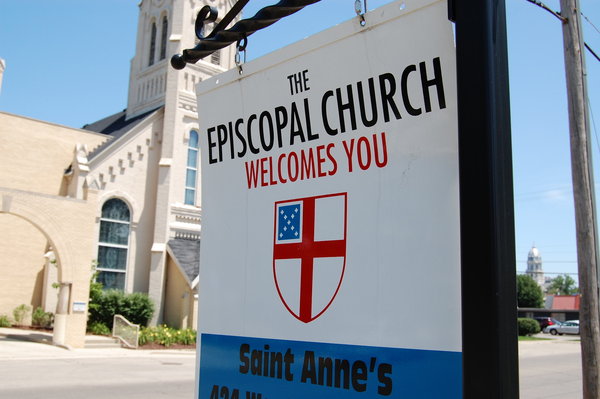
At its triennial General Convention in Indianapolis, the church House of Deputies approved a change to the “nondiscrimination canons” to include “gender identity and expression.” The move makes it illegal to bar from the priesthood people who were born into one gender and live as another or who do not identify themselves as male or female.
The church, which has 1.9 million members in the U.S., currently has rules against discrimination based on race, ethnicity, national origin, sex, marital status, sexual orientation, disability and age for Episcopalians who want to become priests.
There are transgender priests in some Episcopal dioceses and transgender people have been discouraged from becoming priests in some areas. Transgender advocates have campaigned for an official denominational policy.
The vote by the House of Deputies — which includes lay people and clergy — followed Saturday’s approval of the non-discrimination clause by the church House of Bishops. Both groups have to approve new legislation.
“We are filled with joy for this clear affirmation that the Episcopal Church welcomes and values the ministerial gifts of transgender people, lay and ordained. We are also delighted by the strong support and broad understanding of trans issues shown by deputies representing a wide range of regions and generations in this church. As the church steps boldly into new frontiers in various facets of its light, we are proud to be part of this spirit-filled movement,” members of TransEpiscopal, a organization of transgender Episcopalians, said in a statement.
The House of Deputies passed similar legislation at the previous General Convention in Anaheim, Calif., in 2009. When presented with the legislation that year, however, the House of Bishops voted instead to bar discrimination against “all” people instead of specific groups.
The church on Monday also voted to make it illegal to discriminate against transgender people in non-clergy positions in the church.
“It is not just a good day for transgender Episcopalians and their friends, families and allies. It is a good day for all of us who are part of a church willing to the risk to continue to draw the circle wider as we work to live out our call to make God’s inclusive love known to the whole human family,” the Rev. Susan Russell, a deputy from the Diocese of Los Angeles and an activist who supported the legislation, said in a statement.
The House of Bishops on Monday also approved a provisional standard liturgy for priests to use in the blessing of same-sex relationships. Bishops approved the liturgy 111 to 41 with three abstentions. The House of Deputies is expected to vote on the matter before the church’s meeting ends on Thursday.
If the same-sex liturgy is approved, it would be used during a trial that would begin in December and be revisited at the church’s next national meeting in three years. Some Episcopal bishops currently allow same-sex blessings in their dioceses, but many have said they will not allow them unless the church has an official liturgy. If approved, the new liturgy would not be mandatory. Bishops who do not approve of same-sex relationships could bar its use in their dioceses. The liturgy does not represent a religious marriage, though some clergy in states that allow civil marriage do secular marriages in their churches.
The Episcopal Church is the U.S.-based wing of the Anglican Communion, an 85 million-member global denomination. In addition to its U.S.-based members, it has 173,000 members in other countries and territories, including the British Virgin Islands, Colombia, the Dominican Republic, Ecuador, Haiti, Honduras, Taiwan and Venezuela.
Liberal trends in the church regarding the ordination of gay priests and bishops have increasingly strained its relations with its more conservative counterparts in the United Kingdom and Africa. The election in 2003 of its first gay bishop, the Rt. Rev. Gene Robinson of New Hampshire, caused several dioceses to defect and align themselves with more conservative Anglican churches in Africa.
The vote on transgender clergy and the possible passing of same-sex liturgical blessings could further strain relations between Episcopalians and the Anglican Communion.
Complete Article HERE!
Happy 10th Anniversary!

Blessed Courageous Women!
Nuns’ leader decries church environment of fear
The leader of the group representing most American nuns challenged the Vatican’s reasons for disciplining her organization, insisting that raising questions about church doctrine should not be seen as rebellion.
 Sister Pat Farrell, president of the Leadership Conference of Women Religious, said Monday that Catholics should be able to search for answers about faith without fear.
“I don’t think this is a healthy environment for the church,” Farrell said in a phone interview. “We can use this event to help move things in that direction – where it’s possible to pose questions that will not be seen as defiance or opposition.”
Farrell’s remarks are her first since she met last week in Rome with the Vatican orthodoxy office, the Congregation for the Doctrine of the Faith, which concluded in April that the group had strayed broadly from church teaching. The Vatican has appointed three American bishops to conduct a full-scale overhaul of the organization, sparking protests globally in support of the sisters.
In the Rome meeting, Farrell said she did not ask Vatican officials in to drop their demand for reform. “I think we could clearly see in the tenor of the conversation that that was not an option,” she said. She characterized the meeting as frank and open but difficult, and said she did not leave the talk feeling any more hopeful about what’s ahead.
The Vatican has directed the three American bishops to oversee rewriting the statutes of the Leadership Conference, reviewing its plans and programs including approving speakers, and ensuring the group properly follows Catholic prayer and ritual.
“I don’t yet feel that we’re any further than just the initial conversation,” Farrell said.
The Leadership Conference of Women Religious, based in Silver Spring, Md., represents about 80 percent of the 57,000 U.S. nuns.
After an investigation starting around 2008, the Vatican office concluded that the nuns’ group had failed to emphasize core teaching on abortion, while promoting “certain radical feminist themes” that undermine Catholic teaching on the all-male priesthood, marriage and homosexuality.
The Leadership Conference has called the claims unsubstantiated and the investigation flawed. Farrell said the Leadership Conference “cooperated to the best of our ability” with the doctrinal assessment, but said the group was not shown the final report before it was sent to the Vatican.
Vatican officials and U.S. bishops have stressed that its report targeted the leadership organization, not individual orders of religious women. But in a statement Monday, the board of the Leadership Conference said the Vatican crackdown had been felt by “the vast majority of Catholic sisters” and lay Catholics globally. At a meeting last week of the U.S. Conference of Catholic Bishops in Atlanta, protesters presented church leaders with petitions signed by more than 57,000 people condemning the Vatican inquiry.
Farrell said the nuns’ group would decide its next steps in regional meetings that will culminate in a national assembly in August.
Complete Article HERE!
Exit, Don’t Enable the Roman Catholic Church
By Wayne Besen
If there is one thing that irks me, it is having the Roman Catholic Church preach to me about sexual morality. It is a religious sect led by a virulently homophobic Pope that goes out of its way to trash my family. Yet, my family hasn’t spent a cent defending itself against nonexistent charges of child rape, while the Vatican has spent $2.5 billion on legal fees, prevention programs, and settlements relating to the sexual abuse of minors.
 Exactly why should I listen to what these “holy” men have to say? I’ve been out of the closet for twenty-four years, during which time I worked in the center of the LGBT movement, but can’t think of a single friend or colleague arrested for child molestation. None of the people I associate with have shielded, shuffled, or offered severance packages to pedophiles to protect the institutions that they work for. But such obscene behavior is precisely what the Vatican did, all the while turning my loved ones into scapegoats to obscure their criminality.
The latest preoccupation of the Catholic Church, as well as their brethren in the ultra-Orthodox Jewish Community, is fiercely lobbying state legislatures to not change the statute of limitations for child sexual abuse cases.
“Even when you have the institution admitting they knew about the abuse, the perpetrator admitting that he did it, and corroborating evidence, if the statute of limitations has expired, there won’t be any justice,” Marci Hamilton, a professor at the Benjamin N. Cordozo School of Law at Yeshiva University, explained to the New York Times.
It seems the hierarchy is only interested in saving its own skin, instead of paying a price for those whose skin it violated. For a church built on a human sacrifice, there is scant evidence of noble virtues as the church lies and litigates against its victims.
Which brings us to a burning question: Why do liberal Catholics continue to support an intolerant, homophobic, misogynistic institution capable of covering up heinous crimes against children?
I’m not the only one asking this pertinent question. On June 1, the Freedom From Religion Foundation placed a full-page ad in USA Today headlined, “It’s Time to Quit The Catholic Church.”
According to the ad: “If you think you can change the church from within – get it to lighten up on birth control, gay rights, marriage equality, embryonic stem-cell research – you’re deluding yourself. By remaining a ‘good Catholic,’ you are doing ‘bad’ to women’s rights. You are an enabler. And it’s got to stop.”
New York Times columnist Bill Keller also urged moderate Catholics to find a new church: “Much as I wish I could encourage the discontented, the Catholics of open minds and open hearts, to stay put and fight the good fight, this is a lost cause…Summon your fortitude, and just go. If you are not getting the spiritual sustenance you need, if you are uneasy being part of an institution out of step with your conscience — then go.”
It does seem as if diehard liberal and moderate Catholics are not fighting so much as being beaten to a pulp by ideologues. If this were a boxing match, it would have been stopped many rounds ago. Indeed, attacks from the right have become so extreme that the Church is even going after American nuns. If nuns aren’t Catholic enough for these fanatics, liberal Catholics sure aren’t going to be embraced any time soon.
This whole debate reminds me of when gay people from conservative backgrounds complain to me that they can’t come out because of the environment in which they were raised. One says, “I grew up in a traditional Chinese household, so I can’t tell my parents.” While another person says, “I grew up in a Pentecostal family, so I can’t tell anyone.” And yet another proclaims, “You wouldn’t understand, it’s not that easy coming out because my parents are from a rural area.”
Everybody has an excuse or explanation, and, no, it’s never easy to come out – but at the same time, it really is a simple process. Saying “I’m gay” works like a charm every time and frees a person to be their authentic self.
Similarly, it may be incredibly difficult to leave the Catholic Church. But, it is also as easy as going to a computer search engine and typing “church” or speaking into your iPhone, “Siri, find me a church.” Within moments dozens of alternatives will pop up – many of which are more concerned with spirituality than the statute of limitations.
Are you tired of being treated like an abused dog by the Catholic Church? Then drop the dogma and quit. After all, they quit you, your family, and your moderate belief system a long time ago. Exit, don’t enable.
Complete Article HERE!
Lexington woman ordained as priest
To the Vatican, Donna LeMaster Rougeux, a married mother of three who works as a hospice chaplain, is part of a revolt.

But Rougeux and others believe she is following a spiritual calling.
Rougeux, 52, was ordained through the Association of Roman Catholic Women Priests on Saturday in Lexington, becoming one of only two such female priests in Kentucky and 130 in the world.
Bridget Mary Meehan, a bishop with the same association who presided over the ceremony, called it part of a “new spiritual uprising in the church.”
“It’s part of a big justice movement that recognizes we all are images of God,” Meehan said.
The Roman Catholic Church does not recognize Rougeux’s ordination. The Roman Catholic Diocese of Lexington issued a statement calling it a “provocative and headline-grabbing fiction.”
The church’s position is that only men can be ordained. That’s not sexist, but biblical, said Tom Shaughnessy, spokesman for the diocese.
As Pope John Paul II pointed out, “if the church is faithfully to follow the example of Jesus, who chose twelve men as his first priests/bishops, then the Roman Catholic Church is not free to ordain women,” Shaughnessy said in a statement.
Rougeux chose automatic excommunication when she was ordained a deacon earlier, according to the church’s position.
Rougeux and others involved in the women’s ordination movement, however, don’t acknowledge the excommunication.
“We believe the church is the people of God,” not the male-dominated hierarchy, said Janice Sevre-Duszynska of Jessamine County, who in 2008 became the first Kentucky woman ordained as a priest.
The controversy over ordaining women is part of a larger debate in the church over the role of women, the propriety of contraception and other issues.
This year, for instance, the Vatican strongly criticized the nation’s leading organization of nuns, the Leadership Conference of Women Religious, for not speaking strongly enough against ordination of women, among other things, prompting a show of support for the nuns.
And debates over issues such as whom to ordain are not unique to the Roman Catholic Church.
People who support ordaining female Roman Catholic priests say it is a step toward correcting centuries of incorrect teaching and practice by the institutional church, based on misogyny.
One of the Scriptures read at Rougeux’s ordination ceremony at the Unitarian Universalist Church of Lexington was from the Gospel of Luke, about Jesus healing a woman who had been unable to stand up straight for 18 years.
“The institutional church is trying to keep women bent over when it refuses to recognize our call to priesthood,” Meehan said in her homily. “Women are silent, and invisible, and subordinate no more.”
People involved said the communities involving women priests use male and female images of God and inclusive language and liturgies.
Part of the goal is to “de-clericalize” and create a community of equals, Meehan said.
“Christ calls both men and women to the priesthood,” said Sevre-Duszynska. “When it’s in you, it’s there. It doesn’t leave.”
Rougeux said the call to ministry was definitely in her.
She grew up in the United Church of Christ but converted to Roman Catholicism in the 1980s. She taught in a Catholic school, then she said she felt a pull to attend seminary, and finally a call to ministry.
She found out about the women priest movement on the Internet.
“It’s like God has revealed it one step at a time,” she said.
Rougeux has a degree in pastoral studies from Lexington Theological Seminary, has completed additional work in clinical pastoral education, and is a chaplain at Hospice of the Bluegrass.
“I think I bring a whole other bag of experiences to helping people,” she said. “I think we are all needed.”
Rougeux said she wants to help the community of like-minded Catholics grow in Lexington.
“I want them to grow together as a community of God helping the world,” she said.
Rougeux said she was excited to be part of the movement to reform the church.
“I think my granddaughters are going to look back at this and think history was being formed.”
Complete Article HERE!
Sexism and the Roman Catholic Church
By — Roy Bourgeois
I have been a Catholic priest for years and like most people I know, my experiences in life have changed me.
 Growing up in a small town in Louisiana, as Catholics, my family did not question our segregated schools or ask why the black members of our church had to sit in the last five pews during Mass. Nor did we, needless to say, question why women could not be priests.
Joining the military was my ticket out of Louisiana. I volunteered for duty in Vietnam, which became that turning point in my life. In the midst of all the violence and death, my faith became more important and I felt God was calling me to be a priest. After four years in the military, I entered the Maryknoll Order.
In my ministry in the United States, I have met many devout Catholic women who are called by God to be priests. They are rejected because the Church teaches only baptized males can be ordained. This makes no sense to me.
Don’t we profess that God created men and women of equal worth and dignity? The Holy Scriptures state clearly in Galatians 3:28 that “There is neither male nor female. In Christ Jesus you are one.” All Catholic priests say that the call to be a priest is a gift and comes from God. How can we, as men, say that our call from God is authentic, but your call, as women, is not?
After much reflection, study and prayer, I have come to believe that the exclusion of women from the priesthood is a grave injustice against women and against our loving God, who calls both men and women to be priests. I also believe that if we are to have a healthy and vibrant Church, we need the wisdom, experiences and voices of women in the priesthood.
The Vatican refers to the ordination of women as “a grave scandal” in our Church. When Catholics hear the word “scandal” they think about the thousands of priests who sexually abused children, and the many bishops who covered up their horrific crimes.
Pope Benedict XVI is telling priests like me to be obedient to our Church leaders and not to question or discuss our Church teachings.
This presents a problem because the Church teaches us about the primacy of conscience. Our conscience is sacred because it gives us a sense of right and wrong and urges us to do what is right, what is just. When we betray our conscience, we separate ourselves from God.
Often, I think how we, as Catholics, were silent when our schools were segregated; not questioning why black members of our Church had to sit in the back pews. As a priest, I have learned that when there is injustice, our silence is the voice of complicity. Sexism, like racism, is a sin.
And no matter how hard we may try to justify discrimination against others, in the end, it is not the way of God.
Complete Article HERE!
10 Tips for Children of Gay Couples that Get Teased
Thanks, Martina, for the heads up on this.
All children will likely get teased at some point while growing up, and sadly, there isn’t much that their parents can do about it. However, when a child has gay parents, it often opens the door to teasing that is much more targeted and intense, and that can prove difficult to manage. Learning how to handle teasing can help boost confidence and empower a child to seek help from a trusted adult.
If you’re a gay parent who is concerned that their child is getting teased, encourage your child to:
- Be confident: No matter what the reason is for being teased, it is far less fun for the teasers if the person getting teased is comfortable with themselves and their situation, and doesn’t come across as bothered by the teasing.
- Understand their situation: Urge your child to talk to you about any questions that they might have about your relationship. The more children understand their family, the more comfortable they can be in their own skin.
- Ignore the teasing: Encourage your child to just ignore the teasing; the teasers are obviously trying to get a rise out of the child using whatever methods it takes. If they think your child is embarrassed about their parents being gay, then they are going to latch on to that and tease your child to provoke a reaction.
- Be open: Encourage your child not to hide who he is. If having gay parents is not a big secret, the kids will spend less time teasing your child about it.
- Be educated: Many children are uneducated about gay couples and may feel like they are the only children with gay parents. Help your child to learn about other gay families and be educated enough to answer common questions that may arise.
- Speak to a teacher: There are rules against bullying in schools today. Make your child aware that teasing or bullying him because his parents are gay is a hate crime and one that will not be tolerated in the school.
- Encourage education at school: Support your child in speaking to the principle to inquire about having a speaker come in and discuss diversity with the student body. Make sure that gay parenting is covered as one of the ways that people are diverse. Education will often open the eyes and hearts of a lot of people. Kids can be pretty open-minded when they are given the facts.
- Lead by example: Make sure that your child knows he should not be discriminating against anyone else. If you have a diverse set of friends, your child will grow up learning to be accepting of others.
- Find or start a support group: It’s important to have people in your support system that understand what you are going through. Encourage your child to join a support group and if there isn’t one at school, encourage him to start one. This group can be for anyone that has experienced teasing. Your child can ask the school counselor for help with this task.
- Find an online forum: If you are in an area that is not open to gay rights and you feel like you are trapped with small minded people that don’t understand you and don’t want to understand you, encourage your child to reach out and connect with others over the Internet.
Many children who tease others do so because they are afraid of what they don’t understand, and to cover their lack of knowledge they tease rather than to admit that they are ignorant. Helping your child learn to deal with teasing can help him to grow stronger and more confident in who he is as an individual.
Complete Article HERE!
Vatican’s term ‘radical feminist’ says more about cardinals than nuns they rebuke
COMMENTARY
It surprises me a little that the men who run things at the Vatican did not use their most favorite recent pejorative – “feminist” — when they rapped the knuckles of Margaret Farley, a nun who has long been a professor at Yale, for having written a book about sex and love that condones masturbation (and as of Thursday morning was in Amazon’s top 20). In a million other ways, it doesn’t uphold their view of Christian sexual morality.

Because unlike the other nuns the Vatican has been reprimanding recently, Sister Farley is, in fact, a feminist. An ethicist who has worked on the problem of HIV/AIDS, Farley was commended in 2005 by her Yale colleagues for her contributions to feminist theory.
A nun looks on as Pope Benedict XVI leads a ceremony commemorating Christ’s gesture of humility toward his apostles on the night before he died at the Basilica of St. John Lateran in Rome April 5, 2012. Pope Benedict recently re-stated the Roman Catholic Church’s ban on women priests and warned that he would not tolerate disobedience by clerics on fundamental teachings.
Members of the Vatican hierarchy are using the word “feminist” and even “radical feminist” the way third-graders use the word “cooties.” In April, the Vatican accused the Leadership Conference of Women Religious, which represents 57,000 nuns nationwide, of allowing “radical feminist” ideas to flow, unchecked, in their communities. In 2008, after he launched an investigation against American nuns (the results of which have not yet been released), Cardinal Franc Rode told a radio interviewer that the nuns are suspected of “certain irregularities,” a “secular mentality,” and “perhaps also a certain feminist spirit.”
The authors of these rebukes never define “feminism” or “radicalism.” In their hands, these words, which can carry legitimate intellectual meanings, appear to signify something like: “Yucky women who fail to heed our instructions and, anyway, don’t meet our standards of womanhood.” In other words, the sisters aren’t behaving as girls should.
Their casual use of these terms convinces me that the cardinals, in their vast experience, have never actually met a radical feminist theologian. Such creatures do exist, although American religious orders are hardly their breeding ground. What the Vatican hierarchy sees as a “radical feminist” is a woman who dares to believe that she’s equal to a man.
“Even large sectors of the church itself have legitimate concern and want to continue to talk about the place of women in the church, and rightful equality between men and women,” Sister Pat Farrell, a member of the LCWR, told the New York Times last week. “So if that is called radical feminism, then a lot of men and women in the church, far beyond us, are guilty of that.”
Lisa Isherwood is a real-life radical feminist theologian. She is editor of the journal Feminist Theology and a professor at Winchester University in England. She believes that the men at the Vatican are using the term “radical feminist” as a right-wing scare tactic, for it evokes other enemies far more dangerous than nuns. Their thinking goes like this, she says: “We hear the word radical Islam, and everyone panics, so let’s chuck that at them.”
The mother of radical feminist theology was the late Mary Daly, who started life as a committed Roman Catholic and spent most of her career teaching at Boston College, a Catholic institution.
She was driven to critique her beloved church after she sat in on sessions of the Second Vatican Council in Rome and felt that women had no meaningful part in the proceedings.She was, she wrote later, appalled by “the contrast between the arrogant bearing and colorful attire of the ‘princes of the church,’ ” she wrote later, “and the humble, self-deprecating manner and somber clothing of the very few women. … Watching the veiled nuns shuffle to the altar rail to receive Holy Communion from the hands of a priest was like observing a string of lowly ants at some bizarre picnic.”
In her breakthrough 1974 book, “Beyond God the Father,” Daly wrote, “If God is male, then the male is God. The divine patriarch castrates women as long a he is allowed to live on in the human imagination.” Now that’s a radical feminist for you. Daly’s work gave voice to generations of feminist scholars.
Isherwood, for one, wears the labels “feminist” and “radical” with pride. She is a Catholic — “in as far as anyone’s trying to hang in there” – she says.
She deeply loves her church and believes that at its core, Roman Catholicism has a radical feminist message. “The church should be radical. It should be saying, ‘More inclusion, more equality.’ An abundance of life is a fundamental Catholic value. The idea of ordination of women and so on is just one very small, very significant point. Radical feminism would want the church to be more proactive in terms of working for a life of abundance for the marginalized.”
Now that’s a threatening idea.
Complete Article HERE!
Vatican Denounces Nun Over Book on Sexuality
The Vatican’s doctrinal office on Monday denounced an American nun who taught Christian ethics at Yale Divinity School for a book that attempted to present a theological rationale for same-sex relationships, masturbation and remarriage after divorce.
The Congregation for the Doctrine of the Faith said that the book, “Just Love: A Framework for Christian Sexual Ethics,” by Sister Margaret A. Farley, was “not consistent with authentic Catholic theology,” and should not be used by Roman Catholics.

Sister Farley, a past president of the Catholic Theological Society of America and an award-winning scholar, responded in a statement: “I can only clarify that the book was not intended to be an expression of current official Catholic teaching, nor was it aimed specifically against this teaching. It is of a different genre altogether.”
The book, she said, offers “contemporary interpretations” of justice and fairness in human sexual relations, moving away from a “taboo morality” and drawing on “present-day scientific, philosophical, theological, and biblical resources.”
The formal censure comes only weeks after the same Vatican office, the Congregation for the Doctrine of the Faith, issued a stinging reprimand of the main coordinating organization of American nuns, prompting many Catholics across the country to turn out in defense of the nuns with protests, petitions and vigils.
The nuns’ organization, the Leadership Conference of Women Religious, said on Friday that its board had declared that the Vatican’s accusations were “unsubstantiated,” and that it was sending its leaders to Rome to make its case. Three bishops have been appointed by the Vatican to supervise a total overhaul of the nuns’ organization.
The censure of Sister Farley, who belongs to the Sisters of Mercy of the Americas, is the second time recently that a book by an American nun has been denounced by the church’s hierarchy. In 2011, the doctrine committee of U.S. bishops condemned “Quest for the Living God: Mapping Frontiers in the Theology of God,” by Sister Elizabeth A. Johnson, a professor of theology at Fordham University in New York.
The Vatican’s doctrinal office, led by an American, Cardinal William J. Levada, has spent more than two years reviewing Sister Farley’s book, which was published in 2006. The office first notified Sister Farley’s superior of its concerns in March 2010, and said it had opened a further investigation because a response she had sent to the Vatican in October 2010 hadn’t been “satisfactory.” It said her book had “been a cause of confusion among the faithful.”
The dean of Yale Divinity School, Harold W. Attridge, a Catholic layman, and the president of the Sisters of Mercy, Sister Patricia McDermott, issued statements in support of Sister Farley. So did 15 fellow scholars who, in a document released by the divinity school, testified to Sister Farley’s Catholic credentials and the influence she has had in the field of moral theology.
Cardinal Levada’s statement about the book, dated March 30 but released on Monday, said, “Among the many errors and ambiguities of this book are its positions on masturbation, homosexual acts, homosexual unions, the indissolubility of marriage and the problem of divorce and remarriage.”
He said that the book “cannot be used as a valid expression of Catholic teaching, either in counseling and formation, or in ecumenical and interreligious dialogue.” The statement said Pope Benedict XVI had approved its contents and ordered its publication. It comes as the Vatican struggles to contain a controversy over leaked documents that have shown infighting and mismanagement in the papacy of Benedict XVI, who on Sunday concluded a three-day meeting in Milan to promote family values.
The Vatican spokesman, the Rev. Federico Lombardi, said the Vatican had not called for any sanctions against Sister Farley and was not expected to do so because she has retired from teaching. He added that it was “quite normal” that documents signed by Vatican offices are published much later than when they were signed, according to “internal bureaucratic and organizational needs.”
Sister Farley’s book finds moral and theological justifications for same-sex marriage, which aside from abortion, has become the major galvanizing political and moral issue for American bishops. The statement took Sister Farley to task for writing that same-sex marriage “can also be important in transforming the hatred, rejection, and stigmatization of gays and lesbians.” She wrote that “same-sex relationships and activities can be justified according to the same sexual ethic as heterosexual relationships and activities.”
“This opinion is not acceptable,” the Vatican statement said. It said that the Catechism of the Catholic Church says that homosexual acts are “acts of grave depravity” that are “intrinsically disordered” and “contrary to the natural law.” It said that Sister Farley’s assertion that sometimes divorce is a reasonable option for couples who have grown apart contradicted church teaching on the “indissolubility of marriage.”
The statement quoted liberally from some of the racier passages in “Just Love,” including ones in which Sister Farley writes that female masturbation “usually does not raise any moral questions at all.” She adds that “many women” have found “great good in self-pleasuring – perhaps especially in the discovery of their own possibilities for pleasure – something many had not experienced or even known about in their ordinary sexual relations with husbands or lovers.”
The Vatican said that this assessment contradicts church teaching that “the deliberate use of the sexual faculty, for whatever reason, outside of marriage is essentially contrary to its purpose.
Complete Article HERE!