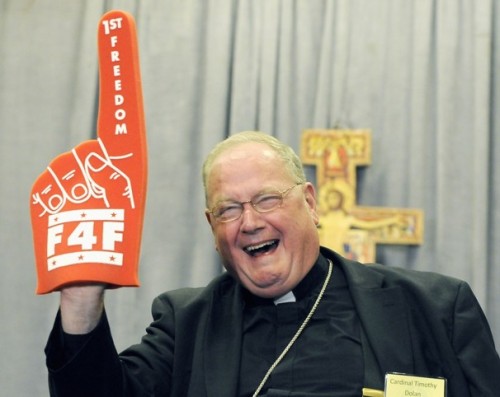
Bishop Patricia Fresen on Excommunication to Ordination

Imprisoned for breaking apartheid law, excommunicated for breaking Vatican law, Bishop Patricia Fresen looks more sweet grandma than warrior ​— ​especially carrying the stuffed black sheep she presents with a smile: “We’re the black sheep of the church,” she said.

She’s no stranger to working the outskirts.

Raised “a proper white South African,” Fresen was stunned upon entering her convent after matriculation (and years of segregation), greeted by 55 women ​— ​15 of them black. “I didn’t know it would be racially mixed,” she says now. “It never occurred to me. But I became colorblind.”

That journey would prove significant. After university, Fresen ​— ​in Santa Barbara last week to teach a workshop at La Casa de Maria ​—  worked in the city of Welkom as principal of a school for whites. But by the 1970s, Fresen remembered she and her fellow Dominicans began thinking, “Something’s wrong; we can’t go on like this.”

Apartheid was law by then, but a debate — ​that would prove a theme of Fresen’s life ​— ​ensued. On one side were those who said they couldn’t change apartheid: “The law must change first,” Fresen recounted. She said the others believed, “We mustn’t follow an unjust law; we must follow our conscience.” Their bishop, Denis Hurley, agreed with the latter group. It was risky and illegal, but he believed breaking the law was the only way it would change.

Essentially ignored by the police, they had some wiggle room to plot. Bishop Hurley challenged the principals to bring black students into their schools. They spent a year preparing ​— ​ensuring white students’ families were comfortable, reaching out to black families, teaching black children English ​— ​all while keeping it out of the papers to hold trouble at bay, relying instead on the African drum to spread the word.

On the first day of school, Fresen was overcome watching the children ​— ​black, white, all in the same uniform ​— ​streaming in. But before the goosebumps could dissolve, the hairs on the back of her neck stood up: She heard the stomping of police boots approaching her office. They gave her a week to get in line.

One week later, they took her to prison. Not one child was sent away; today the school is flourishing.

Years later, after receiving her doctorate in theology in Rome, Fresen began teaching seminary ​— ​teaching men to be priests ​— ​in Pretoria. And a longing to be a Catholic priest herself began to nag. She shushed it as best she could, telling herself, “Don’t be stupid.”

In 2002, while teaching at Johannesburg’s Catholic university, she heard about the Danube Seven ​— ​seven women who were ordained Catholic priests on Germany’s Danube river. Two months later, fate intervened: Fresen was sent to Germany for a weeklong course. She spent a day with two of those women; they asked if she felt called to the priesthood. She said yes. They rendezvoused in Barcelona on August 7, 2003 (nine years to the day of our interview); Fresen was ordained.

And then, all hell broke loose. Her parish phoned the Vatican; the cardinal ordered her to recant. Or, he said, leave.

Heartbroken and staggered, she left. She lost her job, her congregation, her family, and moved to Germany.

Since then, she’s found a home, a community. She’s been ordained bishop (by proper apostolic succession ​— ​which means sympathetic male bishops are ordaining women, at great personal risk), ordains women, performs sacraments, and leads workshops.

She’s also been excommunicated. While in St. Louis performing an ordination (in a borrowed sacred space where these clandestine events take place: this time a Jewish synagogue), Cardinal Raymond Burke sent a cadre of “spies,” with cameras. (He followed up, excommunicating any identifiable participants.) Someone handed Fresen an envelope (she thought it might be a check): inside, a summons. She ignored it. Three weeks later, the mail carrier delivered an official decree of excommunication, “with my name beautifully written,” she says, eyes shining.

Burke was promoted.

As for the big question ​— ​why stay? ​— ​Fresen says she believes there are two churches: the hierarchy and the people. She believes the people, the ones who want reform ​— ​the separation of celibacy and priesthood, the ordination of women ​— ​are reaching a critical mass. And this: “If I left, nothing would change. The hierarchy would take no more notice of us. We can only make change if we stay, so we are not going away.”

Complete Article HERE!

Rainbow Sash Movement challenges San Francisco New Archbishop on Bigotry

Press Release

Rainbow Sash Movement challenges San Francisco New Archbishop on Bigotry

Bishop Cordileone has been appointed the next Archbishop elect of San Francisco. The sad situation at Most Holy Redeemer parish only emphasizes how deeply homophobia is ingrained in the culture of the Church. The Cathedral of Saint Mary of the Assumption will be the stage for all the world to see how the Church celebrates in a public fashion this culture of homophobia on October 4, 2012. The Archbishop’s instillation will be used as another launching pad to promote hate directed at the San Francisco LGBT Community,the national LGBT Community and women. The sad reality about this appointment is how far you can get in the church by promoting a closet mentality and hate of women. Integrity will apparently have no place at Bishop Cordileone’s Cathedral Eucharistic table.

People of good will and reason will understand this liturgical service for what it is, and will respond appropriately and non violently. The Rainbow Sash Movement (LGBT Catholics) is inviting San Francisco’s Drag Community, and the Catholic women’s community to stand with us both outside and inside the Cathedral as we witness this betrayal of the Church’s Social Justice Ministry at the installation ceremony at the Cathedral. The dignity of the human person apparently has more to do the with clothing you wear, the medication you use for family planning, and what gender you are than your relationship with God.

As we approach the 50th anniversary of Vatican II the Cathedral clergy and staff should hang their heads in shame over the part they are playing in the demise of Catholic Social Justice. Because justice will not flow from this installation of bigotry at the Cathedral it will not be a valid liturgy, and therefore will not be bound by the norms that guide the liturgical celebration. We will come to witness this abuse of Christ love for all people.

Contact Person:

Bill O’Connor
Rainbow Sash Movement

Drag Queens Prohibited at Most Holy Redeemer Parish

Nice goin’ (Archbishop) Sal; piss of the drag queens first thing out the gate.

A local gay recovery group will not be holding its annual fall fundraiser in the social hall of the Castro neighborhood’s Most Holy Redeemer Catholic Church after officials said that no drag queens would be allowed.

For the past couple of years the Castro Country Club has held its event in the church’s social hall and had drag queens as entertainment.

As a statement issued by the country club’s board of directors explained, the new no-drag-queen policy at the church is simply unacceptable.

“The Castro Country Club had planned to hold our third annual Harvest Feast on October 20, 2012, at Most Holy Redeemer Church, where we have held this and other events in the past,” the directors said in a statement.

But that changed when the club was notified by the church last week that they would not be able to hold the dinner if any drag queens were part of the program, the board said.

“In previous years, we have had Ivy Drip and Heklina, both well-known entertainers and community fundraisers, serve as emcees of the event, and we felt we could not in good conscience abide by the church’s new policy,” the board said.

“It is our organization’s policy to be inclusive and welcoming to all. Drag queens are no exception. We are currently seeking an alternative venue for the Harvest Feast, which provides an important source of revenue for our annual budget,” the board added.

Individual members of the country club declined to comment and referred to the board’s statement.

Most Holy Redeemer’s new pastor, the Reverend Brian Costello, confirmed over telephone on Monday, August 6, that drag queen performers and emcees are no longer permitted to participate in events at the church.
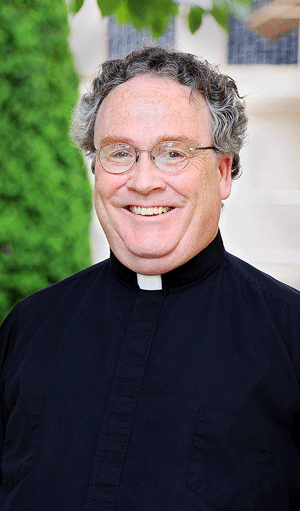
Costello said that during a telephone conversation with a Castro Country Club representative, when the topic of drag queens came up, he told the person, “That is not going to work under the present circumstances.”

“I said work with me. You can still have the dinner. You can have a regular emcee, but not drag queens on church property,” Costello said.

New leadership
It seems the directive is the result of several factors.

“I am the new pastor,” Costello added. “There is a new archbishop. The archdiocese told me straight out, ‘No drag queens.’”

The change of policy at Most Holy Redeemer was greeted with charges of discrimination, homophobia, and calls for compromise, even reconciliation.

“It’s really ridiculous and discriminatory,” said Zachary Davenport in a phone interview. “I mean it’s like, who’s next?”

Most Holy Redeemer Catholic Church in the Castro has banned drag queens, forcing the Castro Country Club to find a new venue for its fall fundraiser.
(Photo: Rick Gerharter)
The drag queen ban is personal for Davenport, who, in drag as Laybelline has served as emcee for a variety of sobriety-related nonprofit events held at Most Holy Redeemer.

“What constitutes drag?” he said. “If we want to get funny, let’s talk about the priests. Hello.”

Davenport also pointed to a nuanced landscape of gender identity and expression, which the new policy at Most Holy Redeemer seemingly blocks. “There are members of our community who express their gender all the time, and are not necessarily performing, but would say, ‘Yes, I am in drag,’” he said.

“Yes, I realize [Most Holy Redeemer] is a church. But it is in the Castro,” said Davenport. If, “the new archbishop is wanting to do away with drag queens and the gays,” then “look where you are. [The neighborhood] has a history of 30 to 40 years of being a safe place.”

A California native from Watsonville, Davenport, 28, who is not Catholic, added, “I know gay people who go to Most Holy Redeemer and love the church.”

Dignity San Francisco offered its take on the new policy at Most Holy Redeemer.

“This is an unfortunate development between Most Holy Redeemer and the Castro County Club,” said Ernest L. Camisa, treasurer of the Dignity/SF chapter, speaking for the organization by e-mail and over the telephone.

“It looks like the Archdiocese of San Francisco wants to protect its image by not condoning cross-dressers. By doing so they show that they care more for their image than they do for gay people trying to overcome alcohol addiction. Here the church looks like it values its own image more than it does human life. This is not Christian, but callous,” Camisa said.

A couple of Most Holy Redeemer parishioners declined to comment. No one from Castro Country Club was willing to speak on the record.

Reached by phone, George Wesolek, department head for communications and public policy for the archdiocese, said he was not in the policy conversation “loop.” Nonetheless, Wesolek acknowledged, the situation is “difficult pastorally,” particularly in “very divided and fractious church.”

Others weigh in
Meanwhile, across the country, the new no-drag queen policy has struck a chord among gay Catholic activists and those in ministry.

“I think this is a very difficult and complex time for not only the pastor and the people of Holy Redeemer parish, but also for members of the drag community. All three groups are an example of ordinary people being called to do some extraordinary things for their neighbors. The pastor and parish of Most Holy Redeemer have to be very careful not to throw out the baby with the water in the name of homophobia. Jesus, not homophobia, should guide us in this matter,” said Joe Murray, a founder of the Chicago-based the pro-LGBT Catholic Rainbow Sash Movement.

The Rainbow Sash Movement, stateside and abroad, advocates reception of Eucharist by visibly gay persons during Mass. The movement is best known for donning rainbow sashes on Pentecost and approaching the altar for communion during Mass that day.

At the same time, New Ways Ministry Executive Director Francis De Bernardo offered his assessment via e-mail correspondence.

“Drag is a historically-based, time-honored entertainment tradition that has existed, at least, since classical times,” he said.

“Canceling this program without any explanation or substantial reason is simply caving into fear of reprisals from higher authorities. If the [Most Holy Redeemer] community has supported this event for years, there has obviously been a relationship that has developed between the sponsoring organization and the parish, and it would be great if the two groups could work together to find some resolution. Reconciliation is what any and every parish should be about. If the parish does not offer a substantial intervening reason, we can only assume that other forces have had influence,” said DeBernardo.

Located just outside Washington, D.C., New Ways is a pro-gay Catholic ministry of education, healing, and reconciliation for LGBT Catholics, their families, friends, and the wider church.

For his part, Costello said the Castro Country Club event would have been in its third year at Most Holy Redeemer.

“It’s not a 20- to 25-year relationship,” he said.

Nonetheless, Costello lamented the course of events.

“I am big on compromising,” he said. But “[Castro Country Club] would not work with me. It was all or nothing. And they got nothing.”

Costello also said that with respect to drag queens, “We have had bad experiences, not only in church, but also the [social] hall.”

Still, “I feel bad because [Castro Country Club] do[es] good work in the community,” he said.

While Costello did not elaborate on any social hall “bad experience,” one church incident nearly five years ago caused a media stir.

During Sunday Mass on Sunday, October 7, 2007, Archbishop George Niederauer gave communion to two members of the activist group and drag troupe Sisters of Perpetual Indulgence, an indecent that angered, hurt, and even horrified some conservative Catholics, as well as it grabbed local and national headlines.

Called to task locally by the California Catholic Daily and a “90 years young” priest, the Reverend John Malloy, on A Shepherd’s Voice blog, Niederauer apologized for giving communion to gays dressed as nuns.

Attempts to reach the Sisters for comment on the recent change of policy at Most Holy Redeemer were unsuccessful.

Meanwhile, as recent as April 29, in a Shepherd’s Voice post Malloy blasted the “gay parish” for hosting an April 14 “drag show” to benefit the Castro Country Club, “a substance abuse treatment organization.”

“Hosting a drag show at [Most Holy Redeemer] is the equivalent of sending a case of wine to Castro Country Club,” wrote Malloy. “It is beyond irresponsible for the Archdiocese of San Francisco to allow it.”

And while local conservative bloggers and orthodox Catholic activists may well exacerbate tensions at Most Holy Redeemer, Rainbow Sash Movement’s Murray noted, “The appointment of Archbishop-elect [Salvatore] Cordileone has brought this matter to a head.”

And yet, said Murray, “Let’s be very clear homophobia in the church existed prior to this event.”

He went on to fault the teaching of the Catholic Church, the Catechism, “for saying on the one hand that homosexuals are to be welcomed and every form of unjust discrimination is to be condemned, while saying at the same time saying we are morally disordered for our love.”

“Either gay and lesbian people are welcome at Most Holy Redeemer or they are not. It’s that simple. If the tradition of Most Holy Redeemer is to allow for drag queens to raise money for charity, then to fault those who are raising the money in the name of homophobia, I think, speaks volumes to what type of ministry is going on at Most Holy Redeemer; and that deeply disturbs me. If that is the case, I like the parishioners of Most Holy Redeemer have been misled,” said Murray.

Complete Article HERE!

Church and its accepting environment taking hold

Ogden is the first Western state to host The General Episcopal Synod, an international conference for members and leaders of the North American Old Catholic Church. About 100 representatives from across the United States and several countries will be in attendance this weekend.

“It is noteworthy because it signals to the world that you can be Catholic and not be locked into a Middle Ages mindset,” said the Rev. Jim Morgan, who oversees the Glory to God North American Old Catholic Church, at 375 Harrison Blvd. He said the gospel is “relevant, vital and apposite to the people of our world and time. We are committed to bringing this truth to the forefront.”

Although the Old Catholic Church is a community of Christian churches with Catholic roots, members of Ogden’s congregation are especially attracted to the church for the love and acceptance they feel there.

“We’re a very caring, praying church,” said Robbin Hansen, who helps manage the office for the Ogden church. “A lot of people kick you out. You feel you are not wanted in other churches.”

She said her service animal as well as her domestic living situation seemed to be a problem at other churches. But not at Glory to God.

“It doesn’t matter who you are, we love you. We care about you,” said Hansen, who has been attending Glory to God for more than three years. “This church is an amazing church you dream of that will accept you. This is a personal church.”

She said many girls come from Park City, Kamas and Heber City to have their quinceañera Mass celebrated at the church.

Glory to God offers bilingual Mass every Saturday at 6 p.m. as part of its outreach to Latino and Hispanic populations. Morgan also celebrates baptisms and 3-year-old presentations.

Hansen is looking forward to watching the deacon and priest ordinations today at 6 p.m. So is Morgan. He said with the ordination of locals Robert Patrick Trujillo and Mark Dexheimer Trujillo to the priesthood, the church can “offer even more to the families and persons who are routinely ignored or shunned by other churches in our area.”

“It has been my experience that our congregation is made up of diverse populations, some gay, many straight, young and old,” Dexheimer Trujillo said. “We come from a variety of denominational backgrounds, some Roman Catholic, others Episcopalian, LDS or nondenominational communities.

“Our parishioners are folks on the margins, folks who have never found their home in other settings,” said Dexheimer Trujillo, who was raised in a “very establishment, Episcopalian” environment. “We are small but have created a marvelous mosaic. We are a very human group of people whose lives are changed by Christ. It is a beautiful encounter.”

In contrast to many churches, Glory to God accepts members of all sexual orientations.

“We consider gender diversity a blessed part of life and promote the full inclusion of LGBT persons in our religious life, sacraments, and clergy,” Morgan said. “Similarly, we advocate for the full inclusion of LGBT persons throughout society.

“I would like my sisters and brothers — old and young, regardless of sexual orientation — to know that the gracious, almighty God that created them and all that is, loves them unconditionally, unreservedly and totally just the way he created them, and so do we,” Morgan said. “There is a church, family and home waiting for them here at Glory to God.”

Morgan said the best part of the church is the church family it creates.

“We come together to love, lend support, encourage and lift up each other,” he said. “We celebrate with each other and console one another.”

He said he particularly likes the church’s monthly potlucks, especially because his congregation has some great cooks.

Congregation members also like the church’s engaging, relevant preaching and lively approach to music.

Glory to God uses 21st-century tools such as contemporary music and multimedia “to engage heart, mind and soul,” Trujillo said.

Members of Glory to God — the first Old Catholic congregation established in Utah — want to expand it to other areas of the state.

Dexheimer Trujillo, a teacher at Tooele High School, plans to plant a mission in Tooele. Three other Salt Lake City-area congregations may join the church within a year.

“It makes perfect sense to grow the church in Utah,” he said. “The culture in Utah tends to be folks who take their faith seriously.

“We are Christians and serious Catholics,” he said. “We are constantly working to stay balanced. Our denomination strives not be become institutional.”

The North American Old Catholic Church was established in Ogden on June 6, 1996, and is now the Glory to God Church. Morgan said an average of 30 to 40 people attend Mass on any given Sunday, and church records include 65 people.

Dexheimer Trujillo said the goal is to keep congregations small.

“It sits within the context of being accepting. On purpose we keep small congregations, as opposed to getting lost in a large institution.”

He said the approach helps him to focus on pastoring instead of “church stuff.”

The Old Catholic Church originally split from the Roman Catholic Church over doctrines, most importantly papal infallibility, the belief that the Pope is preserved from the possibility of error. The Old Catholic Church holds to the belief that the total church acting in unity — or Ecumenical Council — may speak infallibly.

Morgan said the faith is rooted in tradition and the early days of Jesus and his teachings on peace, love, justice and equality. He said congregation members strive to care for the oppressed, disenfranchised, poor and unwell.

According to a church statement, “We are a church that worships God by living our faith every day of the week, speaking out against injustice and praying for healing in the world by being active believers, committed to loving our neighbors.”

Complete Article HERE!

A church celebrates with women as priests

Several months ago, Kathy Schuck’s 15-year-old daughter posed a question that seemed innocuous but that became a call to action.

The gist of Ann Schuck’s question: Why did girls and women seem to be less important than men in their church, St. Rose of Lima in North Wales?

Kathy Schuck, 56, of Blue Bell, said she had long felt women were confined to secondary roles in the Roman Catholic Church, where she did not hear a message of inclusion. The hierarchy and exclusion of the voices of the lay members troubled her, she said. So, after 15 years, she left her parish.

“It disturbed me that the hierarchy of the Roman Catholic Church uses a term like ‘radical feminism’ to . . . categorize any woman who wants to have a voice in the church when that voice is not in total compliance with doctrine and orthodoxy,” Schuck said. “It was clear to me that my lack of action reinforced that that behavior was acceptable – and it isn’t.”

On Sunday, she joined more than 50 others belonging to the St. Mary Magdalene Community in celebration of its fifth anniversary. The group is led by two Roman Catholic female priests not recognized by the Vatican. Sunday’s celebratory service was held in rented space at the Drexel Hill United Methodist Church.

St. Mary Magdalene is one of several worship communities being led by women in 28 states, said Suzanne Thiel, president of Roman Catholic Womenpriests USA, a nonprofit group that prepares women for ordination and carries out the ceremonies.

“We provide spiritual comfort and solace for people who no longer find it in the Roman Catholic Church,” said Eileen McCafferty DiFranco, who was ordained in 2006 and who, along with her St. Mary’s co-pastor, is one of 113 female Roman Catholic priests, bishops, and deacons worldwide, according to Thiel.

At least eight more ordinations, which the organization maintains are valid, are planned worldwide by Christmas, Thiel said.

“We know the Vatican and the hierarchy are not happy with us,” Thiel acknowledged. “What’s important is the Catholic people have accepted us.”

Since 1976, the Vatican has been strongly reiterating that women are not full members of the Roman Catholic clergy after the Episcopal Church validated the illicit ordination in 1974 of 11 women in Philadelphia.

Then Pope Paul VI reminded Catholics that an all-male clergy was a “constant and universal tradition” of the Roman church because Jesus freely chose only men to be his apostles. By their “natural resemblance” to Christ, male priests also serve as the “sacramental sign” of him, the pontiff said.

Advocates of female clergy had long accused the church hierarchy of misogyny.

St. Mary Magdalene has drawn male and female members, some from as far as Delaware. In general, members said they did not feel fulfilled by their home Catholic parishes and sought a more intimate community with less hierarchy where their voices would be more valued.

“It’s all about intimacy. You can’t be intimate with a parish that has 2,000 to 3,000 members and no mechanism to get to know people on a deeper level,” said Judy Miller, 73, of Hockessin, Del., a member of St. Mary for three years with her husband, Chuck.

Schuck said she was welcomed, greeted by name, and introduced. “I was as comfortable as I was in someone’s home,” she said.

The St. Mary Magdalene Community has grown from 10 members to about 90, with a satellite community in Northeast Philadelphia, said DiFranco, who, along with being a priest, is a school nurse in the city. Services usually draw 30 to 40 members.

St. Mary members said that they enjoyed the congregation’s interactive homilies and that everyone was welcome to take communion. DiFranco said she doesn’t use prayers routinely heard in traditional Catholic Masses, opting instead for “non-sexist” prayers.

Members collectively decide which charities to support.

Maryrose Petrizzo, a member of St. Mary of Magdalene, said leadership opportunities were limited in her church in Wilmington. Among the positions she held was youth minister and eucharistic minister. “I could only do so much,” she said.

But at St. Mary Magdalene, she has led the liturgy and given the homily.

“That’s been so life-giving to be able to give a homily,” said Petrizzo, who has applied to be ordained.

After DiFranco’s ordination in 2006 in Pittsburgh, staff from St. Vincent de Paul in Germantown visited her and asked her not to show up for communion.

She preached on Sunday about following one’s dreams, much like women who have heeded the call to be priests.

“We succeeded in being priests in spite of the church,” she said after the homily. “Where human beings shut the door, God opens the window.”

Complete Article HERE!

Psychologist: Bishops’ lashing out at sisters is a distraction

COMMENTARY — Kathy Galleher

Since the Vatican’s public release April 18 of the results of the doctrinal assessment of the Leadership Conference of Women Religious, many American Catholics have been confused and angry. These women, who work tirelessly with the poor and marginalized, whom many of us see as embodying Christ’s love, are being accused of doing grave harm to the church. In conversation after conversation, I have heard, “Why so much anger directed at women religious?”, “What is this about?” and “It just seems … abusive.” As I pondered this last observation, I recognized a familiar dynamic.

For nearly eight years I worked as a psychologist at a treatment center for priests and religious. During that time I worked with a number of men who had committed sexual abuse. An essential part of the therapeutic work was for these men to understand the deep pain they had caused, to accept responsibility for it, and to move forward with a commitment not to let it happen again, which included accepting restrictions and consequences. Often the largest obstacle to healing was the first task: accepting and understanding the amount of pain they had caused.

When we harm someone, healing requires that we recognize the extent of the injury we caused. Only when we are able to see this clearly and take responsibility for it can we respond with appropriate guilt. Appropriate guilt focuses us on how to repair the injury (if that is possible) and what actions we must take to prevent it from occurring again. If we cannot recognize the pain and take responsibility for it, we get stuck and assume an aggressively defensive stance, lashing out and blaming others as a way to deflect attention from our actions, actions we find too painful to look at honestly.

In treatment, when a client was stuck in this way, we would see this blaming/lashing-out dynamic, and he would start a fight. The greater the unacknowledged pain, the more furious the fight. Often the fury was directed toward a bishop or superior who was removing him from ministry. “You’re ruining my life,” he would say. “I feel betrayed. You have no idea how much pain you are causing me and you don’t even care.” Although he was the abuser, in his mind in that moment, he was the victim of the bishop or superior. The real victim had vanished from his awareness.

Fights like these were so provocative that the instinctive reaction of those on the receiving end was to respond with their own aggression. So the fight would escalate, take on more heat, and distract from the work at hand. As therapists, we tried to contain these fights and give them as little energy as possible (like depriving a fire of oxygen). Our job was to say, “This is a distraction. Let’s get back to work.” Then we would support the client in leaving the fight behind and returning to his unfinished work: looking deeply at his own pain, taking responsibility for the pain he had caused, and taking action to prevent it from occurring again.

I see strong parallels between this and the church’s dealings with LCWR. The level of anger and blame in the doctrinal assessment document feels like someone is picking a fight, and the intensity of it hints at the enormous amount of still unworked pain at the heart of the church’s sexual abuse crisis. To me, this fight looks like a distraction.

In the past 10 years, the church has taken steps toward responding to the tragedy of sexual abuse in the church at the individual level, including responding to allegations more quickly, involving law enforcement, and developing child protection policies. However, the church has not yet been willing or able to examine its own role as an institution in concealing and enabling decades of abuse. The bishops have not taken collective responsibility for their actions (and inactions) and for the enormous pain they have caused. As much as the abuse itself, it is this failure by the hierarchy to acknowledge and accept their responsibility that has angered and disillusioned so many current and now-former Catholics. Too much pain is still unacknowledged and unworked.

The church hierarchy seems to be stuck and they are blaming and lashing out. They have started a fight with LCWR and the women religious. In the doctrinal assessment, they have accused the women of the church of betraying the core values of the church, of causing scandal and leading the faithful astray, and of not being sufficiently trustworthy to reform themselves. They have ordered the women to be closely supervised. These accusations seem more rightly to belong to the sexual abuse scandal rather than to the actions of LCWR. It was the bishops who, by protecting sexual abusers, betrayed core values of the church and caused scandal to the faithful. It is the institutional church that appears not to be able to reform itself and to be in need of outside supervision.

This fight with LCWR is a distraction from the work the bishops still need to do in order to bring about genuine healing in the church.

In response to the misdirected accusations and the severe punishment directed at LCWR, many Catholics feel outraged and want to fight back. But as we saw above, to do so stokes the fire and continues the distraction. We can all be grateful to the women of LCWR for their powerful model of non-reactivity and reflection in their response to this situation. They have spoken their truth, but have not thrown wood on the fire. Similarly, public statements of support from men religious — notably the Franciscans — are courageous and direct but nonviolent. I hope that all of us will follow their lead — speaking our truth with courage and nonviolence, and, like the sisters, keeping our eyes on the real work we are called to do as a church.

It seems the moment to say clearly to the Vatican and to the bishops, “This fight with LCWR is a distraction. The women are not to blame. The church is not the victim. There is still a great deal of pain to address. Let’s get back to work.” Let us hope that with our prayers and support they will be able to look more deeply. Let us hope they can return to and complete the work that is still theirs to do, and in that way bring about healing and transformation for themselves and for our entire church.

Complete Article HERE!

U.S. Episcopalians set to be first to bless gay marriage

On Monday bishops of the Episcopal Church in the United States – the 14th largest denomination in the country, with almost 2 million members – “overwhelmingly” approved a rite for blessing gay marriages, making it the first big U.S. church to say “yes” to gay marriage.

Speaking to Reuters, Ruth Meyers, a chair of the Episcopalians’ Subcommittee on Prayer Book, Liturgy and Church Music, said the Episcopal Church’s Chamber of Bishops agreed to the proposed blessing at a meeting in Indianapolis and its House of Deputies should formally approve it later this week.

“The decision would go into effect in December and make the Episcopal Church, an independent U.S.-based institution affiliated with global Anglicanism, the biggest U.S. church to allow a liturgy for same-sex marriages,” Reuters said.

Up until now, it had been the United Church of Christ, a mainstream Protestant denomination counting approximately 1 million members, which had done more than any other U.S. church to support same sex marriage voting in favour of it in 2005.

The new Episcopal same-sex liturgy is called “the Witnessing and Blessing of a Lifelong Covenant,” and would become the standard rite for same-sex marriage, Reuters reported.

In the past, it was bishops who showed the strongest opposition to such measures but the result of Monday’s vote showed a different attitude altogether, with 111 voting in favour and 41 against. Abstentions totalled 3.

The convention also approved inclusion of transgender people among those who should not be discriminated against, either for ordination or as lay leaders.

“Today the Episcopal Church affirmed the human dignity of a deeply stigmatized population that is far too often victim to discrimination, bullying and abuse,” the Reverend Lowell Grisham, a leader of the Chicago Consultation, a group that supports equality, said in a statement quoted by Reuters.

The Episcopal Church allowed gay priests 16 years ago and approved its first openly gay bishop 9 years ago.

Today, gay marriage is legal in six states and the District of Columbia and as Reuters reported, the legislatures of three states – New Jersey, Maryland and Washington State – approved gay marriage this year, although New Jersey Governor Chris Christie vetoed it. Governors in the other two states signed the legislation but there are attempts being made to block it through a referendum. Monday’s decision has nevertheless marked yet another victory for gay-rights advocates in the U.S., after President Barack Obama endorsed gay marriage in May.

Complete Article HERE!

An American Nun Responds To Vatican Criticism

Sister Pat Farrell is the president of the Leadership Conference of Women Religious and the vice president of the Sisters of St. Francis in Dubuque, Iowa.


As an aside, the Sisters of St. Francis in Dubuque, Iowa were the spirit-filled women who formed me in grade school at St John Brebeuf Parish in Niles IL. God bless them all.


Bishops, Oaths, and Conscience

Today’s Washington Post reports on a highly troubling story (Arlington Diocese parishioners question need for fidelity oath) about a rising trend in Catholic dioceses to require workers — including volunteers who teach religious education — to affirm some sort of “fidelity oath” in order to continue their work or ministry. The story ends with this:

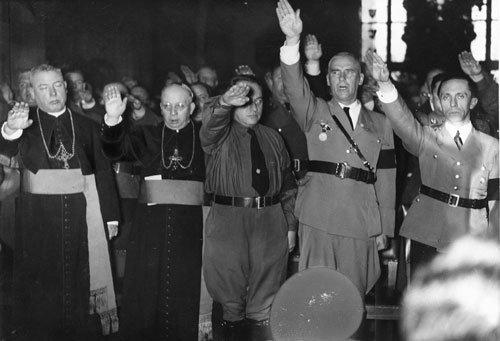
The Rev. Ronald Nuzzi, who heads the leadership program for Catholic educators at the University of Notre Dame, said many bishops “are in a pickle.” They want Catholic institutions to be staffed by people who not only teach what the church teaches but whose “whole life will bear witness.”

Nuzzi said he keeps a photo on his desk from the 1940s that shows all the German bishops in their garb, doing the Nazi salute.

“I keep it there to remind people who say to do everything the Church says, that their wisdom has limitations, too.”

Anyone who fully understands and values the breadth and depth of Catholic Christianity must be appalled by this trend, especially when such oaths appear to be written in ways that clearly are contrary to Catholic teaching. What is more troubling, however, is the perspective expressed by some — both clergy and laity — who see no problem with such a practice.

Complete Article HERE!

Flaccid ‘Fortnight for Freedom’ fizzles for fathers

COMMENTARY – Fred Clark

The “Fortnight for Freedom” was a flop.

This was supposed to be a game-changer — the U.S. Conference of Catholic Bishops’ big display of political might. But instead it exposed the bishops as inept campaigners and as generals without an army.

I thought they’d be better at this sort of thing. They had some formidable assets to work with. For weeks ahead of time, Fortnight events were publicized and promoted in every diocese and every parish across the country. And they had some serious money to work with thanks to deep-pocketed (anonymous) donors. They even got a big boost of support from their allies in the evangelical religious right.

But still, it flopped. Big time.

This two-week extravaganza was supposed to redefine the political conversation, but instead it went mostly unnoticed and unattended. It was supposed to show massive grassroots support for the bishops’ contention that allowing women to purchase comprehensive health insurance constitutes an intolerable threat to the religious liberty of employers who wish to prohibit that. But instead it showed, definitively, that there is no grassroots support for that strange argument.

The bishops declared themselves the grand marshals of what was to be a glorious parade, but no one showed up to march behind them and only a meager handful turned out to line the route as spectators.

It was pathetic, really. A bunch of nuns on a shoestring-budget bus tour drew more enthusiasm and more support for their polar-opposite message. For all the millions spent and all the weeks of elaborate, top-down fanfare, the Fortnight for Freedom came and went almost without notice.

“Oh, right, the bishops’ big rally, when is that again? Oh, it happened already? Oh.”

Yawn.

All that time and money invested and almost nothing to show for it.

Part of what we learned here, I think, is that if you’ve got a top-down, hierarchical mentality that regards listening to anyone else as beneath you, as an affront to your righteous authority, then you’re probably not well-suited to rallying grassroots support. When that arrogant mentality shapes your outlook, it seems, you’re probably not even capable of recognizing that you’ve utterly lost all grassroots support.

The bishops did their best to put a happy face on their embarrassing fortnight of failure. “Thousands rally in Washington,” one press release said. And that was true — “thousands” plural because two is a plural number. The largest Fortnight event drew about 4,000 — or, in other words, it was a bit smaller than the crowd at a Bowling Green Hot Rods game on Fireworks Night. (Yes, the Rays’ single-A farm team may outdraw the bishops despite a much-smaller PR budget, yet as far as I know the Hot Rods are not making any claims that this gives them the right to dictate national policy to the president.)

By the end of the fortnight, the affiliated Republican effort “Conscience Clause” had also collected 6,000 signatures for a petition in support of the bishops — or nearly half the number of signatures collected so far in the “Save Pan Am” campaign to get ABC to revive that failed show.

The Fortnight for Freedom was a failure. I suppose, though, that it did succeed in at least one way: providing a handle for plenty of insightful commentary on the bishops’ demands for religious privilege and their increasingly partisan political activism. A sampling of some of that commentary below the jump.

Jessica Coblentz: “Fortnight for Freedom: Whose Religious Liberty?

In the reaction against Fortnight for Freedom, some are responding to the bishops on their own terms. If the campaign is about religious liberty, they ask, then whose liberty is at stake? The bishops present the Catholic exercise of religious liberty as the ability to reject the use of contraception, or at least the financing of insurance plans that cover contraceptive services. The irony, to those on the other side, is that a campaign meant to promote religious liberty actually denies the religious freedom of many Catholic women, who rely on their personal religious convictions to determine their stance on contraception and the mandate. Studies show that as many as 98 percent of sexually experienced American Catholic women over the age of 18 have used contraception. A recent PRRI/RNS poll reports that a majority of American Catholics do not see the contraception mandate as a threat to religious freedom, indicating that many hold a broader understanding of religious liberty than the bishops maintain. The debate surrounding the mandate, then, is not only about contraception and religious liberty. It is also about who gets to define religious liberty’s very meaning.

… Critics of the bishops’ current battle can call on this Catholic history of religious liberty and individual freedom. In their view, women’s choices are an issue of religious liberty — not merely a threat to it. Still, who defines religious liberty remains a matter of authority — and a highly gendered one at that. When the USCCB conveys that the rejection of contraception is the only religiously-motivated choice that warrants the protection of religious liberty among Catholics, they assert the message that only church leaders have the authority to determine what counts as religious behavior. This strips other Catholics of the legitimate authority to negotiate their tradition when determining their own religiously-motivated actions. What is more, so long as the all-male Catholic clergy solely possess the authority to identify what does and does not constitute a free, religiously-motivated choice worthy of legal protection, women have no official authority in Catholic religious liberty conversations whatsoever. As it stands, the religious decisions and actions of all Catholics other than clergy — be they for or against contraception and contraceptive coverage — are seemingly insignificant in “Catholic” concerns about religious liberty.

… The bishops, or anyone for that matter, need not theologically condone the contraceptive decisions of Catholic women in order to recognize them as exercises of free, religious choice. Yet the current rhetoric of the USCCB’s “Fortnight for Freedom” campaign does not. … If the bishops continue to exclude so many American Catholics from their representation of religious liberty — notably, the majority of Catholic women — the USCCB fails in its own stated aim to protect the religious liberty of all.

Katherine Stewart: “How Corrupt Catholics and Evangelicals Abuse Religious Freedom

In the writings and speeches of Catholic bishops and evangelical leaders in recent months, “religious freedom” has come to mean something close to its opposite. It now stands for “religious privilege.” It is a coded way for them to state their demand that religious institutions should be allowed special powers that exempt them from the laws of the land.

… This is a war of conquest, designed to expand the power of religious institutions at the expense of the rest of society and the state. It is about carving out an even larger share of the special privileges and exemptions that are already made available only to organized religious institutions.
Such privileges are already substantial. Religions already receive hefty subsidies – by some estimates, as much as $71bn a year – through broad tax exemptions, deductions, and faith-based government programs. A “ministerial exemption” allows them to hire and fire people directly involved in religious activity without regard to anti-discrimination laws.
But they want more. And they are willing to turn the meaning of the word “persecution” on its head to get it.

Sally Rasmussen: “The Bishops on Religious Freedom: ‘We Get More Than You’

The Catholic bishops have been talking a lot recently about the First Amendment. They’ve made the remarkable claim that their tradition is a source of First Amendment freedoms, but their interpretation of such freedom is that it should shield them from prosecution for collaborating in the sexual abuse of children, at the same time that they are doing their best to deny freedom of religion, speech, and assembly to American nuns. Nor do they believe in freedom of conscience for the Catholic Church which is the people of God – a Church that has thoughtfully concluded that contraception is morally acceptable.

Mark Silk: “Religious Freedom, Becket Style

I can’t help suspecting that the bishops’ rage against the contraception mandate is actually displaced anger at losing their de facto power to decide the fate of sexually abusive priests.

The real lesson of the conviction of Msgr. William Lynn in Philadelphia last month and the impending trial of Bishop Robert Finn in Kansas City is that if church authorities don’t behave like secular executives when confronted with a subordinate suspected of abuse, then they too will be criminally prosecuted. Archbishop Becket would have considered that an assault on his religious freedom. No one in America can do so anymore, Fortnight or no Fortnight.

Complete Article HERE!