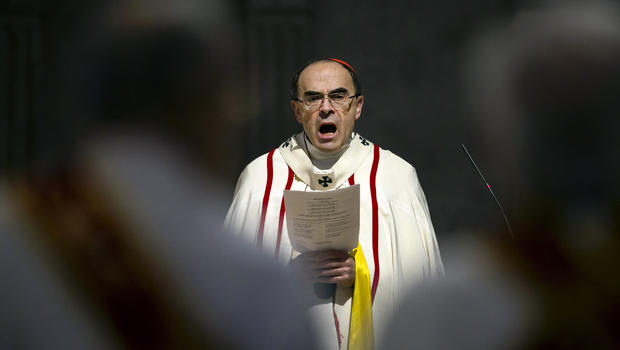
50 Reasons to Boycott the Catholic Church

The Church uses its resources to oppose social progress and positive change all over the world.

By Adam Lee

Last month in Ireland, Savita Halappanavar died, and she shouldn’t have. Savita was a 31-year-old married woman, four months pregnant, who went to the hospital with a miscarriage in progress that developed into a blood infection. She could easily have been saved if the already doomed fetus was aborted. Instead, her doctors did nothing, explaining that “this is a Catholic country,” and left her to suffer in agony for days, only intervening once it was too late.

Savita’s death is just the latest in a long line of tragedies directly attributable to the doctrines and beliefs of the Roman Catholic church. I acknowledge that there are many good, progressive Catholics, but the problem is that the church isn’t a democracy, and those progressives have no voice or vote in its governance. The church is a petrified oligarchy, a dictatorship like the medieval monarchies it once existed alongside, and it’s run by a small circle of conservative, rigidly ideological old men who make all the decisions and choose their own successors.

This means that, whatever individual Catholics may do, the resources of the church as an institution are bent toward opposing social progress and positive change all over the world. Every dollar you put into the church collection plate, every Sunday service you attend, every hour of time and effort you put into volunteering or working for church organizations, is inevitably a show of support for the institutional church and its abhorrent mission. When you have no voice, there’s only one thing left to do: boycott. Stop supporting the church with your money and your time. For lifelong Catholics, it’s a drastic step, but it’s more than justified by the wealth of reasons showing that the church as an institution is beyond reform, and the only meaningful response is to part ways with it. Here are just a few of those reasons:

1. Throughout the world, Catholic bishops have engaged in a systematic, organized effort going back decades to cover up for priests who molest children, pressuring the victims to sign confidentiality agreements and quietly assigning the predators to new parishes where they could go on molesting. Tens of thousands of children have been raped and tortured as a result of this conspiracy of silence.

2. Strike one: “What did the pope know and when did he know it?” The current pope, when he was Cardinal Joseph Ratzinger, was personally implicated in a case from the 1970s in which at least three sets of parents reported that a priest in his diocese had sexually abused their children. In response, Ratzinger assigned the priest to therapy, without notifying law enforcement, and washed his hands of the matter. That priest was back on duty in just a few short days and went on to molest more children.

3. Strike two: In 1981, again when the current pope was Cardinal Ratzinger, he got a letter from the diocese of Oakland asking him to defrock a priest who had acknowledged molesting two children. Ratzinger ignored this letter, and several followup letters, for four years. Finally, in 1985, he wrote back saying that more time was needed, and that they had to proceed very slowly to safeguard “the good of the Universal Church” in light of “the young age of the petitioner” — by which he meant not the victimized children, but the pedophile priest. (By contrast, when a rogue archbishop ordained married men as priests, he was laicized six days later.)

4. Strike three: In 2001, Cardinal Ratzinger wrote a letter, De Delictis Gravioribus, to all Catholic bishops advising them how to handle accusations of sex crimes by priests. There was no recommendation to contact the police, but rather an instruction for them to report such cases only to the Vatican and tell no one else: “Cases of this kind are subject to the pontifical secret.

5. Some church officials, like the American friar Benedict Groeschel, have blamed the epidemic of child molestation on sexually wanton boys who tempt priests into assaulting them.

6. They threaten to cut off funding for immigrants’ rights advocates because they sometimes work with gay-rights advocates. Preventing immigrants from getting legal and medical aid is less important than ensuring the church isn’t contaminated by even indirect contact with anyone who helps gay people.

7. In a sign of how ridiculously disproportionate and unhinged the church’s martyrdom complex is, the current pope has compared expanding the rights of women and gay people to the murderous anticlerical violence of the 1930s Spanish civil war.

8. They’ve used their official UN observer status to team up with Islamic theocracies like Iran and Libya to oppose calls for family-planning services to be made available in the world’s poorest nations.

9. They’ve gone to desperately poor, AIDS-ravaged regions of Africa to spread the life-destroying lie that condoms don’t prevent transmission of HIV.

10. In the mid-20th century, they appointed a special papal commission to study whether Catholicism should permit the use of birth control. When the commission almost unanimously recommended that they should, they ignored that recommendation and doubled down on their absolute ban on contraception.

11. They excommunicated the doctors who performed an abortion on a pregnant 9-year-old who’d been raped by her stepfather.

12. They did not excommunicate the stepfather.

13. Savita Halappanavar wasn’t the first: Catholic-run hospitals are willing to let women die rather than get lifesaving abortions, even when a miscarriage is already in progress and no possible procedure could save the fetus.

14. They refused to provide contraception or abortion to women who were abducted and forced to work as prostitutes, and then filed a lawsuit complaining it was violating their religious freedom when the government took away their contract.

15. In Poland, they ordered politicians to vote for a law banning IVF and threatened to excommunicate any who didn’t comply.

16. They were a major source of the pressure on the Komen Foundation that led to its disastrous decision to cut ties with Planned Parenthood.

17. They’ve announced an inquisition into the Girl Scouts to get to the bottom of its association with morally suspect groups like Doctors Without Borders and Oxfam.

18. They’ve been one of the major forces attacking Obamacare, filing lawsuits arguing that non-church Catholic employers should be able to decide whether or not employee health insurance plans will cover contraception. This is effectively an argument that a woman’s employer should be allowed to force her to pay more for medical coverage, or even place it out of her reach altogether, based on his religious beliefs.

19. In Australia, they allegedly derailed a police investigation of an accused pedophile, putting pressure on higher-ups to get an investigating officer removed from the case.

20. They demanded that Sunday school teachers sign a loyalty oath agreeing to submit “will and intellect” to the proclamations of church leaders.

21. Some top church officials, including the current pope, have advocateddenying communion to politicians who support progressive and pro-choice political ideas. Notably, although the church also opposes preemptive war and the death penalty, no conservative politician has ever been denied communion on this basis.

22. They’ve cracked down on American nuns for doing too much to help the poor and not enough to oppose gay marriage, condemning them for displaying a seditious “feminist spirit.”

23. In Germany, where parishioners pay an officially assessed tax rate to the church, they’ve tried to blackmail people who don’t want to pay the church tax, threatening to fire them from jobs in church institutions. In some cases, if the person opts out but later loses the paperwork, they demand on-the-spot repayment of decades of back taxes.

24. In America, bishops have compared Democratic officeholders, including President Obama, to Hitler and Stalin and have said that it jeopardizes a person’s eternal salvation if they don’t vote as the bishops instruct them to.

25. They fight against equal marriage rights for same-sex couples. It’s not enough for the Catholic church hierarchy that they refuse to perform church weddings for gay and lesbian couples; they want to write that prohibition into the civil law and deny marriage equality to everyone who doesn’t fit their religious criteria, and have invested vast amounts of money and effort into doing so. In the 2012 election cycle alone, the church spent almost $2 million in an unsuccessful fight to defeat marriage-equality initiatives in four states.

26. They’ve compared gay sex to pedophilia and incest and called for it to be forbidden by law, saying that “states can and must regulate behaviors, including various sexual behaviors.”

27. They’ve shut down adoption clinics rather than consider gay people as prospective parents. The church’s official position, apparently, is that it’s better for children to remain orphans or in foster care than to be placed in a loving, committed same-sex household.

28. They barred an anti-LGBT bullying group, anti-teen-suicide foundation from a Catholic school ceremony, explaining that the group’s mission is “contrary to the teachings of the Catholic church.”

29. They told a teenager he wouldn’t be allowed to go through confirmationbecause he posted a pro-gay-rights status message on Facebook, and theyexpelled a preschooler from a private Catholic school because his parents were lesbians.

30. They have a history of dumping known pedophile priests in isolated, poor, rural communities, where they apparently assumed that local people wouldn’t dare to complain or that no one would listen if they did.

31. They’ve given huge payouts — as much as $20,000 in some cases — to pedophile priests, to buy their silence and quietly ease them out of the priesthood, after specifically denying in public that they were doing this.

32. When the Connecticut legislature proposed extending statute-of-limitations laws to allow older child-abuse cases to be tried, the bishops ordered a letter to be read during Mass instructing parishioners to contact their representatives and lobby against it.

33. To fight back against and intimidate abuse-survivor groups like SNAP, the church’s lawyers have filed absurdly broad subpoenas demanding the disclosure of decades’ worth of documents.

34. In the Netherlands, some boys were apparently castrated in church-run hospitals after complaining to the police about sexual abuse by priests.

35. When a Catholic official from Philadelphia, William Lynn, was charged with knowingly returning predator priests to duty, his defense was to blame those decisions on his superior, Cardinal Anthony Bevilacqua, thus acknowledging that the corruption reaches to the highest levels of the church.

36. When confronted with hundreds of complaints about child-raping priests spanning decades, a Dutch cardinal used the same “we knew nothing” excuse once given by Nazi soldiers. Several months later, it was reported that this same cardinal had personally arranged to move a pedophile priest to a different parish to shield him from accusations.

37. In one case, Mother Teresa successfully persuaded the church to return a suspected pedophile priest to duty because he was a friend of hers. Eight additional complaints of child abuse were later lodged against him.

38. In yet another case, they appointed a priest with a history of child molestation to a board that advises the church on what to do when they get reports of priests molesting children.

39. And after all this, they’ve had the audacity to plead for money and ask parishioners to pick up the tab for legal costs and settlements.

40. They abducted tens of thousands of babies from unwed mothers who gave birth in Catholic-run hospitals all over the world throughout the 20th century, forcing drugged or helpless women to give their newborn children up for adoption against their will.

41. They tried to have the Indian skeptic Sanal Edamuruku charged with blasphemy and imprisoned for debunking a claim of a miraculous weeping statue.

42. They publicly supported the Russian Orthodox church’s decision to have the punk band Pussy Riot charged and imprisoned for blasphemy.

43. Their finances are a disorganized mess, lacking strong accounting controls and clear internal separations, which means parishioners who give to the church can have no assurance of what the money will be used for. According to an investigation by the Economist, funds meant for hospitals, cemeteries and priests’ pensions have been raided to pay legal fees and settlements in several diocesan bankruptcies.

44. They’ve said in public that the sexist prohibition on women priests is an infallible part of Catholic dogma, and hence can never be changed.

45. They’ve silenced priests who call for the ordination of women and other desperately needed reforms, exhorting them to instead show “the radicalism of obedience.”

46. They’ve excommunicated at least one priest for advocating the ordination of women.

47. They lifted the excommunication of an anti-Semitic, Holocaust-denying bishop who also thinks women shouldn’t attend college or wear pants.

48. When it comes to the question of who’s financially responsible for compensating the victims of sex abuse, they argue that priests aren’t employees and therefore the church bears no responsibility for anything they do.

49. They canonized Mother Teresa for doing little more than offering a squalid place for people to die. Outside observers who visited her “Home for the Dying” reported that medical care was substandard and dangerous, limited to aspirin and unsterilized needles rinsed in tap water, administered by untrained volunteers. The millions of dollars collected by Mother Teresa and her order, enough to build many advanced clinics and hospitals, remain unaccounted for.

50. They announced that voluntary end-of-life measures, such as terminal patients’ directives for when they wish to have a feeding tube removed, won’t be respected at Catholic hospitals.

Complete Article HERE!

Vilification of abusers won’t contribute to solution

Review by — John C. Seitz

If we want to understand sexual violence, we have to get to know its perpetrators and the worlds in which they were formed. In the particular context in which Marie Keenan is interested — clerical sexual abuse and its cover-up in the U.S. and Ireland since the middle of the 20th century — such an adage goes from truism to nonstarter. Pressure not to get to know clerical abusers and the institutional, educational and social worlds of their formation comes from many angles of varying validity.

A posture of attentiveness to abusers may strike some abuse victims and their advocates as excusing the abuse and losing sight of the harm it may have inflicted. For their part, media outlets have helped uncover abuse, but they have also contributed to the vilification of clerical offenders, fixating on the category of pedophilia (at the expense of other abusive scenarios), and fomenting moral panic.

Church officials, on the other hand, want to isolate abusers and officials complicit in cover-up. They would have us pay attention to abusers only as aberrant pathological individuals. The theological or institutional context for their production as clergy is more or less off-limits.

Keenan, a researcher and lecturer in applied social science at University College Dublin and a registered psychotherapist, plunges into these taboo waters, taking her readers into the theological, moral and institutional contexts for abuse and cover-up. Working with the ever-present caution that to “understand all is never to forgive it all,” Keenan makes this journey in part through analysis of extensive conversations with nine Catholic men — all retired or laicized Irish priests and brothers — who admitted to having sexually abused minors in the past.

The premise for such a move is simple: Vilification of abusers prohibits thick understandings of their lives. Content to turn “them” into monsters, we avoid their (and our) implication in wider contexts that helped produce the abuse. Humanizing abusers offers significant new angles on the problem. Listening to these men’s stories allows Keenan to see that they “were not in themselves ‘bad’ men, rather, they were trying to be ‘perfect’ priests.” Description of what it meant to be “perfect” — to practice the priesthood in the officially celebrated manner — goes a long way toward explaining how these men could “rationalize” their behavior and the secrecy that surrounded it.

Keenan does not rush into a presentation of the perpetrators’ stories, as if they alone were enough. Instead, the first half of the book includes a review of the existing literature on clerical sexual abuse, the culture of seminaries, and psychologies of abusive behavior. This first half of the book also includes an insightful reading of the complexities of “power” as theorized by contemporary scholars of gender. She interprets these sources clearly and cautiously. These chapters alone make Keenan’s work immensely useful. But the book’s real contribution comes from its exploration of the stories of nine abusive clergymen in Ireland.

This latter section of the book develops several themes relevant to the rise of abuse in Roman Catholic settings. Her focus is on seminary culture and education (in the period before the 1990s) and the kind of living it enabled and disabled. In these spaces priests learned to fear sexuality, disavow their bodies and emotions, bury non-priestly components of themselves, and adapt to emotionally isolated and lonely lives.

Two additional themes enhance her critique of clerical formation. The first is a paradox of clerical life, a condition she describes as simultaneously powerful and powerless. Valorized as special beings with unique ritual powers and heightened virtue, priests and brothers were also demeaned and devalued by expectations of humility and deference to their clerical superiors. Often unsupported and unsupervised and yet conditioned toward obedience to those above, many clerics experienced frustration in a church that demanded so much of them.

These conditions, along with sexual immaturity fostered by lifelong silence surrounding sexuality, helped produce priests who had an “emotional congruence” with children. Keenan sees perpetrators of abuse tragically seeking to navigate their emotional tempests in the presence and with the bodies of young people, whom abusers saw as equal, if easily silenced, partners.

The other most compelling theme concerns moral education. The church, Keenan argues, has offered poor tools for making judgments. Instead of judging out of a context of relationships with particular others and dynamic processes of introspection and empathy, seminarians were instructed in the technical and intellectual application of fixed, universal and external rules. Impersonal and abstract, this moral theology enabled abusers to treat their behavior as a matter of sin against God and purity and not as a matter of harm for others. Moreover, the confessional, with its seal of secrecy, further enabled the abuse by providing a context for expiation of this sin. Regular confession helped convince the priests that they were at least trying to meet God’s standards. All of the nine priests confessed their abuse in confession — according to their reports, only once did a confessor alert the abuser to the criminal nature of the offense. The system advanced a purity ethic at the expense of a relational ethic.

If all or most priests and brothers were trained amid these conditions until very recently, why did some abuse while others did not? Keenan argues that abusers were more likely to be those inclined to be rule followers rather than rule breakers. Many clergy had the ability or cunning to know which rules they needed to bend or break in order to make seminary and clerical life humane. Others, those aspiring to the most strict and idealized version of the priesthood (what Keenan calls “Perfect Celibate Clerical Masculinity”) were essentially harmed by the church in the process. Buying into the impossible standards of this idealized clerical identity stifled opportunity for these men to openly explore their humanity and sexuality, develop intimate and satisfying adult relationships, account morally for their impact on others, and see themselves outside their duties to powerful superiors.

The stunning conclusion of this work is that for those who embraced the idealized model of perfect celibate clerical masculinity, seminary and priestly life were in themselves abusive contexts. Overly credulous or unsavvy, they accepted standards that led to “soul death.” Eventually, children were the “sacrificial lambs” on the altar of this image of clerical perfection. Until recently, victims’ silence allowed Catholics to ignore their complicity in the institutional secrecy and hypocrisy that helped these sacrifices continue.

For Keenan, it remains a question whether these voices speaking up will result in real change. Vilification or dismissal of abusers won’t contribute to the solution. Apologies, shame and even strict “zero tolerance” policies will not constitute the kind of structural reform that will begin to solve the problem in the Roman Catholic church. Only a “new model of the church” will do. Keenan’s hard-nosed and sophisticated book is a step in that direction.

Complete Article HERE!

Film defrocks church hierarchy over handling of sex abuse

By Andrea Burzynski

Four deaf Wisconsin men were some of the first to seek justice after suffering childhood sexual abuse at the hands of a priest, and a new documentary about the Catholic Church’s poor handling of such cases stemming from the Vatican seeks to make their voices heard.

“Mea Maxima Culpa: Silence in the House of God” explores the impact of the Roman Catholic Church’s protocol as dictated from the Vatican for dealing with pedophile priests. It opens in U.S. cinemas on November 16, and will air on cable channel HBO in February.

Though American media coverage about child sex abuse by clergy has been extensive since a slew of cases came to light in Boston in 2002, Oscar-winning documentary director Alex Gibney wanted to connect individual stories with what he sees as systemic failures stemming from the top of the church.

“A lot of individual stories had been done about clerical sex abuse, but I hadn’t seen one that really connected the individual stories with the larger cover-up by the Vatican, so that was important,” Gibney told Reuters in an interview.

The film centers on the group of deaf men and their experiences as young boys attending St. John’s School for the Deaf in St. Francis, Wisconsin.

In a letter to the Vatican in 1998, the late Rev. Father Lawrence Murphy admitted abusing some 200 deaf boys over two decades beginning in the 1950s.

Murphy claimed he had repented, and asked to live out his last years as a priest, and was never defrocked or punished by civil authorities. He died in 1998.

In the film, the men communicate their frustrating attempts to bring their experiences to the attention of religious and civil authorities with effusive sign language and facial expressions, paired with voiceovers by actors such as Ethan Hawke.

The film also traces a convoluted bureaucracy – right up to the cardinal who is now Pope Benedict – to reveal a set of policies that the film portrays as often seeming more interested in preserving the Church’s image.

STRUGGLING TO BE HEARD

“These were deaf men whose voices literally couldn’t be heard, so there was a silence from them, and there was also this silence coming from the church, a refusal to confront this obvious crime, in part because they were covering it up,” said Gibney.

The Vatican has denied any cover-up in the Murphy case and in 2010 issued a statement condemning his abuse. It has criticized media reports about the Church’s handling of the cases as anti-Catholic.

Contrasting that, the film shows interviews with former church officials who talk openly of church policies to handle cases by “rehabilitating” abusive clergymen and snuffing out scandal.

Gibney said that all of the Vatican officials he contacted declined his interview requests.

Raised Catholic himself, Gibney no longer practices organized religion, but empathizes with Catholics who feel a sense of loyalty to the religion’s institutions and acknowledges that criticism of the church can feel like a personal attack.

“Mea Maxima Culpa,” a Latin phrase meaning “my most grievous fault” focuses on the failures of the Catholic Church’s hierarchy. But Gibney – who won an Oscar for “Taxi to the Dark Side” – said the film’s theme transcends religion and is also relevant for secular institutions.

“This is obviously about the church, but it’s also a crime film,” he said. “It’s about abuse of power and it’s about how institutions instead of reckoning with problems try to cover them up. It’s always the cover-up that creates the problem.”

He cited the Jerry Sandusky sex abuse scandal that rocked Penn State University recently, and the BBC’s poor handling of abuse allegations against the late British TV personality Jimmy Savile as examples of secular institutions brought low by similar issues.

“The thing about predators is that they tend to hide in plain sight,” Gibney said. “You’re seeing it now with Sandusky, you’re seeing it now with Jimmy Savile in Great Britain, and you saw it with Father Murphy in the film.”

Gibney thinks that the public’s stubbornly rosy perceptions of charismatic authority figures, including priests, is a major factor in such scandals.

“They’re often involved in charity or good works,” he said of high-profile abusers. “That seems to give you license to do unbelievable things because people cut you all sorts of slack that they wouldn’t normally do for other people.”

Complete Article HERE!

Quote of the Day

“When you rape children, cover it, rape them again, cover it up, rape them again, finally get caught, still cover it up, apologize, recant your apology, then blame the victim, you have zero moral authority to lecture others about their supposed sins.”

John Aravosis at AMERICAblog, writing about the Catholic Church’s most current bit of pearl-clutching over marriage equality.

Six men suing the Catholic church for alleged sexual abuse

A group of men from a northwestern Ontario First Nations community are suing a Winnipeg-based Roman Catholic order and others to seek redress for alleged sexual abuse they suffered at the hands of their community priest as young boys.

The six men from the Lac La Croix First Nation near Fort Francis seek unspecified financial damages from the federal government, a Catholic diocese in Thunder Bay and the order of Les Oblats de Marie Immaculee du Manitoba, along with a priest who lived and worked on the reserve in the 1960s.

The men range in age from 55 to 61.

In separate statements of claim, each alleges his life has been deeply and negatively affected by the aftershocks of sexual assaults he was subjected to — abuse the men say they felt powerless to speak out about given the priest’s position of power in their small community.

One man states that when he was 10 or 11 years old, the priest took him to his on-reserve home several times during the summer months and anally raped him. The behaviour continued until he was 13 or 14, the now-56-year-old says.

The other men make similar claims, one alleging he was abused more than two dozen times at the priest’s home and in a schoolhouse room. Another claims he was assaulted by the priest in a hotel room during a trip to Minnesota.

The priest died in May 1986.

The allegations have not been proven, and no statement of defence has been filed. No court date has been set to test the men’s claims.

The men state the Order and the Thunder Bay diocese should be held indirectly responsible for the actions of the now-late priest, who was a member of the order and an employee of the diocese, their lawsuits say.

“The Order and the Diocese held out (the priest) as an individual that embodied the values of the Roman Catholic faith such that it was implied that he could be trusted and that he would do no harm,” one lawsuit states.

The two organizations should have known there would be a “power imbalance” given the emphasis the faith places on obeying the wishes of its clergy, and the power the priest had over the “immortal souls” of the faithful in the community.

Complete Article HERE!

MEA MAXIMA CULPA SILENCE IN THE HOUSE OF GOD

Alex Gibney, an award-winning documentary maker whose work has focussed on Lance Armstrong, Julian Assange, and Enron, has found his most contentious topic yet.

His Oscar-touted exposé, Mea Maxima Culpa: Silence in the House of God, traces a sex-abuse scandal from a Milwaukee Catholic church to the Vatican.

Gibney also shot parts of the film in Ireland and Italy and received €50,000 from the Irish Film Board. The movie was banned by the Venice and Rome film festivals this year.

According to the New York Post, Gibney said of its rejection: “I was disappointed. The Vatican exerts a very strong influence in Italy. There is a palpable sense of fear there. This film takes on the Vatican’s complicity [in covering it up].”

The film won the best documentary prize at the London Film Festival last week.

It was co-produced by Belfast’s Below the Radar production company, and is in cinemas in the US from Nov 16.

It follows the story of Fr Lawrence Murphy at the St John’s School for the Deaf in Wisconsin, who molested 200 pupils for 24 years. He was never disciplined, even after his actions were brought to the attention of the Vatican. Instead, he was moved to other schools.

“The direct connection of the Vatican to this sheds light on the way they’ve shoved this stuff under the carpet,” said Gibney, who discovered a similar scandal involving deaf students in Verona in Italy while making the film.

Five students are interviewed in the film, and, as they use sign language, their words are voiced by actors.

Gibney said: “We play with the idea of silence in this film. How could this predatory behaviour exist with people so helpless?

“With the priests in Italy… there is very little sympathy for victims.

“Instead, there’s this resentment that people would attack the Church. What else is in this huge cache of documents in the secret Vatican archives that has been compiled for centuries?”

MEA MAXIMA CULPA SILENCE IN THE HOUSE OF GOD

Alex Gibney, an award-winning documentary maker whose work has focussed on Lance Armstrong, Julian Assange, and Enron, has found his most contentious topic yet.

His Oscar-touted exposé, Mea Maxima Culpa: Silence in the House of God, traces a sex-abuse scandal from a Milwaukee Catholic church to the Vatican.

Gibney also shot parts of the film in Ireland and Italy and received €50,000 from the Irish Film Board. The movie was banned by the Venice and Rome film festivals this year.

According to the New York Post, Gibney said of its rejection: “I was disappointed. The Vatican exerts a very strong influence in Italy. There is a palpable sense of fear there. This film takes on the Vatican’s complicity [in covering it up].”

The film won the best documentary prize at the London Film Festival last week.

It was co-produced by Belfast’s Below the Radar production company, and is in cinemas in the US from Nov 16.

It follows the story of Fr Lawrence Murphy at the St John’s School for the Deaf in Wisconsin, who molested 200 pupils for 24 years. He was never disciplined, even after his actions were brought to the attention of the Vatican. Instead, he was moved to other schools.

“The direct connection of the Vatican to this sheds light on the way they’ve shoved this stuff under the carpet,” said Gibney, who discovered a similar scandal involving deaf students in Verona in Italy while making the film.

Five students are interviewed in the film, and, as they use sign language, their words are voiced by actors.

Gibney said: “We play with the idea of silence in this film. How could this predatory behaviour exist with people so helpless?

“With the priests in Italy… there is very little sympathy for victims.

“Instead, there’s this resentment that people would attack the Church. What else is in this huge cache of documents in the secret Vatican archives that has been compiled for centuries?”

More sex charges filed against priest removed from St. Paul church

A priest who had been charged with criminal sexual misconduct now faces 17 counts of possessing child pornography, Ramsey County authorities said Tuesday.

The Rev. Curtis Wehmeyer, 48, of Oakdale, was removed as pastor of Blessed Sacrament Catholic Church in St. Paul in June amid an investigation into child sex assault.

During the summer of 2010, Wehmeyer allegedly brought two young brothers to his camper trailer, parked in the lot of the church, and showed the boys, then 12 and 14, pornographic movies.

He gave them alcohol and marijuana as he allegedly molested one and exposed himself to the other, according to the complaint filed in late September.

“As the parish priest for this family, the defendant betrayed a sacred trust and forever marred the innocence of two young victims,” Ramsey County Attorney John Choi said Tuesday. “We will pursue justice for the family, as well as the community.”

After he was arrested in June at the church rectory, Wehmeyer saw the boys’ mother and told her that he intended to plead guilty.

The complaint filed Monday details pornographic images showing nude prepubescent boys alone and engaged in sexual acts with each other.

Investigators allegedly found the videos and photos on the priest’s laptop computer, in a closet in the rectory, while executing a search warrant in July.

Each of the 17 counts is punishable by up to five years in prison and/or a fine of up to $5,000.

The earlier charges are second-degree criminal sexual conduct and two counts of gross misdemeanor fifth-degree criminal sexual conduct.

Wehmeyer was ordained in 2001 and served as associate priest at St. Joseph Catholic Church in West St. Paul from 2001 to 2006. Since 2006 he had served at Blessed Sacrament.

The Archdiocese of St. Paul and Minneapolis released a statement after the September charges were filed, saying it “deeply regrets the pain caused by clergy misconduct or by others within the Church, and is offering its support and assistance to all concerned.”

Complete Article HERE!

Chilean bishop resigns amid sex abuse inquiry

The pope yesterday accepted the resignation of a Chilean bishop who is under investigation by the Vatican for the alleged sexual abuse of a minor.

The resignation of Bishop Marco Antonio Ordenes Fernandez of Iquique, Chile, marks one of the few times that the Vatican has acknowledged publicly it was investigating a bishop for sex abuse allegations. Advocates for clerical sex abuse victims have long complained the Vatican has looked the other way when bishops have been accused of abuse or of covering it up.

The Vatican said yesterday that the pope has accepted Ordenes’ resignation under the code of canon law that says a bishop must resign if he is sick or because some other “grave” reason makes him unsuitable for his job.

The 47-year-old Ordenes suffers from a liver ailment and has been seeking medical treatment. But the Vatican Embassy in Santiago confirmed Oct. 2 that it had been investigating Ordenes since April and was offering psychological and other care to “those affected.”

The Vatican spokesman, Federico Lombardi, said the link between the resignation and the investigation “can be considered obvious.”

Ordenes is accused of abusing a 15-year-old altar boy in the northern city of Iquique.

The former bishop admits he had “an imprudent act” with his accuser but says that he met him in 1999 when he was 17 and they had a relationship when he was no longer underage.

“My conscience is clear before God, and that’s what matters,” Ordenes told Chilean newspaper La Tercera in a recent interview.

His accuser, Rodrigo Pino, 30, said the abuse began when he was 15. At first, he said it was forced, but then they became lovers.

The Associated Press doesn’t normally name victims of alleged sexual abuse, but Pino has gone public with his claims.

“We began a friendship because I showed him my interest in becoming a priest. I became very involved with him, and then the abuses began,” Pino told Chilean ADN radio. “He would tell me that he was like a father to me and I was like his son, his lover, his brother and friend. … At first the abuse was forced because I was a boy who fell in love.”

The Vatican Embassy is taking charge of the investigation because Ordenes is a bishop. Usually, a priest accused of sexually abusing children is investigated by his bishop, who then sends the case to the Vatican for review if he finds a semblance of truth to the accusations.

Lombardi said the fact the case was now before the Vatican’s Congregation for the Doctrine of the Faith, which handles cases of clerics accused of the sexual abuse of minors, indicates the investigation concerns the allegation that Ordenes abused Pino when he was underage.

A handful of U.S. bishops have resigned after facing sex abuse allegations. More recently, the then-bishop of Bruges, Belgium, Roger Vangheluwe, quit in 2010 after admitting he had molested his nephew for years starting when he a young boy. The Vatican later sanctioned him.

Earlier this year, the Vatican laicized a Canadian bishop who was convicted of child porn possession.

Complete Article HERE!