In bizarre move, bishop who ousted gay catholic from parish rejects 18,000 signatures, sends them back

File under: insulated, monolithic, callous, tone deaf church power structure

by Ross Murray

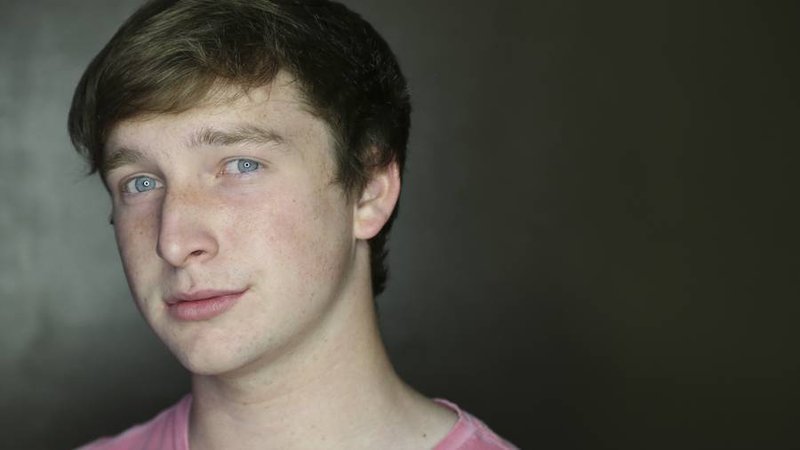
On April 11, Nicholas Coppola delivered over 18,000 signatures gathered through Faithful America to the Roman Catholic Diocese of Rockville Centre, asking that Nicholas be once again allowed to volunteer with his parish, after getting married to his husband.

On April 23, Bishop William Murphy mailed them back, accompanied by one sentence:

“FROM YOUR FAITHFUL ROMAN CATHOLIC BISHOP.”

Seriously. You can see the cover letter here.

“I really don’t understand what sort of message Bishop Murphy is trying to send,” said Nicholas Coppola upon learning that the signatures were mailed back. “Is he no longer listening to the voices of the faithful? I have more questions than anything now.”

“Bishop Murphy owes Nicholas and the 18,000 people who’ve signed this petition a real answer, not a tactless ‘return to sender’” said Michael Sherrard, executive director of Faithful America. “I’ve never heard of a church official returning a petition like this without any kind of explanation.”

In January, Nicholas was informed by his priest that because he got married, he was to be removed from all parish activity, including altar server, lector, visitation minister, and religious education instructor. More than 18,000 people, including many Catholics, stood up in support of Nicholas, and asked that he be restored to his participation with the parish. Rather than speak with Nicholas, the Diocese dispatched security and would not allow Nicholas to enter the building. A security guard stated that he was to collect Nicholas’ petition and deliver it to the correct person.

Since that time, Nicholas has launched a second petition through Change.org, inviting Cardinal Timothy Dolan to break bread with him and listen to the story of at least one faithful gay Catholic. The petition comes in response to Cardinal Dolan’s admission to George Stephanopoulos that the Roman Catholic Church hasn’t “been too good” about not attacking gay and lesbian people. The Change.org petition has collected over 20,000 signatures to date.

According to canon law, the bishops must respond to letters that have been delivered. Later the same day that Nicholas delivered the petitions, the diocese issued a media statement reaffirming Nicholas’ ouster. It is unclear if returning the petition is the official response, per canon law.

“Nicholas Coppola is a faithful Catholic who loves his church, and he is now being treated like a threat by his own bishop,” said Ross Murray, GLAAD’s Director of News and Faith Initiatives. “Now more than ever, it is vital that Cardinal Dolan break bread with Nicholas to hear how he is being treated by the church that he loves so much.”

Take Action: Tell Cardinal Dolan to break bread with Nicholas Coppola

It’s time to replace shunning with real dialogue. Please join GLAAD in asking Cardinal Dolan to break bread with Nicholas Coppola so he can see that they are just like any other American Catholic family. Visit www.glaad.org/breakbread to learn more.

Complete Article HERE!

Inconsistent messages damage credibility of the new evangelization

By Isabella R. Moyer

“Inconsistency on the part of pastors and the faithful between what they say and what they do, between word and manner of life, is undermining the Church’s credibility,” Pope Francis stated Sunday during his first papal visit to the Basilica of St. Paul Outside the Walls.

I couldn’t agree more. Inconsistency is one of the greatest obstacles to the new evangelization. It might be the greatest obstacle.

The new evangelization is aimed mostly at Catholics who have “drifted” from their faith. Papal and episcopal fingers of blame have pointed outward to the evils of secularism and other temptations of our modern age. But a simple mirror of introspection will show that the lack of credibility in the church is a major cause for the mass emptying of pews.

True, some may have drifted apathetically away but others have stomped out of the church in disgust, happy to slam the door behind them. The disgust comes from the glaring divide between the message preached, and the message lived.

Inconsistency is present when a parish describes itself as a welcoming, inclusive community but single mothers, questioning Catholics, divorced, re-married or LGBT persons do not experience that welcome.

Inconsistency is present when a diocese claims to be a faith-centered communion of communities, but all you see is division, financial or legal cover-ups, or a dysfunctional leadership.

Inconsistency is present when Catholics publicly rage against specific culture war issues, while disregarding the truly seamless garment of human dignity and life.

Inconsistency is present when we are told to give generously to church coffers to build extravagant worship spaces while schools, shelters and hospitals struggle to serve those in greatest need.

Inconsistency is present when priests who question the male-only or celibate priesthood are defrocked, but child abusers are not.

Inconsistency is present when more time, money and energy is put into petty and obsessive liturgical changes than into teaching women and men how to form a loving, personal relationship with God in prayer.

Inconsistency is present in each and every one of us when we lack the crucial balance of faith believed, faith prayed and faith lived. The more consistently we ponder, proclaim and live the gospel message in our everyday lives, the more credible we are as Catholics.

In the short month since his election, Francis has shown a gift for saying a lot in a few words and with the smallest of actions. Simplicity has the power to reach many hearts.

It is, perhaps, the most brilliant form of evangelization and our new pope does it well: “Those who listen to us and observe us must be able to see in our actions what they hear from our lips, and so give glory to God!”

Complete Article HERE!

Columbus Diocese Fires Gay Teacher, Coach

File under: insulated, monolithic, callous, tone deaf leadership.

by Bob Vitale

Bishop Watterson High School students are fighting for a longtime physical education teacher and coach they say was fired by the Catholic Diocese of Columbus because she’s gay.

Carla Hale is liked and respected by students and colleagues, but people close to her and the school say she was terminated after Bishop Watterson and church officials were told that she included her partner, Julie, in her mother’s newspaper obituary.

Students began an online petition yesterday that has been gaining about 100 supporters per hour. It was up to 2,800 by noon today.

The petition calls Hale a beloved teacher “who cared for her students and treated each one with respect.”

“The school, however, did not reciprocate that respect in its treatment of her,” reads the petition, started by Watterson senior Jackson Garrity. “Discrimination and injustice is something that we all have a duty to fight in today’s society. … The school claims its mission is to teach its students about love, acceptance, and tolerance, and yet it did none of this in the way it treated Ms. Hale. That is why we all have to stand up together and let it be known that this decision is unacceptable.”

Garrity said students learned of Hale’s firing this week, although they weren’t told directly by the school. The school didn’t tell faculty either, others said.


“She’s a great lady,” a former colleague said of Hale. “She’s totally dedicated to her students.”

Two people who know others who’ve spoken to Hale told Outlook the details of her termination. Hale’s mother, Jeanne E. Roe of Powell, passed away on Feb. 25, and her obituary appeared in The Columbus Dispatch the next day. Hale’s partner, Julie, was listed among Roe’s survivors. That is what prompted school officials to fire Hale, the source said.

“My classmates and I feel very passionately about this issue,” Garrity told Outlook by email. “We (the senior class) agreed that we needed to take a stand as leaders and voice our opinions.”

Other Watterson students, parents and alumni have voiced their anger at the school as well. Here’s a sampling of comments:

“Bishop Watterson demands that we all treat each other with equality and respect. I hope they see that their students are standing up for the morally right thing, not to just rebel against the school. Carla Hale is a child of God and equal in his eyes to all of us. Bishop Watterson needs to recognize that.”

“Ms. Hale was a fantastic PE teacher, she encouraged everyone to be a part of the games and activities we did in class. This made the class more fun for everyone. She was always fair towards me, even in my freshman year when I was rude and disrespectful in her class. … To see the treatment of a woman who has given so much time to the Watterson community as a teacher, coach, and much more is just sickening. Judging and discriminating against people on the basis of their sexuality is not what God wanted at all. … I want Ms. Hale reinstated to the school because regardless of her sexuality (which is no one’s business but her own), she is a great teacher, and a fantastic woman and role model.”

“When I was a student at Bishop Watterson, we were always taught to treat others with dignity and compassion. As an alumni, I still credit Bishop Watterson with shaping me into the person I am today — both morally and ethically. I am deeply saddened to learn that, in spite of what Watterson taught me about respect for all humanity, a longstanding and well-respected faculty member was treated so unfairly. Ms. Hale has always been an excellent coach and teacher. Her sexual orientation and lifestyle choices have no bearing on her capacity to educate her students and should NOT be grounds for termination of employment.”

“My kids go to Bishop Watterson. I want them to see a model of tolerance and love, not discrimination.”

“As a graduate of Watterson I am deeply disappointed that my former school seems to have lost sight of one of their core principles — to love and respect others. I truly hope Watterson realizes their mistake before teaching students that it is acceptable to judge another person for any reason, let alone for loving someone. Ms. Hale please know that we support you.”

Someone who signed the petition with the name of Hale’s daughter wrote: “Discrimination against someone for their sexuality is wrong. It is not our place to judge someone especially based on these terms. She is an amazing mother, friend, teacher, and all around person. That is how people should see her!”

Hale still is listed on Watterson’s website as head of the school’s health and physical education department.

Bishop Watterson Principal Marian Hutson didn’t respond to Outlook’s request for comment. Diocese spokesman George Jones said it’s church policy not to comment on personnel matters.

It’s the second time this year that Catholic schools in Ohio have fired educators for ties to the LGBT community. In February, Mike Moroski, an assistant principal at Purcell Marian High School in Cincinnati, was fired by the Cincinnati Archiocese after he stated his support for marriage equality on his personal blog.

Complete Article HERE!

Two Catholic Leaders Advise Denying Communion to Marriage Equality Supporters

Detroit Catholic leaders, one a legal adviser to the Vatican, suggest those who support gay marriage be denied Communion. Compare this to news that the Vatican collaborated with another murderous dictator.

By Niraj Warikoo

A Detroit professor and legal adviser to the Vatican says Catholics who promote gay marriage should not try to receive holy Communion, a key part of Catholic identity.

And the archbishop of Detroit, Allen Vigneron, said Sunday that Catholics who receive Communion while advocating gay marriage would “logically bring shame for a double-dealing that is not unlike perjury.”

The comments of Vigneron and Edward Peters, who teaches Catholic canon law at Sacred Heart Major Seminary in Detroit, are part of a polarizing discussion about gay marriage that echoes debate over whether politicians who advocate abortion rights should receive Communion.

In a post on his blog last week, Peters said that Catholic teachings make it clear that marriage is between one man and one woman. And so, “Catholics who promote ‘same-sex marriage’ act contrary to” Catholic law “and should not approach for holy Communion,” he wrote. “They also risk having holy Communion withheld from them … being rebuked and/or being sanctioned.”

Peters didn’t specify a Catholic politician or public figure in his post. But he told the Free Press that a person’s “public efforts to change society’s definition of marriage … amount to committing objectively wrong actions.”

Peters, an attorney and the Edmund Cardinal Szoka chairman at Sacred Heart, was appointed by Pope Benedict XVI in 2010 to be a referendary of the Apostolic Sinatura, which means he helps advise the top judicial authority in the Catholic Church. Peters’ blog, “In Light of the Law,” is popular among Catholic experts, but not everyone agrees with his traditional views.

“Most American bishops do not favor denying either politicians or voters Communion because of their positions on controversial issues,” said Thomas Reese, a Catholic priest and senior fellow at the Woodstock Theological Center at Georgetown University. Reese said that Peters’ views are “in a minority among American canon lawyers.”

But, Reese added, “about 30 or so bishops have said that pro-choice or pro-gay-marriage Catholics should not present themselves for Communion.”

Peters has said before that liberal Catholic Democrats, such as U.S. Rep. Nancy Pelosi of California and New York Gov. Andrew Cuomo, should be denied Communion because of their statements and positions.

In 2011, Peters said that Cuomo should not receive Communion because he is an outspoken proponent of gay marriage. Last month, Peters said, “Pelosi suffers from one of the most malformed consciences in the annals of American Catholic politics or … she is simply hell-bent on using her Catholic identity to attack Catholic values at pretty much every opportunity.”

In 2002, Catholic Jennifer Granholm’s support of abortion rights became an issue in the gubernatorial race a month before the election, when Detroit Cardinal Adam Maida released a letter saying Catholic politicians had a “special moral obligation” to oppose abortion.

Last month, Vigneron said at a news conference that maintaining views that oppose abortion and support traditional marriage are important for Catholics.

“Were we to abandon them, we would be like physicians who didn’t tell their patients that certain forms of behavior are not really in their best interest,” said Vigneron, who oversees 1.3 million Catholics in southeastern Michigan.

On Sunday, Vigneron said about supporting gay marriage and receiving Communion: “For a Catholic to receive holy Communion and still deny the revelation Christ entrusted to the church is to try to say two contradictory things at once: ‘I believe the church offers the saving truth of Jesus, and I reject what the church teaches.’ In effect, they would contradict themselves. This sort of behavior would result in publicly renouncing one’s integrity and logically bring shame for a double-dealing that is not unlike perjury.”

Vigneron said the church wants to help Catholics “avoid this personal disaster.”

The Election Of Pope Francis Opens The Door On Another Sordid Vatican Story

More marvelous commentary from Enlightened Catholicism.

“The Great Spirit, she does have her coyote face”. So said a Native American to me once at a ceremony. The implication was that what seems on the surface a good thing sometimes leads to lessons and wisdom you never imagined. Sometimes it brings with it more light on more things than a person really wants exposed. Sometimes a person is more or less forced to go well beyond what they originally intended. Sometimes when the Spirit opens a door, instead of a tiled hallway there is a very fast moving conveyor belt that has no side stops. I think in the election of Cardinal Bergogolio as Pope Francis, the Spirit has once again opened a door on to one of those fast moving, one direction only, conveyor belts.


The behavior of the Roman Catholic Church in South America during the 70’s and 80’s is much more than a story of what the then Argentinian Jesuit Provincial and current Pope Francis may or may not have done. It’s way beyond that. It’s about a systematic implementation of a CIA strategy designed to keep American global corporate interests ascendant and the organized opposition to that ascendancy in check. In this geo political game, Pope Francis was a bit player, a loyal Jesuit soldier under the command of his clerical superiors in Argentina and Rome. He isn’t any longer. He is on the throne, no longer a mostly disengaged member of the College of Cardinals and that fact has opened the door to that very fast moving conveyor belt. The Vatican press office can try to stop that conveyor belt with denials, denunciations, and self righteous anger, but it isn’t going to work any better now than the same strategy did at the beginning of the clerical abuse crisis. For all the Vatican’s efforts at minimizing that crisis and stopping the conveyor belt behind that door, the belt is still running. The Church can not get off it and the exit has not been reached.

Pope Francis is faced with his first serious crisis and that crisis exists precisely because the Spirit influenced the Cardinal electors to choose a man from Argentina who was, minimally or not, entangled with the very same military junta who provided the training, along with the US School of the Americas, for the Contras in Nicuragua. The Contras were trained by the same SOA who also trained those who gunned down El Salvadoran Archbishop Oscar Romero as well as six of Francis’ fellow Jesuits, and who were funded by CIA money filtered through the Vatican of JPII. That very Vatican whose CDF was headed by one Joseph Ratzinger who was tasked with silencing liberation theology, and whose diplomatic corps, under one Angelo Sodano, worked hand in glove with western intelligence agencies to promote agendas having exactly nothing to do with the teachings of Jesus Christ. My guess is if we want to know what the connection was between Ratzinger and Sodano we need not look much further than the Vatican’s clandestine actions in South and Central America.

Pope Francis will not get off this conveyor belt until there is utter transparency concerning the Church’s involvement with the CIA and other Latin right wing interests during this time frame. It isn’t just a matter of purging the Vatican of financial and sexual corruption. It is a matter of purging the Vatican of the geo political games that fuel so much of that corruption. Roman Catholicism can not go forward until it is purged of the arrogance of the curia and the bizarre thinking that Jesus wanted a Church for the political domination of the poor. Francis can not establish a poor Church for the poor as long as clergy keep diplomatic secrets, because those secrets give others the leverage to manipulate both the Church and his papacy.

Pope Francis needs to open all the secret doors and windows and files and archives so that the Church can finally function in the light and not in shadows. He himself needs to understand he is no longer shackled by the personal vows of silence and obedience, vows which must have come close to choking him on his own priestly collar. We can not talk about a reformed Church while being continually dragged down by the worst secrets of the unreformed. Confess the secrets, trust in the mercy of God, and sin no more. Isn’t that how the mantra goes?

Complete Article HERE!

Pope Francis called to restore the Church

Leonardo Boff’s weekly columns are available in Spanish from Servicios Koinonia and in Portuguese on his blog. Some of his older columns are available in English at LeonardoBoff.com.

by Leonardo Boff (English translation by Rebel Girl)

On the social networks, I had proclaimed that the future pope would be named Francis. And I was right. Why Francis? Because Saint Francis’s conversion began when he heard the Crucifix in Saint Damian’s Chapel say to him, “Francis, go and restore my house, which as you see is falling into ruin.” (St. Bonaventure,Legenda Maior II, 1).

Francis took these words literally and rebuilt the Portiuncula Chapel in Assisi which still exists inside a huge cathedral. Then he realized that restoring the “Church that Christ saved through his blood” (ibid) was a spiritual matter. It was then that he started his movement for renewal of the Church that was presided by the most powerful pope in history, Innocent III. He began to live with the lepers and arm in arm with one of them, he went along the way preaching the gospel in the vernacular and not in Latin.

It’s good to know that Francis was never a priest but just a layman, Only at the end of his life, when the popes forbade lay people to preach, did he agree to become a deacon, on the condition that he not receive any kind of remuneration for the post.

Why did Cardinal Jorge Mario Bergoglio choose the name Francis? I think it’s because he realized the Church is in ruins because of demoralization due to the various scandals that have affected the most precious thing it had: morality and credibility.

Francis isn’t a name; it’s a plan for a Church that is poor, simple, gospel-centered, and devoid of all power. It’s a Church that walks the way together with the least and last, that creates the first communities of brothers and sisters who recite the breviary under the trees with the birds. It’s an ecological Church that calls all beings those sweet words “brothers and sisters”. Francis was obedient to the Church and the popes and at the same time he followed his own path with the gospel of poverty in hand. So theologian Joseph Ratzinger wrote: “Francis’ ‘no’ to this imperial type of Church couldn’t be more radical; it’s what we could call a prophetic protest.”(in Zeit Jesu, Herder 1970, 269). Francis doesn’t talk; he simply inaugurates something new.

I think Pope Francis has in mind a church outside the palaces and symbols of power. He showed it when he appeared in public. Normally the Popes and mainly Ratzinger would put over their shoulders the mozzetta, that short capelet embroidered in gold that only emperors could wear. Pope Francis came dressed only in white. Three highly symbolic points stand out in his inaugural address.

First: He said that he wants to “preside with charity”, something that has been called for since the Reformation and by the best theologians of ecumenism. The Pope should not preside as an absolute monarch, clothed in sacred power, as provided for in canon law. According to Jesus, he should preside in love and strengthen the faith of the brothers and sisters.

Second: He gave a central place to the People of God, as Vatican II highlighted but which had been left aside by the two previous popes in favor of the hierarchy. Pope Francis humbly asked the people of God to pray for him and bless him. Only afterwards would he bless the people of God. This means that he’s there to serve and not be served. He asked them to help him build a path together and called for brotherhood for all humankind, where human being don’t recognize each other as brothers and sisters but are tied to economic forces.

Finally, he avoided all spectacle in the figure of Pope. He didn’t extend both arms to greet the people. He remained still, serious and sober, even frightened, I would say. One only saw a white figure who greeted the people affectionately. But he radiated peace and confidence. He showed his mood by speaking without official-sounding rhetoric, like a pastor speaks to the faithful.

It’s worth mentioning that he’s a pope who comes from the Great South, where the poorest of humankind are and where 60% of Catholics live. With his experience as pastor, with a new view of things, from below, he will be able to reform the Curia, decentralize the administration, and give the Church a new and credible face.

Complete Article HERE!

The Pope’s inbox: Top priorities for Benedict’s successor

Pope Benedict XVI’s successor takes the helm at a difficult time for the Catholic Church.

By Michael Hirst

In the West, the Church is struggling to fill pews as congregations dwindle, while the number of priests is also falling.

Meanwhile, the rise of evangelical Churches, especially in Latin America and Africa, is checking the growth of Catholic congregations, which are also threatened in some areas by religious intolerance.

Benedict XVI rejected calls for a debate on the issue of clerical celibacy, and reaffirmed the ban on Communion for divorced Catholics who remarry.

Equality laws being debated in several Western countries are a major issue. Benedict XVI has said the Church’s strict positions on abortion, euthanasia and homosexuality are “not negotiable”, and such outspoken orthodoxy has alienated liberal-minded Catholics.

And the next Pope will also have to shore up confidence in an institution that been rocked for several years by the sexual abuse of minors by priests.

Here are some of the major issues facing the next Pope once he is elected.

Managing the Vatican

The recent leaking of Vatican documents by the Pope’s butler have exposed the Church’s central government – the Curia – as a seriously dysfunctional institution.

It appears to be “riddled with rival factions and there were accusations of corruption in high places”, says veteran Vatican analyst Clifford Longley.

“The reform of the Vatican, which he only began at the margins, has a long way to go yet,” says Mr Longley. “Decentralisation is now imperative. His successor has a huge and unenviable task.”

Systems of oversight need to be put in place to ensure corruption is detected and halted, while Vatican financial transactions need to be made more transparent.

Equality laws


“The one issue which overshadows all others is the growing pressure on Catholics because of equality laws in the West,” says Catholic commentator Austen Ivereigh.

Gay marriage legislation in France and the UK, the closure of Catholic adoption agencies in the UK, the battle in US courts between leading Catholic institutions and the State over sexual equality are all serving to have a chilling effect on the Church in the West, he says.

“Equality laws such as same-sex marriage make Christians and church organisations vulnerable to lawsuits and anti-discrimination claims.”

Ultimately, says Mr Ivereigh, the State could be developing positions through equality legislation that will serve to marginalise Catholics and the presence of the Church in public life.

“There is no bigger file in the Pope’s inbox,” he says.

Sex abuse
USCCB and Survivors of AbuseBenedict XVI has spoken of the Church’s shame for “unspeakable crimes” committed by paedophile priests, as well as offering heartfelt apologies to victims, groups of whom he has met during his trips overseas.

But many critics feel the Vatican was – and still is – far too slow, too reluctant and too secretive when it comes to acknowledging and investigating sexual abuse.

The new Pope will have the task of continuing to ensure perpetrators are held to account, and to ensure the changes introduced by Benedict XVI are implemented – particularly when it comes to bishops signing up to child protection guidelines.

David Clohessy, Executive Director of the Survivors Network of Those Abused by Priests, told the BBC: “The next pontiff must do more to safeguard children.

“He should stop issuing apologies and making gestures, and instead demote bishops who continue to conceal heinous crimes.

“And he should insist that prelates work with secular authorities to craft and pass stronger child sex laws across the globe.”

The role of women


Benedict XVI acknowledged progress on promoting women within the Church – particularly in its administrative bodies – was too slow.

In 2007 he pointed out that while Jesus chose 12 men as apostles, “among the disciples many women were also chosen. They played an active role within the context of Jesus’s mission”.

Despite this, though, he has refused to countenance women priests, delivering a fierce rebuke last year to Catholics who challenged the Church’s teaching.

And while certain women have risen to posts in the Vatican, others considered “difficult” have been removed, says Dr Gemma Simmonds, Director of the UK’s Religious Life Institute.

An investigation into statements made by a group of Catholic nuns in the US on homosexuality and the male-only priesthood caused controversy. Fr Drew Christiansen, a Jesuit priest and visiting scholar at Boston College, says it is one of the key shortcomings of the pontificate.

“The USA owes a huge debt to generous, heroic sisters who have dedicated their lives to offering education, healthcare and pastoral provision only to be subjected to an intrusive, inherently hostile process of investigation for alleged doctrinal errors,” says Dr Simmonds.

“The contrast between their treatment and that of paedophile clergy has caused widespread scandal.”

It is widely acknowledged that a culture shift needs to take place within the Vatican, and the Pope will be expected to promote women into senior management positions in the Curia.

Interfaith tensions

The welfare of persecuted Christians around the world, particularly in troubled areas of the Middle East, Asia and Africa, will be a major issue for the next Pope.
Pope Benedict XVI at the Dome of the Rock in Jerusalem on 12 May, 2009 The exodus of Christians from the Holy Land will be a troubling issue for the next Pope

The ongoing exodus of Christians from the Holy Land will add significance to the Pope’s approach to relations with Jews and Muslims.

Such a bridge-building attempt was not welcomed in some Muslim circles, particularly coming shortly after the Pope quoted from a 14th-century Byzantine emperor who labelled the Prophet Muhammad “evil and inhuman”.

Benedict XVI’s successor will be challenged to find common ground with Islam, which is on the rise in Africa and Asia where Roman Catholicism has a large base.

Benedict XVI irked Jews by forwarding the path of Pope Pius XII to sainthood despite criticisms that the wartime Pope did not do enough to prevent the Holocaust. He also angered some in the Church of England by encouraging those disaffected with Anglicanism to convert to Catholicism.

In general, relations with Anglicans and Jews seem to be on a good footing. But the new Pope will have to tread carefully to build bridges with the Muslim world while not alienating Jews and without being seen to pander to Islamic extremism.

Smaller congregations, fewer priests


There are 1.2 billion Catholics around the world, a large proportion of whom (42%) come from Latin America. Europe, Catholicism’s historic heartland, is now home to just a quarter of Catholics.

However, Benedict XVI seemed reasonably untroubled by this numerical decline, envisioning a smaller, but more faithful, Church.

Key for his successor will be to consolidate this changing position of the Church within society. As it becomes more distant from official institutions, says Austen Ivereigh, the Church will have to ensure that those within the pews – and those who lead them – are well supported.

Similarly, it must continue to ensure it takes advantage of modern technology to spread its message.

The appointment of Fox News’ Rome correspondent Greg Burke as an adviser in 2012 signalled a modern communications strategy at the heart of Vatican decision-making that had previously been lacking. And then the Pope took to Twitter.

His successor will be expected to take a similarly enthusiastic approach to modern technology.

Complete Article HERE!

Cleveland priest excommunicated for role in breakaway worship community

By Brian Roewe

Cleveland Bishop Richard Lennon has issued a decree formally excommunicating Fr. Robert Marrone, the pastor who followed his parishioners from St. Peter Church to the independent worship community that formed in the wake of their parish’s closing.

“It is with sadness I recognize that the Reverend Robert J. Marrone, a priest of the Diocese of Cleveland, has broken communion with the Catholic Church,” Lennon’s decree, issued Monday, reads. “He is found to have withdrawn submission to the pastors of the Church and from communion with the members of the Church subject to them.

“I hereby declare that by doing so freely and with knowledge, the Reverend Robert J. Marrone has incurred ipso facto the automatic penalty (latae sententiae) of excommunication as stated in canon 1364, [paragraph 1] of the Code of Canon Law,” he said.

Fr. Robert Marrone censes the congregation during the Community of St. Peter liturgy Sunday, Dec. 4, 2011, at 7100 Euclid in Cleveland. (Peggy Turbett)

The decree accuses the priest of schism and forbids him from participation in celebrations of the sacraments or in public worship. Marrone can neither receive sacraments nor hold a position in any ecclesiastical office. Canon law allows him 10 days from his excommunication’s publishing to appeal the decree — in this case, until March 14.

Marrone addressed his status in a brief statement to members of the Community of St. Peter, stating the action “reflects the continuous pattern [in the diocese] which has marked the process of clustering, consolidation, closing, suppressions and reopening of parishes. I must, as I have stated repeatedly in the past, follow my conscience in this matter.”

Marrone expressed his gratitude to the community while reaffirming his commitment as their pastor-administrator.

“I will continue to serve the Community of Saint Peter as long as they call me to do so and as long as I am able to fulfill the responsibilities of the work entrusted to me,” he said.

The community scheduled a meeting for registered members only March 11 to discuss their pastor’s current status and future.

At posting time, Marrone had not responded to NCR’s request for comment.

In a statement accompanying his official decree, Lennon said, “The desired effect of excommunication is not to ban someone from the Church permanently. Rather it is a temporary status meant to be medicinal and to encourage the person to reconcile with the Church.”

He added that though excommunicated, Marrone remains a member of the church but has harmed his relationship with it and God through his actions, specifically holding a leadership position with the breakaway St. Peter community.

In March 2009, Lennon announced the closing of St. Peter Parish as part of a wave of closures across the diocese. In all, he shuttered 50-plus parishes and churches, primarily in response to decreasing membership and increasing costs.

Several parishioner groups appealed their cases to the Vatican’s Congregation for the Clergy, and in March 2012, it ruled in favor of 11 parishes, saying Lennon improperly shuttered them and ordering their immediate reopening.

Among those was St. Peter, which, given its unique circumstances, presented a more difficult process than the others. Unwilling to disband as a community upon learning of their church’s closure, a large contingent of St. Peter parishioners chose instead to incorporate themselves in October 2009 as a group outside the diocese’s authority.

A year later in August, they gathered for the first time at their new worship site, a renovated warehouse on Euclid Street. Marrone celebrated the Mass despite his prohibition to publicly celebrate sacraments under the terms of his requested one-year leave from priestly ministry.

Lennon in his statement said he met with Marrone a month before that celebration but said the priest refused to talk. Further attempts to meet also proved futile.

In January 2011, Lennon took a first step toward action against Marrone, giving him a formal canonical warning that he must resign from leadership with the Community of St. Peter. Marrone declined.

In May, Lennon issued a “Declaration of Loss of Canonical Office,” which removed Marrone as pastor of St. Peter Parish and requested he reconcile with the diocese by leaving the Community of St. Peter or face suspension from ministry.

“I will not comply with your decree to leave the community of Saint Peter because I must, before all else, follow what my conscience dictates,” Marrone responded in a letter to Lennon.

A month after St. Peter Parish officially reopened, Lennon in October began the administrative penal process outlined by canon law, with a formal canonical warning sent to Marrone in late October.

Addressing the diocese, Lennon urged parishioners to pray for Marrone and pray that the incident could bring the diocese together.

“I pray that this action may be perceived by the faithful as an initiative to bring unity and peace to the Body of Christ,” he said.

Complete Article HERE!

Lesbian provisions prompt Catholic bishops to oppose Violence Against Women Act

File under: Cut Your Nose Off To Spite Your Face!

By Lauren Markoe

Five key Catholic bishops are opposing the newly authorized Violence Against Women Act for fear it will subvert traditional views of marriage and gender, and compromise the religious freedom of groups that aid victims of human trafficking.

The act, to be signed into law by President Obama on Thursday (March 7), is intended to protect women from domestic violence, sexual assault and human trafficking, and allows the federal government to spend money to treat victims and prosecute offenders.

But for the first time since the original act became law in 1994, it spells out that no person may be excluded from the law’s protections because of “sexual orientation” or “gender identity” — specifically covering lesbian, transgender and bisexual women.

That language disturbs several bishops who head key committees within the U.S. Conference of Catholic Bishops that deal with, among other issues, marriage, the laity, youth and religious liberty.

“These two classifications are unnecessary to establish the just protections due to all persons. They undermine the meaning and importance of sexual difference,” the bishops said in a statement released by the USCCB on Wednesday.

“They are unjustly exploited for purposes of marriage redefinition, and marriage is the only institution that unites a man and a woman with each other and with any children born from their union,” the statement continued.

The bishops also take issue with the lack of “conscience protection” for faith-based groups that help victims of human trafficking, an addition they sought after the Obama administration decided in 2011 to discontinue funding for a Catholic group that works with trafficking victims, many of whom were forced to work as prostitutes.

The administration instead funded other groups that, according to the Department of Health and Human Services, could provide a full range of women’s health services, including referrals for contraception or abortion, both of which the Catholic Church opposes.

“Conscience protections are needed in this legislation to ensure that these service providers are not required to violate their bona fide religious beliefs as a condition for serving the needy,” reads the statement of the bishops, who have supported previous versions of the act.

The statement was signed by:

— Bishop Stephen E. Blaire of Stockton, Calif., chairman of the Committee on Domestic Justice and Human Development

— Archbishop Salvatore J. Cordileone of San Francisco, chairman of the Subcommittee for the Promotion and Defense of Marriage

— Bishop Kevin C. Rhoades of Fort Wayne-South Bend, Ind., chairman of the Committee on Laity, Marriage, Family Life and Youth

— Archbishop William E. Lori of Baltimore, chairman of the Ad Hoc Committee for Religious Liberty

— Archbishop Jose H. Gomez of Los Angeles, chairman of the Committee on Migration

The bill passed the Senate 78 to 22 on Feb. 12, and the House passed it on Feb. 28 on a vote of 286 to 138, with no Democrats in opposition. Some Republicans objected to the bill for reasons similar to the bishops’.

Complete Article HERE!

Flocks and shepherds

As a conclave gathers to elect a pope, many in the Catholic church want change

WANTED: man of God; good at languages; preferably under 75; extensive pastoral experience; no record of covering up clerical sex abuse, deeply spiritual and, mentally, tough as old boots. It is a lot to ask, but that is the emerging profile of the man many of his fellow-cardinals would like to see replace Benedict XVI as the next pope.

On March 4th the princes of the church began a series of preliminary “general congregations”, the first step to electing a pontiff. They have much to discuss. After four sessions, they had still not—as expected—fixed a date for the Conclave, the electoral college, made up of cardinals below the age of 80, which will actually choose the next pope.

The papal spokesman, Father Federico Lombardi, said the members of the general congregation, who include older cardinals, are not “hurrying things”. By March 6th, when they adjourned, the assembly had heard 51 speeches. As Father Lombardi tactfully put it, they spoke “freely and with rather effective colour”. That is code for candour—even bluntness. Indeed, given the crises the church faces, delicacy might seem remiss.

The procedure is usually to identify the main threats facing the church and then find the cardinal best able to deal with them. Of the subjects cited by Father Lombardi, half concerned the Vatican itself. Deeper questions include the loss of religious faith in Europe; the challenge from evangelical Protestantism in Latin America; persecution of Christians in the Middle East and clerical sex abuse. But none is as pressing as the turmoil in the Roman Curia, the church’s central administration.

Benedict, intellectually fearless yet personally timid, was unable to keep order. Many in Rome believe that was the true reason for his departure. The Curia has become a battleground. Prelates loyal to the secretary of state, Cardinal Tarcisio Bertone, who in many cases were appointed by him or come from his native region of Piedmont, are at furious odds with papal diplomats who resented the appointment of a secretary of state with no knowledge of their business. Other feuds abound too. The leaking of documents by the pope’s butler, Paolo Gabriele, though apparently motivated by genuine dismay at decisions taken in the Vatican, was entwined with this venomous plotting and squabbling.

Following the will of God
The findings of an investigative panel of three cardinals will cast a long shadow over the conclave. Last month an Italian newspaper wrote of a ring of gay prelates, some being blackmailed by outsiders. In the first general congregation, three cardinals—reportedly all Europeans—demanded (in vain) access to the findings. If the report will indeed be kept secret until it is handed to the new pope, it is unclear who made that decision. Secrecy fosters suspicions that the contents are dreadful.

The episode may also strengthen the resolve of the mainly English- and German-speaking cardinals who want a vigorous pope to clean up the Curia. This was last reformed under Paul VI, who reigned from 1963 to 1978. Cardinal George Pell, the burly archbishop of Sydney, said he wanted “a strategist, a decision-maker, a planner, somebody who has got strong pastoral capacities already demonstrated so that he can take a grip of the situation.”

For I have sinned

Among those watching the decision making in Rome with apprehension, fear and optimism is the Catholic priesthood. In many countries, their declining and ageing ranks are beset by the revelation of past scandals—both at the parish and at the top. This week Scotland’s most senior cleric, Cardinal Keith O’Brien, admitted that his sexual conduct at times “has fallen below the standards” expected of him. A radio interview by his former counterpart in England and Wales, Cardinal Cormac Murphy O’Connor, marked by a nervous laugh and opaque language, compounded the ire.

Victims of sexual abuse believe the reckoning has barely begun. They want not just proper investigation, but apologies and punishments—and in some cases cash. For them, Benedict exemplified the secretive, cautious response that aggravated the misconduct. It will be hard for any new pope to meet their expectations.

Along with frustrations of church politics and shame about misconduct, attendance at mass is falling. In America it has declined by over a third since 1960. In Britain data from the 2011 census show a similar trend, with numbers of Christians down 12 percentage points since 2001. Average Sunday attendance has fallen for the past 20 years. In mostly Catholic Italy only 39% attend on a monthly basis.

But parish life goes on. Timothy Radcliffe, the former head of the Dominican order, says priests are mostly happy, albeit overstretched. After a peak of 110 vocations in England and Wales in 1996, the figure dropped to a mere 19 in 2006. But this year 38 ordinations are expected. In a reversal of the old days of Western missionaries, many were born overseas. Father Stephen Wang, of Allen Hall seminary in London, counts men from Africa, India and Australia in this year’s cohort of 54.

Movements such as “Youth 2000” and World Youth Day encourage vocations through what has been called “evangelical Catholicism”, says Father Wang, in which the faith is “more confident” about presenting itself. Traditionalist groups such as the Priestly Fraternity of St Peter or the Institute of Christ the King are attracting younger members. The provost of the Brompton Oratory, a traditionalist church in central London, is Father Julian Large, a 43-year-old former journalist who draws a youthful following.

The brighter shore

In some respects the woes of the church in the West seem far away from the parts of the world where it is thriving. In a leafy sanctuary from the heat and frenzy of Abidjan, Côte d’Ivoire’s biggest city, Father Aurel da Silva sits under a tree on the tidy front lawn of a monastery. On the wall behind him hangs an oversize portrait of Michel Nielly, who a half-century ago established it as a beachhead for the Dominican order. Today it houses some 30 seminarians from across the region and its small wooden chapel attracts Abidjan’s elites for Sunday mass.

Near the guardhouse, employees raise money for local charities by selling mushrooms that grow in the monastery’s garden. Ceramic water filters distributed to the poor are also displayed prominently. A pink leaflet posted on a bulletin board advertises job-training programmes for unemployed youth. When violence engulfed Côte d’Ivoire after its disputed 2010 presidential election, the towering St Paul’s cathedral in the heart of Abidjan sheltered nearly 2,000 people.

The rapidly growing African Catholic church, says Father da Silva, has great ambitions as a social force. But autonomy must be the watchword. The doctrinal debates and papal intrigue in Rome hardly concern him. “I haven’t spent time in Rome, but I don’t need to,” he says. “What I do here is more important.”

Some of his seminarians have softer attitudes to the Vatican, but they insist that the church’s social message is secondary: spirituality comes first. The African church is no hotbed of liberalism. Its leading contender for the papacy, the Ghanaian cardinal Peter Turkson, is widely regarded as a conservative in the mold of Benedict.

But one of Father da Silva’s older colleagues stakes out a more radical position. The church must evolve, he says. His priorities are: the end of clerical celibacy, women’s ordination, and, above all, greater tolerance for dissent: “You have to accept other people’s way of thinking.”

Those views chime across continents and oceans. In the beautiful, desolate west of Ireland is the village of Moygownagh, the home parish of Father Brendan Hoban. He is a co-founder of the Association of Catholic Priests, which aspires to represent the 2m Irish people who attend mass at least once a month. It is campaigning for an end to celibacy, “inclusive ministry” (code for women priests) and a rethinking of sexual teaching, especially on contraception.

Nearly a quarter of Ireland’s 4,500 priests (and probably a higher share of its able-bodied, energetic ones) has joined. It is in touch with similar bodies in Austria, where a grass-roots initiative among priests incurred a papal rebuke last year, as well as France, the Czech Republic, Australia and the United States.

The Irish association has special credibility. It speaks for a country where the hierarchy is reeling from horrific revelations about abuse in church-run institutions and clerical cover-ups, but where the population, despite the onrush of secularism, remains relatively pious by the standards of the rich world.

The village exemplifies both the crisis and strength of Irish Catholicism. Half of its residents attend weekly mass and most of the remainder look to the church for rites of passage, from first communion to anniversary masses for the dead. Despite the recession, generous donations are paying for church refurbishment.

Moygownagh belongs to a small diocese with 32 priests serving 22 parishes; that number sounds high, and it reflects a flood of vocations in the 1960s and 1970s. But only seven priests are under 55. Father Hoban is nearly 65. When he retires, he expects that the village will be left without a priest of its own for the first time in centuries. In his parents’ time, he recalls, a local farming family would be proud if a son joined the priesthood. Now, he says, even a “faithful Catholic family might panic” if a son announced a similar vocation. “They would feel he was embarking on a life of stress, isolation and low social prestige.”

Almost all the church’s recent woes can be ascribed, in Father Hoban’s view, to the top-down decision-making which has marked the past two papacies. Like many Catholic liberals, he feels that the trouble started when the church hierarchy hijacked the devolutionary reforms of the second Vatican council and blocked change or implemented it badly.

The result, viewed from an Irish village, is that “Rome doesn’t listen to the national bishops; the bishops don’t tell Rome the truth because Rome doesn’t want to hear it; the bishops don’t listen to the priests, the priests haven’t listened enough to the people.” With lay involvement, the child-abuse cover-ups would not have happened. He does not want the church to be “literally democratic”, but nor should it “preserve structures inherited from the Roman empire.”

What do priests of his school expect from the conclave? “In some ways we don’t hope for that much, because all the cardinals have been appointed under the present order. But we hope that some can see the dysfunctionality of the Vatican in its present form…the cardinals need to bite the bullet and appoint somebody who can challenge the Curia.”

Complete Article HERE!