Perhaps we need some help with PR, say Catholic bishops in U.S.

File Under: Ya don’t say!

There’s no doubt that America’s Roman Catholic bishops have had their share of what might quaintly be called bad press. The priest sex-abuse scandal, a Vatican crackdown on nuns, a head-knocking fight with the president of the United States over contraceptive coverage — none of these would qualify as good news.

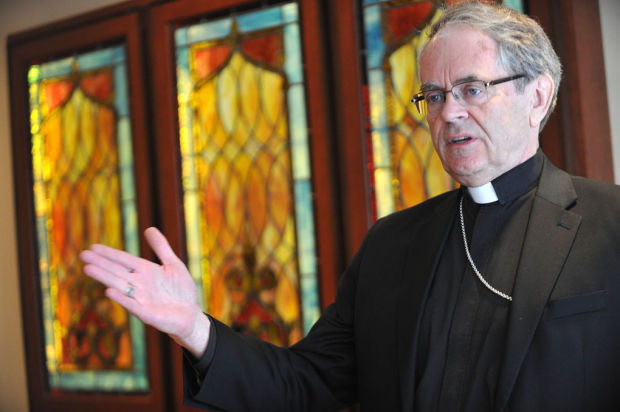
On Thursday, the bishops said they’ve had enough. It is time, they said, to beef up their public relations arsenal.

“We need more help and sophistication in our messaging,” said Cardinal Sean O’Malley of Boston, who decried the “latest debacle” of bad PR over the treatment of American nuns (which involves an investigation by the Vatican, not the American bishops).

O’Malley observed ruefully that when John Jay College released a landmark study last year of the causes and handling of the church’s sex-abuse crisis, it “should have been a good moment for the church, and yet it was another black eye.”

His comments followed a report to the U.S. Conference of Catholic Bishops from Bishop John Wester of Salt Lake City, who heads the bishops’ communications committee. The bishops are holding their annual spring meeting in Atlanta this week.

Wester said it was time for the bishops to fully embrace the 21st century array of communications tools, and “take a good, hard look” at how well they communicate their message.

Cardinal Donald Wuerl of Washington, D.C., suggested the not-quite-revolutionary idea of hiring a spokesperson, someone who “can speak for all of us.” Several other bishops hailed the idea, although Cardinal Timothy Dolan of New York, the president of the conference, noted that there was an “ecclesial” problem with the idea, since all bishops have authority to speak for the church and therefore, theoretically, other bishops can’t speak for them.

Be that as it may, the bishops at least have a new way to talk to each other: Wester announced the creation of an exclusive, closed social network open only to American bishops.

He didn’t say what the new network would be called, which seemed to present a ripe opportunity for late-night comedians. Bishop Timothy Doherty of Lafayette, Ind., was the first to attempt to drive through the opening.

“I assume people in the room have already trademarked the phrases i-bishop and e-bishop,” he quipped (perhaps proving why he is a bishop and not a late-night comedian).

Complete Article HERE!

Lexington woman ordained as priest

To the Vatican, Donna LeMaster Rougeux, a married mother of three who works as a hospice chaplain, is part of a revolt.

But Rougeux and others believe she is following a spiritual calling.

Rougeux, 52, was ordained through the Association of Roman Catholic Women Priests on Saturday in Lexington, becoming one of only two such female priests in Kentucky and 130 in the world.

Bridget Mary Meehan, a bishop with the same association who presided over the ceremony, called it part of a “new spiritual uprising in the church.”

“It’s part of a big justice movement that recognizes we all are images of God,” Meehan said.

The Roman Catholic Church does not recognize Rougeux’s ordination. The Roman Catholic Diocese of Lexington issued a statement calling it a “provocative and headline-grabbing fiction.”

The church’s position is that only men can be ordained. That’s not sexist, but biblical, said Tom Shaughnessy, spokesman for the diocese.

As Pope John Paul II pointed out, “if the church is faithfully to follow the example of Jesus, who chose twelve men as his first priests/bishops, then the Roman Catholic Church is not free to ordain women,” Shaughnessy said in a statement.

Rougeux chose automatic excommunication when she was ordained a deacon earlier, according to the church’s position.

Rougeux and others involved in the women’s ordination movement, however, don’t acknowledge the excommunication.

“We believe the church is the people of God,” not the male-dominated hierarchy, said Janice Sevre-Duszynska of Jessamine County, who in 2008 became the first Kentucky woman ordained as a priest.

The controversy over ordaining women is part of a larger debate in the church over the role of women, the propriety of contraception and other issues.

This year, for instance, the Vatican strongly criticized the nation’s leading organization of nuns, the Leadership Conference of Women Religious, for not speaking strongly enough against ordination of women, among other things, prompting a show of support for the nuns.

And debates over issues such as whom to ordain are not unique to the Roman Catholic Church.

People who support ordaining female Roman Catholic priests say it is a step toward correcting centuries of incorrect teaching and practice by the institutional church, based on misogyny.

One of the Scriptures read at Rougeux’s ordination ceremony at the Unitarian Universalist Church of Lexington was from the Gospel of Luke, about Jesus healing a woman who had been unable to stand up straight for 18 years.

“The institutional church is trying to keep women bent over when it refuses to recognize our call to priesthood,” Meehan said in her homily. “Women are silent, and invisible, and subordinate no more.”

People involved said the communities involving women priests use male and female images of God and inclusive language and liturgies.

Part of the goal is to “de-clericalize” and create a community of equals, Meehan said.

“Christ calls both men and women to the priesthood,” said Sevre-Duszynska. “When it’s in you, it’s there. It doesn’t leave.”

Rougeux said the call to ministry was definitely in her.

She grew up in the United Church of Christ but converted to Roman Catholicism in the 1980s. She taught in a Catholic school, then she said she felt a pull to attend seminary, and finally a call to ministry.

She found out about the women priest movement on the Internet.

“It’s like God has revealed it one step at a time,” she said.

Rougeux has a degree in pastoral studies from Lexington Theological Seminary, has completed additional work in clinical pastoral education, and is a chaplain at Hospice of the Bluegrass.

“I think I bring a whole other bag of experiences to helping people,” she said. “I think we are all needed.”

Rougeux said she wants to help the community of like-minded Catholics grow in Lexington.

“I want them to grow together as a community of God helping the world,” she said.

Rougeux said she was excited to be part of the movement to reform the church.

“I think my granddaughters are going to look back at this and think history was being formed.”

Complete Article HERE!

Sexism and the Roman Catholic Church

By — Roy Bourgeois

I have been a Catholic priest for years and like most people I know, my experiences in life have changed me.

Growing up in a small town in Louisiana, as Catholics, my family did not question our segregated schools or ask why the black members of our church had to sit in the last five pews during Mass. Nor did we, needless to say, question why women could not be priests.

Joining the military was my ticket out of Louisiana. I volunteered for duty in Vietnam, which became that turning point in my life. In the midst of all the violence and death, my faith became more important and I felt God was calling me to be a priest. After four years in the military, I entered the Maryknoll Order.

In my ministry in the United States, I have met many devout Catholic women who are called by God to be priests. They are rejected because the Church teaches only baptized males can be ordained. This makes no sense to me.

Don’t we profess that God created men and women of equal worth and dignity? The Holy Scriptures state clearly in Galatians 3:28 that “There is neither male nor female. In Christ Jesus you are one.” All Catholic priests say that the call to be a priest is a gift and comes from God. How can we, as men, say that our call from God is authentic, but your call, as women, is not?

After much reflection, study and prayer, I have come to believe that the exclusion of women from the priesthood is a grave injustice against women and against our loving God, who calls both men and women to be priests. I also believe that if we are to have a healthy and vibrant Church, we need the wisdom, experiences and voices of women in the priesthood.

The Vatican refers to the ordination of women as “a grave scandal” in our Church. When Catholics hear the word “scandal” they think about the thousands of priests who sexually abused children, and the many bishops who covered up their horrific crimes.

Pope Benedict XVI is telling priests like me to be obedient to our Church leaders and not to question or discuss our Church teachings.

This presents a problem because the Church teaches us about the primacy of conscience. Our conscience is sacred because it gives us a sense of right and wrong and urges us to do what is right, what is just. When we betray our conscience, we separate ourselves from God.

Often, I think how we, as Catholics, were silent when our schools were segregated; not questioning why black members of our Church had to sit in the back pews. As a priest, I have learned that when there is injustice, our silence is the voice of complicity. Sexism, like racism, is a sin.

And no matter how hard we may try to justify discrimination against others, in the end, it is not the way of God.

Complete Article HERE!

10 years after Catholic sex abuse reforms, what’s changed?

When the nation’s Catholic bishops gather in Atlanta next week (June 13-15) for their annual spring meeting, a top agenda item will be assessing the reforms they adopted 10 years ago as revelations of widespread sexual abuse of children by priests consumed the church.

The policy package they approved at that 2002 meeting in Dallas was known as the Charter for the Protection of Children and Young People, or the Dallas charter, for short. With it, the bishops vowed to finally put an end to the abuse and secrecy. They also pledged to help raise awareness about the plague of child abuse in society.

But is anything different — in the church or in the country — 10 years later? Here’s a look at what has changed, and what has not:

One, law enforcement is more assertive

The chief criticism of the 2002 reforms was that they did not include any means of disciplining bishops who fail to follow the charter. Each bishop still answers only to the pope — and Benedict XVI has so far declined to penalize any of them.

But that hasn’t stopped law enforcement officials from pursuing churchmen when the church will not — a marked change from the deference that police and district attorneys once showed the hierarchy.

Witness the ongoing trial of Monsignor William Lynn, the longtime head of priest personnel for the Philadelphia archdiocese and the first cleric ever to face trial for covering up for abusers. The headline-making story was in many ways a trial in absentia of former Philadelphia Cardinal Anthony Bevilacqua, who died shortly before the trial started, and Cardinal Justin Rigali, who retired under a cloud last year after a grand jury indicted Lynn and others.

Similarly, in Missouri, Bishop Robert Finn of Kansas City-St. Joseph is facing trial in September on charges that he failed to report credible allegations that one of his priests had a trove of child pornography and a suspicious interest in young children. The priest was arrested and charged, and Finn could become the first bishop ever convicted of a crime in connection with the scandal.

Two, progress in other countries is halting

While the U.S. bishops have made important strides in addressing the plague of clergy abuse, the Vatican and church leaders in other countries have been reluctant to push for similar steps elsewhere.

Only last year, in the wake of abuse revelations in Italy, did the Vatican give the bishops in every country a year to draw up their own guidelines. In May, the Italian bishops’ conference became the last national hierarchy in Western Europe to publish abuse policies, but they made it clear that the bishops have no legal obligation to report suspected cases to police.

Three, the Catholic Church may be the safest place for children

Whatever its past record, the Catholic Church in the U.S. has made unparalleled strides in educating their flock about child sexual abuse and ensuring that children are safe in Catholic environments.

Over the past 10 years, Catholic parishes have trained more than 2.1 million clergy, employees, and volunteers about how to create safe environments and prevent child sexual abuse. More than 5.2 million children have also been taught to protect themselves, and churches have run criminal background checks on more than 2 million volunteers, employees, educators, clerics and seminarians.

Allegations of new abuse cases continue to decline, as they have since 1980, and appear to reflect the effectiveness of some of the charter’s policies as well as ongoing efforts to increase screening of seminarians and to deal with suspected abusers before they claim multiple victims.

Four, other denominations are starting to face the issue

What for years was seen as a “Catholic” problem is increasingly being recognized as a blight for all religious communities to one degree or another.

After a series of sexual abuse incidents in recent months, Christianity Today, the flagship evangelical magazine, called for action in an editorial declaring that “all faith-based institutions can no longer afford to assume that predators are somewhere’out there,’ over the clean Christian rainbow. They are not just in college locker rooms and Catholic rectories either. They are on our evangelical faculty and work in our community nonprofits…”

Orthodox Judaism has also been struggling with the issue, after revelations that some communities are thwarting efforts to address the problem or report allegations and suspects to police.

Court rulings may add impetus to reform efforts. Last May, a jury in Florida found that the Florida Baptist Convention was liable for failing to adequately check out a pastor and church planter who was later convicted of abusing a 13-year-old boy.

Five, Americans are realizing it’s not just a problem for religion

Former Penn State football assistant coach Jerry Sandusky is set to go on trial on Monday (June 11) for sexually abusing boys under his charge, a scandal that rocked an iconic college program and brought down legendary head coach Joe Paterno, who died earlier this year.

The story was so shocking that it has reverberated beyond Penn State and focused attention on child abuse in all sports.

In addition, the sexual abuse of students by teachers has made headlines as it rarely did before, and a 2010 jury verdict holding the Boy Scouts of America liable for abuse that was detailed in secret files for decades alerted people to the dangers lurking in that venerable organization.

Whether further changes are in the offing for the Catholic Church or U.S. society is unclear, and may well depend on whether there are further scandals to keep public attention, and pressure, focused.

Complete Article HERE!

Vatican’s term ‘radical feminist’ says more about cardinals than nuns they rebuke

COMMENTARY

It surprises me a little that the men who run things at the Vatican did not use their most favorite recent pejorative – “feminist” — when they rapped the knuckles of Margaret Farley, a nun who has long been a professor at Yale, for having written a book about sex and love that condones masturbation (and as of Thursday morning was in Amazon’s top 20). In a million other ways, it doesn’t uphold their view of Christian sexual morality.

Because unlike the other nuns the Vatican has been reprimanding recently, Sister Farley is, in fact, a feminist. An ethicist who has worked on the problem of HIV/AIDS, Farley was commended in 2005 by her Yale colleagues for her contributions to feminist theory.

A nun looks on as Pope Benedict XVI leads a ceremony commemorating Christ’s gesture of humility toward his apostles on the night before he died at the Basilica of St. John Lateran in Rome April 5, 2012. Pope Benedict recently re-stated the Roman Catholic Church’s ban on women priests and warned that he would not tolerate disobedience by clerics on fundamental teachings.

Members of the Vatican hierarchy are using the word “feminist” and even “radical feminist” the way third-graders use the word “cooties.” In April, the Vatican accused the Leadership Conference of Women Religious, which represents 57,000 nuns nationwide, of allowing “radical feminist” ideas to flow, unchecked, in their communities. In 2008, after he launched an investigation against American nuns (the results of which have not yet been released), Cardinal Franc Rode told a radio interviewer that the nuns are suspected of “certain irregularities,” a “secular mentality,” and “perhaps also a certain feminist spirit.”

The authors of these rebukes never define “feminism” or “radicalism.” In their hands, these words, which can carry legitimate intellectual meanings, appear to signify something like: “Yucky women who fail to heed our instructions and, anyway, don’t meet our standards of womanhood.” In other words, the sisters aren’t behaving as girls should.

Their casual use of these terms convinces me that the cardinals, in their vast experience, have never actually met a radical feminist theologian. Such creatures do exist, although American religious orders are hardly their breeding ground. What the Vatican hierarchy sees as a “radical feminist” is a woman who dares to believe that she’s equal to a man.

“Even large sectors of the church itself have legitimate concern and want to continue to talk about the place of women in the church, and rightful equality between men and women,” Sister Pat Farrell, a member of the LCWR, told the New York Times last week. “So if that is called radical feminism, then a lot of men and women in the church, far beyond us, are guilty of that.”

Lisa Isherwood is a real-life radical feminist theologian. She is editor of the journal Feminist Theology and a professor at Winchester University in England. She believes that the men at the Vatican are using the term “radical feminist” as a right-wing scare tactic, for it evokes other enemies far more dangerous than nuns. Their thinking goes like this, she says: “We hear the word radical Islam, and everyone panics, so let’s chuck that at them.”

The mother of radical feminist theology was the late Mary Daly, who started life as a committed Roman Catholic and spent most of her career teaching at Boston College, a Catholic institution.

She was driven to critique her beloved church after she sat in on sessions of the Second Vatican Council in Rome and felt that women had no meaningful part in the proceedings.She was, she wrote later, appalled by “the contrast between the arrogant bearing and colorful attire of the ‘princes of the church,’ ” she wrote later, “and the humble, self-deprecating manner and somber clothing of the very few women. … Watching the veiled nuns shuffle to the altar rail to receive Holy Communion from the hands of a priest was like observing a string of lowly ants at some bizarre picnic.”

In her breakthrough 1974 book, “Beyond God the Father,” Daly wrote, “If God is male, then the male is God. The divine patriarch castrates women as long a he is allowed to live on in the human imagination.” Now that’s a radical feminist for you. Daly’s work gave voice to generations of feminist scholars.

Isherwood, for one, wears the labels “feminist” and “radical” with pride. She is a Catholic — “in as far as anyone’s trying to hang in there” – she says.

She deeply loves her church and believes that at its core, Roman Catholicism has a radical feminist message. “The church should be radical. It should be saying, ‘More inclusion, more equality.’ An abundance of life is a fundamental Catholic value. The idea of ordination of women and so on is just one very small, very significant point. Radical feminism would want the church to be more proactive in terms of working for a life of abundance for the marginalized.”

Now that’s a threatening idea.

Complete Article HERE!

Vatican Denounces Nun Over Book on Sexuality

The Vatican’s doctrinal office on Monday denounced an American nun who taught Christian ethics at Yale Divinity School for a book that attempted to present a theological rationale for same-sex relationships, masturbation and remarriage after divorce.

The Congregation for the Doctrine of the Faith said that the book, “Just Love: A Framework for Christian Sexual Ethics,” by Sister Margaret A. Farley, was “not consistent with authentic Catholic theology,” and should not be used by Roman Catholics.

Sister Farley, a past president of the Catholic Theological Society of America and an award-winning scholar, responded in a statement: “I can only clarify that the book was not intended to be an expression of current official Catholic teaching, nor was it aimed specifically against this teaching. It is of a different genre altogether.”

The book, she said, offers “contemporary interpretations” of justice and fairness in human sexual relations, moving away from a “taboo morality” and drawing on “present-day scientific, philosophical, theological, and biblical resources.”

The formal censure comes only weeks after the same Vatican office, the Congregation for the Doctrine of the Faith, issued a stinging reprimand of the main coordinating organization of American nuns, prompting many Catholics across the country to turn out in defense of the nuns with protests, petitions and vigils.

The nuns’ organization, the Leadership Conference of Women Religious, said on Friday that its board had declared that the Vatican’s accusations were “unsubstantiated,” and that it was sending its leaders to Rome to make its case. Three bishops have been appointed by the Vatican to supervise a total overhaul of the nuns’ organization.

The censure of Sister Farley, who belongs to the Sisters of Mercy of the Americas, is the second time recently that a book by an American nun has been denounced by the church’s hierarchy. In 2011, the doctrine committee of U.S. bishops condemned “Quest for the Living God: Mapping Frontiers in the Theology of God,” by Sister Elizabeth A. Johnson, a professor of theology at Fordham University in New York.

The Vatican’s doctrinal office, led by an American, Cardinal William J. Levada, has spent more than two years reviewing Sister Farley’s book, which was published in 2006. The office first notified Sister Farley’s superior of its concerns in March 2010, and said it had opened a further investigation because a response she had sent to the Vatican in October 2010 hadn’t been “satisfactory.” It said her book had “been a cause of confusion among the faithful.”

The dean of Yale Divinity School, Harold W. Attridge, a Catholic layman, and the president of the Sisters of Mercy, Sister Patricia McDermott, issued statements in support of Sister Farley. So did 15 fellow scholars who, in a document released by the divinity school, testified to Sister Farley’s Catholic credentials and the influence she has had in the field of moral theology.

Cardinal Levada’s statement about the book, dated March 30 but released on Monday, said, “Among the many errors and ambiguities of this book are its positions on masturbation, homosexual acts, homosexual unions, the indissolubility of marriage and the problem of divorce and remarriage.”

He said that the book “cannot be used as a valid expression of Catholic teaching, either in counseling and formation, or in ecumenical and interreligious dialogue.” The statement said Pope Benedict XVI had approved its contents and ordered its publication. It comes as the Vatican struggles to contain a controversy over leaked documents that have shown infighting and mismanagement in the papacy of Benedict XVI, who on Sunday concluded a three-day meeting in Milan to promote family values.

The Vatican spokesman, the Rev. Federico Lombardi, said the Vatican had not called for any sanctions against Sister Farley and was not expected to do so because she has retired from teaching. He added that it was “quite normal” that documents signed by Vatican offices are published much later than when they were signed, according to “internal bureaucratic and organizational needs.”

Sister Farley’s book finds moral and theological justifications for same-sex marriage, which aside from abortion, has become the major galvanizing political and moral issue for American bishops. The statement took Sister Farley to task for writing that same-sex marriage “can also be important in transforming the hatred, rejection, and stigmatization of gays and lesbians.” She wrote that “same-sex relationships and activities can be justified according to the same sexual ethic as heterosexual relationships and activities.”

“This opinion is not acceptable,” the Vatican statement said. It said that the Catechism of the Catholic Church says that homosexual acts are “acts of grave depravity” that are “intrinsically disordered” and “contrary to the natural law.” It said that Sister Farley’s assertion that sometimes divorce is a reasonable option for couples who have grown apart contradicted church teaching on the “indissolubility of marriage.”

The statement quoted liberally from some of the racier passages in “Just Love,” including ones in which Sister Farley writes that female masturbation “usually does not raise any moral questions at all.” She adds that “many women” have found “great good in self-pleasuring – perhaps especially in the discovery of their own possibilities for pleasure – something many had not experienced or even known about in their ordinary sexual relations with husbands or lovers.”

The Vatican said that this assessment contradicts church teaching that “the deliberate use of the sexual faculty, for whatever reason, outside of marriage is essentially contrary to its purpose.

Complete Article HERE!

Butler’s journey from trusted servant to accused Judas

Just after dawn on Wednesday, May 23, Paolo Gabriele said goodbye to his wife, passed by the bedrooms of his three children and left to start another day in the service of the man Roman Catholics believe is the vicar of Christ on Earth.

By the end of the day, Pope Benedict’s butler would be branded a traitor and some, including an Italian cardinal, would compare him to the most famous betrayer in history – Judas Iscariot, the man who turned Jesus over to the Romans.

Dark haired and handsome, Gabriele, 46, left his simple home on the third floor of a 1930s Vatican apartment block named after the 7th century monk Saint Egidio.

With the St Ann’s Gate entrance, guarded by Swiss Guard in blue berets, to his back, he passed the Holy See’s central post office on Via Del Belvedere, turned left to climb a stone stairway named after Pope Pius X, and walked up a flight of covered steps to enter the small Renaissance-era Courtyard of Sixtus V.

Here he used a key held by fewer than 10 people to enter an elevator that leads directly to the pope’s private apartment on the third and top floor of the Apostolic Palace in the world’s smallest state. Even cardinals can’t use it.

Gabriele, said by those who know him to be a timid, reserved and shy man, is now at the centre of the worst crisis in Pope Benedict’s pontificate.

His face has appeared on the front pages of newspapers all over the world, accused of being the source of leaked documents alleging serious Vatican corruption and cronyism in a scandal that has shaken the very centre of the Church.

To some – even if he is found guilty – he is an idealist who wanted to root out corruption in the Vatican and was helped by outside accomplices. To others, he is merely a pawn in a much bigger power struggle among cardinals inside the Vatican walls.

“I know Paolo and I don’t think he is capable of doing something like this by himself,” a person who spoke on the condition of anonymity told Reuters.

“It is clearly a betrayal of the pope’s trust but I don’t think he could have acted alone,” that person said.

That Wednesday morning when Gabriele, dressed in a dark suit and white shirt, entered the private papal apartment, he walked down a corridor past the pope’s modern private chapel, with its stained glass ceiling and white leather kneelers.

Even as he was serving the pope his breakfast, after the pontiff had said mass with other members of the “papal family” that morning, Gabriele knew he was a suspect in an investigation into leaks that had begun in January.

“He was questioned earlier but the decisive elements that permitted the arrest surfaced later,” a Vatican official said, adding that one of the pope’s two private secretaries, Monsignor Georg Ganswein, had confronted Gabriele with his suspicions.

LAST RIDE IN THE POPEMOBILE

At precisely 10:30 that sunny Wednesday morning, Benedict rode in his white popemobile through the Arch of the Bells into St Peter’s Square to start his weekly audience. Gabriele was in his usual place, to the right of the driver, and his stony face showed no emotion.

It was the last ride he would take in the iconic vehicle that carries the man world diplomacy recognizes not only as leader of 1.2 billion Roman Catholics but as “The Sovereign of the State of Vatican City.”

That afternoon, agents led by Domenico Giani, 49, the shaven-headed Vatican police chief who is known by the diminutive “Mimmo” to his friends, rang the buzzer on the Gabriele family apartment and entered.

Giani was formerly a member of the Italian secret service.

“It’s not a fancy place – four rooms, a bath and a kitchen, if I remember correctly,” someone who has been inside told Reuters.

Inside, they found what the Vatican newspaper L’Osservatore Romano – which waited nearly a week before writing about the arrest – called “a large number of confidential documents” belonging to the pope.

“A sense of tension, disorientation, stupor and sadness fell over the whole place like a thick fog after news of Paolo’s arrest spread,” said one Vatican worker describing the mood of employees from priests to postmen in the following days.

Because the Vatican does not have a jail, Gabriele is being held in a simple “safe room” with a bed and small table in the Vatican police station.

But the question on many people’s minds and lips, including Gabriele’s friends, was “Why? What is the motive?”

If he is guilty, why would Paoletto (little Paul, as he known), a devout Catholic and devoted father, betray the man whose official titles include “Successor of the Prince of the Apostles” and “Servant of the Servants of God”?

People who know Gabriele, now called “the defendant” in Vatican statements, exclude money as a motive.

They say the butler, who still attends Mass each day in the police station, would not have been able to spend it anywhere without raising suspicion; unless he left his job and probably even Italy.

And why, at 46 with three small children, would he leave a simple but comfortable life in the Vatican? While Vatican employees do not receive large salaries, they do enjoy benefits such as low rent, no income tax and cheap food and petrol at the commissaries of the 108-acre city state.

NO CHECKBOOK JOURNALISM, SAYS AUTHOR

Gianluigi Nuzzi, the Italian journalist who revealed many of the documents alleging corruption in the Vatican and internal conflict over the role of the Vatican bank, declines to reveal his sources but insists he did not pay anyone.

Nuzzi, a respected journalist with a good track record whose book “His Holiness: The Secret Papers of Benedict XVI,” contains some of the allegations, says his sources were simple, devout people “genuinely concerned about the Catholic Church” who wanted to expose corruption.

People who know Gabriele, who started out as a humble cleaning person in the Vatican, said there was no indication either that he could have been blackmailed over his private life to force him to leak the documents.

Apart from Gabriele, the few other people who could go directly into the papal apartments via the reserved private elevator at the base of the Sixtus V courtyard include the pope’s two priest secretaries, Ganswein and Maltese Monsignor Alfred Xuereb, and four consecrated women of “Memores Domini”.

Memores Domini is an association of lay women, similar to nuns, who take vows of poverty, chastity and obedience within the Catholic organization Communion and Liberation. Their names are Carmela, Loredana, Cristiana and Rossella.

The fact that Gabriele was part of a tightly knit group known as “the papal family” explains the sadness and bitterness in the pope’s words when he first spoke about the crisis in public on Wednesday, exactly one week after the butler’s arrest.

“Our life and our Christian path are often marked by difficulties, incomprehension and suffering,” he said, adding that all people must persevere in the face of “conflicts in human relations, often within one’s own family”.

While the pope’s secretaries and the four women who help him run the simple household live in the papal residence, Gabriele stayed in his own apartment nearby with his family.

“He lived in the Vatican but not in the papal apartment,” one Church official who knows Gabriele told Reuters. “He could have met with anyone in the Vatican or outside the Vatican”.

In an interview with Reuters, Nuzzi would not say if any of the documents he had received came from Gabriele.

His book contains a treasure trove of private Vatican correspondence, including documents alleging cronyism and corruption in contracts with Italian companies, conspiracies among cardinals and clashes over management at the Vatican’s own bank, the Institute for Works of Religion, or IOR.

He said the book, which hit the stands last week and is already sold out in Rome, is based on confidential conversations with more than 10 Vatican whistleblowers.

LOOKING FOR THE CROWS

The Vatican has not contested the authenticity of the documents but says their leak was part of a “brutal” personal attack on the pope and their publication “a criminal act”.

The Italian media have dubbed the people who have leaked the documents “Corvi” (crows), a pejorative Italian term for an informant.

“They are not crows, they are doves who wanted to shed light, clean their air,” Nuzzi told Reuters. “If the image of the Vatican that emerges is negative, it is not my fault, it is because of what is written in the documents.”

The leaks began in January when an investigative television show hosted by Nuzzi broadcast private letters to Secretary of State Cardinal Tarcisio Bertone and the pope from Archbishop Carlo Maria Vigano, former deputy governor of the Vatican City, who has been moved to Washington as the Vatican’s ambassador.

The letters showed Vigano was transferred after he exposed what he said was a web of corruption and cronyism linked to the awarding of contracts at inflated prices to Italian contractors.

Bertone responded by removing Vigano from his position three years before the end of his tenure and sending him to the United States, despite his strong resistance.

Bertone, whose job is to keep the Vatican’s central administration, or Curia, running smoothly for the pope, now looks weakened after the leaks scandal and other failures.

They include the abrupt departure last week of the Vatican bank’s Italian chief Ettore Gotti Tedeschi – who was recruited by Bertone from Spanish bank Santander – after a no-confidence vote by its board.

At his position in the papal apartments, Gabriele was in a prime position to see at least some of the disarray and tension in the Curia. But it remains to be seen whether he really was a pawn used by others to undermine Bertone, as some sources say.

“This is a strategy of tension, an orgy of vendettas and pre-emptive vendettas that has now spun out of the control of those who thought they could orchestrate it,” said Alberto Melloni, a prominent Italian Church historian.

After his arrest Gabriele called an old school friend and devout catholic, Carlo Fusco, and asked him to be his defense lawyer. Fusco, a civil advocate, called in criminal lawyer Cristiana Arru to help with Gabriele’s defense.

Gabriele’s fate is now in the hands of Piero Antonio Bonnet, the Vatican’s public prosecutor.

He will decide if the man who once was trusted with the keys to the papal elevator should stand trial for aggravated theft, or even worse, disclosing the documents of a head of state or breaking a special pontifical law protecting papal confidentiality.

The pope has tried to end talk of conflict under his roof.

Breaking his silence on the scandal on Wednesday, he expressed full confidence in his staff, including those who he said work “in silence” to help him carry out his ministry.

But that group no longer includes Gabriele, who only a few days ago was one of the closest men to Pope Benedict but now sits in a lonely room in the Vatican awaiting his fate.

Complete Article HERE!

Cardinal Authorized Paying Abusers

File Under: This man couldn’t tell the truth if his life depended upon it!

Cardinal Timothy M. Dolan of New York authorized payments of as much as $20,000 to sexually abusive priests as an incentive for them to agree to dismissal from the priesthood when he was the archbishop of Milwaukee.

Questioned at the time about the news that one particularly notorious pedophile cleric had been given a “payoff” to leave the priesthood, Cardinal Dolan, then the archbishop, responded that such an inference was “false, preposterous and unjust.”

But a document unearthed during bankruptcy proceedings for the Archdiocese of Milwaukee and made public by victims’ advocates reveals that the archdiocese did make such payments to multiple accused priests to encourage them to seek dismissal, thereby allowing the church to remove them from the payroll.

A spokesman for the archdiocese confirmed on Wednesday that payments of as much as $20,000 were made to “a handful” of accused priests “as a motivation” not to contest being defrocked. The process, known as “laicization,” is a formal church juridical procedure that requires Vatican approval, and can take far longer if the priest objects.

“It was a way to provide an incentive to go the voluntary route and make it happen quickly, and ultimately cost less,” said Jerry Topczewski, the spokesman for the archdiocese. “Their cooperation made the process a lot more expeditious.”

Cardinal Dolan, who is president of the national bishops’ conference and fast becoming the nation’s most high-profile Roman Catholic cleric, did not respond to several requests for comment.

A victims advocacy group, the Survivors Network of those Abused by Priests, sent a letter of protest to the current archbishop of Milwaukee on Wednesday asking, “In what other occupation, especially one working with families and operating schools and youth programs, is an employee given a cash bonus for raping and sexually assaulting children?”

Experts in the Catholic Church’s response to sexual abuse say that payouts to dismissed priests are not uncommon. When a man becomes a priest, the church is expected to care for his needs for a lifetime.

The newly revealed document is the minutes of a meeting of the finance council of the Milwaukee archdiocese from March 7, 2003, which Cardinal Dolan attended. The archdiocese was facing a flood of potential lawsuits by people claiming abuse, and the church’s insurance company was refusing to cover the costs because it said the church had been negligent. The minutes noted that “unassignable priests” — those suspected of abuse — were still receiving full salaries.

The minutes say that those at the meeting discussed a proposal to “offer $20,000 for laicization ($10,000 at the start and $10,000 at the completion the process).” Instead of salary, they would receive a $1,250 monthly pension benefit, and, until they found another job, health insurance.

The first known payment in Milwaukee was to Franklyn Becker, a former priest with many victims. Cardinal Dolan said in response to a reporter’s question at the time that the payment was “an act of charity,” so that Mr. Becker could pay for health insurance.

According to church documents, Mr. Becker was accused of abusing at least 10 minors, and given a diagnosis of pedophilia in 1983. The church paid more than $16 million to settle lawsuits involving him and one other priest.

The Milwaukee Archdiocese filed for bankruptcy in January 2011, in the face of potential lawsuits by 23 accusers.

Complete Article HERE!

Vatican’s assessment of LCWR about fear, not doctrine

COMMENTARY

The Congregation for the Doctrine of Faith’s April 18 doctrinal assessment of the Leadership Conference of Women Religious is not about doctrine. It is not primarily about protecting the faith or ensuring an ecclesiology of communion, no matter how many times these terms are woven through the report. It is fundamentally about fear — fear of the loss of power — and the willful use of dominative control to defend that power.

The abundance of religious themes and language do not mask this punitive effort to shore up the crumbling authority of hierarchical leaders. Nor does the document hide the anger that roils beneath the protestations of gratitude and concern. The final report of the LCWR assessment reveals a desperate attempt on the part of some fearful and angry church leaders to protect their turf — to maintain an all-male church leadership, to keep women and laypeople under their authority, and to shield the homophobic-homosexual subculture in the leadership of the Catholic church.

When fear rules

The pattern of using coercive intimidation to control others in one’s household is called domestic abuse. Domestic abuse does not need to involve physical violence — in fact, many abusers never beat their partners. Instead, the threatened person strikes out psychologically to evoke compliance. Public humiliations, corrections, threats, accusations of disloyalty and demands for absolute obedience make up the typical arsenal of the abusive person. In extreme cases, the abuser monitors the actions of the other, keeps a record of his or her transgressions, restricts his or her activities, discredits his or her reputation, takes charge of his or her decisions, and threatens to withdraw support if unquestioned compliance to demands is not maintained.

These abusive acts will sound curiously familiar to anyone who has read the proposed implementations of the Vatican doctrinal assessment.

While females can and do commit domestic abuse, statistically, they do so at much reduced rates, inflict less physical harm and commonly have different motivations than male perpetrators, making domestic abuse primarily a crime against women. Yes, a crime — like child sexual abuse — something many bishops, archbishops and cardinals in the Catholic church failed to take seriously until they were forced to do so by lawsuits and public outcry.

But has transfer of learning taken place? Do they get it? Do they get that they cannot treat women and children as stepping stones to power, privilege and pleasure?

Whether through hits or humiliations, broken bones or broken spirits, threats of bodily harm or warnings of impending excommunication, the goal of abusers is the same: Assert absolute control. Wear the person down until he or she gives in or gives up. Use punishment if he or she dares to claim his or her own authority.

The most dangerous time in a household where domestic abuse is present is right after the person being abused has stood up to the abuser. Have too many members of LCWR claimed their own authority? The classic domestic abuser seeks one thing above all else: obedience to dictates. It is not surprising that obedience is alluded to on every page of the final doctrinal assessment document.

In fact, the mandate for implementation of the results of the doctrinal assessment reads like a how-to manual for the most common form of domestic abuse — no physical violence, just a resolute campaign to rein in those who have dared disobey the master, or, in the case of LCWR, the pope and bishops: “to implement a process of review and conformity to the teachings and discipline of the church, the Holy See” (page 7). Pretty clear.

Diagnosing the abuser

Mental illness, including personality disorders, compound domestic abuse but are not its primary cause. Domestic abuse is power abuse. In its most prevalent form, it is conscious, coercive conduct by men those believe they have the unconditional right to use forceful tactics to enforce their rules and maintain absolute control over those they deem subject to them.

What kinds of people abuse others? While there is no single profile of the domestic abuser, research has identified characteristics frequently seen among perpetrators of all types. Ironically, there is not much difference between those who use their fists and those who use words alone to demand obedience.

* Abusers believe they are entitled to maintain power and control over those in their households (institutions).
* They may believe they have an obligation to compel obedience for the benefit of the victim and the good of the household (church).
* They do not identify their controlling and hurtful tactics as abusive and are insulted when others perceive them that way.
* Perpetrators tend to perceive all interactions within relationships through a prism of compliance or disobedience.
* Abusers tend to be insecure men who need to establish dominance to feel confident.

The single most conclusive thing we know about domestic abuse is that it is learned behavior. Abusers have gained knowledge of abusive behaviors by seeing them in action, either in their families or in the various cultures to which they belong. This applies to religious cultures where the seminarian is taught early to bow to the wishes of his rector, to obey his bishop and to submit to the cardinal — all of whom kiss the ring of the pope.

All of this bowing, obeying and willful submission programs the brain to normalize hierarchical authority, and in some less secure individuals, to deeply internalize this way of relating and to replicate it.

As in sexual abuse, church leaders who have witnessed domestic abuse in their families or who have experienced such abuse as children may be particularly susceptible to behave abusively themselves. When a fragile ego combines with learned patterns of abuse, the stage is set for domestic abuse.

While abusers do not fit neatly into any particular diagnostic category, their behavior is not considered “normal.”

Psychologically healthy adults do not mandate obedience, forbid dialogue about subjects they do not wish discussed, or use oppressive tactics to gain control over others. Personally secure leaders don’t issue orders to other functioning adults, threatening punitive measures if they are not obeyed.

Often described as having a “Jekyll and Hyde” personality, most abusers can be quite civilized and even charming when they need to be. Their ability to function as CEOs of companies and preside over large corporations does not eliminate them from the pool of the insecure who strike out against those who threaten them. Some male abusers have been found to harbor a secret loathing of females, considering them inferior. Since such attitudes are certainly present in the history of the church (read St. Jerome), it is possible that its influence still inhabits, consciously or the unconsciously, the collective mind of church leaders.

The persistent desire of hierarchical leaders to keep women under their control and out of their sphere of leadership, especially women theologians, suggests that the “Jerome Syndrome” might still be operative.

[Fran Ferder is a Franciscan sister, clinical psychologist, author and professor at Seattle University.]

Complete Article HERE!

Dionne: Is Catholic spring on horizon?

There is a healthy struggle brewing among the nation’s Roman Catholic bishops.

A previously silent group, upset over conservative colleagues defining the church’s public posture and eagerly picking fights with President Obama, has had enough.

The headlines this week were about lawsuits brought by 43 Catholic organizations, including 13 dioceses, to overturn regulations issued by the administration requiring insurance plans to cover contraception under the new health-care law.

But the other side of this news was also significant: That the vast majority of the nation’s 195 dioceses did not go to court.

It turns out that many bishops, notably the church leadership in California, saw the litigation as premature. They are upset that the lawsuits were brought without a broader discussion among the entire membership of the U.S. Conference of Catholic Bishops and wanted to delay action until the Conference’s June meeting.

Until now, bishops who believed that their leadership was aligning the institutional church too closely with the political right had voiced their doubts internally.

While the more moderate and liberal bishops kept their qualms out of public view, conservative bishops have been outspoken in condemning the Obama administration and pushing a “Fortnight for Freedom” campaign aimed at highlighting “threats to religious freedom, both at home and abroad.”

But in recent months, a series of events — among them the Vatican’s rebuke of the Leadership Conference of Women Religious encouraged by right-wing American bishops — have angered more progressive Catholics and led to talk among the disgruntled faithful of the need for a “Catholic spring” to challenge the hierarchy’s shift to the right.

Bishop Stephen E. Blaire of Stockton, Calif., broke the silence on his side Tuesday in an interview with Kevin Clarke of the Jesuit magazine America. Blaire expressed concern that some groups “very far to the right” are turning the controversy over the contraception rules into “an anti-Obama campaign.”

“I think there are different groups that are trying to co-opt this and make it into political issue, and that’s why we need to have a deeper discussion as bishops,” he said. “I think our rhetoric has to be that of bishops of the church who are seeking to be faithful to the Gospel, that our one concern is that we make sure the church is free to carry out her mission as given to her by Christ, and that remains our focus.”

Clarke also paraphrased Blaire as believing that “the bishops lose their support when the conflict is seen as too political.”

Blaire’s words were diplomatic. But in a letter to the national bishops’ conference that has not been released publicly, lawyers for California’s bishops said the lawsuits would be “imprudent” and “ill-advised.”

The letter was not answered by the national bishops’ group before the suits were announced.

Already, there are reports that some bishops will play down or largely ignore the Fortnight for Freedom campaign, scheduled for June 21 to July 4, in their own dioceses.

These bishops fear that it has become enmeshed in Republican election-year politics and see many of its chief promoters, notably Archbishop William E. Lori of Baltimore, as too strident.

The irony in the current acrimony is that Catholics were broadly united last January across political lines in opposing the Department of Health and Human Services’ initial rules on contraception because they exempted only a narrow category of religious institutions from the mandate.

Facing this challenge, the president fashioned a compromise under which employees of Catholic organizations such as hospitals and social service agencies would still have access to contraceptive services but the religious entities would not have to pay for them.

This compromise was accepted by most progressive Catholics, though many of them still favor rewriting the underlying regulations to acknowledge the religious character of the church’s welfare and educational work.

But where the progressives favor pursuing further negotiations with the administration, the conservative bishops have acted as if it never made any concessions at all.

Significantly, Blaire identified with the conciliatory approach. As Clarke wrote, “Bishop Blaire believes discussions with the Obama administration toward a resolution of the dispute could be fruitful even as alternative remedies are explored.”

For too long, the Catholic Church’s stance on public issues has been defined by the outspokenness of its most conservative bishops and the reticence of moderate and progressive prelates.

Signs that this might finally be changing are encouraging for the church, and for American politics.

Complete Article HERE!