Church Official in Philadelphia Gets Prison in Abuse Case

By JON HURDLE and ERIK ECKHOLM

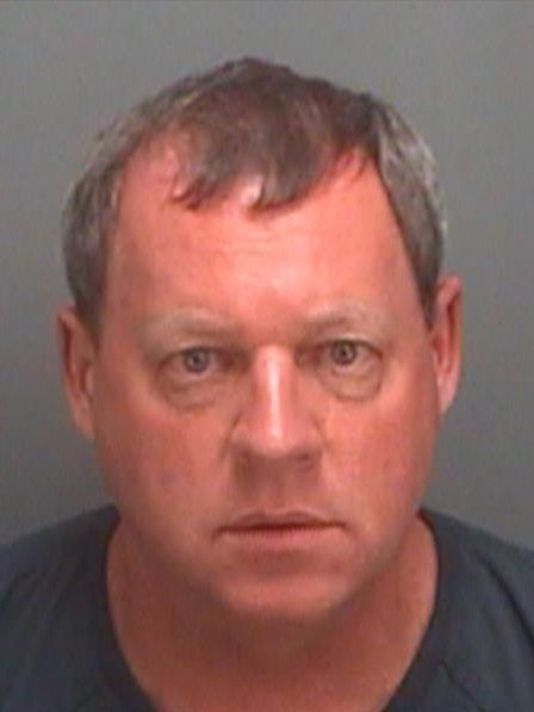
Msgr. William J. Lynn, the first Roman Catholic Church official in the United States to be convicted of covering up sexual abuses by priests under his supervision, was sentenced Tuesday to three to six years in prison.

“You knew full well what was right, Monsignor Lynn, but you chose wrong,” Judge M. Teresa Sarmina of Common Pleas Court said as she imposed the sentence, which was just short of the maximum of three and a half to seven years. Monsignor Lynn must serve at least three years before he is eligible for parole.

Monsignor Lynn, 61, was found guilty on June 22 of child endangerment after a three-month trial that revealed efforts over decades by the Philadelphia archdiocese to play down accusations of child sexual abuse and avoid scandal. He was acquitted of conspiracy and a second child endangerment charge.

Monsignor Lynn served as secretary for clergy for the 1.5 million-member archdiocese from 1992 to 2004, recommending priest assignments and investigating abuse complaints. During the trial, prosecutors presented evidence that he had shielded predatory priests, sometimes transferring them to unwary parishes, and lied to the public to avoid bad publicity and lawsuits.

The conviction of a senior official, followed by a prison sentence, has reverberated among Catholic officials around the country, church experts said.

“I think this is going to send a very strong signal to every bishop and everybody who worked for a bishop that if they don’t do the right thing, they may go to jail,” said the Rev. Thomas J. Reese, a senior fellow at the Woodstock Theological Center at Georgetown University. “They can’t just say ‘the bishop made me do it.’ That’s not going to be an excuse that holds up in court.”

In a three-minute statement before sentencing, Monsignor Lynn, dressed in a black clerical shirt and white collar, said: “I have been a priest for 36 years, and I have done the best I can. I have always tried to help people.”

Turning toward relatives of an abuse victim in the courtroom, he said, “I hope someday that you will accept my apology.”

But he did not comment on the broader accusations that he put children at risk by repeatedly protecting “monsters in clerical garb,” as Judge Sarmina described it at the hearing.

The sentence was a victory for the Philadelphia district attorney, R. Seth Williams, who said outside the courtroom, “Many people say that the maximum still would not have been enough.”

Monsignor Lynn’s lawyer, Thomas Bergstrom, called the sentence “unbalanced.” Last week, the defense argued that a long prison sentence would be “merely cruel and unusual.”

Prosecutors argued that the gravity of Monsignor Lynn’s crime — giving known sexual predators continued access to children, causing lifelong anguish and damage to some — was “off the charts.”

Monsignor Lynn’s lawyers said they would appeal the conviction, saying that the child endangerment law at the time did not apply to supervisors and that the judge erred in allowing testimony about accusations that were beyond the statute of limitations.

In a statement Tuesday, the Archdiocese of Philadelphia said that its procedures for protecting children had improved significantly since “the events some 10 years ago that were at the center of this trial.”

It acknowledged “legitimate anger in the broad community toward any incident or enabling of sexual abuse.” But it also described the sentence as overly harsh, saying “fair-minded people will question the severity.”

“We hope that when this punishment is objectively reviewed, it will be adjusted,” it said.

After the sentencing, Ann Casey, a friend of Monsignor Lynn for 36 years, said she believed he was a scapegoat and a victim of his intense faith in the archdiocese’s leaders. “It was his vow of obedience to the church that landed him this morning in jail,” she said.

During the trial, Monsignor Lynn’s lawyers argued that he had followed the instructions of Cardinal Anthony J. Bevilacqua, who was the archbishop of Philadelphia from 1988 to 2003 and who died in January.

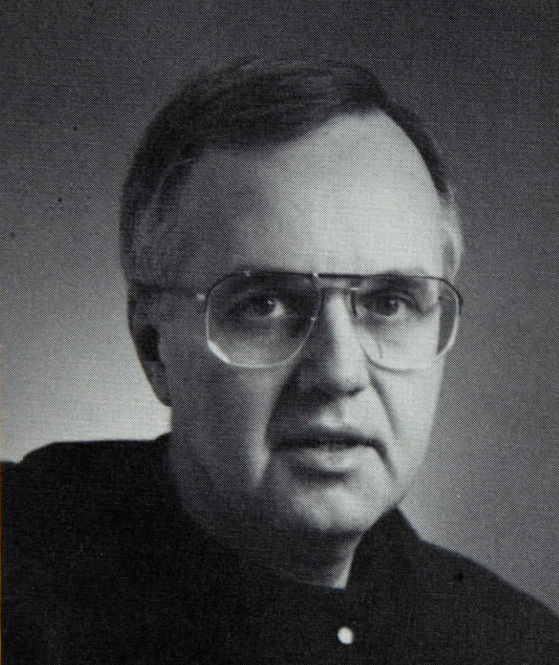
Monsignor Lynn’s conviction was for lax oversight of one former priest, Edward V. Avery, who spent six months in a church psychiatric center in 1993 after an abuse episode. Doctors said he should be kept away from children. But Monsignor Lynn sent him to live in a rectory and did not warn parish officials.

In 1999, Mr. Avery engaged in oral sex with a 10-year-old altar boy. He pleaded guilty to the assault just before Monsignor Lynn’s trial and was sentenced to two and a half to five years in prison.

Complete Article HERE!

Gay marriage vs. natural law

Ya can’t help but feel a little sorry for old Francis. He’s been without for so long, he’s forgotten some of the fundamentals of the old in and out. Besides, what about all those heterosexual couples who are married, but who are unable to have children. Is he questioning their marriage too?

By Manya A. Brachear

When Illinois legislators approved civil unions last year, gay-marriage opponents turned to Scripture and church teachings to explain their resistance. But with state lawmakers poised to consider approval of same-sex marriage, Roman Catholic bishops and other advocates of traditional marriage have changed their tack.

They say church teaching has nothing to do with it; gay marriage simply violates natural law.

francis george

“Marriage comes to us from nature,” Chicago’s Cardinal Francis George said in a recent interview. “That’s based on the complementarity of the two sexes in such a way that the love of a man and a woman joined in a marital union is open to life, and that’s how families are created and society goes along. … It’s not in our doctrine. It’s not a matter of faith. It’s a matter of reason and understanding the way nature operates.”

State Sen. Heather Steans and state Rep. Greg Harris, both Democrats from Chicago, could introduce the Religious Freedom and Marriage Fairness Act to legalize same-sex marriage as early as this week. Steans has said she and Harris will not put the legislation up for a vote unless they believe it will pass the current General Assembly. A new set of lawmakers will be sworn in Jan. 9.

George figures the bill’s introduction has some “inevitability to it now,” but he’s dismayed that natural law largely has been left out of the public debate.

Supporters of gay marriage call the renewed effort to highlight natural law a clever but disingenuous appeal to the masses.

“On sexual ethics, nature is neutral,” said Bernard Schlager, executive director of the Center for Lesbian and Gay Studies in Religion and Ministry at Pacific School of Religion in Berkeley, Calif. “We’re moral beings. We may look to nature for some aspects of how we are in our lives, but we answer to a higher standard. Sexual behavior is an expression of human love.”

According to the tradition of natural law, every human being must seek a fundamental “good” that corresponds to the natural order to flourish. Natural-law proponents say heterosexual intercourse between a married man and a woman serves two intertwined good purposes: to procreate and to express a deep, abiding love.

“You want to be sure that everybody has a chance at happiness. That’s a very persuasive argument,” George said. “But we all want that, and nobody should be disdained or persecuted because of their sexual orientation. … But when we get behind the church and behind the state, you’ve got a natural reality that two men or two women … cannot consummate a marriage. It’s a physical impossibility.

Though some have argued that a basic tenet of natural law is equality, the Rev. Robert John Araujo, a law professor at Loyola University Chicago, said same-sex couples are not equal to heterosexual couples. Objective intelligence demonstrates that heterosexual couples have the capacity to populate the planet and same-gender couples do not, he said.

“It is this very intelligence that is at the core of the natural law upon which the cardinal is relying when he asserts that the marriage question is not restricted to religious concerns but is also of concern to the natural-law legal reasoning that gave us the American republic,” Araujo said.

Other people of faith disagree. Last Sunday, more than 250 Illinois clergy members, mostly Protestant and Jewish, endorsed the gay marriage bill as “morally just to grant equal opportunities and responsibilities to loving, committed same-sex couples.”

Alice Hunt, president of Chicago Theological Seminary, said the natural-law argument seems like a “strategic move.”

“They quickly saw biblical marriage wasn’t going to work,” she said. “It doesn’t work for me because you’re still depending on one person or some group of people’s interpretation of natural law. When you look at the history of marriage, there are many ways marriage has taken shape over time.”

Christopher Wolfe, a professor emeritus of constitutional law at Marquette University who now serves as the co-director of the Thomas International Center, a Raleigh, N.C., institute devoted to the teachings of Thomas Aquinas, said natural law plays a role no matter what side of the debate one takes.

“Everybody’s argument on marriage comes down to some kind of natural-law argument,” Wolfe said. “But there are differences as to what that nature is. Are children central to it or not?”

He argues that children should indeed be central.

Polling by the Public Religion Research Institute has found that most American Catholics support legal recognition of same-sex relationships.

Though that might be true of parishioners, the church hierarchy is of one mind and speaks the truth, according to Robert Gilligan, executive director of the Catholic Conference of Illinois, the church’s lobbying arm in Springfield.

“The reason we’re vocal about laws that unite more than a man and a woman in marriage is it’s incompatible with human nature,” he said. “We’re talking to more than people in the pews. This is something that pertains to believers and nonbelievers.”

Complete Article HERE!

Lawyer who foretold church scandals writes his story

By Angus MacSwan

Ray Mouton was a successful young lawyer in Lafayette, Louisiana, respected in the community and blessed with a loving family, when he received a call from a vicar in the Roman Catholic diocese for a lunch meeting on a fateful day in 1984.

The diocese asked him to defend an errant priest, accused of abusing dozens of children in a rural community. Mouton reluctantly agreed to take on the task.

What followed over the next few years was the uncovering of an institution riddled with pedophile priests on a national scale and efforts at high levels in the Catholic Church to hide the problem away.

For Mouton, it meant the end of his law career, health problems, and anger, depression and guilt.

After many years of writing from his self-imposed exile in France, he finally tells his story in the novel “In God’s House“. It is a harrowing read laden with sickening detail, but also for Mouton, a work of atonement.

“There’s not a day I don’t think about the children. When I was writing the book, whenever I wanted to quit, I thought about the victims and their families,” he told Reuters.

In person, Mouton, now aged 65, looks like a southern lawyer from central casting, with a head of thick white hair and a sonorous Louisiana drawl.

He chose to tell the story in novel form although the characters, from the lawyer to a senior Vatican official who proves an obstacle to addressing the scandal – are based on real figures.

“The novel is a dramatic experience. My experience was a traumatic one. Every day there were revelations. I didn’t want to believe, the country didn’t want to believe,” he said.

Mouton and his family – Cajuns whose ancestors came to Louisiana as part of the Acadian diaspora – were strongly Catholic. His family had donated land for the cathedral in Lafayette and built schools, churches and a seminary.

When he first agreed to defend the priest, Father Gilbert Gauthe, he believed he was dealing with an isolated case.

“I believed priests were somehow superior. I had never heard of a priest having sex with a child. I could not believe a Catholic priest could do this. I thought he was just one then it all unraveled. In that diocese alone there were a dozen more.”

The church preferred to deal with the problem by paying off victims’ families. But one family wanted to see justice done.

As a lawyer, Mouton believed Gauthe had the right to a fair trial. He soon realized the church was deeply compromised. It had known about Gauthe’s crimes since his days in seminary but had moved him around various parishes, where the abuses continued.

The church was in effect harboring criminals, Mouton said.

“I did start out on the side of the church. I couldn’t imagine they had foreknowledge,” he said.

Mouton joined forces with Father Tom Doyle, a canon lawyer in the Vatican Embassy in Washington, and Father Michael Peterson, a psychiatrist priest who treated sexually deviant clergymen. The two had heard many other cases across Louisiana and the United States – and attempts to bury the problem.Ray Mouton

Believing they had the support of the church hierarchy, they set out on a crusade to bring it into the open and seek justice for the victims.

They spent a year working on a document detailing the scale of the abuse, the steps the church should take to address it and the consequences if it did not. It stated that there was a national crisis involving dozens, if not hundreds, of priests.

“It told them what the deal was – you’ll lose 1,000 priests and a billion dollars.”

They hoped to present the document to the United States Conference of Catholic Bishops for debate. But after a meeting in a Chicago hotel in 1985 with a cardinal, they were told to kill it.

“They put the reputation of the church above the value of the little children. They did all they could to avoid scandal.”

FALL FROM GRACE

“In God’s House” details a powerful apparatus at work involving local politicians, expensive lawyers, insurance companies and bishops. It also reached into the Vatican, which Mouton says considered the institution above the law.

It also shows the devastation of the victims and their families – shame, anger and frustration as well as physical damage. Many were told that to seek redress would be disloyal to the church, adding further conflict to their emotions.

Mouton himself suffered verbal abuse and even death threats in the community for defending Gauthe. He was accused of trying to extort the church for exorbitant fees.

He put up an insanity plea for Gauthe but the priest himself insisted he was sane. He was sentenced to 20 years.

However, a senior jurist in Louisiana involved himself personally in Gauthe’s case. Instead of going to a prison that was a treatment facility for pedophiles, the priest was sent to a prison where juveniles were held. He was released after serving only half of his sentence.

Gauthe was picked up in Texas soon after his release for molesting a 3-year-old boy, but put on probation rather than being sent back to prison.

Mouton’s marriage broke up and he became an alcoholic.

“It was a cataclysmic event. It broke me in half. I did fall from grace,” he said.

It took many years but subsequent events have vindicated Mouton as widespread sexual abuse by priests came to light across the United States and the world, from Ireland to Australia.

The church and its insurance companies have paid out more than $2 billion dollars in the United States, bishops have been disgraced, and its reputation has suffered to the point that the faithful have deserted in droves.

Mouton now lives in southern France close to the Pyrenees with his second wife Melony and travels frequently to Spain, Mexico and other countries.

He is still bitter about the cover-ups and that many of those responsible have never been brought to justice. Nor has the problem been eradicated, he believes.

“I don’t think we’ve reached critical mass on it yet. The question is what can the church do? The church needs to release all the documents and demand the resignations of those involved.”

The novel is dedicated to Scott Anthony Gastal, the first child to testify in court against a bishop, and to the victims and their families, who, he says, “were abandoned not by their God, but by their Church”.

“I was haunted by my experience. I felt I had to do something,” he said.

Complete Article HERE!

Website helps Dutch Catholics “de-baptize” over gay marriage

Thousands of Dutch Catholics are researching how they can leave the church in protest at its opposition to gay marriage, according to the creator of a website aimed at helping them find the information.

Benedict ClausTom Roes, whose website allows people to download the documents needed to leave the church, said traffic on ontdopen.nl – “de-baptise.nl” – had soared from about 10 visits a day to more than 10,000 after Pope Benedict’s latest denunciation of gay marriage this month.

“Of course it’s not possible to be ‘de-baptized’ because a baptism is an event, but this way people can unsubscribe or de-register themselves as Catholics,” Roes told Reuters.

He said he did not know how many visitors to the site actually go ahead and leave the church.

About 28 percent of the population in the Netherlands is Catholic and 18 percent is Protestant, while a much larger proportion – roughly 44 percent – is not religious, according to official statistics.

The country is famous for its liberal attitudes, for example to drugs and prostitution, and in April 2001 it was the first in the world to legalize same-sex marriages.

In a Christmas address to Vatican officials, the pope signaled the he was ready to forge alliances with other religions against gay marriage, saying the family was threatened “to its foundations” by attempts to change its “true structure”.

Roes, a television director, said he left the church and set up his website partly because he was angry about the way the church downplayed or covered-up sexual abuse in Catholic orphanages, boarding schools and seminaries.

A report by an independent commission published a year ago said there had been tens of thousands of victims of child sexual abuse in the Netherlands since 1945 and criticized the church’s culture of silence.

Complete Article HERE!

UnHoly Communion

Some months ago a fellow contacted out of the blue and identified himself as Hank Estrada. Apparently he found me through the Gay Catholic Priests Facebook page. Hank went on to introduce himself and tell me about his latest book, UnHoly Communion-Lessons Learned from Life among Pedophiles, Predators, and Priests. This immediately piqued my interest. His book was published just weeks before my book, Secrecy, Sophistry and Gay Sex In The Catholic Church: The Systematic Destruction of an Oblate Priest in the summer of 2011. After a short conversation on Skype we decided to exchange books and read each other’s story. Hank was way better than me in getting this job done. In record time he plowed through my rather ponderous book and we spoke again on Skype in the earl fall.

Hank complimented me on my work and we spoke for nearly an hour about the many church related experiences we had in common. You see, Hank was a Claretian seminarian in Los Angeles, California around the same time I was Ordained and Oblate priest in Oakland California.

UnHoly CommunionI told Hank that I had yet to get to his book. I apologized for being so slow and promised that I’d get to it as soon as possible. Well it took me way longer than I thought. It’s astonishing how life seems to get in the way of of my best intentions. At any rate, I finished Hank’s book yesterday, Christmas Day. Curiously enough, Hank had some time to spend yesterday afternoon so we met on Skype once again to discuss his book.

UnHoly Communion-Lessons Learned from Life among Pedophiles, Predators, and Priests is primarily a story of the indomitable human spirit. Hank’s story is harrowing — years of childhood incest with his pedophile uncle while his alcoholic family lived in denial.  His escape to what he believed to be a safe haven, the Church, only to be sexually abused by a trusted superior.   And how the leadership of his religious community added insult to injury by ignoring his story and shamefully protecting the sexual predator in their midst permitting him  to move from one victim to another.

Despite all of the abuse, deception and betrayal, Hank triumphs. He is now a nationally recognized spokesman and tireless advocate for male victims and adult survivors of sexual assaults. In 1986, he founded the first national nonprofit organization to support non-offending adult male survivors. His book, despite the difficult subject matter and candid recollections of his ordeal, is really a testament to all of us who have been through similar experiences. It is a message, presented in a very accessible, matter of fact style, of hope, support, and encouragement.

I was particularly touched by his perception, as a seminarian, of the Catholic priesthood that he aspired to join. He perfectly captures the moral and ethical minefield that each priest and religious faces. And how easily it is for any one of us to succumb to the dark side. I quote…

While living in a community of Catholic priests and brothers, I quickly learned about the many personal benefits a religious clergyman receives throughout his priesthood, among them prestige, privilege, protection and often unchallenged influential power over parishioners. Could these questionable benefits lead to arrogance, self-righteousness, and a false sense of invincibility on the part of the priest? What about the sense of accountability, respect, adherence to faith, protection of the innocent and being true examples of Christ’s presence in the world? I witnessed as these men who wore a traditional black suit with white “Roman” collar, undeniably the most recognizable symbol of the Catholic priesthood, were frequently sought out, pampered, given unlimited trust and attention, and had people constantly offering to do things for them. Internally, I questioned some priests I saw take the spiritual “gift” of priesthood and turn it into something they bartered with, a way to control parishioners, as saying “If you treat me special, I will pray and give you blessing from our Lord.”

Hank’s book, UnHoly Communion-Lessons Learned from Life among Pedophiles, Predators, and Priests is a must read for anyone interested in knowing the truth about life in the Catholic Church. His thoughtful and reflective presentation is not about grinding an ax, although he has every right to do so. It’s all about being honest, primarily with himself, then with his family, his religious community, and us. Because it is precisely this honesty that will help him, them and us from shirking our responsibility to be more vigilant in terms of protecting the most vulnerable among us.

Thank you, Hank, for your witness. And thank you for calling us to uncover our eyes and see things, not as we would like them to be, but as they really are.

Swiss abbot makes fiery appeal for church reform

By Christa Pongratz-Lippitt

A fiery appeal for church reform by an influential Swiss abbot has attracted widespread attention throughout Europe, and has, moreover, been welcomed by the future president of the Swiss bishops’ conference.

Abbot Martin WerlenFifty-year-old Abbot Martin Werlen, leader of the Abbey of Einsiedeln and himself a member of the Swiss bishops’ conference, first voiced his appeal in a sermon on the 50th anniversary of the beginning of the Second Vatican Council in October. The sermon was later published in a 39-page brochure that sold out within three days and is now in its third edition.

Titled “Discovering the Embers Under the Ashes,” it echoes remarks by Cardinal Carlo Maria Martini in his last interview before his death Aug. 31. Referring to the state of the church today, Martini spoke of his sense of powerlessness and how Catholicism’s “embers” were “hidden under the ashes.”

Werlen said he is alarmed by the present state of the church. “The situation of the church is dramatic, not only in the German-speaking countries,” he said. “It is dramatic not only because of the rapidly decreasing number of priests and religious or because of plummeting church attendance. The real problem is not a problem of numbers. What is missing is the fire! We must face the situation and find out what is behind it.”

He said there is leeway for reform and discussed possible reforms at length.

For example, he said, the church could learn from the way the Orthodox church deals with remarried divorced people, who are not barred from Communion. The Catholic church has never condemned the Orthodox approach, Werlen emphasized.

Local churches should also have more say in episcopal nominations, he said, recalling that religious orders have always elected their superiors democratically over the centuries.

On priestly celibacy, he quoted the Code of Canons of the Eastern Churches, promulgated by Pope John Paul II in 1990. The code says that clerical celibacy “is to be greatly esteemed everywhere,” but adds that “likewise, the hallowed practice of married clerics in the primitive Church and in the tradition of the Eastern Churches throughout the ages is to be held in honor.”

There is also a lot of leeway as far as cardinals are concerned, Werlen pointed out. Women and men from all over the world, both young and old, could be elected to the cardinalate for a period of five years and could meet with the pope every three months in Rome. “Such meetings could bring a new dynamism into church leadership,” Werlen suggested.

The church could also “rediscover” synodal processes. “If bishops’ synods are so influentially prepared and accompanied by the Roman Curia that nothing new can emerge, is that a witness of faith?” he asked. As at Vatican II, “bishops should realize their responsibilities and with the help of theologians, and together with the pope, face changes in full faith — and let paper remain paper!”

Werlen wrote that he deplores the lack of courage, vision and creativity in today’s church, which he says is crawling along “with the hand brake on.”

“The problems are known. Pope Benedict on occasion refers to them. But nothing concrete is done to solve them,” Werlen said.

Sweeping problems under the table or forbidding discussion of certain issues undermines the church’s credibility, he warned.

“Not taking a situation or a person seriously is an act of disobedience. When those in authority in the church do not fulfill their duty and are therefore disobedient, initiatives are started as emergency measures … which can lead to schisms or to people leaving the church. The disobedience deplored by church officials is often the consequence of those very church officials’ own disobedience. I can understand why so many initiatives were started in recent years.”

But polarization between conservatives and progressives in the church, which he said has now reached a “frightening” level, has a deadening effect, he cautioned.

“I myself together with the Einsiedeln community would like to take another path, namely that of seeking the embers in the ashes,” he said. He pointed out that Einsiedeln is in dialogue with both the Lefebvrist Society of St. Pius X and the progressive Catholic theologian Fr. Hans Küng.

Within a week after the brochure was first published, Werlen received more than a 1,000 emails and 100 letters, many from prominent Catholics. He said he was “quite overwhelmed” by this and added, “The embers are there. One can feel people of different generations heaving a deep sigh of relief.”

After reading the brochure, Bishop Markus Büchel of Sankt Gallen, newly elected president of the Swiss bishops’ conference, released the following statement: “Abbot Werlen has taken up urgent questions the faithful are asking; he has outlined the problems very clearly and has put forward possible solutions. This is an impetus for very necessary discussions in the church that are also a great concern of mine. That is why I am most thankful to him.”

Büchel has been elected to succeed Bishop Norbert Brunner of Sion as conference president for three years starting Jan. 1.

Werlen became abbot of Einsiedeln in 2001. The abbey is a famous pilgrimage shrine in the oldest part of Switzerland, its heartland. Between 150,000 and 200,000 pilgrims annually visit the shrine, which at times rivaled Santiago de Compostela in Spain.

Complete Article HERE!

Pope attacks gay marriage…AGAIN!

File under “Doubling Down — In The Vain Hope That The Tide of History Will Turn Back The Clock.”

Benedict promoted traditional marriage in his annual ‘State of the Church’ speech at the Vatican and added posts lauding truth, faith and family to his popular personal Twitter account this week.

Benedict ClausSpeaking to the Curia, the bureaucrats who run the global church of 1.2 billion Catholics, the pope said opposition to gay marriage is a way of defending humanity: “Whoever defends God is defending man.”

Benedict also quoted the chief rabbi of France, Gilles Bernheim, who has written that promoting a right to same-sex marriage is an “attack” on the traditional family made up of a father, mother and children.

The address echoed his recently released annual peace message, which said gay marriage, abortion and euthanasia are threats to world peace.

These are the threats to world peace, huh? Not war! Not poverty! Not a lack of access to education! Not sectarianism! Not nuclear arms! Not the changing climate! Jesus! No wonder fewer and fewer people take the man and the institution he represents seriously any more.

Complete Article HERE!

Theologian Hans Küng condemns pope’s modern ‘Inquisition’

The Vatican is reining in the progressive leadership of American nuns, raising the stakes over the future of a faith with one billion adherents worldwide. Described as a modern ‘Inquisition,’ this political test of wills is playing out on the 50th anniversary of the Second Vatican Council as a rigid papacy imposes a disciplinary culture on American nuns who were inspired by Vatican II in taking the social justice gospel directly to the world’s poor.

By Jason Berry

Fifty years ago in this medieval city with its steep hills and the sprawling campus of one of Germany’s great universities, Hans Küng and Joseph Ratzinger were priests and theology department colleagues.

Emerging out of the University of Tübingen, Küng and Ratzinger were the youngest and most influential progressives to advise bishops in Rome at The Second Ecumenical Council, or Vatican II, which began in the fall of 1962.

When Vatican II concluded in 1965 it unleashed an historic movement in the church toward greater engagement in the daily lives of People of God, as the council documents called rank and file believers. A new sensibility for justice and individual rights arose in the church that would grow to 1 billion Catholics worldwide, with missions of activism in many of the poorest countries on earth.

Back in Tübingen, Küng, a native of Switzerland, and Ratzinger, who had grown up in the Nazi darkness of his native Germany, soon found themselves at odds over the sweeping changes in the church, and a theological debate that would echo across Europe and the global church.

Now on the 50th anniversary of Vatican II, Küng, an internationally renowned scholar, and Ratzinger, known as Benedict XVI since his election as pope seven years ago, are even more at odds. Of the many issues that divide them, Küng sees the attempt to rein in the Leadership Conference of Women Religious as a sign of myopia, a failure of vision.

“You cannot deny that Joseph Ratzinger has faith,” says Küng, in a coat and tie, seated in his office, speaking in calm tones in the blue twilight. “But he is absolutely against freedom. He wants obedience.”

“He is against the paradigm of Vatican II.” Küng pauses. “He has a medieval idea of the papacy.”

“Many sisters are better educated and more courageous than a lot of the male clergy,” he says matter-of-factly. The Roman Curia “will try to condemn them.”

The legendary intellectual battle between Küng and Ratzinger holds a mirror to divisions in the larger church. Their split began shortly after Vatican II. During student revolts of 1968, Ratzinger was appalled when protesters disrupted his classroom. That same year, Pope Paul VI’s encyclical, Humanae Vitae, which condemned the use of artificial contraception, met with enormous protest from lay people, theologians like Küng, even scattered bishops.

Ratzinger shifted to the right, embracing institutional continuity. Küng attacked papal infallibility as an accident of history, devoid of genuine theological meaning.

Küng sees the clergy abuse crisis and the crackdown on the leadership council of American nuns as symptoms of a pathological power structure. By his lights, the impact on church moral authority, and finances, is a crisis rivaling the Protestant Reformation.

In his years at the university here, Ratzinger, polite and bookish, was a familiar sight on his bicycle. “He did not have a driver’s license,” recalls Hermann Häring, a retired faculty theologian who knew both men.

Ratzinger saw the church’s future in rebuilding its orthodox roots.

Polls since 1968 have shown that some 85 percent of Catholics do not follow the birth control teaching.

From academia Ratzinger rose to archbishop of Munich, then a cardinal appointed by Pope John Paul II as the prefect of the Congregation of the Doctrine of the Faith, the old office of the Roman Inquisition. As he prosecuted theologians for straying from official teaching, he became known as an enforcer of truth.

Küng became a highly influential popular theologian with a stream of writings, including a book critical of papal infallibility. Ratzinger reacted with a CDF investigation and suspension of his license to teach theology. But at University of Tübingen, a public facility that dates to 1477, Küng had job safety. Still a priest, he became a pariah to orthodox Catholics and an intellectual hero to mainstream believers as he kept publishing and speaking.

As CDF proceedings targeted more church scholars, notably Charles Curran of America and Leonardo Boff, the Brazilian scholar of Liberation Theology, Küng likened Ratzinger to the Grand Inquisitor, in Dostoyevski’s “The Brothers Karamazov” — the sinister monk who tells Jesus the masses must be subdued by superstition for religion to maintain its power.

“You cannot be for human rights in society and not be for it in the church,” he continues. ”In Ireland, the prime minister is more outspoken than anyone” — referring to Edna Kenny’s blistering 2010 speech in the parliament attacking the Vatican for the rooted concealment of pedophiles. Ireland closed its embassy to the Holy See.

In the French edition of his new book (forthcoming in English as “Can the Catholic Church Be Saved?”), Küng expands on the analogy between a church that once put heretics on trial and injustice at the CDF under Ratzinger, as cardinal and now as pope.

“The Roman Inquisition continues to exist,” he writes, “with methods of psychological torture and the use in our day of many enforcement manuals.”

Küng, 84, expanded on the Inquisition theme in a Nov. 15 interview at his split-level residence, which also has offices for Global Ethic Foundation, which he founded.

“The [Roman] Curia realized that the practical life of nuns was different,” he says, “and that was enough to persecute them. You go to Rome for a hearing and it’s a dictate — take it or leave it.”

Küng and Pope Benedict personify the polarized camps as the church has evolved since Vatican II church. One side sees a church of rising aspirations in lay people, particularly women; the papal side seeks a return to deeper piety, a rules-based tradition that honors the hierarchy.

The monarchical notion of papal absolutism has Benedict XVI and John Paul II standing out in high relief from the clamor of Vatican II-inspired theologians and activists. Küng sees the CDF investigation of the nuns’ leadership group as symptomatic of papal retrenchment from Vatican II.

“Dissent is important in the history of the United States,” he explains. “The Catholic Church is different. They are persecuting people who are dissenting. … Is the church one boss who has the truth, and not much justice?”

Küng is not surprised that the climate of fear generated by the CDF has been met with silence by American priests.

“I have already written,” he says, as if the lesson should be memorized, “that one priest, acting alone, is nobody. Ten priests are a threat taken seriously. Fifty priests acting together are invincible.”

Küng has announced his retirement next year on turning 85. The handsome, book-lined home here in Tübingen will continue housing the foundation he launched. For a man of such fierce idealism, he seems a portrait in serenity.

“Most people do not remain in the church because they identify with the local bishop — or the church,” he says, as the lights of the town twinkle across the hills of Tübingen. “They are loyal to their community and not the Roman Curia.”

Complete Article HERE!

Why does Benedict XVI receive anti-gay politicians in audience?

The Vatican Engages In More ‘Popesplainin’–And It’s Not Very Good ‘splainin’

Funny how Sr Simone Campbell was not honored with a papal audience since she was also in Rome getting an award from the same group at the same conference for which Uganda’s Rebecca Kadaga came to Rome specifically to attend.

One of the stories out of the Vatican from last week that utterly revolted me concerned the meeting between Pope Benedict and Uganda’s Parliamentary President Rebecca Kadaga. Ms Kadaga promised the people of Uganda a Christmas present in the form of passage of the ‘kill the gays’ bill. Well, that’s not going to happen. The bill has suddenly moved to the bottom of the priority list, but I’ll have more on that after the following article. I too wondered what in the world the UnHoly See thought it was doing by allowing such a photo op as the one that leads this post.

Needless to say the story became something of an internet sensation, forcing Pope Benedict’s official popesplainer, Fr Lombardi to finally address the controversy, but through Vatican Insider, not Osservatore Romano. Interesting. I should warn readers I have a ton of comments with in the body of this article, but…. I just….. had to make them.

“Why does Benedict XVI receive anti-gay politicians in audience?” 

“Tensions are high over the Pope’s meeting with the Ugandan parliament speaker who favours a law that would introduce life imprisonment as a punishment for “aggravated homosexuality”
Alessandro Speciale – Vatican Insider – 12/15/2012 As if the passage on marriage in the Pope’s Message for the World Day of Peace had not kicked up enough of a storm, another case has recently erupted on the Internet, rekindling hostilities between the homosexual community and the Catholic Church.
 
The woman at the centre of the row is the President of the Ugandan Parliament, Rebecca Kadaga, who is in Rome for the 7th Consultative Assembly of Parliamentarians for the International Criminal Court and the Rule of Law, organised by the Italian Chamber of Deputies. During the assembly, a prize was awarded to American nun, Simone Campelle, leader of the “Nuns on the Bus” campaign against the Republicans’ cost-cutting budget plan. Kadaga kissed the Pope’s hand during the Wednesday General Audience on 12 December in the Vatican, which she attended as part of a group of Ugandan MPs.(Let’s just throw in a sentence that has nothing to do with the story, but might make people feel less hostile since it refers to the most famous of the ‘nuns on the bus’ for how she and they defeated the ‘Republican’ budget plan. Nothing like using nuns you have specifically sent the CDF after like the Vatican has after Sr Simone’s lobbying group NETWORK.  No shame, no shame, absolutely no shame.)
 
As speaker for the Ugandan Parliament, Kadaga publicly expressed her support  for the famous anti-homosexuality bill which, in its original version presented in 2009 by MP David Bahati, established the death penalty as punishment for those found guilty of “aggravated homosexuality”. According to the bill, a person commits this offence where “the person against whom the offence is committed is below the age of 18 years” or “the offender is a person living with HIV”. Ever since it was presented, the bill – renamed “Kill the Gay Bill” – has been at the centre of controversies and sharp criticisms on the part of the international community and human rights organizations.(‘aggravated homosexuality’ is also defined as a long term relationship. Funny how that got left out.)
 
The provision is being discussed and it is unlikely it will be approved by the end of the year, despite Kadaga’s promises. In its current form, the bill no longer presents the death penalty as a punishment for “aggravated homosexuality”. Instead it stipulates life imprisonment for the offence, but the sentences for those who engage in relations with other people of the same sex – which are illegal in Uganda – have become tougher on the whole.(Either Vatican Insider is privy to information no one else knows, or this is really disingenous ‘splainin’.  Every other source I’ve read, including Ugandan, says no one knows for sure if the death penalty statues have been removed. It’s an assumption at this point. These details in the bill are very hush hush.)
 
The case exploded when certain elements of the Ugandan press made Kadaga’s brief meeting with the Pope – when the speaker kissed Benedict XVI’s hand and the two exchanged a quick greeting that lasted no more than 20-30 seconds –look by like a “blessing” from Pope Benedict XVI to the President of the country’s Parliament. According to Flavio Romani, president of the Italian LGBT association Arcigay, with “the blessing he gave yesterday in the Vatican to the Ugandan parliamentary delegation led by spokesman Rebecca Kadaga,  one of the arch promoters of the “Kill the Gay Bill”…he continues to present himself as an apostle of injustice, division and discrimination against gay, lesbian and transsexual people.”
 
Not so according to Vatican spokesman Fr. Federico Lombardi who issued a statement to Vatican Insider: “relations with the delegation were not out of the ordinary and no blessing was given.” The group of Ugandan MPs greeted the Pope “just like any other individuals attending an audience with the Pope would” and this “is by no means a specific sign of approval of Kadaga’’s actions or proposals.” (Sure, and it would just be another day at the Vatican zoo if Benedict greeted any other individual who say….favored women’s ordination. (as if they would get into an audience.)  Speaking of just another day at the zoo, how come no papal audience for Sr Simone Campbell and the nuns on the bus? After all, she and they actually got an award.  Ooops I forget, these audience things have nothing to do with making any political statements or giving any blessings to politicians, or lobbyists, or anti gay crusaders.)
 
Lombardi also reiterated the Catholic Church’s absolute opposition to the death penalty, regardless of the case or the country. (I hope all my right wing buddies picked up on ‘absolute opposition’ to the death penalty. No wishy washy cutting corners in the words ‘absolute opposition’.  On the other hand, no mention of gays or treating gays with dignity and compassion, just the implication that it isn’t OK to kill gays for being gays.)
 
A Wikileaks cable had shown how in 2009 the United States had been actively – and apparently successfully – committed to creating awareness among Holy See diplomats about Uganda’s anti-homosexuality bill. In December 2009, when the debate over the “Kill the Gay Bill” was at its peak the Permanent Observer of the Holy See to the UN, Mgr. Celestino Migliore, condemned “all forms of violence and unjust discrimination against homosexual persons.” A few weeks later, the Archbishop of Kampala, Mgr. Cyprian K. Lwanga, condemned the bill because it targeted “the sinner not the sin” and did not reflect a very “Christian caring approach” to the issue of homosexuality. (Again, some interesting ‘splainin’.  What this fails to mention is that in 2008 Migliore caused another uproar by notifying France that the UnHoly See would be the only European state that did not sign onto the French UN resolution to decriminalize homosexuality.  Reasoning:  “it would create new and implacable discriminations against opponents of same-sex marriage”.  The Vatican thinks it is better to imprison gays than discriminate against people (like the Roman Catholic Church) who don’t like the idea of same sex marriage.)

*******************************************

This entire Ugandan situation was a set up from the get go.  President Museveni got precisely what he wanted from the ‘kill the gays’ bill.  At the same time the Parliament under Ms Kadaga was blathering on about gays, they passed the Petroleum Bill which gives the entire over site of Ugandan oil production and exploration to one cabinet member under Museveni’s control. It appears to me this was always the main prize and that gays were used as a distraction from this agenda.  It is not surprising then, why American C Street fundamentalists were the main instigating force in the attack on gays.  C Street is in the Koch brothers pockets.  Shock and awe, that all  of a sudden ‘the kill the gays’ bill is at the bottom of parliament’s priority list.

But now it can get even better. When Ugandans watch the Museveni family and his supporters get even richer off Ugandan mineral and oil wealth they will get to hear how it’s all the fault of the gays and having had to capitulate to Western agitators on the ‘kill the gays’ bill.  This will happen after Museveni is nominated for the Nobel peace prize by Dick Cheney.  That last is a joke…..I think.

I bet Fr Lombardi wishes he didn’t have to continually cover for Pope Benedict’s machinations.  I bet he wishes the just made Archbishop Ganswein would have to do this kind of dirty work.  But it’s not to be, and so he offered this incredible piece of ‘popesplainin’ for an act that is too obvious to ‘splain’ away and this is really really bad ‘slainin’.  I wonder how he sleeps at night. Probably only with the help of a lot of sacramental wine or really good meds.

Bishop Robert Morlino cracks down on Madison nuns for espousing ‘New Ageism’ and ‘indifferentism’

File under: More of them dangerous nuns on the loose!

By DOUG ERICKSON

Two longtime Madison nuns who lead an interfaith spirituality center have been banned by Madison Catholic Bishop Robert Morlino from holding workshops or providing spiritual direction or guidance at any Catholic churches in the 11-county diocese.

Sisters Maureen McDonnell and Lynn Lisbeth, both Sinsinawa Dominicans, have diverged too far from Catholic teaching, according to a confidential memo sent Nov. 27 to priests on behalf of Morlino. A copy of the memo was leaked to the State Journal.

Two other women connected to the interfaith center, called Wisdom’s Well, also have been banned as part of the same action.

The memo says Morlino has “grave concerns” about the women’s teachings, specifically that they “espouse certain views” flowing from such movements as “New Ageism” and “indifferentism.” The latter, according to the memo, is “the belief that no one religion or philosophy is superior to another.”

The women “may not share an authentic view of the Catholic Church’s approach to interreligious dialogue,” the memo said.

Brent King, a spokesman for the diocese, said three other potential parish guest speakers, all male, have been banned “in recent years.” The women are not prohibited from attending Mass or, if Catholic, from receiving communion, King said. Asked whether they could contribute to parish life in other ways, such as reading Bible passages from the pulpit or chairing a church committee, King said that would be up to individual priests.

The action comes amid a papal crackdown on nuns. Earlier this year, the Vatican accused the most influential group of Catholic sisters in the U.S. of “serious doctrinal issues” for not following Rome’s lead on topics such as the male-only priesthood and homosexuality.

Interfaith approach

Wisdom’s Well was founded in Madison in 2006. The center has no physical facility but offers workshops and retreats on topics such as nonviolence, contemplative living and Christian meditation.

The center’s website says it “serves to support those who desire to grow spiritually, seek inner wisdom, and yearn for a transformative spirituality.” Its mission statement says the center is “grounded in the Christian tradition, while embracing the wisdom found in other religious traditions.”

Along with the sisters, the third staff member is Beth O’Brien, a married mother of two and a religious layperson affiliated with the Benedictine community. She also is banned, as is Paula Hirschboeck, a philosophy professor at Edgewood College in Madison who helped found Wisdom’s Well but is no longer on its staff.

The women declined comment, referring questions to the Dominicans of Sinsinawa Congregation, based in southwestern Wisconsin.

‘Valued members’

The order’s spokeswoman, Tricia Buxton, released a statement saying McDonnell and Lisbeth are “respected and valued members” of the order, and that both women “have been dedicated to religious life and preaching and teaching Gospel values for nearly 50 years.” The Sinsinawa Dominicans “wholeheartedly support our sisters and hold them in prayer as we continue our mission of participating in the building of a holy and just church and society,” the statement said.

Buxton said Sinsinawa Dominicans have never before faced a prohibition like this in the diocese. The order has 521 sisters.

Both McDonnell and Lisbeth are well-known in Madison. McDonnell served for 21 years on the campus ministry staff at Edgewood College, her alma mater. Lisbeth regularly leads classes in spirituality at the Madison Senior Center.

At the time the memo went out, McDonnell was co-facilitating a series of weekly classes with 12 students at St. James Catholic Church in Madison titled, “Just Peace Initiative: The Challenge and Promise of Nonviolence for Our Time.” The class has been moved, according to an organizer, who did not want the new site published.

Diocese’s ‘duty’

The memo sent to priests says the four women “are not to be invited or allowed to preach, catechize, lead spiritual or prayer instructions or exercises, or to provide spiritual direction or guidance at churches, oratories or chapels within the Diocese of Madison.” No publicity materials from Wisdom’s Well are to be allowed inside parishes.

The memo does not give specific examples of things the women may have said that violate church teaching. Rather, the memo references problematic statements on the center’s website, including that the sisters embrace “the wisdom found in other religious traditions.”

King said it is both the diocese’s duty and right to ensure parish speakers transmit true church teaching. “A proposed speaker’s association with a group whose philosophy is inconsistent with the Catholic faith disqualifies a proposed speaker,” he said.

The prohibition against the sisters came only after the diocese “patiently and prudently” investigated the matter, King said. The memo says the diocese “sought clarification” from the sisters, but “the responses from these individuals proved insufficient and inconclusive to resolve grave concerns.”

Complete Article HERE!