Nuns’ leader decries church environment of fear

The leader of the group representing most American nuns challenged the Vatican’s reasons for disciplining her organization, insisting that raising questions about church doctrine should not be seen as rebellion.

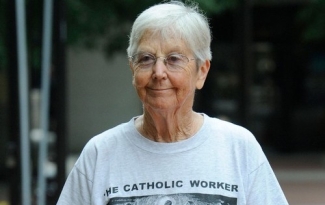
Sister Pat Farrell, president of the Leadership Conference of Women Religious, said Monday that Catholics should be able to search for answers about faith without fear.

“I don’t think this is a healthy environment for the church,” Farrell said in a phone interview. “We can use this event to help move things in that direction – where it’s possible to pose questions that will not be seen as defiance or opposition.”

Farrell’s remarks are her first since she met last week in Rome with the Vatican orthodoxy office, the Congregation for the Doctrine of the Faith, which concluded in April that the group had strayed broadly from church teaching. The Vatican has appointed three American bishops to conduct a full-scale overhaul of the organization, sparking protests globally in support of the sisters.

In the Rome meeting, Farrell said she did not ask Vatican officials in to drop their demand for reform. “I think we could clearly see in the tenor of the conversation that that was not an option,” she said. She characterized the meeting as frank and open but difficult, and said she did not leave the talk feeling any more hopeful about what’s ahead.

The Vatican has directed the three American bishops to oversee rewriting the statutes of the Leadership Conference, reviewing its plans and programs including approving speakers, and ensuring the group properly follows Catholic prayer and ritual.

“I don’t yet feel that we’re any further than just the initial conversation,” Farrell said.

The Leadership Conference of Women Religious, based in Silver Spring, Md., represents about 80 percent of the 57,000 U.S. nuns.

After an investigation starting around 2008, the Vatican office concluded that the nuns’ group had failed to emphasize core teaching on abortion, while promoting “certain radical feminist themes” that undermine Catholic teaching on the all-male priesthood, marriage and homosexuality.

The Leadership Conference has called the claims unsubstantiated and the investigation flawed. Farrell said the Leadership Conference “cooperated to the best of our ability” with the doctrinal assessment, but said the group was not shown the final report before it was sent to the Vatican.

Vatican officials and U.S. bishops have stressed that its report targeted the leadership organization, not individual orders of religious women. But in a statement Monday, the board of the Leadership Conference said the Vatican crackdown had been felt by “the vast majority of Catholic sisters” and lay Catholics globally. At a meeting last week of the U.S. Conference of Catholic Bishops in Atlanta, protesters presented church leaders with petitions signed by more than 57,000 people condemning the Vatican inquiry.

Farrell said the nuns’ group would decide its next steps in regional meetings that will culminate in a national assembly in August.

Complete Article HERE!

Vatican’s assessment of LCWR about fear, not doctrine

COMMENTARY

The Congregation for the Doctrine of Faith’s April 18 doctrinal assessment of the Leadership Conference of Women Religious is not about doctrine. It is not primarily about protecting the faith or ensuring an ecclesiology of communion, no matter how many times these terms are woven through the report. It is fundamentally about fear — fear of the loss of power — and the willful use of dominative control to defend that power.

The abundance of religious themes and language do not mask this punitive effort to shore up the crumbling authority of hierarchical leaders. Nor does the document hide the anger that roils beneath the protestations of gratitude and concern. The final report of the LCWR assessment reveals a desperate attempt on the part of some fearful and angry church leaders to protect their turf — to maintain an all-male church leadership, to keep women and laypeople under their authority, and to shield the homophobic-homosexual subculture in the leadership of the Catholic church.

When fear rules

The pattern of using coercive intimidation to control others in one’s household is called domestic abuse. Domestic abuse does not need to involve physical violence — in fact, many abusers never beat their partners. Instead, the threatened person strikes out psychologically to evoke compliance. Public humiliations, corrections, threats, accusations of disloyalty and demands for absolute obedience make up the typical arsenal of the abusive person. In extreme cases, the abuser monitors the actions of the other, keeps a record of his or her transgressions, restricts his or her activities, discredits his or her reputation, takes charge of his or her decisions, and threatens to withdraw support if unquestioned compliance to demands is not maintained.

These abusive acts will sound curiously familiar to anyone who has read the proposed implementations of the Vatican doctrinal assessment.

While females can and do commit domestic abuse, statistically, they do so at much reduced rates, inflict less physical harm and commonly have different motivations than male perpetrators, making domestic abuse primarily a crime against women. Yes, a crime — like child sexual abuse — something many bishops, archbishops and cardinals in the Catholic church failed to take seriously until they were forced to do so by lawsuits and public outcry.

But has transfer of learning taken place? Do they get it? Do they get that they cannot treat women and children as stepping stones to power, privilege and pleasure?

Whether through hits or humiliations, broken bones or broken spirits, threats of bodily harm or warnings of impending excommunication, the goal of abusers is the same: Assert absolute control. Wear the person down until he or she gives in or gives up. Use punishment if he or she dares to claim his or her own authority.

The most dangerous time in a household where domestic abuse is present is right after the person being abused has stood up to the abuser. Have too many members of LCWR claimed their own authority? The classic domestic abuser seeks one thing above all else: obedience to dictates. It is not surprising that obedience is alluded to on every page of the final doctrinal assessment document.

In fact, the mandate for implementation of the results of the doctrinal assessment reads like a how-to manual for the most common form of domestic abuse — no physical violence, just a resolute campaign to rein in those who have dared disobey the master, or, in the case of LCWR, the pope and bishops: “to implement a process of review and conformity to the teachings and discipline of the church, the Holy See” (page 7). Pretty clear.

Diagnosing the abuser

Mental illness, including personality disorders, compound domestic abuse but are not its primary cause. Domestic abuse is power abuse. In its most prevalent form, it is conscious, coercive conduct by men those believe they have the unconditional right to use forceful tactics to enforce their rules and maintain absolute control over those they deem subject to them.

What kinds of people abuse others? While there is no single profile of the domestic abuser, research has identified characteristics frequently seen among perpetrators of all types. Ironically, there is not much difference between those who use their fists and those who use words alone to demand obedience.

* Abusers believe they are entitled to maintain power and control over those in their households (institutions).
* They may believe they have an obligation to compel obedience for the benefit of the victim and the good of the household (church).
* They do not identify their controlling and hurtful tactics as abusive and are insulted when others perceive them that way.
* Perpetrators tend to perceive all interactions within relationships through a prism of compliance or disobedience.
* Abusers tend to be insecure men who need to establish dominance to feel confident.

The single most conclusive thing we know about domestic abuse is that it is learned behavior. Abusers have gained knowledge of abusive behaviors by seeing them in action, either in their families or in the various cultures to which they belong. This applies to religious cultures where the seminarian is taught early to bow to the wishes of his rector, to obey his bishop and to submit to the cardinal — all of whom kiss the ring of the pope.

All of this bowing, obeying and willful submission programs the brain to normalize hierarchical authority, and in some less secure individuals, to deeply internalize this way of relating and to replicate it.

As in sexual abuse, church leaders who have witnessed domestic abuse in their families or who have experienced such abuse as children may be particularly susceptible to behave abusively themselves. When a fragile ego combines with learned patterns of abuse, the stage is set for domestic abuse.

While abusers do not fit neatly into any particular diagnostic category, their behavior is not considered “normal.”

Psychologically healthy adults do not mandate obedience, forbid dialogue about subjects they do not wish discussed, or use oppressive tactics to gain control over others. Personally secure leaders don’t issue orders to other functioning adults, threatening punitive measures if they are not obeyed.

Often described as having a “Jekyll and Hyde” personality, most abusers can be quite civilized and even charming when they need to be. Their ability to function as CEOs of companies and preside over large corporations does not eliminate them from the pool of the insecure who strike out against those who threaten them. Some male abusers have been found to harbor a secret loathing of females, considering them inferior. Since such attitudes are certainly present in the history of the church (read St. Jerome), it is possible that its influence still inhabits, consciously or the unconsciously, the collective mind of church leaders.

The persistent desire of hierarchical leaders to keep women under their control and out of their sphere of leadership, especially women theologians, suggests that the “Jerome Syndrome” might still be operative.

[Fran Ferder is a Franciscan sister, clinical psychologist, author and professor at Seattle University.]

Complete Article HERE!

Rome vs. the Sisters

Commentators offer a range of explanations for last week’s Vatican “assessment” charging a group that includes the largest number of US Catholic sisters, the Leadership Conference of Women Religious (LCWR) with “serious doctrinal problems” and “radical feminism.”

One frequent explanation is that the report was issued in retaliation for support given the 2009 Affordable Care Act (ACA) by Network, a Catholic social justice lobby with close ties to the LCWR. For example, in a BBC News interview several days after the release of the assessment, Sister Simone Campbell, Network’s executive director, acknowledged “a strong connection” between Network’s challenge to the US bishops over the ACA and the Vatican accusations.

No doubt there is some truth to this analysis. But it’s worth noting that the Vatican launched the investigation that culminated in this document in January 2009, more than a year before Congress passed the ACA. Given the speed with which Rome does things, it’s more than likely that while the sisters’ support for the ACA contributed to the harshness of the statement, it by no means caused it. Indeed, Pope John Paul II mandated a previous investigation of US religious in 1983, though the outcome of that process was less brutal than the current one has proven to be.

In point of fact, throughout the history of the Church, bishops and popes have struggled mightily to keep committed celibate Catholic women under control. Already in the early Christian centuries male church leaders forced virgins to describe themselves as “brides of Christ” rather than use the male martial imagery they had come to use during the Roman persecutions. The early equality between male and female desert monastics was likewise undercut when eighth century bishops began taking control of women’s monasteries and ordained monks to the priesthood for the first time (but not nuns, of course.) And as, throughout the following centuries, groups of dedicated Christian women came together—canonesses, Beguines, beatas, recluses—popes, bishops, and male theologians went to great lengths to rein them in.

In the 12th century, Aelred of Rievaulx forbade women recluses to so much as talk alone with their confessors; Gregory IX imposed cloister on all Franciscan sisters except those in the house led by their foundress, Clare of Assisi; and in 1917, after a century marked by the foundation of innumerable active (that is, non-cloistered) congregations of sisters dedicated to serving the needs of the sick and the poor, the new Vatican Code of Canon Law cloistered them all, imposing rigid rules that undercut their ministries.

As the century moved on, however, relations between the Vatican and the sisters seemed to improve. In its effort to respond to the horrors of the twentieth century, the Vatican ordered the sisters to become better educated, to update their rules and habits, and to begin meeting together for the sake of greater effectiveness.

Already in 1929 Pope Pius XI had stressed the need for better prepared Catholic school teachers; in 1950, Pius XII called a meeting of the heads of all religious orders for the purpose of further advancing their collaboration; and in 1952 he called a meeting of women’s superiors, during which he urged the sisters to update and educate themselves for the purpose of attaining attain equal footing with their secular counterparts.

The Vatican also called for the formation of the US Conference of Major Superiors of Women, the group that eventually morphed into the currently-maligned LCWR. Ironically, the American women’s congregations at the time felt no need for the Conference, but organized it out of obedience to the Pope. Finally, the Second Vatican Council called the sisters to renew their congregations, return to the charism of their founders, and revise their constitutions, a call Pope Paul VI seconded. The sisters embraced Vatican II renewal immediately, with all their hearts, more so than any other group in the church.

So how, you may wonder, did the sisters and the Vatican get into the current conundrum? In much the same way that the rest of the Catholic Church did in the decades after Vatican II.

Conservative commentators argue that the sisters misinterpreted the teachings of Vatican II, or didn’t study them at all, and abandoned the way of life to which they were vowed. More illuminating, I believe is a comment made in 2005 by Sister Mary Daniel Turner, an LCWR executive director who, in the 1970s, led the organization through some of its most significant transformations: “Each time the church takes a step forward,” she said, “it takes a step back.” At Vatican II, the church called its members to respond to the “signs of the times,” to recognize “the universal call to holiness” that made clergy, religious and laypeople equal, to respond to the “joys and hopes, the griefs and anxieties” of modern men and women.

But when the “People of God” began to do this, the Vatican and the bishops realized with a shock what it actually meant, and they didn’t like it.

In point of fact, according to papers released in 2011 by the moral theologian Germaine Grisez, papal buyers’ remorse had become evident even before the closing of the Council, when Pope Paul VI made clear that he would not reverse the church’s earlier condemnation of artificial contraceptives under any circumstances. And in 1968 he was true to that promise, absolutely forbidding, in his encyclical Humanae Vitae, the use of artificial contraceptives. In so doing the pope overrode the recommendations of the birth control commission formed during Vatican II, a commission that included married lay people. So much for the equality that came with the “universal call to holiness.”

US sisters themselves began slamming into the buyers’ remorse of the institutional church around the same time. Already in 1967, the rollback of the renewal the sisters had undertaken with such commitment began to come into focus. When the cardinal archbishop of Los Angeles forbade the Immaculate Heart Sisters there from implementing the changes agreed upon at their renewal chapter, including modernizing their habit and educating their young sisters before sending them out to teach, the Vatican backed the cardinal, although these were changes the Vatican itself had called for. Ultimately, a majority of IHMs abandoned their status as Catholic sisters under canon law.

When LCWR members proposed a motion protesting the treatment accorded the IHMs, the Vatican representative at their meeting prevented the motion from coming to a vote. In the years that followed, the LCWR protested to Rome repeatedly what appeared to them unjustifiable intrusions by the Vatican and the bishops in decisions over which the Council had given them discretion.

I could go on but you get the idea. The recent investigation of the LCWR and accusations of doctrinal infidelity and radical feminism against the group are one more sad chapter in the long history of popes and bishops attempting to bring Catholic sisters to heel.

There is one significant difference, however. In part because of the Vatican’s own demand that they become so, the sisters currently under attack are the most highly educated women in the history of the church.

And because of the sisters’ hard, able, for the most part financially uncompensated work, Catholic women in the US today are also vastly more educated, competent, and professional than Catholic women of any previous generations. Think here, if you will, of Nancy Pelosi, recent occupant of the highest position of power a woman has held in the history of the US government. Think of Kathleen Sebelius. Think, for that matter, of me. We Catholic women understand the enormous debt we owe our sisters, and we are not pleased to have their faith denigrated in such a vile fashion even as they move into old age.

To paraphrase Sister Simone Campbell, I don’t think the boys have any idea what they’re in for.

Complete Article HERE!

Bishops Play Church Queens as Pawns

COMMENTARY

IT is an astonishing thing that historians will look back and puzzle over, that in the 21st century, American women were such hunted creatures.

Even as Republicans try to wrestle women into chastity belts, the Vatican is trying to muzzle American nuns.

Who thinks it’s cool to bully nuns? While continuing to heal and educate, the community of sisters is aging and dying out because few younger women are willing to make such sacrifices for a church determined to bring women to heel.

Yet the nuns must be yanked into line by the crepuscular, medieval men who run the Catholic Church.

“It’s not terribly unlike the days of yore when they singled out people in the rough days of the Inquisition,” said Kenneth Briggs, the author of “Double Crossed: Uncovering the Catholic Church’s Betrayal of American Nuns.”

How can the church hierarchy be more offended by the nuns’ impassioned advocacy for the poor than by priests’ sordid pedophilia?

How do you take spiritual direction from a church that seems to be losing its soul?

It has become a habit for the church to go after women. A Worcester, Mass., bishop successfully fought to get a commencement speech invitation taken away from Vicki Kennedy, widow of Teddy Kennedy, because of her positions on some social issues. And an Indiana woman named Emily Herx has filed a lawsuit saying she was fired from her job teaching in a Catholic school and denounced as a “grave, immoral sinner” by the parish pastor after she used fertility treatments to try to get pregnant with her husband.

Cardinal Timothy Dolan of New York recently told The Wall Street Journal that only “a tiny minority” of priests were tainted by the sex abuse scandal. But it’s a global shame spiral. The church leadership never recoiled in horror from pedophilia, yet it recoils in horror from outspoken nuns.

In Philadelphia, Msgr. William Lynn, 61, is the first church supervisor to go on trial for child endangerment. He is fighting charges that he may have covered up for 20 priests accused of sexual abuse and left in the ministry, often transferred to unwitting parishes.

Somehow the Philadelphia church leaders decided that the Rev. Thomas Smith was not sexually motivated when he made boys strip and be whipped playing Christ in a Passion play. Somehow they decided an altar boy who said he was raped by two priests and his fifth-grade teacher was not the one in need of protection.

Instead of looking deep into its own heart and soul, the church is going after the women who are the heart and soul of parishes, schools and hospitals.

The stunned sisters are debating how to respond after the Vatican’s scorching reprimand to the Leadership Conference of Women Religious, the main association of American Catholic nuns. The bishops were obviously peeved that some nuns had the temerity to speak out in support of President Obama’s health care plan, including his compromise on contraception for religious hospitals.

The Vatican accused the nuns of pushing “radical feminist themes,” and said they were not vocal enough in parroting church policy against the ordination of women as priests and against abortion, contraception and homosexual relationships.

In a blatant “Shut up and sit down, sisters” moment, the Vatican’s doctrinal office, the Congregation for the Doctrine of the Faith, noted, “Occasional public statements by the L.C.W.R. that disagree with or challenge positions taken by the bishops, who are the church’s authentic teachers of faith and morals, are not compatible with its purpose.”

Pope Benedict, who became known as “God’s Rottweiler” when he was the cardinal conducting the office’s loyalty tests, assigned Archbishop J. Peter Sartain of Seattle to crack down on the climate of “corporate dissent” among the poor nuns.

When the nuns push for social justice, they’re put into stocks. Yet Archbishop Sartain has led a campaign in Washington to reverse the state’s newly enacted law allowing same-sex marriage, and he’s a church hero.

Sister Simone Campbell, executive director of Network, a Catholic lobbying group slapped in the Vatican report, said it scares the church hierarchy to have “educated women form thoughtful opinions and engage in dialogue.”

She told NPR that it was ironic that church leaders were mad at sisters over contraception when the nuns had committed to a celibate life with no families or babies. Given the damage done by the pedophilia scandals, she said, “the church’s obsession, at times, with the sexual relationships is a serious problem.”

Asked by The Journal if the church had a hard time convincing the flock to follow its strict teachings on sexuality, Cardinal Dolan laughed: “Do we ever!”

Church leaders behave like adolescent boys, blinded by sex. That’s the problem with inquisitors and censors: They become fascinated by what they deplore.

The pope needs what the rest of us got from nuns: a good rap across the knuckles.

Complete Article HERE!

Holy Wisdom Monastery provides church services for disaffected local Catholics

Alice Jenson’s faith took an irreversible turn six years ago.

It was Nov. 5, 2006, and she was contributing to Mass at St. Joseph’s Catholic Church in Madison as a lay person, reading Bible passages from the lectern.

The same day, Madison Bishop Robert Morlino required all priests to play a recorded message from him explaining his position on three issues state residents would vote on that week, including a ban on same-sex marriage, which he supported.

When the priest hit “play,” Jenson walked out.

“It was the first time I’d ever outwardly gone against what I was raised to follow,” said Jenson, 67.

She found a new religious home at Holy Wisdom Monastery, a former Roman Catholic monastery in the town of Westport, just outside Madison. Its Sunday service, offered by the sisters who live there, retains many elements of a traditional Catholic Mass but diverges in sometimes startling ways.

Women can lead the service and preach the sermon. Gay relationships are warmly embraced. All parishioners, not just Catholics, can consume the communion wine and bread because the service is ecumenical, meaning welcoming of all Christian traditions.

It’s an alternate universe of sorts — what some think a Catholic Mass might look like today if the liberal spirit of Vatican II in the 1960s had taken root and flowered.

“We’re doing what the hierarchical church was afraid to complete,” said Jim Green, a longtime Holy Wisdom parishioner who is gay and describes himself as “a Catholic in exile.”

The service, called Sunday Assembly, is attended by people from many denominational backgrounds but has become especially popular with Catholics displeased with Morlino or church doctrine in general. Membership doubled in five years to 335, and parishioners estimate a majority are Catholics who left their regular parishes.

Detractors say the parishioners strayed too far from Catholicism to warrant the label.

Approach evolves
Though many self-described Catholics attend Holy Wisdom, it’s no longer an official Catholic Mass.

A little history: In the 1950s, a group of Benedictine nuns opened a high school at the site for girls in the Madison Catholic Diocese. Benedictines belong to a monastic religious order regulated by the canon law of the Catholic Church. Masses at the site were led by Catholic priests, often provided by the diocese.

In 1966, the nuns closed the school and turned the buildings into a Christian retreat center. The sisters, spurred by the Benedictine tradition of hospitality, gradually made the service more inclusive to all Christians. Lay people, especially women, took on greater roles.

In 2000, the Benedictine sisters went a step further, welcoming a Protestant woman to live with them. “When we chose to open our community to Protestant women, it meant other doors closed,” said Sister Mary David Walgenbach, the monastery’s head.

The sisters sought independence from the Catholic Church, and the Vatican granted it in 2006. Consequently, they no longer are tied to the local diocese. They remain affiliated with a Benedictine federation, but they have a special status, not a full membership, because of their ecumenism.

Bishop’s request
When the sisters disassociated from Rome, Bishop Morlino asked them to no longer celebrate Mass at the site so as not to cause confusion, said Brent King, a diocesan spokesman.

“Many people had visited (the monastery) over the years, and the bishop felt it would take time for people to understand that it was no longer a Roman Catholic institution,” King said, adding the bishop “was in no way unfriendly toward their desire to start a non-Catholic ecumenical community.”

The sisters understood the bishop’s position and stopped calling the service a Catholic Mass in 2006, Walgenbach said. Priests ceased to lead the service.
Today, the sisters describe the Sunday Assembly as being “for the celebration of Eucharist,” a term most commonly used to refer to Catholic communion. However, Walgenbach said some Protestant churches also use it. To many people, the service still has the essence of a Catholic Mass.

“You wouldn’t know it wasn’t a Catholic church, except for the person officiating,” said parishioner Pat Hobbins-Kemps, 64. A lifelong Catholic, she said she left her regular parish partly out of a lack of opportunities for women to lead.

Finding a home
Trisha Day, 66, said she came to Holy Wisdom after growing tired of sermons that focused on politically charged issues such as abortion and homosexuality while saying little about social justice and the poor.

Jeanne Marquis, 68, found Holy Wisdom after the terrorist attacks of Sept. 11, 2001. “I needed someone to talk about forgiveness instead of retaliation,” she said. “I needed a place where I was encouraged to ask questions.”

Ann Baltes, 44, a lifelong Catholic, said she sought a place where she and her husband, Bill Rosholt, a Lutheran, could participate in communion together.

Are these parishioners still Catholic? The answers vary.

Jenson says she’s not. “Too much divides us.”

Day calls herself “a transitional Catholic,” unsure where she’ll end up. Green said his Catholic identity can’t be taken from him. “The church is the people of God, not the institution,” he said.

Joanne Kollasch, one of the three Benedictine sisters who live at the monastery, said she “is a Catholic and will remain a Catholic,” adding, “I don’t like to be thought of as less Catholic because I’m ecumenical.”
Said Walgenbach: “The Catholic spirituality is bigger than the Roman Catholic Church.”

Both sisters said they respect the Catholic Church and Morlino and don’t seek controversy.

Detractors
Syte Reitz, a member of Madison’s Cathedral Parish who blogs about Catholic issues, said disaffected Catholics are free to start their own churches, but they shouldn’t confuse people by suggesting they still are faithful Catholics.

“Does it matter whether they are errant Catholics or not Catholics?” asks Reitz. “No matter what we label them, the laws of right and wrong and of morality still stand, and they and others will suffer from the mistakes that they make.”

Reitz said because a male priest is not presiding over the Eucharist, the bread is not being turned into the body of Christ, thus depriving attendees of the Catholic Church’s central sacrament.

King, the diocesan spokesman, said for Catholics to fulfill their obligation to attend Mass on Sundays, they must attend a Catholic Mass validly offered by an ordained Catholic priest.

Does the Holy Wisdom service qualify?

“In charity, we must respond that it does not,” he said.

Complete Article HERE!

Former North Side Catholic nun gets ordained

The Nun’s Story …

A former North Side Catholic nun was ordained a priest recently in an unsanctioned church ceremony in Fort Myers, Fla.

She was immediately ex-communicated from the Catholic church.

“I reject that,” said Judy Beaumont, 74 — the former Sister Mary Daniel — who grew up in Rogers Park before becoming a Benedictine nun who taught theology at St. Scholastica Academy.

Beaumont, who is now referred to as Pastor Judy, was ordained by the Association of Roman Catholic Women Priests.

“We are following our conscience and we are full loyal members of the church,” said Beaumont.

“We will do everything we can to bring about a new way of inclusivity in the church,” said Beaumont, who is now the 11th priest ordained by her group.

The key differences in the women’s “ordination” ceremony are:

† They don’t take a vow of obedience to the bishop. (“It basically denies you the ability to follow your conscience.”)

† Their bishop is a woman, who serves as a spiritual adviser.

† They don’t take a vow of celibacy and allow married, single, grandmothers, gay and straight women into the priestly fold.

† Rather than always referring to God as a “he,” their church language is more inclusive. The “Our Father” prayer reads “Our Mother/Father, who art in heaven.”

“The institutional church will not hire any of us to do church ministry, so we do what we can ministering in hospitals and to the homeless,” she said. “We hold Sunday mass in “church” houses and live on donations. “Stepping outside the institution is hard.”

Two more women are being ordained priests in the next few days, Beaumont added. “I didn’t decide I wanted to become a priest, it was a calling,” she said.

Complete Article HERE!

Jacqueline G. Wexler, Ex-Nun Who Took On Church, Dies at 85

Jacqueline G. Wexler, a former Roman Catholic nun who fought the Vatican’s authority and won, then found herself on the other side of the barricades when she became president of Hunter College in 1970, facing student demonstrators storming her office, died on Thursday in Orlando, Fla. She was 85.

Her death was confirmed by her daughter, Wendy Wexler Branton.

While still a nun and battling the church on many issues, Ms. Wexler drew nationwide attention as a bellwether of the liberal reforms of the Second Vatican Council. She fought successfully against church control of Webster College, the small Catholic women’s college near St. Louis that she headed in the 1960s. She advocated greater participation by women in church leadership and criticized the church’s ban on birth control.

Archbishop Fulton J. Sheen, the Catholic televangelist, referred to her as a “Benedict Arnold” in 1967, the year she won autonomy for Webster and simultaneously renounced her vows. Dick Cavett had her as a guest on his late-night TV talk show.

Ms. Wexler’s appointment in 1970 as president of Hunter, one of 11 colleges in the City University of New York system, coincided with a turbulent year in its history. Students, roiled by a combination of antiwar politics and local tensions caused by rising fees and a new university-wide open admissions policy, held demonstrations that shut down the campus repeatedly that spring.

Protesters blocked building entrances and elevators, forcing others to use emergency doors and stairways. Ms. Wexler, refusing at first to call the police, waded into angry crowds to talk, only to be shouted down. Barricaded in her office several times, she finally called the police.

A reporter for The New York Times was in the president’s office one afternoon that April when the phones rang, bringing news that students had blocked elevators and entrances for the second time that month.

“Here we go again,” Ms. Wexler said.

Outside her window, protesters chanted in rhyme, accusing her of colluding with “pigs,” the epithet they used for the police.

Ms. Wexler said that if anything had prepared her for the turmoil, it was having been a lightning rod for condemnation by conservatives in the church.

“Zealotry is the enemy,” she said, adding: “The far right called you every name, from daughter to Beelzebub on, and you learned to take it.”

She was born Jean Grennan on Aug. 2, 1926, the youngest of four children of Edward and Florence Grennan, who owned a small farm in Sterling, Ill. She later took the name Jacqueline in honor of an older brother, Jack, who died of a brain tumor at 21.

After graduating from Webster College, she entered the order of the Sisters of Loretto in 1949, and taught high school math and English in St. Louis and El Paso, Tex. She received her master’s in English from the University of Notre Dame in 1957, and returned to Webster in 1959 as an instructor and administrator.

Sister J., as she was known, was named president of Webster in 1965. She began initiatives aimed at raising educational standards and halting declining enrollment, then common among Catholic women’s colleges.

Sister J. made institutional separation from the church her first priority. “The very nature of higher education is opposed to juridical control by the church,” she said at the time.

She also led the transition to co-education, built new facilities, and started a social-justice program that sent students to work in the poorest neighborhoods of St. Louis, attracting the attention of the Kennedy administration.

She was appointed to the president’s advisory panel on research and development in education and to the original steering committee that developed Project Head Start, the federal program for low-income children.

After several years of well-publicized jousting with Sister J., the Vatican, in 1967, granted the Sisters of Loretto permission to put Webster under the control of an independent, secular board of trustees. It was one of the first Catholic colleges to cut its ties to the church. Asked for his reaction, Archbishop Sheen replied to a reporter: “No comment. I am more interested in Nathan Hales than Benedict Arnolds.”

In 1969, the former Sister Jacqueline married Paul Wexler, a record company executive, and adopted his two children, Wayne and Wendy. Besides Ms. Wexler Branton, Ms. Wexler is survived by her husband and son, as well as four grandchildren, two great-grandchildren and two sisters.

Ms. Wexler was known as a calming presence at Hunter. She led it through the rocky early 1970s and helped make it the city university’s premier center for health care education. Before stepping down in 1979, she brought Bellevue Hospital’s nursing school into the college, expanded health care training, raised money to start a gerontology program in the school of social work and inaugurated a women’s studies program.

From 1982 until 1990, she was president of the National Conference of Christians and Jews.

After receiving an honorary degree from her alma mater, now Webster University, in 2007, Ms. Wexler, then 81, was given a tour of the campus by the president accompanied by a reporter for The St. Louis Post-Dispatch.

Many buildings had been added since she left. She was eager to see them all, the newspaper said, and seemed to grow impatient when the elevator in one building was slow to arrive.

Whether out of eagerness or habit forged in the crucible of 1970, Ms. Wexler proceeded to the stairs.

“Let’s walk,” she said. “I wore comfortable shoes.”

Complete Article HERE!

Call To Action Names Leadership Award Winner

Call To Action is pleased to announce that Margaret Mary McBride, RSM will be the recipient of the 2011 Leadership Award at this year’s conference!

Sr. Margaret, an administrator at St. Joseph’s Hospital and Medical Center in Phoenix, assisted in the decision to save the life of a patient who was pregnant and suffering from pulmonary hypertension.

Medical providers determined that death of both the 27-year-old woman and her 11-week-old fetus would occur unless the pregnancy was terminated.  Sr. Margaret, as part of the hospital’s ethics committee, agreed to the abortion that saved the woman’s life.

Call To Action’s board recognizes Sr. Margaret’s careful work with a complex issue, her courage in a time of censorship and public pressure, and her witness to the need to stand firm in the face of opposition while striving to protect life in all its venues.

Complete Article HERE!