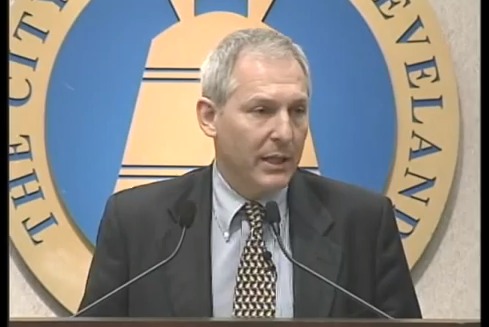
Female bishop speaks up for views, talks about ‘Womenpriest Movement’

Bishop Patricia Fresen says she dreams of establishing a church in which people of all genders, races and sexual orientations are treated equally and allowed to assume positions of leadership.

Fresen, a leader of the Roman Catholic Womenpriest Movement, spoke Sunday to members of the Mary Magdalene First Apostle Church about the need for an all-inclusive church after Mass at St. John’s Episcopal Church.

“There needs to be an emphasis on what unites us, rather than what divides us,” she said.

Fresen’s story
Born and raised in South Africa, Fresen was a nun in the Dominican Sisterhood for 45 years. She taught at St. John Vianney Seminary in Pretoria, South Africa, and at St. Augustine’s University in Johannesburg.

In 2003, Fresen was ordained a priest, which is a role the Roman Catholic Church reserves solely for men. As a result, she was excommunicated from the church and forced to leave her teaching positions.

Two years later, she was appointed a bishop and has been instrumental in bringing what supporters call the Womenpriest Movement to the United States. It is not recognized by the Catholic Church.

The Womenpriest Movement has support but there is still resistance, Fresen said.

“The resistance comes from a great fear of women and sexuality, and the long patriarchal tradition of the Roman Catholic Church,” she said.

Structure
Fresen said members of the Womenpriest Movement still consider themselves Catholic, but there are fundamental differences in how the churches are structured.

The Womenpriest Movement’s church is non-hierarchical and has a circular model in which leaders work in teams. Fresen said there are six regions of the Womenpriest Movement in the U.S.: North, West, South, East, the Great Waters region and the Midwest region.

Each region is led by a bishop, administrator and program director who are all elected by the people, Fresen said. The administrator is the main position in charge while the bishop has pastoral responsibilities and guides priests and deacons.

The second main difference between the churches is that women are allowed to hold leadership positions and nearly all the women involved in the Womenpriest Movement are married. Fresen said celibacy is not a requirement of ordination and neither is a vow of obedience to the bishop.

Fresen said the Womenpriest Movement advocates showing mutual respect for all religions, and expressing different cultures through liturgy and music.

Regina Nicolosi, bishop of the Midwest region of Roman Catholic Womenpriests, said it is important to her to spread the message of the movement because she believes in total equality for men and women.

Nicolosi said the law that does not allow women to be ordained as priests in the Roman Catholic Church is unjust, and she feels a strong call to advocate against the law.

“Being part of the Womenpriest Movement has helped me answer that call,” she said. “I want to belong to a church that is accepting of all races, all genders, all sexual orientations and takes that very seriously.”

Fresen said she uses humor to cope with the unjust structures of the Roman Catholic Church, and if the Womenpriest Movement is strong in its beliefs, “the church will back down, like a bully usually does.”

Fresen told audience members they must lose all fear of excommunication if the Womenpriest Movement is to be successful. She cited Nelson Mandela as an example of someone who spent 27 years in prison because he refused to obey what he considered an unjust law.

“In good conscience, one must not obey an unjust law … but you must be prepared to pay the price,” Fresen said.

Complete Article HERE!

An American Nun Responds To Vatican Criticism

Sister Pat Farrell is the president of the Leadership Conference of Women Religious and the vice president of the Sisters of St. Francis in Dubuque, Iowa.


As an aside, the Sisters of St. Francis in Dubuque, Iowa were the spirit-filled women who formed me in grade school at St John Brebeuf Parish in Niles IL. God bless them all.


Happy 10th Anniversary!


“The rejection of women’s ordination by the Vatican is clearly based on antifeminist, theologically unfounded arguments. In answer to this we are seeing an increasing wave of resistance among Catholic women and within church reform movements as they demand equal rights for women and justice within the Roman Catholic Church.” — Dr. Ida Raming

Blessed Courageous Women!


Lexington woman ordained as priest

To the Vatican, Donna LeMaster Rougeux, a married mother of three who works as a hospice chaplain, is part of a revolt.

But Rougeux and others believe she is following a spiritual calling.

Rougeux, 52, was ordained through the Association of Roman Catholic Women Priests on Saturday in Lexington, becoming one of only two such female priests in Kentucky and 130 in the world.

Bridget Mary Meehan, a bishop with the same association who presided over the ceremony, called it part of a “new spiritual uprising in the church.”

“It’s part of a big justice movement that recognizes we all are images of God,” Meehan said.

The Roman Catholic Church does not recognize Rougeux’s ordination. The Roman Catholic Diocese of Lexington issued a statement calling it a “provocative and headline-grabbing fiction.”

The church’s position is that only men can be ordained. That’s not sexist, but biblical, said Tom Shaughnessy, spokesman for the diocese.

As Pope John Paul II pointed out, “if the church is faithfully to follow the example of Jesus, who chose twelve men as his first priests/bishops, then the Roman Catholic Church is not free to ordain women,” Shaughnessy said in a statement.

Rougeux chose automatic excommunication when she was ordained a deacon earlier, according to the church’s position.

Rougeux and others involved in the women’s ordination movement, however, don’t acknowledge the excommunication.

“We believe the church is the people of God,” not the male-dominated hierarchy, said Janice Sevre-Duszynska of Jessamine County, who in 2008 became the first Kentucky woman ordained as a priest.

The controversy over ordaining women is part of a larger debate in the church over the role of women, the propriety of contraception and other issues.

This year, for instance, the Vatican strongly criticized the nation’s leading organization of nuns, the Leadership Conference of Women Religious, for not speaking strongly enough against ordination of women, among other things, prompting a show of support for the nuns.

And debates over issues such as whom to ordain are not unique to the Roman Catholic Church.

People who support ordaining female Roman Catholic priests say it is a step toward correcting centuries of incorrect teaching and practice by the institutional church, based on misogyny.

One of the Scriptures read at Rougeux’s ordination ceremony at the Unitarian Universalist Church of Lexington was from the Gospel of Luke, about Jesus healing a woman who had been unable to stand up straight for 18 years.

“The institutional church is trying to keep women bent over when it refuses to recognize our call to priesthood,” Meehan said in her homily. “Women are silent, and invisible, and subordinate no more.”

People involved said the communities involving women priests use male and female images of God and inclusive language and liturgies.

Part of the goal is to “de-clericalize” and create a community of equals, Meehan said.

“Christ calls both men and women to the priesthood,” said Sevre-Duszynska. “When it’s in you, it’s there. It doesn’t leave.”

Rougeux said the call to ministry was definitely in her.

She grew up in the United Church of Christ but converted to Roman Catholicism in the 1980s. She taught in a Catholic school, then she said she felt a pull to attend seminary, and finally a call to ministry.

She found out about the women priest movement on the Internet.

“It’s like God has revealed it one step at a time,” she said.

Rougeux has a degree in pastoral studies from Lexington Theological Seminary, has completed additional work in clinical pastoral education, and is a chaplain at Hospice of the Bluegrass.

“I think I bring a whole other bag of experiences to helping people,” she said. “I think we are all needed.”

Rougeux said she wants to help the community of like-minded Catholics grow in Lexington.

“I want them to grow together as a community of God helping the world,” she said.

Rougeux said she was excited to be part of the movement to reform the church.

“I think my granddaughters are going to look back at this and think history was being formed.”

Complete Article HERE!

Sexism and the Roman Catholic Church

By — Roy Bourgeois

I have been a Catholic priest for years and like most people I know, my experiences in life have changed me.

Growing up in a small town in Louisiana, as Catholics, my family did not question our segregated schools or ask why the black members of our church had to sit in the last five pews during Mass. Nor did we, needless to say, question why women could not be priests.

Joining the military was my ticket out of Louisiana. I volunteered for duty in Vietnam, which became that turning point in my life. In the midst of all the violence and death, my faith became more important and I felt God was calling me to be a priest. After four years in the military, I entered the Maryknoll Order.

In my ministry in the United States, I have met many devout Catholic women who are called by God to be priests. They are rejected because the Church teaches only baptized males can be ordained. This makes no sense to me.

Don’t we profess that God created men and women of equal worth and dignity? The Holy Scriptures state clearly in Galatians 3:28 that “There is neither male nor female. In Christ Jesus you are one.” All Catholic priests say that the call to be a priest is a gift and comes from God. How can we, as men, say that our call from God is authentic, but your call, as women, is not?

After much reflection, study and prayer, I have come to believe that the exclusion of women from the priesthood is a grave injustice against women and against our loving God, who calls both men and women to be priests. I also believe that if we are to have a healthy and vibrant Church, we need the wisdom, experiences and voices of women in the priesthood.

The Vatican refers to the ordination of women as “a grave scandal” in our Church. When Catholics hear the word “scandal” they think about the thousands of priests who sexually abused children, and the many bishops who covered up their horrific crimes.

Pope Benedict XVI is telling priests like me to be obedient to our Church leaders and not to question or discuss our Church teachings.

This presents a problem because the Church teaches us about the primacy of conscience. Our conscience is sacred because it gives us a sense of right and wrong and urges us to do what is right, what is just. When we betray our conscience, we separate ourselves from God.

Often, I think how we, as Catholics, were silent when our schools were segregated; not questioning why black members of our Church had to sit in the back pews. As a priest, I have learned that when there is injustice, our silence is the voice of complicity. Sexism, like racism, is a sin.

And no matter how hard we may try to justify discrimination against others, in the end, it is not the way of God.

Complete Article HERE!

Holy Wisdom Monastery provides church services for disaffected local Catholics

Alice Jenson’s faith took an irreversible turn six years ago.

It was Nov. 5, 2006, and she was contributing to Mass at St. Joseph’s Catholic Church in Madison as a lay person, reading Bible passages from the lectern.

The same day, Madison Bishop Robert Morlino required all priests to play a recorded message from him explaining his position on three issues state residents would vote on that week, including a ban on same-sex marriage, which he supported.

When the priest hit “play,” Jenson walked out.

“It was the first time I’d ever outwardly gone against what I was raised to follow,” said Jenson, 67.

She found a new religious home at Holy Wisdom Monastery, a former Roman Catholic monastery in the town of Westport, just outside Madison. Its Sunday service, offered by the sisters who live there, retains many elements of a traditional Catholic Mass but diverges in sometimes startling ways.

Women can lead the service and preach the sermon. Gay relationships are warmly embraced. All parishioners, not just Catholics, can consume the communion wine and bread because the service is ecumenical, meaning welcoming of all Christian traditions.

It’s an alternate universe of sorts — what some think a Catholic Mass might look like today if the liberal spirit of Vatican II in the 1960s had taken root and flowered.

“We’re doing what the hierarchical church was afraid to complete,” said Jim Green, a longtime Holy Wisdom parishioner who is gay and describes himself as “a Catholic in exile.”

The service, called Sunday Assembly, is attended by people from many denominational backgrounds but has become especially popular with Catholics displeased with Morlino or church doctrine in general. Membership doubled in five years to 335, and parishioners estimate a majority are Catholics who left their regular parishes.

Detractors say the parishioners strayed too far from Catholicism to warrant the label.

Approach evolves
Though many self-described Catholics attend Holy Wisdom, it’s no longer an official Catholic Mass.

A little history: In the 1950s, a group of Benedictine nuns opened a high school at the site for girls in the Madison Catholic Diocese. Benedictines belong to a monastic religious order regulated by the canon law of the Catholic Church. Masses at the site were led by Catholic priests, often provided by the diocese.

In 1966, the nuns closed the school and turned the buildings into a Christian retreat center. The sisters, spurred by the Benedictine tradition of hospitality, gradually made the service more inclusive to all Christians. Lay people, especially women, took on greater roles.

In 2000, the Benedictine sisters went a step further, welcoming a Protestant woman to live with them. “When we chose to open our community to Protestant women, it meant other doors closed,” said Sister Mary David Walgenbach, the monastery’s head.

The sisters sought independence from the Catholic Church, and the Vatican granted it in 2006. Consequently, they no longer are tied to the local diocese. They remain affiliated with a Benedictine federation, but they have a special status, not a full membership, because of their ecumenism.

Bishop’s request
When the sisters disassociated from Rome, Bishop Morlino asked them to no longer celebrate Mass at the site so as not to cause confusion, said Brent King, a diocesan spokesman.

“Many people had visited (the monastery) over the years, and the bishop felt it would take time for people to understand that it was no longer a Roman Catholic institution,” King said, adding the bishop “was in no way unfriendly toward their desire to start a non-Catholic ecumenical community.”

The sisters understood the bishop’s position and stopped calling the service a Catholic Mass in 2006, Walgenbach said. Priests ceased to lead the service.
Today, the sisters describe the Sunday Assembly as being “for the celebration of Eucharist,” a term most commonly used to refer to Catholic communion. However, Walgenbach said some Protestant churches also use it. To many people, the service still has the essence of a Catholic Mass.

“You wouldn’t know it wasn’t a Catholic church, except for the person officiating,” said parishioner Pat Hobbins-Kemps, 64. A lifelong Catholic, she said she left her regular parish partly out of a lack of opportunities for women to lead.

Finding a home
Trisha Day, 66, said she came to Holy Wisdom after growing tired of sermons that focused on politically charged issues such as abortion and homosexuality while saying little about social justice and the poor.

Jeanne Marquis, 68, found Holy Wisdom after the terrorist attacks of Sept. 11, 2001. “I needed someone to talk about forgiveness instead of retaliation,” she said. “I needed a place where I was encouraged to ask questions.”

Ann Baltes, 44, a lifelong Catholic, said she sought a place where she and her husband, Bill Rosholt, a Lutheran, could participate in communion together.

Are these parishioners still Catholic? The answers vary.

Jenson says she’s not. “Too much divides us.”

Day calls herself “a transitional Catholic,” unsure where she’ll end up. Green said his Catholic identity can’t be taken from him. “The church is the people of God, not the institution,” he said.

Joanne Kollasch, one of the three Benedictine sisters who live at the monastery, said she “is a Catholic and will remain a Catholic,” adding, “I don’t like to be thought of as less Catholic because I’m ecumenical.”
Said Walgenbach: “The Catholic spirituality is bigger than the Roman Catholic Church.”

Both sisters said they respect the Catholic Church and Morlino and don’t seek controversy.

Detractors
Syte Reitz, a member of Madison’s Cathedral Parish who blogs about Catholic issues, said disaffected Catholics are free to start their own churches, but they shouldn’t confuse people by suggesting they still are faithful Catholics.

“Does it matter whether they are errant Catholics or not Catholics?” asks Reitz. “No matter what we label them, the laws of right and wrong and of morality still stand, and they and others will suffer from the mistakes that they make.”

Reitz said because a male priest is not presiding over the Eucharist, the bread is not being turned into the body of Christ, thus depriving attendees of the Catholic Church’s central sacrament.

King, the diocesan spokesman, said for Catholics to fulfill their obligation to attend Mass on Sundays, they must attend a Catholic Mass validly offered by an ordained Catholic priest.

Does the Holy Wisdom service qualify?

“In charity, we must respond that it does not,” he said.

Complete Article HERE!

Former North Side Catholic nun gets ordained

The Nun’s Story …

A former North Side Catholic nun was ordained a priest recently in an unsanctioned church ceremony in Fort Myers, Fla.

She was immediately ex-communicated from the Catholic church.

“I reject that,” said Judy Beaumont, 74 — the former Sister Mary Daniel — who grew up in Rogers Park before becoming a Benedictine nun who taught theology at St. Scholastica Academy.

Beaumont, who is now referred to as Pastor Judy, was ordained by the Association of Roman Catholic Women Priests.

“We are following our conscience and we are full loyal members of the church,” said Beaumont.

“We will do everything we can to bring about a new way of inclusivity in the church,” said Beaumont, who is now the 11th priest ordained by her group.

The key differences in the women’s “ordination” ceremony are:

† They don’t take a vow of obedience to the bishop. (“It basically denies you the ability to follow your conscience.”)

† Their bishop is a woman, who serves as a spiritual adviser.

† They don’t take a vow of celibacy and allow married, single, grandmothers, gay and straight women into the priestly fold.

† Rather than always referring to God as a “he,” their church language is more inclusive. The “Our Father” prayer reads “Our Mother/Father, who art in heaven.”

“The institutional church will not hire any of us to do church ministry, so we do what we can ministering in hospitals and to the homeless,” she said. “We hold Sunday mass in “church” houses and live on donations. “Stepping outside the institution is hard.”

Two more women are being ordained priests in the next few days, Beaumont added. “I didn’t decide I wanted to become a priest, it was a calling,” she said.

Complete Article HERE!

Disobedient priests plan global movement

A parish priest who encouraged clergymen to be “disobedient” towards the Vatican plans to go international.

Helmut Schüller of the Preachers’ Initiative said yesterday (Sun) that “2012 will be the year of internationalisation”. Schüller – who previously headed Caritas Austria – said the Austrian Roman Catholic Church should “finally take members seriously”.

Schüller criticised the Vatican due to its conservative approach towards key topics of the 21st century and said the institution resembled an “absolutist monarchy”. The head of the parish of Probstdorf in the province of Lower Austria stressed that his initiative “receives a lot of approval from Catholic reform movements all over the world.”

Schüller claimed some weeks ago that the Preachers’ Initiative currently consisted of 370 members. He said yesterday there were no plans for further talks with the highest representative of the Roman Catholic Church of Austria, Viennese Archbishop Christoph Cardinal Schönborn. The archbishop condemned the word disobedience as a “term of fight” last month. Schönborn said it was “burdened with a negative connotation”.

Schönborn said it was not true that he opposed all kinds of reforms of the Church. He admitted that there was the need to rethink certain decisions and opinions but also made clear that he was against the crucial points of Schüller’s agenda.

The Preachers’ Initiative, which was established more than half a year ago, calls on the Vatican to allow priests to give Holy Communion to people who married a second time at registry offices after getting divorced following church weddings. The group also says women should be allowed to become Catholic priests.

Austria is one of the Roman Catholic Church’s most significant strongholds in Europe. Around 5.4 million Austrians are members of the Church. The number of people leaving the Church declined by 32 per cent from 2010 to 2011. More than 58,600 people quit their membership last year. Around 65 per cent of adult residents of the country are part of its Catholic Church – down sharply from 1981 when the same applied to 84 per cent.

The budget of Austria’s Catholic Church was strained in 2011 due to declining membership numbers meaning receding financial support but also compensatory payments to victims of sexual and physical abuse. The Church paid 6.4 million Euros altogether to 456 people who came forward to inform special commissions dealing with the issue that they suffered abuse at boarding schools and other institutions run by the Church.

The Church was also in the news recently due to discussions over whether it should be allowed to charge people who left it. Maximilian Hiegelsberger of the Austrian Association of Farmers’ section in Upper Austria said the Church could tax everyone regardless of whether they were members or not. Hiegelsberger argued that every resident of the country benefited by the Church’s activities in some way. He also made aware of abbeys’ positive effects on the domestic tourism industry.

The Social Democrats (SPÖ) rejected his appeal while St. Pölten Diocese Bishop Klaus Küng said it was an idea worth discussing in his opinion. Hiegelsberger is a member of the conservative People’s Party (ÖVP) which has formed a federal government coalition with the SPÖ since 2007. The SPÖ emphasised it would not support his initiative. The party branded Hiegelsberger’s suggested post-Church membership fee as a “forced charge”.

The Austrian Catholic Church generated 394 million Euros with the so-called Church tax in 2010. The sum Church members have to transfer depends on their salaries. Unemployed people and everyone with a comparably small income do not have to pay anything.

Complete Article HERE!

Thoughts on the Personal Ordinariate of the Chair of St. Peter

COMMENTARY by Lisa Fullam

The New York Times reported on the launch January 1 of the new ordinariate (like a diocese, but nation-wide in scope,) for Anglicans wishing to swim the Tiber and become Catholics. (For more about the ordinariate, go here.)

Is this good news or bad news, and for whom?

I react with dismay to the perception that these folks were finally motivated to move to Rome because of two issues–ordination of women (which strained the camel’s back,) and the Episcopal Church’s stance of openness to same-sex partnered clergy and laity, (which seems to have been the proverbial last straw.) Sure, some folks were likely wanting to rejoin Rome for some time, but the door’s always been open–it does seem to me that these two issues are the key turning point. The establishment of the ordinariate means that the new RC’s will be able to use a variant liturgy that echoes the Book of Common Prayer, and of course their clergy in this generation may remain married, though future applicants to seminary must promise celibacy like regular Roman priests.

My dismay is that once again the Catholic Church is defined by negation–”Don’t like the idea of women in ecclesial leadership? Come join us! Don’t like gay people? We’re the Church for you!” Along with the US magisterium’s attack on Obamacare because it might involve paying for contraception–”We’re Catholic! That means we’re against the Pill!”–Catholicism is seen as summed up in negative positions. The fact that Episcopal priests need only take an on-line course to qualify for ordination underscores the idea that the point here isn’t educating new clergy in the fullness of Catholic tradition (which is distinct in many ways from Anglican tradition, right??) but in welcoming in people who take the “right” position on these few issues, teach them a few things about liturgical particulars, and they’re good to go.

A point of curiosity is how the wives feel about being tolerated for a generation as an exception. Many, doubtless, believe that clergy should be celibate. Still, the implicit attack on their marriages must sting. “Sure, your husbands are welcome in our ranks, and we’ll let you stay married to them–but no future married priests will be allowed! You wives are a distraction and obstacle!”

And perhaps there’s good news, too. Good news for the Episcopalians, surely, who will continue to celebrate the vocations of women, married men, and partnered gay people with less internal opposition. The message of the Episcopal Church USA as a place of welcome for those disdained by Rome will be more clear than ever. I’m curious about the magnitude of the reverse flow of RC’s who have moved to the ECUSA–I suspect that far more are swimming the Tiber in the opposite direction than are swimming toward Rome. I know some very good people who are now Episcopal laity or clergy, and lots of Protestants, too. I’ve been in churches where half the congregation (by the pastor’s estimate,) are former RC’s.

A final point–the one-two punch of rejecting women’s ordination and excluding gays as defining why people would become Catholic should remind Catholics that those of us concerned about the role of women and concerned about attitudes toward gay people in our Church are natural allies. The issues facing the two groups are not the same, to be sure. Women are not described as “disordered,” nor are women described as a threat to society should they marry. On the other hand, women with vocations to priesthood cannot “pass” in a hostile Church the way gay men can. And there are other points of difference. But still–let’s remember and cultivate those natural alliances of all those regarded as outsiders in the Roman Church, yet remain Catholic nonetheless.

Complete Article HERE!