Catholic Church errs in fighting same-sex marriage

There’s a delicious rebellion brewing in Washington state — the “other Washington,” as those of us based in D.C. like to say.

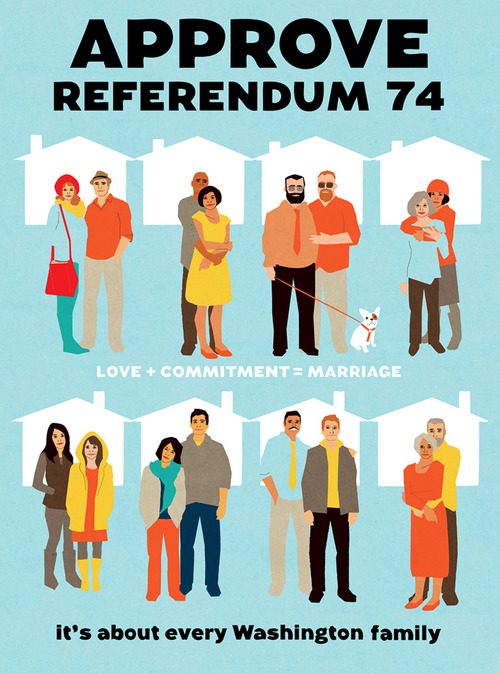
A group of 63 former Roman Catholic priests, with a total of 800 years service, supports Referendum 74, a ballot initiative that would make Washington the seventh state in the nation to legalize marriage between same-sex couples. The announcement of their support is designed to combat a church campaign against the measure that the San Francisco Chronicle describes as “aggressive.”

The church is issuing pastoral statements and releasing videos urging parishioners to vote against marriage equality.

Here’s a sampling:

— Bishop Joseph J. Tyson of the Diocese of Yakima, Wash., told his 41 parishes: “Once marriage is redefined as a genderless contract, it will become legally discriminatory for public and private institutions such as schools to promote the unique meaning of marriage. … This law will challenge our right to educate about the unique value of children being raised by his or her own mother and father in a stable home (sic).”

I understand why the church is undertaking an extensive political campaign against gay marriage. There’s no doubt that gay marriage goes against the very biased doctrinal interpretation of homosexuality often cited in the New Testament.

But if members of the Catholic hierarchy are worried about losing followers to other Christian churches, or want to capture the hearts of the next generation of Catholics, they’ll give up the fight.

It’s clear that young Americans of all faiths have been raised in a cultural environment that views LGBTQ couples as no different than heterosexual couples. The bishops are picking a fight over an issue they are not going to win.

The Chronicle sites a recent Elway Poll that pegged support for Referendum 74 at 57 percent. Gov. Christine Gregoire, a Democrat and an outspoken proponent for it, championed same-sex marriage legislation through the state chambers.

Similar measures are on the ballot in Maryland and Maine.

The church is taking on not just Catholic voters in those states or, one could posit, in the United States — Gallup poll last May on gay marriage showed half of Americans support it.

Ireland’s former president, Mary McAleese, this week told Irish state broadcaster RTE she supports gay marriage. Her views on social issues have drawn the ire of many an archbishop, including the former Archbishop of Boston Bernard Law, who called her “a very poor Catholic president.”

Her response: “I am not a Catholic president, I’m president of Ireland,” where “there were all sorts of people. I’m their president. I happen to be Catholic.”

It seems unwise for the church to take on such powerful politicians and social movements that are gaining mainstream support. The timing is particularly unwise when one takes into account how the church’s handling of the priest pedophilia scandal cost it credibility.

I am in awe of the gay rights movement’s progress on this issue. It seems LGBTQ leaders have been able to turn around public opinion on marriage equality in less than a decade. Too bad their sisters in the abortion-rights movement have not been as successful. Abortion is one topic on which the church, sadly, can keep up a successful crusade. But the church undoubtedly has a dwindling supply of social issues in its arsenal.

Complete Article HERE!

Catholic theologian preaches revolution to end church’s ‘authoritarian’ rule

Hans Küng urges confrontation from the grassroots to unseat pope and force radical reform at Vatican

One of the world’s most prominent Catholic theologians has called for a revolution from below to unseat the pope and force radical reform at the Vatican.
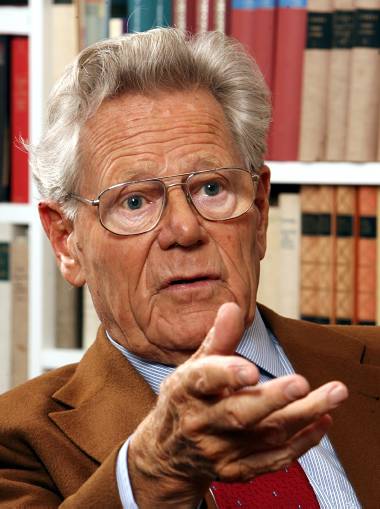
Hans Küng is appealing to priests and churchgoers to confront the Catholic hierarchy, which he says is corrupt, lacking credibility and apathetic to the real concerns of the church’s members.

In an exclusive interview with the Guardian, Küng, who had close contact with the pope when the two worked together as young theologians, described the church as an “authoritarian system” with parallels to Germany’s Nazi dictatorship.

“The unconditional obedience demanded of bishops who swear their allegiance to the pope when they make their holy oath is almost as extreme as that of the German generals who were forced to swear an oath of allegiance to Hitler,” he said.

The Vatican made a point of crushing any form of clerical dissent, he added. “The rules for choosing bishops are so rigid that as soon as candidates emerge who, say, stand up for the pill, or for the ordination of women, they are struck off the list.” The result was a church of “yes men”, almost all of whom unquestioningly toed the line.

“The only way for reform is from the bottom up,” said Küng, 84, who is a priest. “The priests and others in positions of responsibility need to stop being so subservient, to organise themselves and say that there are certain things that they simply will not put up with anymore.”

Küng, the author of around 30 books on Catholic theology, Christianity and ethics, which have sold millions worldwide, said that inspiration for global change was to be found in his native Switzerland and in Austria, where hundreds of Catholic priests have formed movements advocating policies that openly defy current Vatican practices. The revolts have been described as unprecedented by Vatican observers, who say they are likely to cause deep schisms in the church.

“I’ve always said that if one priest in a diocese is roused, that counts for nothing. Five will create a stir. Fifty are pretty much invincible. In Austria the figure is well over 300, possibly up to 400 priests; in Switzerland it’s about 150 who have stood up and it will increase.”

He said recent attempts by the archbishop of Vienna, Christoph Schönborn, to try to stamp out the uprising by threatening to punish those involved in the Austrian “priests’ initiative” had backfired owing to the strength of feeling. “He soon stopped when he realised that so many ordinary people are supportive of them and he was in danger of turning them all against him,” Küng said.

The initiatives support such seemingly modest demands as letting divorced and remarried people receive communion, allowing non-ordained people to lead services and allowing women to take on important positions in the hierarchy. However, as they go against conventional Catholic teaching, the demands have been flatly rejected by the Vatican.

Küng, who was stripped of the authority to teach Catholic theology by Pope John Paul II in 1979 for questioning the concept of papal infallibility, is credited with giving the present pope, Joseph Ratzinger as he then was, the first significant step up the hierarchy of Catholic academia when he called him to Tübingen University, in south-west Germany, as professor of dogmatic theology in 1966.

The pair had worked closely for four years in the 1960s as the youngest theological advisers on the second Vatican council – the most radical overhaul of the Catholic church since the middle ages. But the relationship between the two was never straightforward, with their political differences eventually driving a wedge between them. The dashing and flamboyant Hans Küng, by various accounts, often stole the limelight from the more earnest and staid Joseph Ratzinger.

Küng refers to the “heap of legends” that abound about himself and Ratzinger from their “Tübingen days”, not least the apocryphal accounts of how he gave lifts in his “red sports car” to the bicycle-riding Ratzinger.

“I often gave him a lift, particularly up the steep hills of Tübingen, yes, but too much has been made of this,” he said. “I didn’t drive a sports car, rather an Alfa Romeo Giulia. Ratzinger admitted himself that he had no interest in technology and had no driving licence. But it’s often been turned into some kind of pseudo-profound metaphor idealising the ‘cyclist’ and demonising the ‘Alfa Romeo driver’.”

Indeed the “modest” and prudent “bicycle-rider” image that pope-to-be, now 85, fostered for years has all but evaporated since his 2005 inauguration, according to Küng.

“He has developed a peculiar pomposity that doesn’t fit the man I and others knew, who once walked around in a Basque-style cap and was relatively modest. Now he’s frequently to be seen wrapped in golden splendour and swank. By his own volition he wears the crown of a 19th-century pope, and has even had the garments of the Medici pope Leo X remade for him.”

That “pomposity”, he said, manifested itself most fully in the regular audiences who gather on St Peter’s Square in Rome. “What happens has Potemkin village dimensions,” he said. “Fanatical people go there to celebrate the pope, and tell him how wonderful he is, while meanwhile at home their own parishes are in a lamentable state, with a lack of priests, a far higher number than ever before of people who are leaving than are being baptised and now Vatileaks, which indicates just what a poor state the Vatican administration is in,” he said, referring to the scandal over leaked documents uncovering power struggles within the Vatican which has seen the pope’s former butler appear in court. The trial ends on Saturday.

It was in Tübingen that the paths of the two theologians crossed for several years before diverging sharply following the student riots of 1968. Ratzinger was shocked by the events and escaped to the relative safety of his native Bavaria, where he deepened his involvement in the Catholic hierarchy. Küng stayed in Tübingen and increasingly assumed the role of the Catholic church’s enfant terrible.

“The student revolts were a primal shock for Ratzinger and after that he became ever more conservative and part of the hierarchy of the church,” said Küng.

Calling Pope Benedict XVI’s reign a “pontificate of missed opportunities”, in which he had forgone chances to reconcile with the Protestant, Jewish, orthodox and Muslim faiths, as well as failing to help the African fight against Aids by not allowing the use of birth control, Küng said his “gravest scandal” was the way he had “covered up” worldwide cases of sexual crimes committed by clerics during his time as the head of the Roman Congregation for the Doctrine of the Faith as Cardinal Ratzinger.

“The Vatican is no different from the Kremlin,” Küng said. “Just as Putin as a secret service agent became the head of Russia, so Ratzinger, as head of the Catholic church’s secret services, became head of the Vatican. He has never apologised for the fact that many cases of abuse were sealed under the secretum pontificium (papal secrecy), or acknowledged that this is a disaster for the Catholic church.” Küng described a process of “Putinisation” that has taken place at the Vatican.

Yet despite their differences, the two have remained in contact. Küng visited the pope at his summer retreat, Castel Gandolfo, in 2005, during which the two held an intensive four-hour discussion.

“It felt like we were on an equal footing – after all, we’d been colleagues for years. We walked through the park and there were times I thought he might turn the corner on certain issues, but it never happened. Since then we’ve still kept exchanging letters, but we’ve not met.”

Kung has travelled widely in his life, befriending everyone from Iranian leaders to John F. Kennedy, and Tony Blair with whom he forged close links a decade ago, becoming something of a spiritual guru for the then British prime minister ahead of his decision to convert to Catholicism.

“I was impressed how he tackled the Northern Ireland conflict. But then came the Iraq war and I was extremely troubled by the way in which he collaborated with Bush. I wrote to him calling it a historical failure of the first order. He wrote me a hand-written note in reply, saying he respected my views and thankyou, but that I should know he was acting according to his conscience and was not trying to please the Americans. I was astounded that a British prime minister could make such a catastrophic mistake, and he remains for me a tragic figure.” He described Blair’s conversion to Catholicism as a mistake, insisting he should instead have used his role as a public figure to reconcile differences between the Anglican and Catholic churches in the UK.

From his book-filled study, where a portrait of Sir Thomas More, the 16th-century English Catholic martyr, hangs on the wall, Küng looks out on to his front garden and a two-metre-tall statue of himself. Critics have called it symptomatic of Kung’s inflated sense of his own importance. He is embarrassed as he attempts to explain how it was a gift from his 20-year-old Stiftung Weltethos, (Foundation for a Global Ethic), which operates from his house and will continue to do so after his death.

Far from putting the brakes on his prolific theological output, Küng has recently distilled the ideas of Weltethos – which seeks to create a global code of behaviour, or a globalisation of ethics – into a capricious musical libretto. Mixing narrative with excerpts from the teachings of Confucianism, Hinduism, Buddhism, Judaism, Islam and Christianity, Küng’s writings have been incorporated into a major symphonic work by the British composer Jonathan Harvey that will have its London premiere on Sunday at the Southbank Centre.

Küng says the musical work, like the foundation, is an attempt to emphasise what the religions of the world have in common rather than what divides them.

Weltethos was founded in the early 1990s as an attempt to bring the religions of the world together by emphasising what they have in common rather than what divides them. It has drawn up a code of behavioural rules that it hopes one day will be as universally acceptable as the UN.

The work’s aim is arguably high-minded – Harvey described the demanding task of writing a score for the text as an “awe-inspring responsibility”. But Küng, who has won the support of leading figures including Henry Kissinger, Kofi Annan, Jacques Rogge, Desmond Tutu, Mary Robinson and Shirin Ebadi, insisted its aims were grounded in basic necessity.”At a time of paradigm change in the world, we need a common set of principles, most obvious among them the Golden Rule, in which Confucius taught to not impose on others what you do not wish for yourself,” he said.

Complete Article HERE!

Women as Priests

By JUDITH LEVITT

REFORMERS within the Roman Catholic Church have been calling for the ordination of women as priests. The Vatican, however, refuses to consider the possibility and uses its power to silence those who speak out. Catholic clergy in Europe, Australia and the United States who have voiced public support for female ordination have been either dismissed or threatened with removal from administrative posts within the church.

For those who disobey the prohibition, the consequences are swift and severe. In 2008, the Vatican decreed that any woman who sought ordination, or a bishop who conferred holy orders on her, would be immediately “punished with excommunication.” It went a step further in 2010, categorizing any such attempt as delicta graviora — a grave crime against the church — the same category as priests who sexually abuse children.
Despite the official church position, clergy and laity have been fighting for the ordination of women since the early 1970s, hoping to expand upon the Vatican II reforms. And according to a 2010 poll by The New York Times and CBS, 59 percent of American Catholics favor the ordination of women.

In the last 10 years the Vatican has had to contend with a particularly indomitable group of women who seem to be unaffected by excommunication or other punishment offered by the church. The movement started when seven women were ordained by three Roman Catholic bishops aboard a ship on the Danube River in 2002. The women claimed their ordinations were valid because they conformed to the doctrine of “apostolic succession.” The group that grew out of that occasion calls itself Roman Catholic Womenpriests. There are now more than 100 ordained women priests and 11 bishops.

I grew up as a Catholic, although I don’t practice now. The first time I saw a female Roman Catholic priest on the church altar, dressed in traditional robes, performing the Eucharist and all of the rituals that I grew up with, I was amazed at how deeply it affected me emotionally. It had simply never occurred to me that a woman could preside over the church.

The Roman Catholic Church’s argument against the ordination of women is simple and relies on the logic of tradition: “that’s what we have always done.” Pope John Paul II issued an apostolic letter in 1994 saying that the church had no authority to ordain women because, among other reasons, Christ chose only men to be his apostles. Pope Benedict XVI agrees with his predecessor and insists that the church need offer no further justification for its opposition to women as priests, calling instead for a “radicalism of obedience.”

But contemporary theologians, historians and priests have been challenging the historical basis of the Vatican’s assertion. Recent research suggests that Mary Magdalene, among others, may have been an apostle and that women played leadership roles that profoundly shaped the early church.

Karen L. King’s recent discovery of a scrap of papyrus making reference to Jesus’ wife, and to a female disciple, adds weight to the charge that the Vatican’s opposition to the ordination of women is theologically and historically flawed. The Vatican, however, argues that the document was forged.

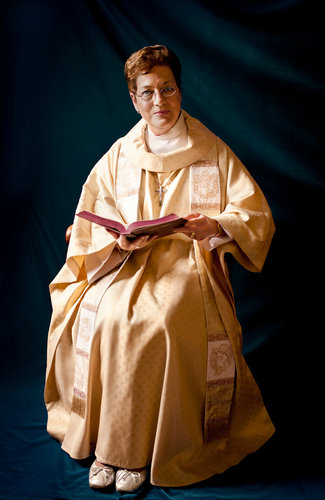
I photographed priests and bishops of the Roman Catholic Womenpriests movement to alter my own deep-seated perception of priests as male. I tried to capture their devotion and conviction and pay tribute to their efforts to reform the church.

Complete Article HERE!

Catholic priest donated $1000 to gay ‘marriage,’ diocese mum

A Catholic priest’s donation to support redefining marriage in Minnesota has been revealed, deepening a rift between a conservative Catholic hierarchy and more liberal subordinates in the blue state over gay ‘marriage.’

The Duluth News Tribune reported Sunday that Rev. Peter Lambert of St. Louis Catholic Church in Floodwood had donated $1,000 to Minnesotans United for Families, the group fighting a constitutional marriage amendment, in March.
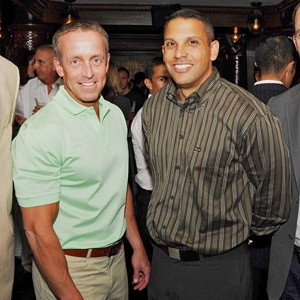
The Diocese of Duluth, where Lambert is stationed, has donated $50,000 to support the traditional marriage amendment. Duluth Diocese spokesman Kyle Eller told the Tribune that Lambert didn’t intend the donation to be a public statement.

“It was my understanding that Father Lambert wasn’t aware that the contribution would be made public, and it wasn’t intended to be a public statement,” said Eller, who declined further comment.

The diocese didn’t immediately respond to an email from LifeSiteNews.com requesting comment Tuesday.

The bishops in Minnesota have ranked among the most outspoken Catholic defenders of traditional marriage in the country in recent years. In 2010, the prelates backed a comprehensive six-week campaign to re-catechize their flock on the Church’s moral teaching on marriage and sexuality.

In January, Archbishop John Nienstedt of St. Paul and Minneapolis emphasized to clergy under his purview, which includes the Duluth diocese, the importance of their adherence to Church doctrine on the marriage question.

“The gravity of this struggle, and the radical consequences of inaction propels me to place a solemn charge upon you all,” he said. “On your ordination day, you made a promise to promote and defend all that the Church teaches. I call upon that promise in this effort to defend marriage. There ought not be open dissension on this issue.”

Nienstedt again urged the Catholic faithful this Sunday to support the proposed marriage amendment that will appear on the general election ballot this November.

Supporters of redefining marriage have meanwhile been targeting Catholics with their own message.

An openly homosexual religious priest from St. John’s Abbey in Collegeville, Minn. told a crowd of 200 in June that Catholics are permitted to vote against the amendment as a matter of freedom of conscience.

“I believe this amendment violates an important principle of Catholic teaching, and that as Catholics, we can vote no,” Rev. Bob Pearson said.

Complete Article HERE!

Rev. Stan Sloan has dedicated his life to serving his fellow men

Stan Sloan is not your ordinary Reverend. As a former priest of the Diocese, he has dedicated his life to serving his fellow men, fallen in love, was out during his priesthood, stood up and since departed from the Roman Catholic Church, and even scarier assimilated back into the dating scene after his priesthood. What matters to Sloan is service and perspective – both, which are for and from the people he has helped and continues to help throughout his career.

Currently, as Chicago House and Social Service Agency’s CEO, Sloan has taken his passion for service and his perspective from his days at St. Leonard’s House where he aided former prisoners and homeless people and instilled it back into the community. With exciting, new endeavors with Sweet Miss Givings Bakery, the development of a TransLife Center, as well as events that include Dance for Life, an all-out dance party, at the Park West on September 15 and the charity’s annual speaker series featuring fashion designer Kenneth Cole in November, Sloan has made Chicago House his new Diocese.
TC: (Terrence Chappell) As the longest running CEO of Chicago House and Social Service Agency, it could be argued that you are Chicago House. Who were you before Chicago House?

SS: (The Rev. Stan Sloan) I was a Catholic priest in the Diocese of Tulsa, Oklahoma up until 1995. In 95′ I just decided that I couldn’t do that anymore. I liked what I was doing and I liked the people I was working with, but I couldn’t stand working for the Roman Catholic institution or the hierarchy.

TC: What was the turning point that moved you to transition out of the Roman Catholic Church?

SS: As gay men we under sell this a lot; being gay is so much more about whom you have sex with. I mean even if you’re a celibate gay man, your gay friendships are still important to you. So, if I had a Friday night off, I would go out with my gay friends – not to gay bars because I knew that was crossing the line, but I would go out to dinner with them. Again, I was not breaking any vows. So, the bishop of Tulsa called me in and said that you’re fixing with the gay community. I said yes, but I’m being celibate and that we’re all God’s people. He said it’s one thing to minister to them but it’s another to be friends with them.

TC: Wow. How did that make you feel?

SS: Yea. It’s horrible. It’s okay to minister to them but to not befriend them? You don’t befriend people when you’re actually contributing to the cause let alone their [Roman Catholic Church] stance on birth control. If it sounds like I’m bitter and angry, it’s because I am.

TC: What do you do with all that bitterness and anger?

SS: I exercise like a mad man. I love my work. I’ve got good friends.

TC: However, you didn’t always feel this way. What was it that attracted you to the priesthood?

SS: I always had a natural prayer life growing up as a child. My parents were devout Catholics, and I enjoyed going to daily mass. It was always just a natural fit for me. I actually came out and had a boyfriend before I was a priest.

TC: Oh really? How did that work out?

SS: When I was in seminary I was celibate. So, as I went through the boards to start going into seminary, they asked me if I was gay and I said yes. At the time it was much more permissive than it is now. The church has gone backwards. However, I said if I do this I’ll be celibate.

TC: How did your boyfriend at the time react to you deciding to become a priest?

SS: I told him at the time, Jimmy this is something I have to try and that chances are that I won’t like it and I will be back. We were both kids at the time – we were like 23. He told me if I do this, you do this and when you come back, I won’t be here. So, we broke up, and I went.

TC: But then you quit the Catholic Church.

SS: Yup and never once did I think that I made the wrong decision. It was hard. You grieve it like you grieve a divorce. But, I was lucky that I happen to pick the Episcopal Church as my next step. We just okayed doing gay marriages, so the Episcopal Church is already ahead. I just feel like in the idea world, the Churches or religion in general should lead the rest of the world on social justice issues. However, instead you have ridiculous groups who do just the opposite. I’m very proud to be a part of denomination that is at the forefront of equality, sexual equality, and gender nonconforming issues.

TC: And then you transitioned over to serving and helping homeless people.

SS: Yes. Serving homeless people really puts perspective around your life and whatever is getting you down. You get to see people who have every reason to not have any hope but they do and they are excited about moving forward with their lives. Every day I get to make a difference.

TC: What kind of perspective did that give you at the time?

SS: I was just this naïve, white kid who grew up in Texas in middle-class America. I remember my first day at St. Leonard’s. I was working with all ex-offenders who just got out of prison. I was afraid of these guys. I’ve never been around a population like this. So, I went in and I had to talk to these guys. I started talking to them and I’m thinking to myself I’ve got two master’s degrees and so on. But then I realized that they were way more afraid of me then I was of them. For instance, I’m a part of the world they want to break into – mainstream society.

TC: How did this perspective help you at Chicago House?

SS: Well one of the things Chicago House gets to do on a daily basis is that we get to take our donors and show them the lives of our residents. I invite people all the time to come. It’s great because different people from different factions of our society can meet. We’re not as different as we think we are.

TC: Is there a story of a particular resident or someone that you have helped that stands out?

SS: One of my first days at St. Leonard’s House, I met a guy who I was working one on one with – helping him with his resume and stuff like that. It was like a light bolt when I was working with this guy; this guy’s IQ is off the charts. This guy is way smarter than I am. We stayed in touch and he did a good job while he was at St. Leonard’s House. He wanted to start up his own computer business. I gave him some money to help him get it started. Now, he owns his own computer business and has a home in Lake Forest. Mind you at the time he was just out of prison and would’ve been homeless if he wasn’t staying at St. Leonard’s House.

TC: When you started at Chicago House, you were still a priest in good standing but no longer a part of the Diocese. So, that means you could start dating. How was that?

SS: I didn’t remember from being 23 of how horrible dating was but I learned very quickly it’s a horrible process (laughs). I remember I had this over-the-top romantic idea that I would fall in love with the right one and wouldn’t have to date very much. Of course that’s not true, that’s not how life works.

TC: How was your “first” date?

SS: I signed up with The Smelts for no other reason because I decided that I wanted to date and that I need to find a husband. There was an adorable guy named Seth Hoff, who is still here in town, and I saw him and I thought he was so hot. So, I just found out his name and I just cold called him. I told him I was at swim practice today and that I saw him and asked him out to dinner. He said that I was the guy with no body fat. He said yes and we went on a few dates. I mean I was insane, so it must have been crazy for him. For instance, we would have fun on the date and instead of saying, “Hey, let’s talk soon,” I’d just say, “Can we get another date down?”

It was a very good, funny introduction into the dating world. (Laughs)

TC: What are some exciting, new developments for Chicago House?

SS: I’m excited to announce that Little Miss Muffet will take on Sweet Miss Giving’s product line. They have licensed our brand name and the internship program will operate out of their factory. Little Miss Muffet will give us a dime off every cookie, off every cupcake, and biscotti they will sell. Right now, we are trying to see how we are going to position ourselves with places like Costco and stuff since they are a national baker and they are already in all those places.

Our other big development is our TransLife Center. It will be in a gracious, old mansion where the first floor will be an emergency drop-in center for trans adults who just need to get off the streets for a day. The upstairs rooms will be built as well. There will be nine bedrooms for transgender men and women who are homeless and who need to get their life together. We will be hiring a full-time career counselor who will be transgender himself or herself who will be helping people with employment. We will have a doctor from Children’s Memorial Hospital who will be putting in weekly hours at the TransLife Center connecting people with care, since there is a huge instance of abuse of transgender people by medical professionals. So, as far as I know it will be the most comprehensive service offered to transgender people. We’re very excited about this.

TC: What do you want the LGBT community as a whole to take from Chicago House’s move in the direction of helping and aiding the trans community?

SS: We’ve made good progress as an LGB community and it’s time to start embracing our transgender brothers and sisters.

TC: What are some upcoming events Chicago House has coming up in the future?

SS: We will be having our One Night Stand event at the Park West on September 15. It will be a dance party. We’ve got all sorts of performers. Keith Elliott, who started Dance for Life and who started the burlesque show for TPAN will be a part of the event, so you know it’s going to be brilliant.

November 2 we’ve got Kenneth Cole coming for our speaker series. Kenneth Cole is the national head of the American Foundation of AIDS Research. So, he’s incredibly knowledgeable and will be a fantastic speaker.

TC: What do you want your legacy to be?

SS: That people’s lives are better because you existed.

To find more information about Chicago House visit www.ChicagoHouse.org.

Complete Article HERE!

Cardinal Carlo Martini says Church ‘200 years behind’

Italian Cardinal Carlo Maria Martini has described the Roman Catholic Church as being “200 years behind” the times.

The cardinal died on Friday, aged 85.

Italian newspaper Corriere della Sera has published his last interview, recorded in August, in which he said: “The Church is tired… our prayer rooms are empty.”

Martini, once tipped as a future pope, urged the Church to recognise its errors and to embark on a radical path of change, beginning with the Pope.

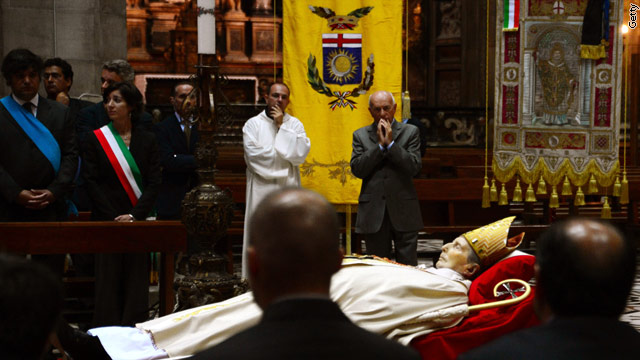
Cardinal Martini
Thousands of people have been filing past his coffin at Milan’s cathedral, where he was archbishop for more than 20 years.

The cardinal, who had retired from the post in 2002, suffering from Parkinson’s Disease, is to be buried on Monday.

‘Old culture’

Martini, a popular figure with liberal stances on many issues, commanded great respect from both Pope John Paul II and his successor Pope Benedict XVI.

The cardinal – a member of the Jesuit religious order – was often critical in his writings and comments on Church teaching, says the BBC’s David Willey in Rome.

He was a courageous and outspoken figure during the years he headed Europe’s largest Catholic diocese, our correspondent says.

Cardinal Martini gave his last interview to a fellow Jesuit priest, Georg Sporschill, and to a journalist at the beginning of August when he knew his death was approaching.

The cardinal had returned to Italy from Jerusalem, where he had settled on retirement in 2002 to continue his biblical studies.

Catholics lacked confidence in the Church, he said in the interview. “Our culture has grown old, our churches are big and empty and the church bureaucracy rises up, our religious rites and the vestments we wear are pompous.”

Unless the Church adopted a more generous attitude towards divorced persons, it will lose the allegiance of future generations, the cardinal added. The question, he said, is not whether divorced couples can receive holy communion, but how the Church can help complex family situations.

And the advice he leaves behind to conquer the tiredness of the Church was a “radical transformation, beginning with the Pope and his bishops”.

“The child sex scandals oblige us to undertake a journey of transformation,” Cardinal Martini says, referring to the child sex abuse that has rocked the Catholic Church in the past few years.

He was not afraid, our correspondent adds, to speak his mind on matters that the Vatican sometimes considered taboo, including the use of condoms to fight Aids and the role of women in the Church.

In 2008, for example, he criticised the Church’s prohibition of birth control, saying the stance had likely driven many faithful away, and publicly stated in 2006 that condoms could “in some situations, be a lesser evil”.

Complete Article HERE!

Catholic priest faces excommunication after launching new parish

A Milwaukee-area Catholic priest sanctioned this year for indirectly violating the seal of the confessional now faces excommunication after launching a new parish with a breakaway diocese a few miles away.

Father David Verhasselt, once a popular priest at St. Catherine of Alexandria Parish in Oconomowoc, was named pastor this month at the newly founded Holy Name of Jesus Evangelical Catholic Church in nearby Ashippun, taking at least some of his former parishioners with him.

The Archdiocese of Milwaukee said Verhasselt will be given an opportunity to reverse his decision and would incur “immediate excommunication” if he does not.

Verhasselt has declined repeated requests to be interviewed. But the Chicago-based Evangelical Catholic Diocese of the Northwest said he withdrew from the Roman Catholic Church in accordance with canon law.

“For the record, the Roman Catholic Church cannot declare a former member of its body ‘excommunicated’ after the fact,” it said in an email to the Journal Sentinel. “We are currently residing within the 21st century.”

Verhasselt’s departure is forcing a gut-wrenching decision for at least some of his former parishioners, many of whom still believe he was unjustly accused of breaching the confessional. Do they stay at St. Catherine’s or follow Verhasselt to his new spiritual home outside the Roman Catholic Church?

“I’m on the fence. I’ve been Roman Catholic and gone to church all my life. But I also love Father Dave,” said June Sawant.

“He’s the most wonderful man, so kind, so caring . . . he was born to be a priest.”

Those who follow a schismatic priest could face excommunication themselves, depending on the circumstances, according to canon lawyers. But that is unlikely to occur without a clear warning from the archbishop, said Father James Connell, a canon lawyer and former vice chancellor of the archdiocese.

No such warning has been issued.

Excommunication bars one from receiving the sacraments; it does not strip one of membership in the church, according to Connell.

“And the door remains open to repentance,” he said. “There is always the hope that they will return.”

Verhasselt had been on leave from St. Catherine’s since April 2010 after allegedly violating the seal of confessional, a charge many of his supporters believed was trumped up as the result of an ongoing feud with a priest in another parish.

Milwaukee Archbishop Jerome Listecki found Verhasselt guilty in March of an “indirect” violation – betraying the sin, but not necessarily the sinner – and sentenced him to a year of prayer and penance.

Verhasselt’s appeal to the Vatican’s Congregation for the Doctrine of the Faith was pending when he resigned to join the Chicago-based Evangelical Catholic Church, a small, dissident denomination not in communion with Rome.

Founded in 1995, the Evangelical Church has 17 parishes or missions in the United States and Ireland, according to spokesman Bill Morton.

It bills itself as “a welcoming community of faith rooted in the Catholic tradition,” but it breaks with Rome in key areas, including ordaining women, allowing married and gay clergy, and in offering the sacrament of marriage to same-sex couples.

Morton said Northwest Diocese Bishop James Wilkowski reviewed the documents involving the charges against Verhasselt and found no evidence of a breach.

Wilkowski presided over an Aug. 4 Mass in which Verhasselt professed his faith in his new denomination, and he is expected to complete the process of incardination by the end of the year.

Complete Article HERE!

Seattle marchers show support for activist nuns

Over the years, Patricia Patterson thought about joining protest marches in support of women’s rights or against war. But the cause that finally got her to take to the streets was nuns.

“It baffles me that a group of women who are among the … most compassionate are being, frankly, picked on by the Vatican,” Patterson said Sunday. She joined a throng of nearly 500 people who marched in support of the nuns’ group recently rebuked by the Catholic Church for promoting “radical feminist themes” at odds with official doctrine.

Patterson carried a picture of her aunt, a nun who had a major influence on her life. Other marchers carried flowers and sang hymns as they walked from Volunteer Park on Capitol Hill to St. James Cathedral, seat of the Archdiocese of Seattle.

But Seattle Archbishop J. Peter Sartain wasn’t home. He was in St. Louis for meetings with the Leadership Conference of Women Religious, an umbrella group that includes about 80 percent of women’s religious orders in the United States.

The Vatican put Sartain in charge of revamping the Leadership Conference to bring its practices more in line with Catholic orthodoxy.

After a four-day conference that concluded Friday, the nuns agreed to talk with Sartain but said they would not “compromise the integrity” of their mission.

Sartain praised the nuns’ work and contributions in a statement issued Saturday. “They deserve our respect, our support, our thanks and our prayers,” he wrote. He said he is committed to working with the Leadership Council in “atmosphere of prayer and respectful dialogue.”

Sister Cathy Beckley, who was cheered as she dashed back and forth in her red baseball cap, said the Vatican’s attack was hurtful to women who have devoted their lives to caring for people on society’s fringes.

In a report issued in April, Catholic Church officials chided the nuns and sisters for resisting some church teachings, including those that prohibit birth control and same-sex relationships.

Beckley, a Seattle social worker and member of the Sisters of the Holy Names of Jesus and Mary, said that when she worked on the streets with the poor and homeless, she never asked about their private lives.

Sunday’s turnout gave her hope that many Catholics agree with the sisters’ approach and value their service. “Clearly, a very significant segment of the church here in the U.S. and around the world is more progressive.”

Among their causes, the sisters of the Leadership Conference mounted a “Nuns on the Bus” tour this summer opposing cuts in federal spending for social and health services proposed by Wisconsin Rep. Paul Ryan — now running mate to Republican presidential candidate Mitt Romney. Catholic bishops also echoed those concerns.

Beyond politics, the split between the sisters and the Vatican reflects the struggle between Catholics who want the church to adapt to modern realities — such as the fact that the vast majority of Catholic women in America use birth control — and those who seek a more traditional path, several marchers said.

Christy Higgins, of Seattle, was a youngster in Catholic school when the Vatican II changes were adopted in the 1960s. She recalls her teachers trading their habits for street clothes, and she embraced the more open and inclusive outlook.

“The church is all of us, not just the Vatican, the bishops and the cardinals,” Higgins said, her shirt pinned with more than a dozen “I Stand with the Sisters” buttons.

The slogan is also the name of the Seattle group that organized Sunday’s march. “We were so upset about how the church hierarchy is treating the sisters,” said Gretchen Gundrum, a co-founder.

It’s easy for ivory-tower leaders — all of whom are men — to discount the hard decisions people face in their day-to-day lives, Gundrum said. “The nuns see the complexity. Morality is not black-and-white, no matter what somebody says.”

The same tensions have always been present in the Catholic Church, Gundrum added. Church leaders denounced Galileo for claiming the Earth revolves around the sun. They finally admitted he was right — nearly 400 years later.

“Our group hopes to shorten the amount of time it takes for them to come around,” Gundrum said.

Complete Article HERE!

Tom Rastrelli: Priests who lie; the dilemma of sexual orientation and the priesthood

People don’t expect their priests and bishops to lie, but as Michelangelo Signorile’s recent post illustrated, clerics do lie. Some even make a virtue of it. I know this from experience, for I was ordained a Catholic priest on a lie.

In spring 2002 I walked with my spiritual director along the blacktop road encircling the seminary. He’d been my confessor and guide for two years, helping me discern God’s presence in all aspects of my life, intimate and mundane. Over our heads, a canopy of newborn leaves rustled in a sunny breeze, a welcome relief from the bitter fog that had engulfed the church and my vocational surety.

For the previous two months an unprecedented number of bishops and priests, starting with Cardinal Law of Boston, had fallen from grace for participation in the sexual abuse of children and the ensuing cover-up. Their duplicity was palpable in my knotted back and abdomen. In a few months I’d be ordained a priest. I didn’t want to do so on a lie.

“I’m coming out of the closet,” I said.

My spiritual director loosened his clerical collar and lit a cigarette. “Where’s this coming from?” he asked. A couple of chattering wrens whooshed past.

I backtracked through six years of seminary formation. At events I had hobnobbed with supposedly holy men, some of whom had been harboring pedophiles. A few had done the deed themselves. By shaking their hands, mine were dirty. I knew the ecclesiology, how the bishops’ authority stemmed from a direct line to Jesus, but they were still criminals. Who were they to declare homosexuals “intrinsically depraved”?

When I’d applied for seminary, the director of seminarians — the priest who’d recruited me — explained that orientation didn’t matter, only celibacy. But on my intake interviews he’d told me to answer “yes” when the archdiocesan psychologist asked if I was attracted to women, and “no” when he asked if I was attracted to men. It was for the greater good, he said. Frightened of being cast out and ashamed of my true nature, I had lied as instructed.

In light of the sexual abuse scandal, lying about my orientation was no longer acceptable. I thought of what a gay friend who’d left seminary had said. His words became my own: “I don’t know if I can separate my private and public selves. Isn’t integration the goal of spiritual direction?”

“Of course it is,” my spiritual director said, more gravelly than usual. He stopped and turned to me. A tree cast a web of shadows over his face. His strawberry nose grew flushed, as he gestured with his hands. “Here’s the thing, Rastrelli. You have to ask yourself: Am I going to be a gay priest, or a priest” — he rolled his fingers and cigarette through the air like a barrel — “who happens to be gay?”

“What’s the difference?” I turned my head to inhale, trying to avoid his secondhand smoke. “Either way I’m gay. It’s a part of me.”

“But are you gay first, and then a priest? Or a priest first, and then gay?” He smiled, satisfied with the distinction.

“Both/and.” I’d hit him with what he’d taught me in class. “Both/and” was the paradoxical answer for every ultimate question in Catholic theology: Scripture or tradition? Faith or works? Is Jesus divine or human? Are we sinful or good? is faith a solo or communal experience?

“Touché,” he said. We walked. He sucked his cigarette. “You’re a smart guy, Rastrelli. Give it some thought.”

I kicked a pebble onto the grass. “I have. I don’t want to lie about my sexuality.”

“It’s not lying if those asking don’t have a right to the information.”

He hadn’t even flinched. I wanted to shake the nicotine from his bones, to scream, “It was that kind of thinking that landed the bishops in the papers!” Still, part of me wanted him to be right. Silence was simpler, easier, and maybe my need to come out was just pride at work. My promise of obedience demanded that I surrender my ego. My vocation was about God, not my orientation. But couldn’t we priests be honest with one another? I had to try.

“Gay Catholics don’t have positive role models,” I said. “I don’t know of a single gay priest that’s healthy. Do you?” I stopped. He kept walking. This was as close as I’d ever come to asking him if he was gay. I suspected he was. He’d lived with another priest for decades. They vacationed and picked out carpeting together. They spoke about their cat as if she were their child. Even if he and his housemate weren’t having sex, they were a couple. I stepped in stride with him. “How am I supposed to be an integrated gay priest when I have no one to look up to? How does celibacy actually work?” I stopped again. “I’m asking you.”

He turned to me. His face became whiter than a funeral pall. “I’m sorry, Rastrelli, but that’s not a conversation I’m comfortable having with a student.”

He resumed his pace. I followed silently.

The breeze picked up. The undulating trees sounded like the ocean breaking on the shore. I choked back the urge to ask, “Are you gay?” I felt like a sinking ship in a fleet that had wandered into a minefield. After laying the mines himself, the fleet commander had ordered radio silence.

I didn’t want to drown alone. I didn’t want to hear him lie. I wanted the truth, but the truth was dangerous. Were I to come out amid sexual-abuse headlines, homophobic Catholics wrongly blaming gay priests for the scandal would demand my dismissal.

My spiritual director was right. Who were they to judge, to put my orientation before my vocation? They had no right to that knowledge. It was safer to be a priest who happened to be gay. Perhaps it was God’s will. The fear accompanying us back to the seminary told me so.

That day, I learned the unspoken rule passed down through generations of priests: the doctrine of justification for lying by clergy. I went on to be ordained a priest. I preached that “the truth will set you free” while living in silence and shame. After a long journey and much pain, I came out. I left the priesthood, finally refusing to live the lies that I’d been taught to venerate.

Complete Article HERE!